
NEWS
Jackery vs. Campervan Power Systems: Understanding the Difference
Portable power stations such as Jackery, Bluetti, EcoFlow, and similar products have become increasingly popular among campers, travelers, and outdoor enthusiasts. They are compact, easy to transport, and provide a convenient source of electricity for charging phones, laptops, cameras, and other small devices.
For many people, these portable units work well for occasional use. However, when travelers begin comparing portable power stations to a fully equipped campervan electrical system, important differences quickly emerge.
Understanding those differences can help travelers choose the solution that best matches how they actually plan to camp and travel.
When travel plans involve powering appliances, keeping food refrigerated, charging multiple devices, and spending extended time away from hookups, the discussion becomes less about battery capacity and more about how power is generated, managed, and replenished.
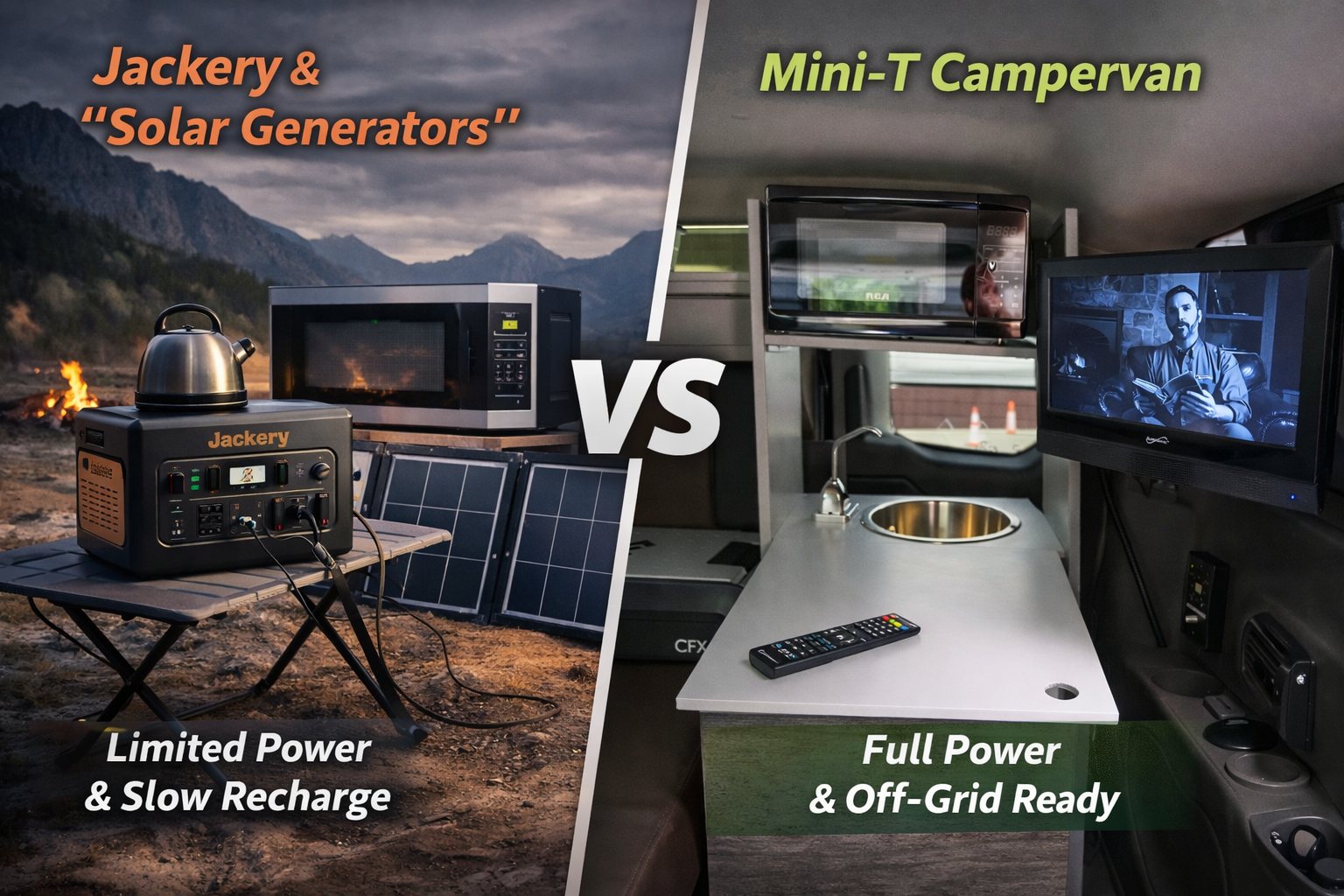
What Is a Portable Power Station?
Despite the common marketing term "solar generator," portable power stations are not generators in the traditional sense.
They do not create electricity. Instead, they store electricity inside a battery and deliver it through built-in outlets and inverters.
To operate, the unit must first be charged from an external source such as:
- A household electrical outlet
- A vehicle charging connection
- A solar panel
- Another external power source
Once the stored energy is used, the unit must be recharged before it can provide power again.
For charging electronics and occasional light-duty use, this approach works well. The limitations become more noticeable when electrical demands increase.
Why Recharge Capability Matters
Many shoppers focus primarily on battery capacity. While storage capacity is important, recharge capability often has a greater impact on real-world usability.
Every electrical system involves two basic questions:
- How much energy can it store?
- How quickly can it replace the energy being used?
A portable power station may have sufficient capacity to run appliances for a period of time, but once that energy is consumed it must be replaced.
Small portable solar panels can help, but actual charging performance depends heavily on sunlight conditions, panel size, weather, season, and available daylight hours.
This is why many portable power station owners eventually find themselves relying on campground hookups, household outlets, or extended charging periods to restore depleted batteries.
What Real Campervan Power Demands Look Like
Travelers often use more electricity than they initially expect.
A typical day of campervan travel may include:
- Running a refrigerator continuously
- Using a microwave oven for meals
- Charging phones and tablets
- Operating laptops or cameras
- Powering medical devices such as CPAP machines
- Running ventilation fans and lighting
None of these activities are extreme, but together they create ongoing electrical demand that must be replenished day after day.
The challenge is not simply storing enough energy—it is replacing that energy consistently while traveling.
How an Integrated Campervan Electrical System Works
A properly designed campervan electrical system takes a different approach.
Rather than functioning as a standalone battery box, the system becomes part of the vehicle itself.
As outlined in this overview of the Mini-T Campervan electrical system, multiple charging sources work together to support daily travel.
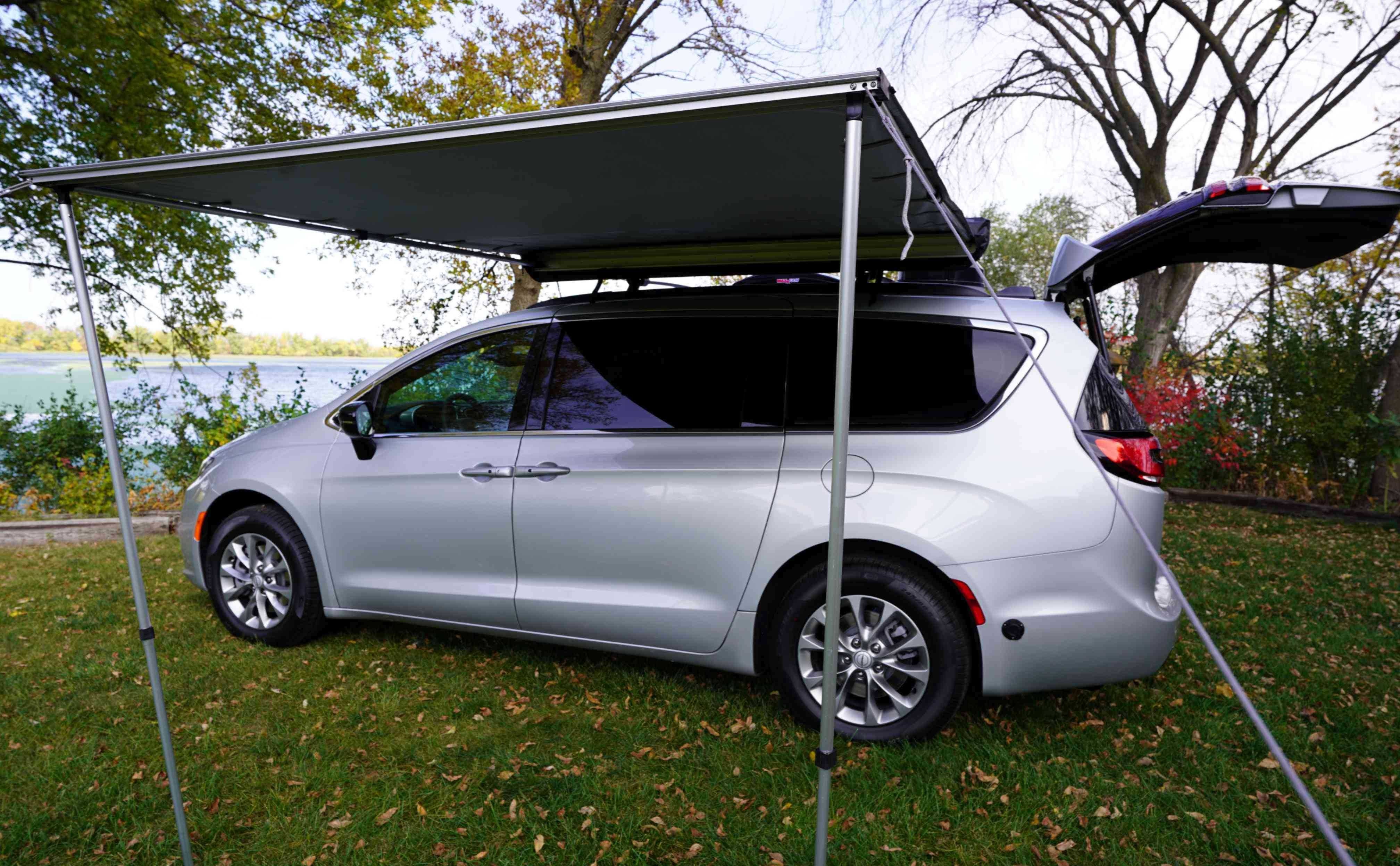
The Mini-T Campervan combines:
- Dual AGM house batteries
- Roof-mounted solar charging
- Vehicle alternator charging while driving
- 120-volt shore power capability
- A 2000-watt pure sine wave inverter
Instead of relying on a single charging method, the system continuously replenishes power through multiple sources depending on how the vehicle is being used.
This allows the refrigerator, microwave, lighting, ventilation, and other onboard systems to function as part of an integrated travel platform rather than as separate portable devices.
Portable Power vs. Integrated Power
The easiest way to understand the difference is to think about fuel.
A portable power station is somewhat like carrying an extra fuel can. It provides useful reserve capacity, but eventually it must be refilled.
An integrated campervan electrical system is more comparable to the vehicle's fuel system itself—designed to continuously support normal operation while being replenished during regular use.
Neither approach is inherently right or wrong. They simply serve different purposes.
Portable power stations are excellent for occasional electrical needs and portable applications. Integrated campervan systems are designed to support ongoing travel and repeated daily use.
Choosing the Right Solution for Your Travel Style
If your goal is charging electronics, occasional camping, emergency backup power, or powering small devices, a portable power station may be an excellent solution.
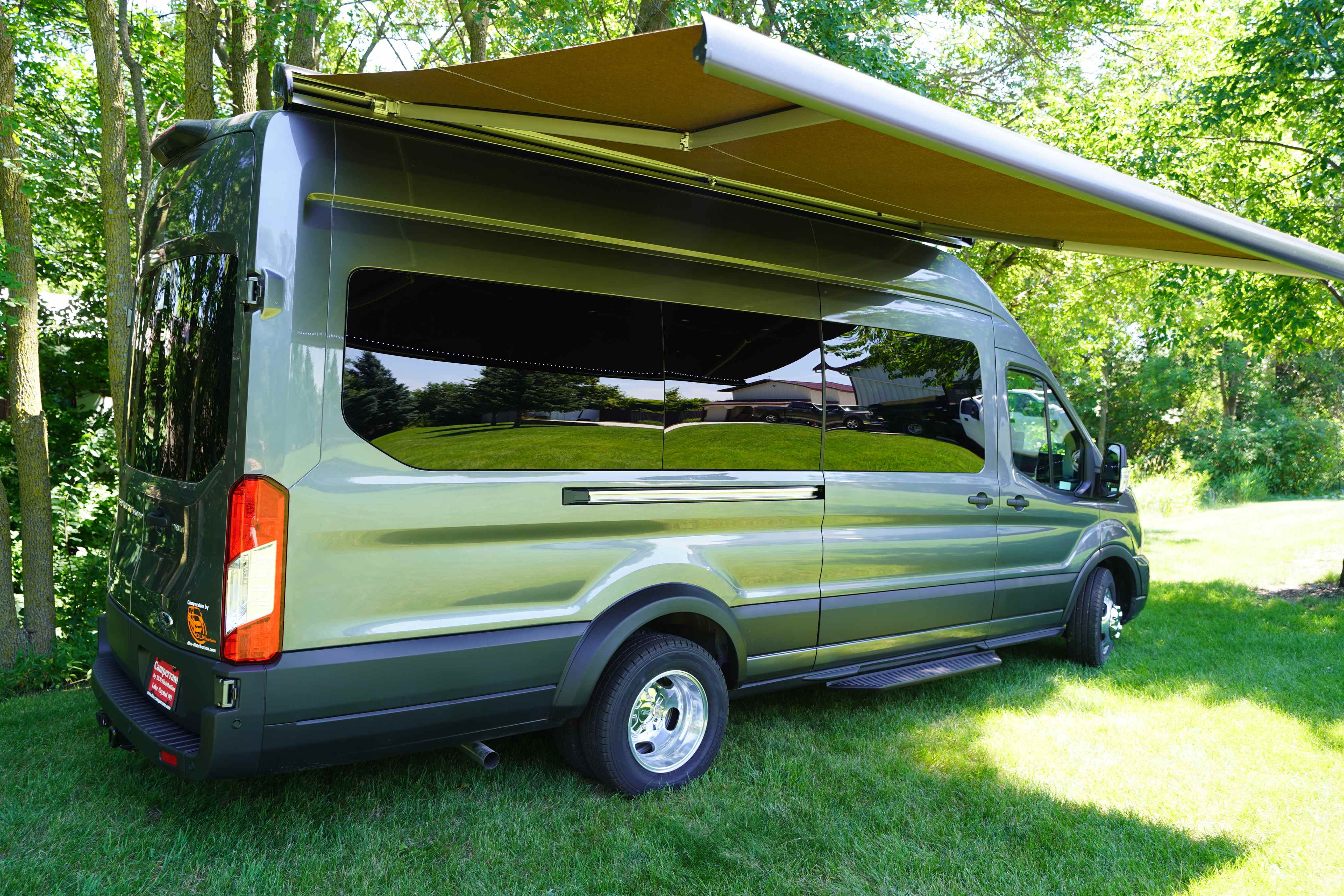
If your goal is extended travel with refrigeration, cooking capability, off-grid camping, and daily electrical use, a fully integrated campervan electrical system often provides a more practical long-term approach.
The key is matching the power system to the way you actually travel.
For many campervan owners, the best power system is the one that quietly works in the background—allowing them to focus on the road, the destination, and the experience rather than constantly managing battery levels.
Happy Camping!

DLM-Distribution / Campervans is a licensed manufacturer and dealer located in Lake Crystal, Minnesota, serving clients around the country.
Contact Dave: 651-285-7089 or Candy: 507-382-9446 today!