
Can You Trade In a Vehicle for a Campervan? What to Know First
For many people considering a campervan, the first question isn't which destination to visit. It's what to do with the vehicle they already own.
Perhaps there's a car in the garage that would see less use once a campervan arrives. Maybe a larger motorhome has become more work than expected, or a truck, SUV, or recreational vehicle no longer fits the way you travel. Selling it privately is one option, but trading it toward a campervan purchase may offer a simpler alternative.
Trade-ins are common in the automotive industry, and they can also be part of purchasing a campervan. The details, however, depend on what you're trading, its condition, its value, and the policies of the manufacturer or dealer accepting it.
Understanding how the process works before you begin shopping can help you make a better financial decision and avoid unnecessary complications when it's time to take delivery.
Can You Trade a Car, Truck, SUV, or RV Toward a Campervan?
Yes. Depending on the seller, a variety of vehicles may be considered for trade toward a campervan purchase.
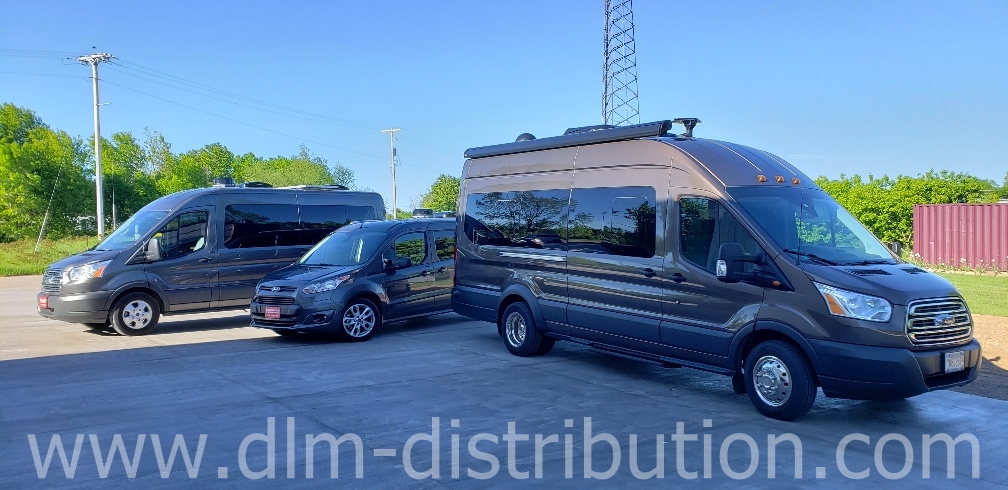
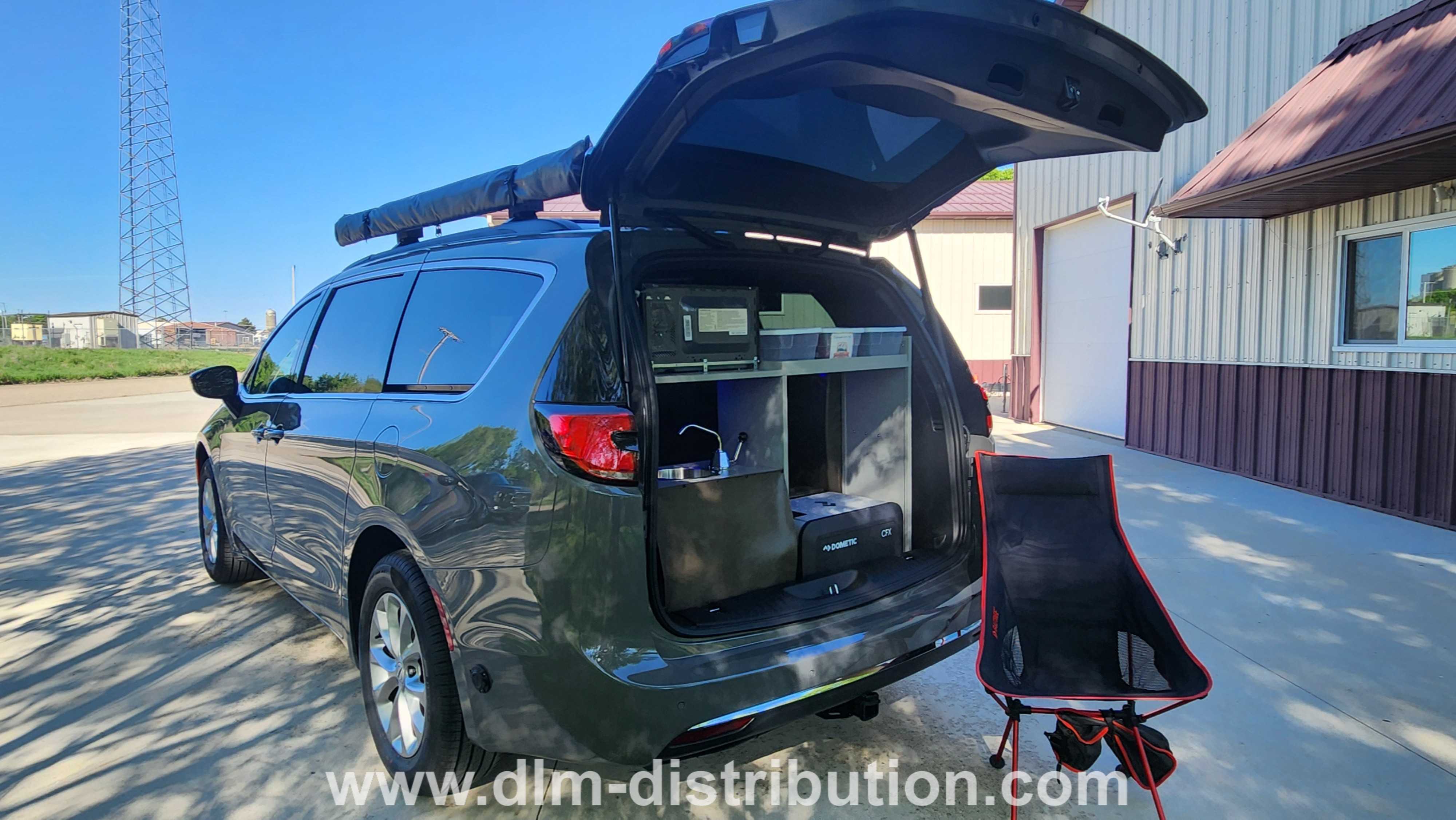
At DLM-Distribution, trade-ins are considered individually when purchasing a Mini-T Campervan. Potential trades include cars, trucks, SUVs, vans, motorhomes, travel trailers, boats, and other recreational vehicles.
Not every vehicle will qualify. Generally, an accident-free vehicle with a clear title and no outstanding lien provides the most straightforward opportunity. Each trade is reviewed according to its circumstances, condition, and marketability rather than accepted automatically.
One advantage of this approach is that you don't necessarily have to trade one RV for another. A vehicle you use for everyday transportation may have enough value to make a meaningful contribution toward a campervan purchase.
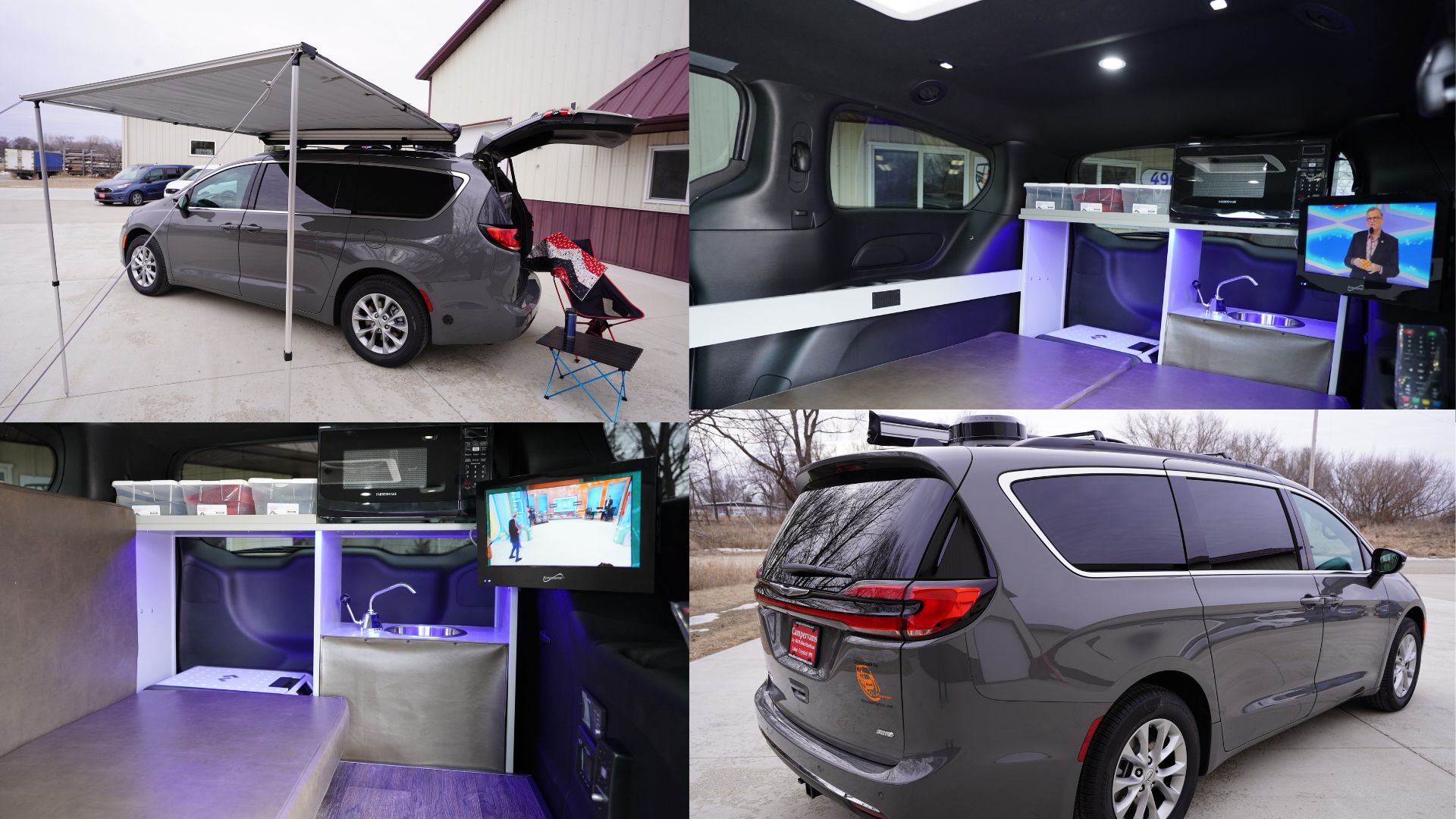
For some buyers, this also creates an opportunity to simplify their vehicle ownership. A garageable Mini-T Campervan can serve as both practical transportation and a travel vehicle, potentially reducing the need to maintain a separate vehicle used primarily for vacations.
How Is a Vehicle's Trade-In Value Determined?
A trade-in offer reflects what the accepting dealer believes the vehicle is worth in a resale or wholesale transaction, taking into account its condition, market demand, and the costs associated with preparing it for another owner.
Several factors influence that evaluation.
Year, Make, and Model: Some vehicles consistently attract stronger resale demand than others. Age, equipment, drivetrain, and the availability of comparable vehicles all influence value.
Mileage and Mechanical Condition: A well-maintained vehicle with reasonable mileage is generally more appealing than one with significant mechanical problems or deferred maintenance.
Accident and Title History: Previous damage, repairs, branded titles, and ownership history can affect resale value and whether a vehicle qualifies for trade.
Appearance and Overall Care: Interior wear, exterior damage, tire condition, cleanliness, and evidence of regular maintenance help determine how much preparation a vehicle may need before resale.
Current Market Demand: A vehicle's value is influenced by what similar vehicles are actually selling for, not simply what an owner originally paid or what comparable vehicles are advertised for online.
For RVs and boats, additional considerations may include the condition of appliances, electrical systems, plumbing, engines, generators, trailers, and other equipment.
Before requesting an evaluation, it helps to gather the vehicle's year, make, model, mileage, VIN, photographs, and a straightforward description of its condition. Maintenance records and information about major equipment can also be useful.
Providing accurate details early allows the dealer to make a more informed assessment and reduces the possibility of surprises when the vehicle is inspected in person.
Trading In Versus Selling Privately: Which Makes More Sense?
Selling privately and trading in each have advantages. The better choice depends on how much time you're willing to invest, how easily your vehicle can be sold, and the difference between the offers you receive.
A private sale may bring a higher selling price because you're dealing directly with the next owner. However, that potential advantage comes with additional responsibilities.
You'll need to determine an asking price, prepare the vehicle for sale, advertise it, respond to inquiries, arrange showings, negotiate with buyers, and handle payment and title paperwork. Some vehicles sell quickly, while others may take weeks or months to find the right buyer.
Trading in generally offers a more predictable process. Once the value is agreed upon, the trade and purchase can be coordinated as part of the same transaction.
That convenience can be especially valuable when you're purchasing a campervan from another state or trying to coordinate the sale of one vehicle with delivery of another.
It is also worth considering the actual financial difference. A private sale that produces a somewhat higher price may not offer as much additional benefit as it initially appears, particularly when potential sales tax advantages and the time involved are considered.
On the other hand, if a vehicle is especially desirable, has a strong private-party market, or receives a trade offer significantly below its likely selling price, selling it yourself may be the better financial decision.
The goal should be to compare the complete transaction rather than focusing only on the trade-in number.
Could a Trade-In Reduce the Sales Tax on Your Campervan?
One of the most overlooked considerations when comparing a trade-in with a private sale is the potential sales tax treatment.
In some states, an eligible vehicle trade-in reduces the taxable purchase amount. Rather than calculating sales tax on the full price of the campervan, the applicable tax may be calculated on the difference between the purchase price and the qualifying trade allowance.
For example, consider a campervan with a purchase price of $70,000 and an eligible trade-in allowance of $20,000. In a state that allows the full qualifying trade allowance to reduce the taxable amount, sales tax might be calculated on $50,000 instead of $70,000.
At a hypothetical 6% tax rate, that difference would represent $1,200 in potential sales tax savings.
This is an illustration, not a universal tax rule. State laws vary considerably. Some states limit or exclude trade-in credits, distinguish between vehicle types, or apply special rules to recreational vehicles, boats, and out-of-state purchases.
Eligibility can also depend on how the transaction is structured and where the vehicle will be titled and registered.
Before deciding whether to trade or sell privately, confirm the applicable tax treatment with the dealer and the appropriate state motor vehicle or revenue agency.
A trade-in offer that initially appears lower than a private-party selling price may be more competitive once any legitimate tax benefit is included in the comparison.
What If Your Current Vehicle Has a Loan?
An outstanding loan adds another consideration to the trade-in process.
When a vehicle has a lien, the lender generally must be paid before clear ownership can be transferred. Some dealerships handle financed trades, but others prefer or require vehicles with clear titles.
DLM-Distribution generally looks for lien-free vehicles when considering trades, although individual circumstances can be discussed during the evaluation.
If your vehicle has an outstanding balance, request the current payoff amount from your lender before assuming how much equity you have available.
For example, a vehicle valued at $18,000 with a $12,000 loan payoff has approximately $6,000 in equity before any other transaction costs. That equity, rather than the entire trade value, is what remains available toward another purchase after the loan is satisfied.
If the amount owed exceeds the vehicle's value, the situation is different and requires additional consideration.
Knowing these numbers before shopping helps avoid confusion and makes it easier to understand your actual purchasing budget.
Can You Trade In a Vehicle When Buying a Campervan From Another State?
Absolutely, provided the seller accepts the trade and the arrangements are agreed upon in advance.
For buyers purchasing a Mini-T Campervan from DLM-Distribution in Minnesota, one straightforward approach is to drive the trade-in vehicle to the dealership and complete the exchange when taking delivery of the campervan.
This allows the buyer to make the trip in a familiar vehicle, complete the paperwork and orientation, and begin the return journey in the new Mini-T.
It's a practical arrangement, particularly for buyers who enjoy the idea of turning their trip home into their first campervan adventure.
However, traveling a long distance with a trade-in should never be based on an informal assumption about its value. The vehicle's details, condition, estimated allowance, title requirements, and any inspection conditions should be discussed and documented before departure.
Buyers should also confirm what paperwork is needed to transfer ownership and how their home state's registration and tax requirements will be handled.
For a broader explanation of purchasing from outside Minnesota, see how to purchase a Mini-T Campervan from out of state.
What If You Would Rather Fly In or Have Your Campervan Delivered?
Not every buyer wants to drive across the country to pick up a campervan, and a trade-in is not always the best arrangement for every purchase.
DLM-Distribution offers nationwide delivery and complimentary pickup for customers arriving through Minneapolis-Saint Paul International Airport. Customers who prefer to rest after their flight can also arrange pickup from a nearby airport-area or Mall of America-area hotel on their delivery day.
For buyers without a trade-in, flying to Minnesota can be a convenient way to receive their campervan, complete the orientation, and enjoy the journey home.
For buyers who have a vehicle they would otherwise trade, it is worth comparing the cost and convenience of driving that vehicle to Minnesota against selling it locally and flying in instead.
Some buyers may find that a local sale through a dealership, a vehicle-buying service, or a private buyer is the better solution. Others may prefer to bring their trade directly to DLM.
There is no single arrangement that works best for everyone. The important thing is to consider transportation, timing, paperwork, and the overall financial result before deciding.
How to Prepare Your Vehicle for a Trade-In Evaluation
A little preparation can make the process more efficient.
Start by gathering the basic vehicle information and taking several clear photographs showing the exterior, interior, dashboard mileage, and overall condition. If the vehicle has damage or known mechanical issues, disclose them rather than waiting until the final inspection.
Locate the title and confirm how ownership is listed. If there are multiple owners on the title, determine whether additional signatures will be required. If the title is held electronically or by a lender, clarify the transfer process ahead of time.
For a motorhome or other recreational vehicle, make a list of important equipment and any known issues. Buyers and dealers alike benefit from knowing whether the generator, air conditioning, plumbing, refrigerator, and other systems operate properly.
Cleaning the vehicle and organizing maintenance records can help present it accurately, but major repairs made solely to improve trade value are not always worthwhile. Discuss significant issues before spending money that may not be recovered in the final allowance.
Finally, ask whether the proposed trade value is preliminary or firm, and whether it is subject to a physical inspection when the vehicle arrives.
These details are particularly important when coordinating a long-distance campervan purchase.
Is Trading In Always the Best Financial Choice?
Not necessarily, and that's an important point.
Trading is often the easiest way to move from one vehicle into another, but convenience and maximum resale value are not always the same thing.
Someone with a nearly new, highly desirable vehicle may be able to obtain an excellent price through a private sale or an independent vehicle-buying service. Another buyer with an older motorhome may find that a trade-in eliminates considerable uncertainty, especially if the RV would otherwise need to be advertised, shown, and demonstrated to prospective buyers.
There are also circumstances where keeping the existing vehicle makes sense. A household may still need a truck for towing, a second car for commuting, or a larger vehicle for family transportation.
The decision should begin with how you expect to use the campervan and whether the vehicle you're considering trading still serves an important purpose.
For travelers evaluating the broader economics of campervan ownership, our article on how campervans can help reduce travel and transportation costs explores additional considerations.
A Simpler Transition Into Campervan Ownership
One of the appealing things about purchasing a campervan is the possibility of simplifying travel. You have your transportation, sleeping accommodations, and everyday conveniences together in one vehicle, making it easier to take an overnight trip, visit family, explore a state park, or travel across the country.
The buying process can follow that same philosophy.
If you already own a vehicle that no longer fits your plans, a trade-in may offer a practical way to move forward without arranging a separate sale. If selling privately makes better financial sense, that can be an equally reasonable decision.
What matters is understanding your options, knowing the value of what you own, and choosing the arrangement that works best for your circumstances.
For prospective Mini-T owners, DLM-Distribution can review potential trade-ins as part of the campervan purchasing process. An early conversation about your current vehicle can help establish whether a trade is practical before you begin making travel or delivery arrangements.
After all, the purpose of purchasing a campervan is to enjoy the places you'll go, not to make the process of getting there unnecessarily complicated.
Happy Travels & Happy Camping!

DLM-Distribution / Campervans is a licensed manufacturer and dealer located in Lake Crystal, Minnesota, serving clients around the country.
Contact Dave: 651-285-7089 or Candy: 507-382-9446 today!