
NEWS
The Appeal of Building Your Own Campervan
Designing and assembling a campervan from the ground up has a natural appeal. The idea of shaping every detail to fit personal travel habits, storage needs, and comfort preferences can feel empowering. For some, the process itself is the reward — researching components, planning layouts, and gradually transforming a vehicle into a livable space.
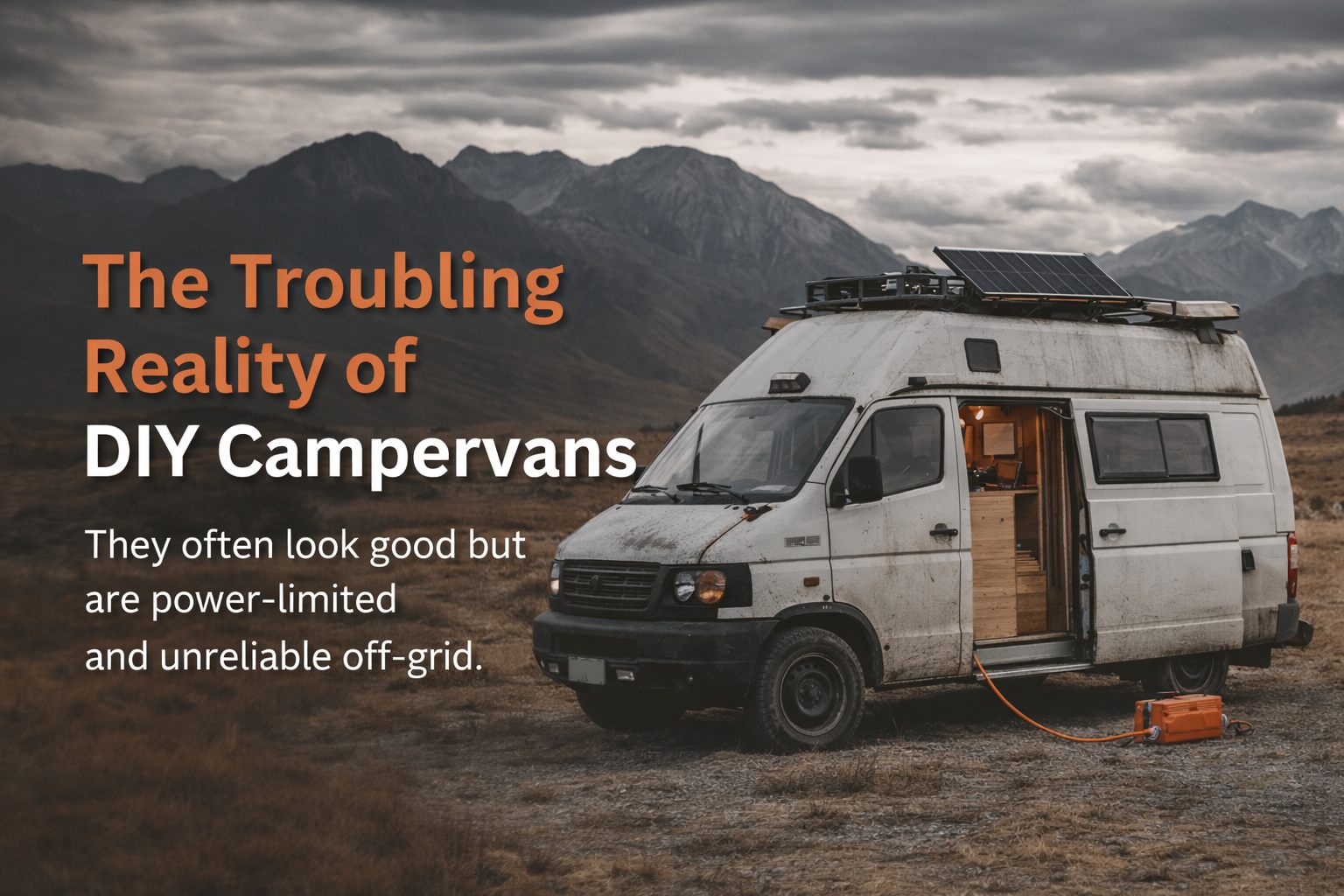
However, the difference between appearance and long-term functionality is where many DIY projects encounter challenges. What looks complete on the surface does not always perform reliably in real-world travel, especially when it comes to electrical capability and system integration.
Understanding these practical realities is essential before beginning a project that must function safely on the highway and dependably off the grid.
Electrical Systems: Where Most DIY Builds Fall Short
Electrical design is one of the most complex and frequently underestimated parts of a campervan conversion. Many self-built vans look impressive visually, yet struggle to deliver consistent power performance.
Running high-demand appliances — such as a microwave — while also supporting lighting, refrigeration, charging devices, and off-grid operation requires more than installing batteries and an inverter. It requires system engineering. Proper load calculations, charging efficiency, battery management, wiring safety, ventilation, and component compatibility all must work together as a unified system.
Without formal electrical design experience, several common problems tend to appear:
-Electrical systems that technically “work” but cannot sustain real-world usage
-Power storage that drains quickly or cannot recharge efficiently
-Inverters and wiring not sized for sustained loads
-Inconsistent off-grid capability despite significant component cost
-Heat buildup, voltage drop, or premature component failure
-Safety risks from improper circuit protection or grounding
Another factor is component selection. To control costs, many DIY builders choose lower-priced electrical equipment that performs adequately in limited testing but struggles under continuous use. Achieving reliable, high-capacity power — especially enough to run demanding appliances while remaining off grid — requires higher-grade components and careful integration. Once those costs are included, the financial advantage many expect from a DIY approach often narrows substantially.
In practice, dependable off-grid electrical performance is one of the most expensive and technically demanding aspects of a campervan — and one of the hardest to execute without specialized experience.
Reliability vs. Completion
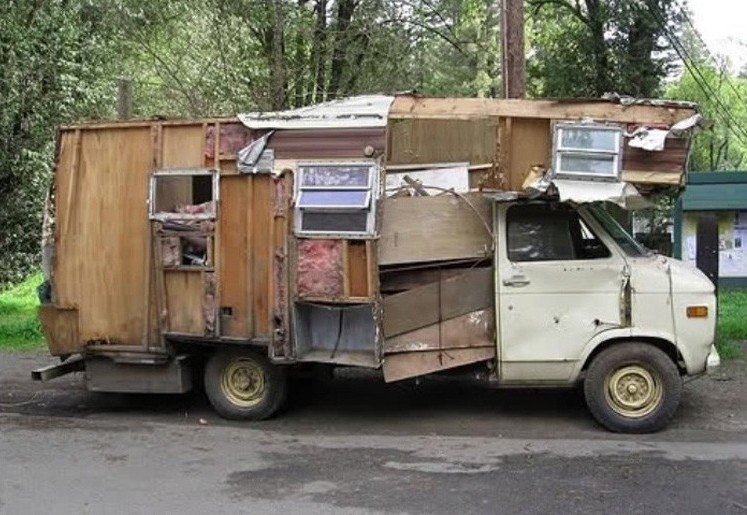
Many DIY projects reach visual completion but never achieve full functional reliability. This is why partially finished conversions frequently appear for sale. The physical build may be done, yet unresolved system performance issues — especially electrical — make continued ownership frustrating.
Unlike stationary construction, a campervan must withstand vibration, temperature swings, moisture exposure, and constant movement. Systems that perform well in a driveway may behave very differently after thousands of miles on varied road conditions.
Reliability is not just about whether something works once. It is about whether it continues to work consistently over time.
Insurance, Valuation, and Resale Considerations
Custom, one-of-a-kind builds can also create practical challenges beyond construction. Insurance providers often have difficulty assigning clear replacement value to vehicles without comparable models. Coverage may be more limited, more expensive, or require additional documentation.
Resale presents similar issues. Buyers must evaluate workmanship, safety, and long-term durability without standardized manufacturing benchmarks. Even visually appealing builds can face hesitation in the marketplace if system design or installation quality cannot be easily verified.
Time, Space, and Project Reality
A campervan conversion requires more than tools and enthusiasm. It demands workspace, time, planning, and repeated problem solving. Projects that appear straightforward in concept often expand significantly in scope. Electrical redesigns, component replacements, and layout adjustments can extend timelines far beyond expectations.
For many builders, the project becomes less about travel and more about construction management.
Why Factory-Built Campervans Often Perform Differently
Manufactured campervans are designed as integrated systems from the beginning. Electrical loads are calculated before installation. Components are selected to work together under expected usage conditions. Wiring, ventilation, mounting methods, and charging systems are engineered for long-term performance under motion and environmental stress.
This level of integration is difficult to replicate on an individual basis because it requires design experience, testing procedures, and system validation that occur before the vehicle ever reaches the road.
Factory-built campervans also tend to provide structured support, including service networks and warranty coverage, which helps address issues that may arise during real-world use.
Most importantly, professionally engineered electrical systems are built with enough capacity and stability to support actual off-grid living conditions — not just short-duration testing.
The Cost Reality of True Off-Grid Capability
A common assumption is that building a campervan independently reduces cost. While initial spending may appear lower, achieving reliable off-grid electrical performance is rarely inexpensive. High-capacity power storage, efficient charging methods, safe distribution systems, and durable components add up quickly.
When comparable electrical capability is the goal — particularly enough power to operate demanding appliances consistently — total investment often approaches or exceeds professionally manufactured systems.
At that point, the primary difference is not cost, but engineering.
A Practical Perspective
Building a campervan can be personally rewarding and educational. For individuals who enjoy fabrication, experimentation, and ongoing system refinement, the process itself may justify the effort.
For those whose priority is dependable travel, consistent off-grid capability, and long-term reliability, system design and integration tend to matter more than visual customization.
Understanding the difference between building something that looks complete and owning something that performs reliably in real conditions is the key decision point.
Final Thoughts
The appeal of creating a custom campervan is understandable. Personal design freedom and hands-on construction can be meaningful experiences. Yet mobile electrical infrastructure, system reliability, and long-term usability introduce complexities that are easy to underestimate.
A campervan is not just a structure — it is a moving, self-contained power system operating in constantly changing conditions. Achieving dependable performance requires more than assembly. It requires engineering.
Taking time to understand that distinction helps ensure expectations match reality before the first component is ever installed.
Happy Camping!

DLM-Distribution / Campervans is a licensed manufacturer and dealer located in Lake Crystal, Minnesota, serving clients around the country.
Contact Dave: 651-285-7089 or Candy: 507-382-9446 today!