
Minnesota North Shore Travel Guide: Scenic Drives, Camping, and Lake Superior Adventures
Some road trips are about getting somewhere. Minnesota’s North Shore is different. Here, the road itself becomes part of the reason for going.
Highway 61 follows Lake Superior from Duluth toward the Canadian border, passing rocky shoreline, waterfalls, forests, historic lighthouses, harbor towns and trailheads along the way. The distance can be covered relatively quickly, but doing so misses much of what makes the North Shore special. This is a place where an overlook can change the day’s plans, a short waterfall stop can become a two-hour hike, and a town you intended to drive through can become the place you stay for dinner.
The best way to experience the North Shore is therefore not to see how many attractions can be fit into an itinerary. Give yourself time, choose a few places you especially want to see, and leave enough room for Lake Superior to decide some of the rest.

Following Highway 61 North
Leaving Duluth and traveling northeast, Highway 61 gradually settles into the rhythm that defines a North Shore road trip. Lake Superior appears and disappears through the trees. Rivers cross beneath the highway on their way to the lake. Small communities provide places to stop for coffee, food or supplies before the road opens again into long stretches of forest.
Two Harbors makes a natural early stop. Its working harbor, Lake Superior shoreline and connection to Minnesota’s railroad and shipping history provide a different perspective on the lake before the trip continues north. From here, the landscape becomes increasingly rugged, and some of the North Shore’s best-known destinations begin appearing one after another.
But Highway 61 is more than the route connecting them. Pullouts and overlooks provide opportunities to stop simply because the lake looks interesting that day. Weather can move across Superior quickly, and the same stretch of shoreline can appear calm and blue one morning and dark and dramatic a few hours later.
That changing personality is part of what keeps people returning.
Where the Waterfalls Begin
North of Two Harbors, Gooseberry Falls State Park is one of the classic introductions to the North Shore landscape. The Gooseberry River tumbles over layers of ancient volcanic rock before continuing toward Lake Superior, creating the Upper, Middle and Lower Falls that generations of Minnesota travelers have stopped to explore.
It is easy to visit Gooseberry as a quick Highway 61 stop, but there is considerably more here for travelers who give it time. Trails follow the river, pass historic Civilian Conservation Corps stonework and eventually reach the Lake Superior shoreline. Camping overnight changes the experience again, allowing visitors to explore during the quieter morning and evening hours.
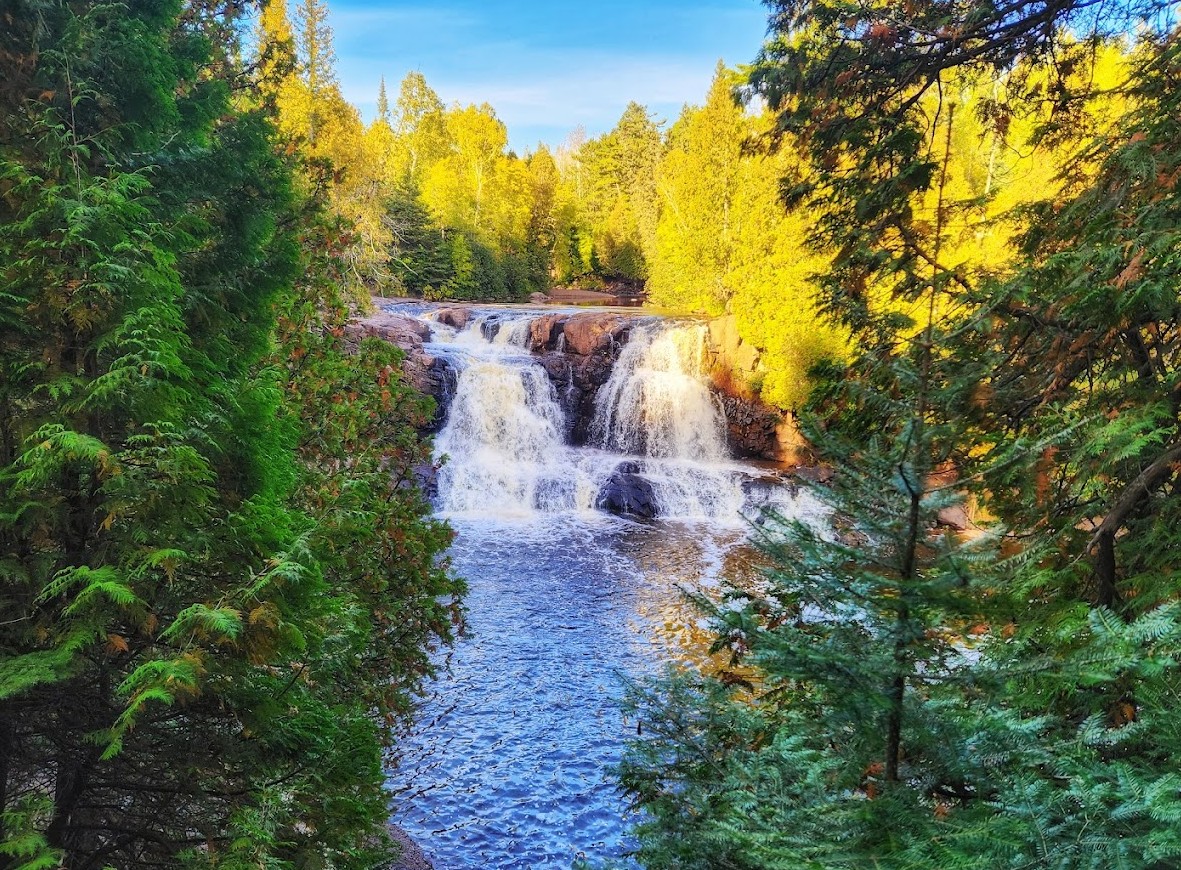
Gooseberry is also a good reminder of how to approach the rest of the North Shore. The famous attraction may be what gets you to stop, but wandering beyond it is often where the destination becomes memorable.
A Lighthouse Above Lake Superior
Continue north and one of Minnesota’s most recognizable landmarks comes into view. Split Rock Lighthouse stands high above Lake Superior on a rocky cliff, a reminder of the shipping history that has long been intertwined with life on the lake.
The lighthouse is impressive from above, but the surrounding landscape deserves just as much attention. Trails and viewpoints reveal different perspectives of the cliffs and shoreline, while Split Rock Lighthouse State Park extends the experience beyond the historic structure itself.
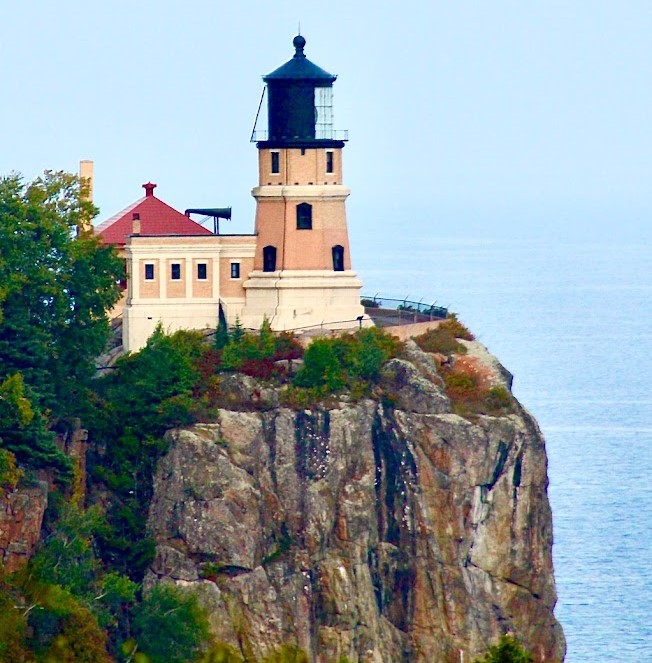
It is one of those places where weather matters. On a clear day, Lake Superior can seem to stretch endlessly beyond the lighthouse. Fog can make the same scene feel isolated and mysterious. Wind and waves transform it again. There is no single version of Split Rock, just as there is no single version of the North Shore.
The Shoreline Gets Wilder
Beyond Split Rock, the landscape continues to change. Around Silver Bay and Beaver Bay, rocky shoreline and forest dominate the views, while Tettegouche State Park introduces some of the region’s most dramatic terrain.
Tettegouche is a place where it is worth getting out of the vehicle and allowing several hours. Trails lead through forest, along cliffs and toward waterfalls, including High Falls on the Baptism River. Nearby Palisade Head rises dramatically above Lake Superior and provides one of the most expansive views along the drive.
This part of the North Shore illustrates why an overly detailed itinerary can become a disadvantage. Distances between attractions may look short on a map, but there is a lot packed into those miles. A traveler who plans to “do” several state parks, waterfalls and overlooks in one afternoon may discover that the first good trail deserves most of the day.
There is nothing wrong with changing the plan.
Camping Changes the Pace of the Trip
Staying overnight along the North Shore makes it much easier to stop thinking about how much ground needs to be covered. State parks, national forest campgrounds and privately operated campgrounds provide many different ways to spend the night, from wooded sites inland to camping within sight or sound of Lake Superior.
For travelers in a campervan, this style of travel can be especially natural. The same vehicle used to explore Highway 61 during the day becomes the campsite in the evening, making it easy to settle in for the night and continue north the following morning.

Where you camp can also shape the trip. Staying near Gooseberry or Tettegouche makes waterfalls and trails the focus. Camping closer to Grand Marais puts restaurants, the harbor and the next morning’s drive toward the Gunflint Trail within easy reach. Sometimes the best campsite is simply the one that allows you to stop driving earlier and enjoy where you already are.
Grand Marais: A Town Worth Slowing Down For
By the time Highway 61 reaches Grand Marais, the town feels less like another stop and more like a destination of its own. Built around a natural harbor, Grand Marais combines the character of a small Lake Superior community with restaurants, shops, galleries and immediate access to the outdoors.
Walk along the harbor, watch changing weather move across the lake, find something to eat and allow some unscheduled time. Grand Marais is particularly good at convincing travelers that they do not need to be anywhere else quite yet.
It is also a natural dividing point in a North Shore trip. Continue northeast on Highway 61 and the journey leads toward Hovland, Grand Portage and the Canadian border. Turn inland and another Minnesota road-trip experience begins.
Turn Inland on the Gunflint Trail
The Gunflint Trail leaves Grand Marais and travels inland through Superior National Forest toward the Boundary Waters Canoe Area Wilderness. Lake Superior gradually disappears behind you, replaced by inland lakes, dense forest and a landscape that feels increasingly remote with every mile.
This is not merely a side trip to squeeze into an already busy afternoon. The Gunflint deserves time of its own. Scenic overlooks, hiking trails, wildlife, resorts, campgrounds and access points to the Boundary Waters make it possible to spend a day or considerably longer exploring away from Highway 61.
The contrast is part of what makes it worthwhile. Within the same trip, travelers can wake beside the largest freshwater lake in the world and spend the afternoon surrounded by quiet inland lakes and northern forest.
Farther North to Grand Portage
Travelers who remain on Highway 61 eventually reach Grand Portage, where the history of the region becomes especially important. Grand Portage National Monument tells the story of the historic fur trade route while also recognizing the much deeper and continuing history of the Grand Portage Ojibwe community.
By this point in the drive, the North Shore feels noticeably different from the more heavily traveled areas closer to Duluth. Communities are farther apart, stretches of undeveloped shoreline become longer, and the Canadian border is near.
For some travelers, Grand Portage is the turnaround point. For others, it raises another question: Why turn around at all?
When the North Shore Becomes the Lake Superior Circle Tour
Minnesota’s North Shore is one section of a much larger journey around Lake Superior. Travelers with enough time can continue into Ontario and eventually circle the lake through Canada, Michigan and Wisconsin before returning to Minnesota.
The Lake Superior Circle Tour covers roughly 1,300 miles and transforms a North Shore vacation into an international road trip. The scenery changes continuously, but the lake remains the common thread—connecting waterfalls, lighthouses, wilderness, mining and shipping communities, beaches, cliffs and cultural history across two countries.

A traveler does not need to circle the entire lake to appreciate that larger geography. Simply realizing where Highway 61 fits into the Lake Superior landscape adds another dimension to the North Shore. What feels enormous while driving from Duluth to Grand Portage is still only one portion of Superior’s shoreline.
Every Season Creates a Different North Shore
Spring brings some of the most dramatic waterfalls of the year as snowmelt moves through rivers toward Lake Superior. Temperatures can remain cool near the lake, but lighter crowds and powerful water make it an interesting time to travel.
Summer brings long days, green forests, hiking, camping and more time to linger outside. It is also the busiest season, making campground reservations and some advance planning worthwhile.
Autumn may be the North Shore at its most celebrated. Forests turn red, orange and gold while the deep blue of Lake Superior provides a dramatic backdrop. Peak color also attracts plenty of other travelers, so patience and flexibility are useful companions.
Then winter changes nearly everything. Waterfalls freeze, snow settles into the forests, Lake Superior creates ice along portions of the shoreline and many of the busy summer destinations become remarkably quiet. It requires more preparation, but winter reveals a side of the North Shore that summer travelers never see.

Leave Some of the Trip Unplanned
It is useful to know where Gooseberry Falls, Split Rock Lighthouse, Tettegouche, Grand Marais and Grand Portage are before leaving home. Reservations may be important, particularly during summer and fall. But after those basics are handled, resist the temptation to schedule every hour.
The memorable part of a North Shore trip may be the destination you planned months ahead. It may also be a beach whose name you did not know, a roadside pullout you almost passed, lunch in a small town, an unexpected trail, or an evening when Lake Superior was too beautiful to justify driving any farther.
That is what makes this road different. Highway 61 will take you north, but there is no requirement to hurry.
The North Shore is best experienced one waterfall, harbor, trail, overlook and unexpected stop at a time.
Happy Camping!

DLM-Distribution / Campervans is a licensed manufacturer and dealer located in Lake Crystal, Minnesota, serving clients around the country.
Contact Dave: 651-285-7089 or Candy: 507-382-9446 today!