
Minnesota is known as the Land of 10,000 Lakes, but water is only the beginning of the story. Lake Superior meets the state along a rugged northern shoreline. Wilderness lakes stretch toward the Canadian border. The Mississippi River begins its long journey here before eventually carving through dramatic bluff country, while thousands of smaller lakes, rivers and waterfalls shape landscapes from north to south.
Travel across Minnesota and the scenery changes more than many first-time visitors expect. Boreal forests give way to lake country, hardwood forests, farmland and prairie. Small towns appear between state parks and scenic byways, and roads that begin as a way to reach a destination often become memorable parts of the trip themselves.
For travelers who enjoy camping, hiking, paddling and road trips, that variety makes Minnesota particularly rewarding. There is no single Minnesota landscape to see. The experience comes from discovering how many different ones exist within the same state.

Following Lake Superior Along Minnesota's North Shore
Few Minnesota road trips are as immediately recognizable as the journey along Lake Superior's North Shore. Highway 61 leaves Duluth and follows the shoreline northeast toward Grand Marais and eventually the Canadian border, passing rocky beaches, waterfalls, forested hills and frequent views across an inland sea that can look different almost every time the weather changes.
The route works particularly well because the attractions are not concentrated at a single destination. Gooseberry Falls State Park introduces a series of waterfalls close to the highway. Split Rock Lighthouse rises above the Lake Superior shoreline farther north, while Tettegouche State Park brings taller cliffs, hiking trails and additional waterfalls into the journey. Continue toward Grand Marais and the road becomes an invitation to keep exploring rather than simply a way to get somewhere.
That makes the North Shore as much a road-trip experience as a collection of individual attractions. A scenic overlook can become an unexpected stop. A short waterfall walk can occupy an hour. A town originally intended for lunch can become the place where the afternoon disappears.
Where Roads Give Way to Water
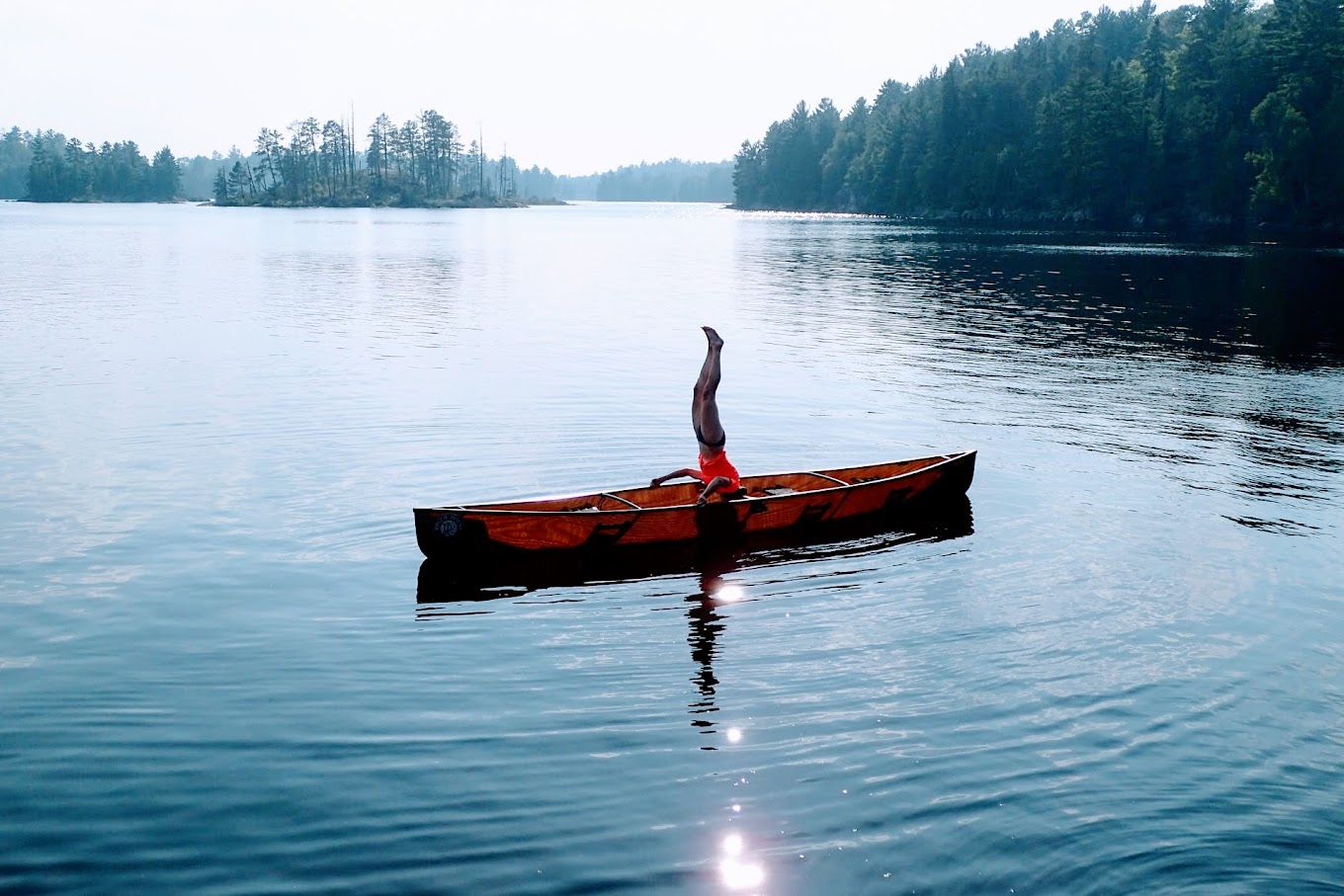
Farther north, Minnesota becomes increasingly defined by forests and interconnected waterways. Voyageurs National Park and the Boundary Waters Canoe Area Wilderness represent two very different ways of experiencing that landscape, but both reveal a part of the state where water is more than scenery.
At Voyageurs, large interconnected lakes, islands and forested shorelines dominate a national park where boats are fundamental to exploration. The Boundary Waters takes that relationship with water even further. Canoe routes connect lakes through portages, allowing travelers to move through an enormous wilderness where the usual road-trip rhythm is left behind.
These landscapes also provide historical context for Minnesota travel. Long before today's highways crossed the state, waterways served as transportation corridors for Indigenous peoples, voyageurs, traders and explorers. Traveling by canoe today is recreational, but it offers a glimpse of a geography in which the most logical route forward was often across the water rather than over land.

Minnesota's Lake Country Beyond the Wilderness
Not every memorable Minnesota lake requires a wilderness expedition. Across central and northern portions of the state, lake country becomes part of everyday geography. Roads curve around shorelines, towns grow beside the water, and campgrounds, public accesses and state parks make it easy to build a trip around swimming, fishing, boating or simply spending an evening beside a lake.
Areas around Brainerd, Bemidji, Detroit Lakes and numerous smaller communities each offer their own version of the Minnesota lake experience. Some lakes are surrounded by resorts and recreational communities; others remain relatively quiet. Many travelers eventually discover that the lake they remember most is not necessarily the largest or most famous one, but the place where they happened to find a campsite, launch a kayak or watch the sun disappear across the water.
This is where Minnesota's nickname begins to make sense. The importance of its lakes is not simply their number. It is how thoroughly they are woven into the landscape and the way people experience it.
Following the Mississippi From Its Minnesota Beginnings
The Mississippi River offers another way to understand the state. Its journey begins modestly at Lake Itasca in northern Minnesota, where visitors can walk across the young river before it begins a course that will eventually reach the Gulf of Mexico.
Follow the Mississippi through Minnesota and its character continually changes. What begins as a relatively small northern river grows as it moves through forests, communities and the Minneapolis-Saint Paul metropolitan area before reaching the broad valley and towering bluffs of southeastern Minnesota.
By the time the river reaches the Lake Pepin region, the landscape bears little resemblance to the headwaters. Limestone bluffs rise above the water, scenic highways follow the valley, and historic river communities create natural places to stop along the way.

Bluff Country and Southeastern Minnesota
The southeastern corner of Minnesota deserves time of its own. Here the terrain becomes more vertical, with wooded ridges, limestone bluffs, river valleys and winding roads creating one of the state's best regions for unhurried driving.
The Mississippi naturally receives much of the attention, but smaller rivers and valleys add another layer to the landscape. Hiking trails climb toward overlooks, state parks protect stretches of bluff and forest, and communities along the river provide places to eat, walk and explore between outdoor stops.
Rather than planning the region around one major attraction, it can be more rewarding to follow the geography. Drive a river road, stop when an overlook appears, spend part of the day hiking, and leave enough room in the schedule for places that were never part of the original plan.
Prairie, River Valleys and Southwestern Minnesota
Travel west and southwest and Minnesota changes again. Forest becomes less dominant, the horizon opens, and prairie and agricultural landscapes begin to define the view. It is a quieter kind of scenery than Lake Superior or the northern wilderness, but it tells an equally important part of the state's story.
Remnants of native prairie, river valleys, wetlands and exposed rock formations interrupt the agricultural landscape. Southwestern Minnesota also holds places where natural and human history are closely connected, including Pipestone National Monument and a collection of state parks that preserve prairie, lakes and river environments.
This part of Minnesota rewards travelers willing to slow down. A road across open prairie may not announce itself as a famous scenic drive, yet evening light, migrating birds, wildflowers or an approaching summer storm can turn an otherwise ordinary stretch of highway into one of the memorable moments of a trip.
Minnesota's State Parks Connect the Landscape
One of the easiest ways to experience the state's variety is through its state parks. They appear across nearly every major Minnesota landscape: beside Lake Superior, among northern forests and lakes, along rivers, within prairie country and high above the Mississippi Valley.
Some are destinations for an entire weekend. Others work beautifully as stops during a longer road trip—a place for a hike, picnic, waterfall walk or night of camping before continuing somewhere new the following morning.
That network makes it possible to experience Minnesota incrementally. A traveler does not need to see the entire state at once. One trip might follow Lake Superior. Another could center on the Mississippi. A long weekend might be spent exploring lake country, while a future journey turns toward the prairie and southwestern Minnesota.
Our collection of Minnesota State Park destinations provides a natural starting point for exploring individual parks and planning those trips.
The Places Between the Destinations Matter Too
Minnesota's natural attractions may provide the reason for a trip, but they are not necessarily what travelers remember most clearly afterward. Small downtowns, local restaurants, historic sites, roadside stops and community events become part of the experience precisely because they were not always planned.
That is one of the advantages of traveling by road. The itinerary can change when something interesting appears. A sign pointing toward a waterfall can justify a detour. A local restaurant can change where the day's drive ends. A campground discovered along the way can become the reason to stay another night.
The state is particularly well suited to this kind of travel because the distances between experiences are often manageable. A day can contain a hike, a scenic road, a small town and an evening beside the water without requiring the entire day to be spent behind the wheel.
Four Seasons Create Four Different Minnesotas
Season matters here. Summer brings long northern daylight, warm afternoons on the water and the height of camping season. Autumn transforms hardwood forests and river valleys, drawing travelers toward scenic roads throughout the state.
Winter changes the landscape more completely. Lakes freeze, waterfalls become walls of ice, snow covers trails and outdoor recreation shifts toward cross-country skiing, snowshoeing, ice fishing and other cold-weather pursuits. Spring arrives less predictably, bringing snowmelt, rising rivers, migrating birds and waterfalls replenished by runoff.
The result is a state that can feel substantially different depending on when it is visited. Returning to the same road, park or lake in another season can create an entirely new experience.
A State Best Discovered One Road at a Time
Minnesota does not have one landscape that defines it. Lake Superior is part of the story, but so are the Boundary Waters, the Mississippi River, interior lake country, southeastern bluffs and western prairie.
What connects them is the opportunity to move between these landscapes without needing every day to revolve around a major attraction. Sometimes the destination is a waterfall or state park. Sometimes it is a lake at the end of the road. And sometimes the road itself turns out to be the reason the trip is remembered.
That is what makes Minnesota particularly rewarding for travelers who enjoy camping and exploring at their own pace. There is always another shoreline, trail, river valley, small town or scenic road somewhere ahead—and often another reason to take the long way there.

DLM-Distribution / Campervans is a licensed manufacturer and dealer located in Lake Crystal, Minnesota, serving clients around the country.
Contact Dave: 651-285-7089 or Candy: 507-382-9446 today!