
Exploring Wyoming’s Natural Landscapes by Road
Wyoming is one of the least populated states in the country, yet it holds some of the most dramatic and recognizable landscapes in North America. Wide valleys, towering mountain ranges, geothermal features, and high desert terrain create a setting that feels expansive and largely unchanged by time.
For travelers who prefer open roads, long scenic drives, and access to public lands, Wyoming offers an ideal environment for a road-based travel experience. Many of the state’s most notable destinations are connected by well-maintained highways, making it possible to move between very different landscapes in a single trip.

Yellowstone National Park
Yellowstone is one of the most geologically active and ecologically diverse national parks in the world. The park is known for its geothermal features, including geysers, hot springs, mud pots, and fumaroles, along with large wildlife populations such as bison, elk, wolves, and bears.
Driving the Grand Loop Road provides access to many of the park’s major features, including Old Faithful, the Grand Canyon of the Yellowstone, and Hayden Valley. Numerous trail systems allow visitors to explore thermal areas and backcountry terrain on foot, while campgrounds throughout the park provide overnight access to different regions.

Grand Teton National Park
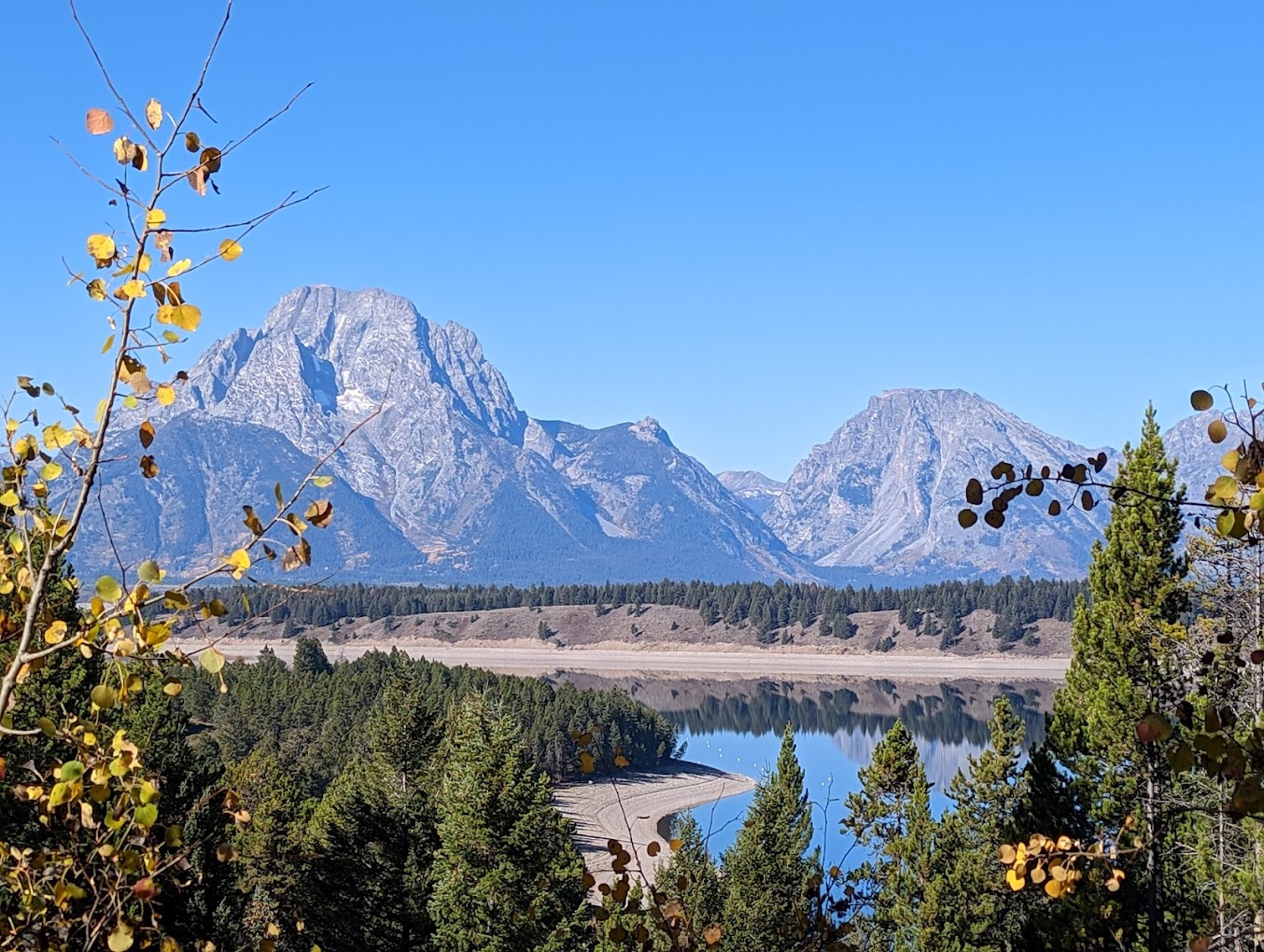
Immediately south of Yellowstone, Grand Teton National Park offers a dramatic shift in scenery. The Teton Range rises sharply from the valley floor, creating one of the most recognizable mountain skylines in the country.
Teton Park Road provides continuous views of the range, with access to trailheads, lakes, and scenic overlooks. Popular activities include hiking to Hidden Falls, paddling on Jenny Lake or Jackson Lake, and photographing wildlife across the valley floor. The park’s layout makes it easy to experience both alpine terrain and open valley landscapes in the same day.
Wind River Range
The Wind River Range stretches across western Wyoming and contains some of the most rugged and remote mountain terrain in the state. Known for its granite peaks, alpine lakes, and extensive wilderness areas, the range attracts hikers, backpackers, and climbers seeking quieter backcountry experiences.
Wyoming Highway 28 provides wide views of the mountains and serves as an access route to multiple trailheads. The region offers everything from short day hikes to extended multi-day routes into high alpine basins.
Bighorn Mountains
Located in north-central Wyoming, the Bighorn Mountains rise unexpectedly from the surrounding plains. The elevation change creates a landscape of forested slopes, alpine meadows, and high mountain passes.
U.S. Highway 14 crosses the range and is considered one of the most scenic drives in the state. Along the route, visitors will find trailheads, campgrounds, overlooks, and access to fishing streams and lakes. The Bighorns provide a quieter mountain experience compared to the state’s more heavily visited national parks.
Devils Tower National Monument
Devils Tower stands alone on the northeastern Wyoming landscape, rising dramatically above the surrounding plains. This geological formation was the first national monument designated in the United States.
A paved trail circles the base of the tower, offering close views of its vertical rock columns. The surrounding area includes additional hiking trails, picnic areas, and open prairie landscapes. The monument is also internationally known as a rock-climbing destination.

Hot Springs State Park
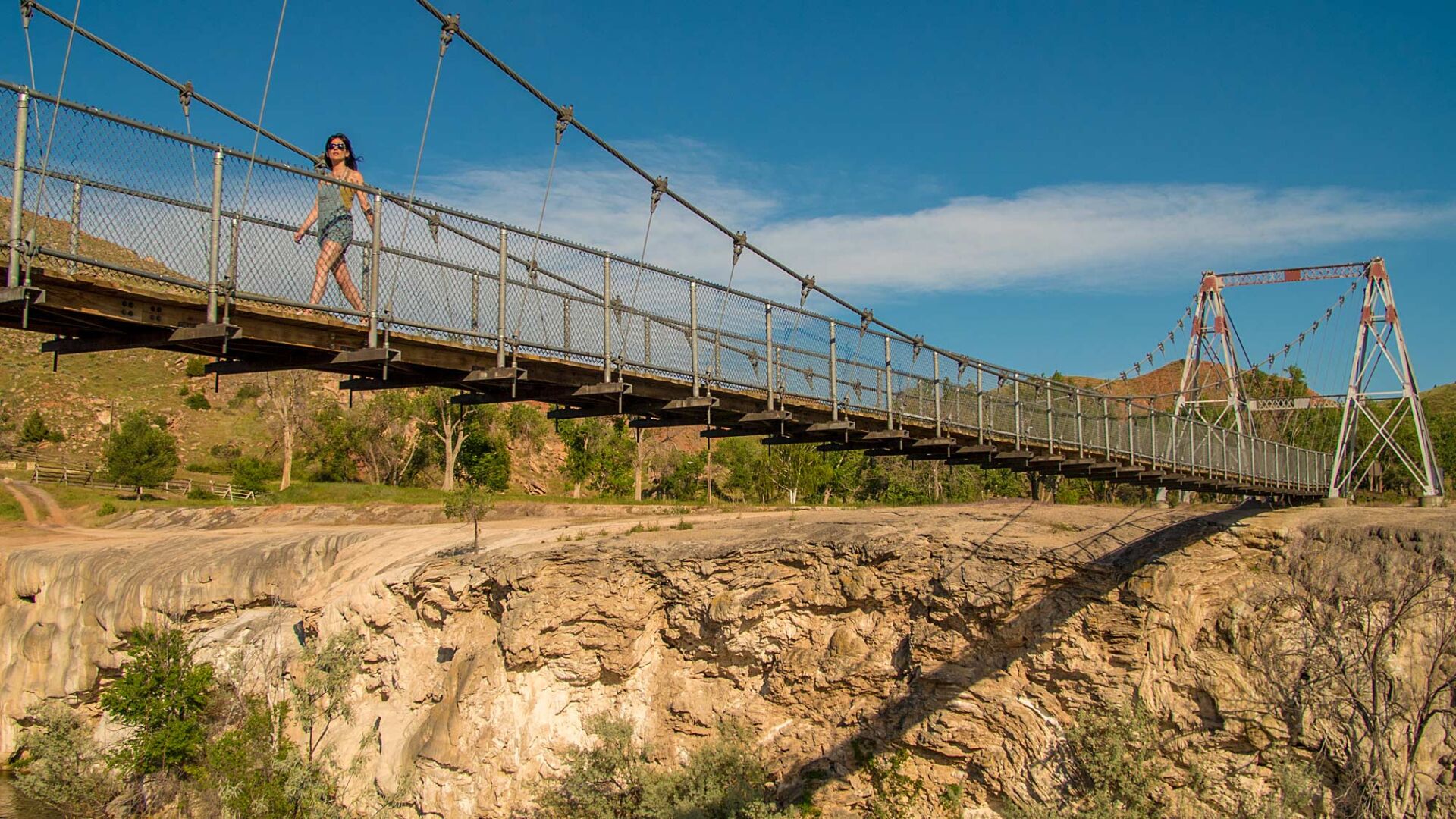
Located in Thermopolis, Hot Springs State Park is built around naturally heated mineral springs that have drawn visitors for generations. The water emerges from the ground at high temperatures and is cooled before entering public soaking pools.
In addition to the bath facilities, the park includes walking paths, river overlooks, and a resident bison herd that roams the surrounding grounds. It offers a slower pace compared to Wyoming’s mountainous regions and serves as a relaxing stop between longer travel segments.
Flaming Gorge National Recreation Area
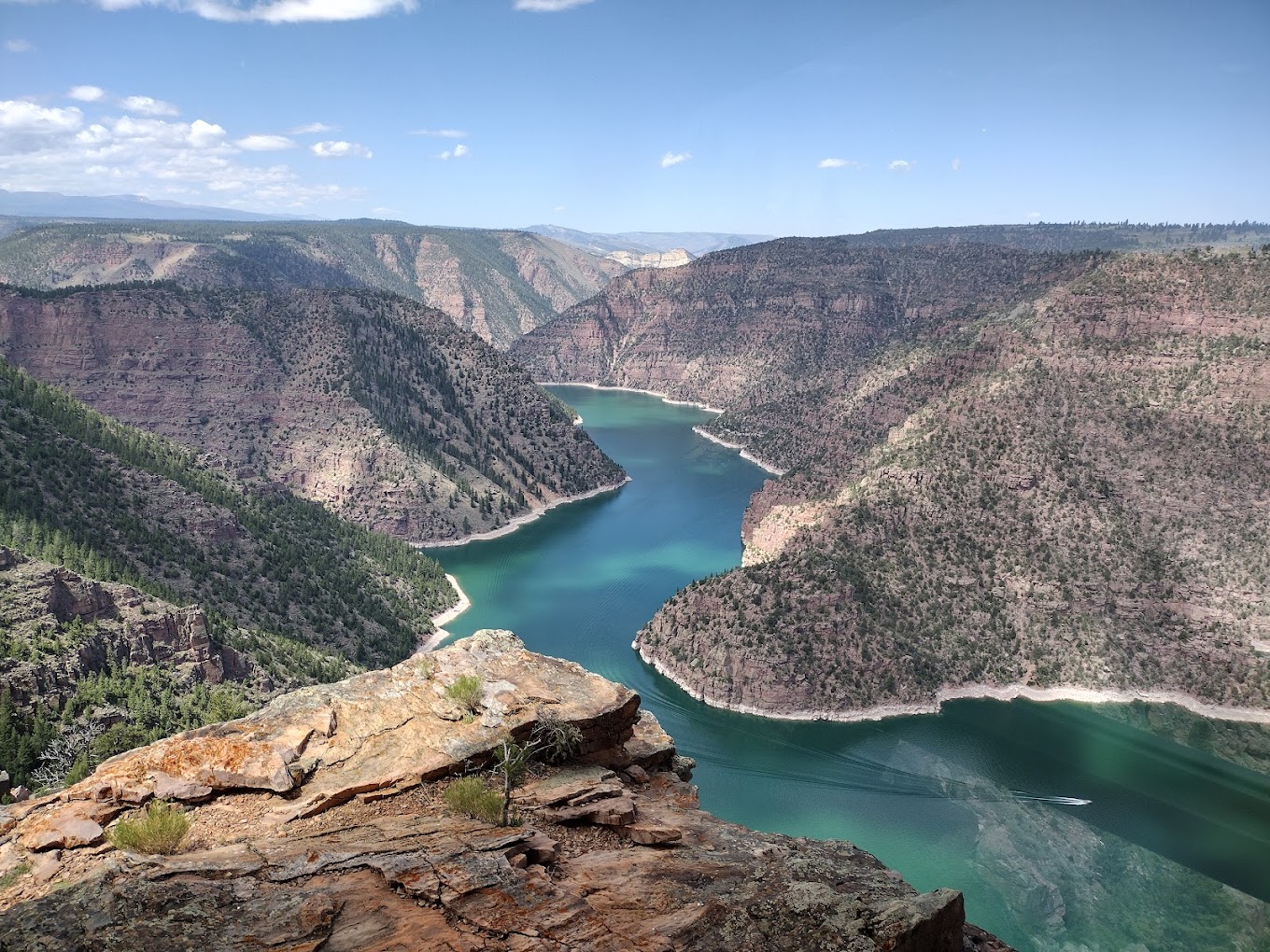
In southwestern Wyoming, Flaming Gorge presents a landscape defined by deep canyon walls, red rock cliffs, and the winding Green River. The contrast between water, desert, and stone creates some of the most visually distinct scenery in the region.
The Flaming Gorge-Uintas National Scenic Byway provides extended views of the reservoir and canyon system. Fishing, boating, hiking, and wildlife viewing are common activities, and multiple campgrounds provide access to different sections of the recreation area.
Planning a Wyoming Road Trip
Wyoming’s destinations are spread across large distances, but the state’s highway system connects major parks, mountain ranges, and recreation areas in logical travel routes. Many travelers combine Yellowstone and Grand Teton with additional drives through the Wind River Range, Bighorn Mountains, or southern desert regions.
Campgrounds are widely available across public lands, and many scenic routes provide direct access to trailheads and recreation areas. Because of the state’s scale and open landscapes, traveling by road allows visitors to experience gradual changes in terrain that would be missed with faster forms of travel.
A Landscape Defined by Space and Scale
Wyoming offers a sense of openness that is increasingly difficult to find elsewhere. From geothermal basins and alpine peaks to desert canyons and prairie horizons, the state presents a wide range of natural environments within a single region.
For travelers who prefer flexible movement between destinations, road travel provides a practical way to experience the full range of Wyoming’s landscapes while staying close to the places that make the state distinctive.
