Road Trip Ready: Planning Your Next Adventure in a Mini-T Campervan
A road trip in a Mini-T Campervan is about more than getting from one destination to another. It is about having the freedom to slow down, follow scenic roads, explore state parks and national parks, visit small towns, and enjoy the journey as much as the destination.
Good planning makes that freedom easier to enjoy. The goal is not to schedule every mile, but to prepare well enough that unexpected discoveries, changing weather, and spontaneous detours become part of the adventure rather than a source of stress.
Whether you are heading out for a weekend getaway, a long-distance road trip, or a cross-country adventure, a little preparation can help you travel more comfortably, efficiently, and confidently.

Start with a Direction, Not a Rigid Schedule
Some of the best campervan trips begin with a general idea rather than a strict itinerary.
You may know you want to visit a national park, follow a scenic highway, explore a lake region, or spend time along the coast. From there, the route can develop naturally as you discover campgrounds, overlooks, small towns, trails, and local recommendations along the way.
Having a flexible plan allows you to reserve key overnight stops when needed while still leaving room for the unexpected. A scenic roadside stop, an interesting state park sign, or a conversation with another traveler can easily become one of the most memorable parts of the trip.

Know When to Reserve Campsites
The Mini-T Campervan is small enough to fit comfortably into many campsites, but popular destinations can still fill quickly.
If your route includes high-demand state parks, national parks, waterfront campgrounds, holiday weekends, or peak summer travel dates, reservations are often a smart choice. Booking key nights in advance provides peace of mind, especially when traveling to places where nearby alternatives may be limited.
At the same time, not every night needs to be planned months ahead. Private campgrounds, county parks, municipal campgrounds, national forest campgrounds, and last-minute cancellations can provide useful flexibility along the way.
The best approach is often a balance: reserve the nights that matter most and leave room for discovery between them.
Use Rest Areas and Travel Breaks Wisely
Long road trips are more enjoyable when the travel day is not treated like a race.
Rest areas, scenic pullouts, visitor centers, and roadside parks can be valuable parts of a successful trip. They provide a chance to stretch, make lunch, walk the dog, check the map, adjust plans, or simply take a break from driving.
Rules for overnight stays at rest areas vary by state, so it is important to understand local regulations before relying on them as part of a travel plan. For more information, see this guide to RV and campervan overnight parking at rest areas.
When used properly, rest areas can help make longer trips safer, more comfortable, and more relaxed.
Prepare the Campervan Before You Leave
Before any longer road trip, take time to check the basics.
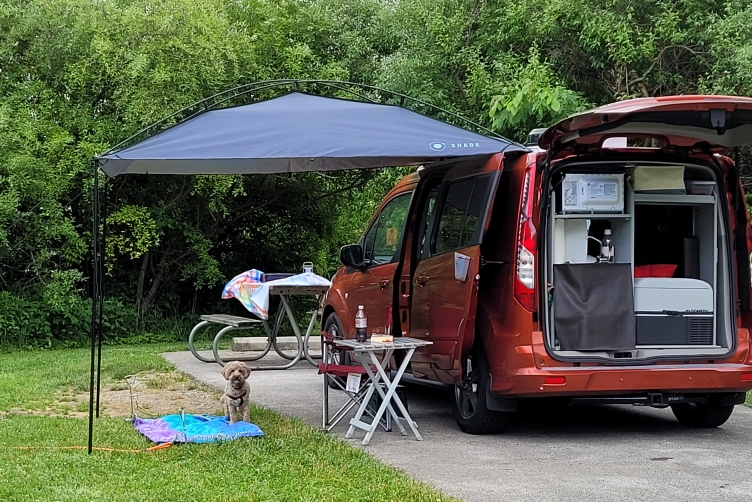
Confirm tire pressure, oil level, windshield washer fluid, lights, wipers, and other routine vehicle items. Make sure the refrigerator, microwave, fan, lighting, shore power cord, and electrical system are operating as expected.
It is also helpful to organize the campervan before departure. Put frequently used items where they are easy to reach, secure loose gear, and avoid packing more than you need.
A short local overnight trip before a longer journey can also be useful. It gives you a chance to confirm your setup, learn what you actually use, and remove items that only take up space.
Pack for Mobility, Not Just Possibility
One of the advantages of a compact campervan is simplicity, but that simplicity works best when packing is intentional.
Instead of packing for every possible situation, focus on items that support the way you actually travel: comfortable bedding, weather-appropriate clothing, basic cookware, easy meals, a flashlight or headlamp, first aid supplies, chargers, personal items, and outdoor gear suited to your destination.
Many travelers find that packing less makes the trip more enjoyable. With fewer items to move, search through, and reorganize, the campervan remains comfortable and easy to use throughout the journey.
Plan Food Around the Way You Travel
Food planning can make campervan travel more enjoyable and more affordable.
The refrigerator, microwave, sink, and onboard power system make it easy to carry simple meals, snacks, coffee, drinks, and fresh ingredients. This helps reduce dependence on restaurants while still allowing room to enjoy local diners, cafes, farmers markets, and regional specialties along the route.
Some travelers like preparing meals ahead of time. Others keep basic ingredients on hand and shop locally as they travel. Either approach works well as long as meals are simple, flexible, and easy to prepare in a compact space.
The goal is not to recreate a home kitchen. It is to make travel days easier and campsite evenings more relaxing.
Understand Your Off-Grid Power
A Mini-T Campervan is designed to support comfortable travel even when campground hookups are not available.
The onboard electrical system allows many everyday conveniences to operate while traveling or camping off-grid. This can include keeping food cold, charging electronics, using lighting, running the microwave, powering a CPAP machine, or making coffee depending on usage and conditions.
Understanding how your power system works helps you make better decisions on the road. Solar charging, alternator charging while driving, house batteries, shore power, and inverter use all work together to support travel flexibility.
For a deeper look at this topic, see Off-grid power capability in the Mini-T Campervan.
Stay Connected When It Matters
Part of the appeal of campervan travel is getting away from everyday routines, but many travelers still want reliable communication for navigation, weather updates, family check-ins, remote work, or emergency planning.
Cell service can vary widely in remote areas, national forests, mountain regions, and rural campgrounds. Downloading offline maps before departure is a smart habit, especially when traveling across unfamiliar territory.
For travelers who need stronger internet access in remote locations, Starlink satellite internet for campervan travel may be worth considering. It can be especially useful for those who work remotely, travel for extended periods, or want additional connectivity beyond cellular service.
Watch the Weather and Adjust Early
Weather can shape any road trip.
Rain, wind, heat, snow, wildfire smoke, flooding, or severe storms can all influence routes and overnight plans. Checking forecasts regularly allows you to make adjustments before conditions become a problem.
One advantage of campervan travel is mobility. If weather changes, you can alter your route, leave earlier, stay longer, or choose a different destination. Flexibility is one of the most valuable travel tools you have.
Think About Fuel and Services in Remote Areas
In many parts of the country, fuel stations, grocery stores, and services may be farther apart than expected.
This is especially true when traveling through the Upper Peninsula, the Great Plains, the desert Southwest, Alaska, mountain regions, or rural scenic routes. Keeping the fuel tank comfortably above empty, carrying drinking water, and restocking groceries before entering remote areas can prevent unnecessary stress.
Compact campervans are efficient, but good habits still matter. When distances are long, planning fuel stops becomes part of responsible travel.
Respect Campgrounds, Public Lands, and Local Communities
Good campervan travel depends on respect for the places visited.
Follow campground rules, observe quiet hours, dispose of trash properly, respect wildlife, and leave campsites cleaner than you found them. In public lands and natural areas, Leave No Trace principles help preserve access for future travelers.
Small towns, local businesses, state parks, national forests, and public recreation areas all play a role in making road trips memorable. Supporting those communities and traveling responsibly helps keep these places welcoming for everyone.
Let the Campervan Make Travel Easier
The Mini-T Campervan is especially well suited to flexible travel because it remains compact, efficient, and easy to drive.
It can fit into many campsites, park in regular spaces, navigate scenic roads, stop at small-town attractions, and remain practical for everyday travel. This makes it easier to explore without constantly planning around the size of the vehicle.
For many owners, this is where the Mini-T truly changes the road trip experience. The vehicle supports the journey instead of complicating it.

The Best Road Trips Leave Room for Discovery
Planning matters, but the most memorable road trips often include moments that were never on the original itinerary.
A quiet lake. A scenic overlook. A small-town cafe. A trailhead discovered by accident. A sunset that makes you stay one more night.
That is the real beauty of campervan travel. You can prepare well, travel confidently, and still leave space for the unexpected.
With the right balance of planning and flexibility, your next Mini-T Campervan adventure can be more than a trip. It can become a collection of stories, stops, and experiences that remind you why road travel remains one of the best ways to explore.
Happy Camping!
DLM-Distribution / Campervans is a licensed manufacturer and dealer located in Lake Crystal, Minnesota, serving clients around the country.
Contact Dave: 651-285-7089 or Candy: 507-382-9446 today!