
Ford Transit T-350HD: Why the Chassis Matters in a Full-Size Campervan
When people compare campervans, attention naturally goes first to what is inside. Sleeping space, storage, electrical systems, water capacity, appliances, and interior height are all easy to see and understand. Yet beneath all of those features is something just as important: the vehicle expected to carry them down the road.
That becomes particularly important as a campervan grows larger. More interior room can accommodate more equipment and greater travel capability, but it also adds weight and places different demands on the suspension, tires, brakes, drivetrain, and overall vehicle structure.
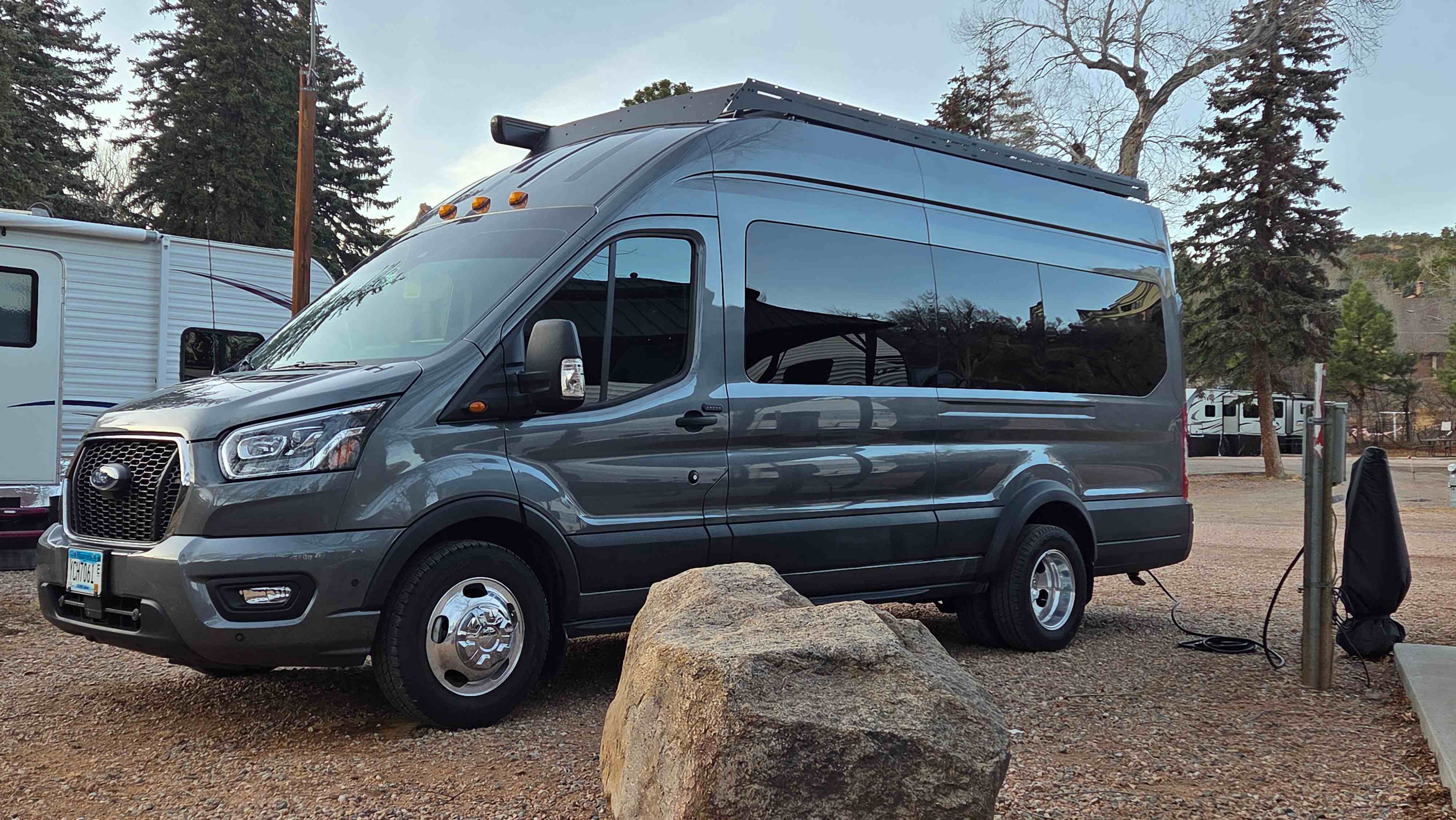
The Ford Transit T-350HD provides an interesting example of how those requirements can be addressed. Rather than being designed specifically as an RV, the Transit is a commercial vehicle platform offered in numerous configurations for different kinds of work. In its heavy-duty form, it also provides a foundation well suited to larger campervan applications.
Start with the Chassis, Not Just the Floorplan
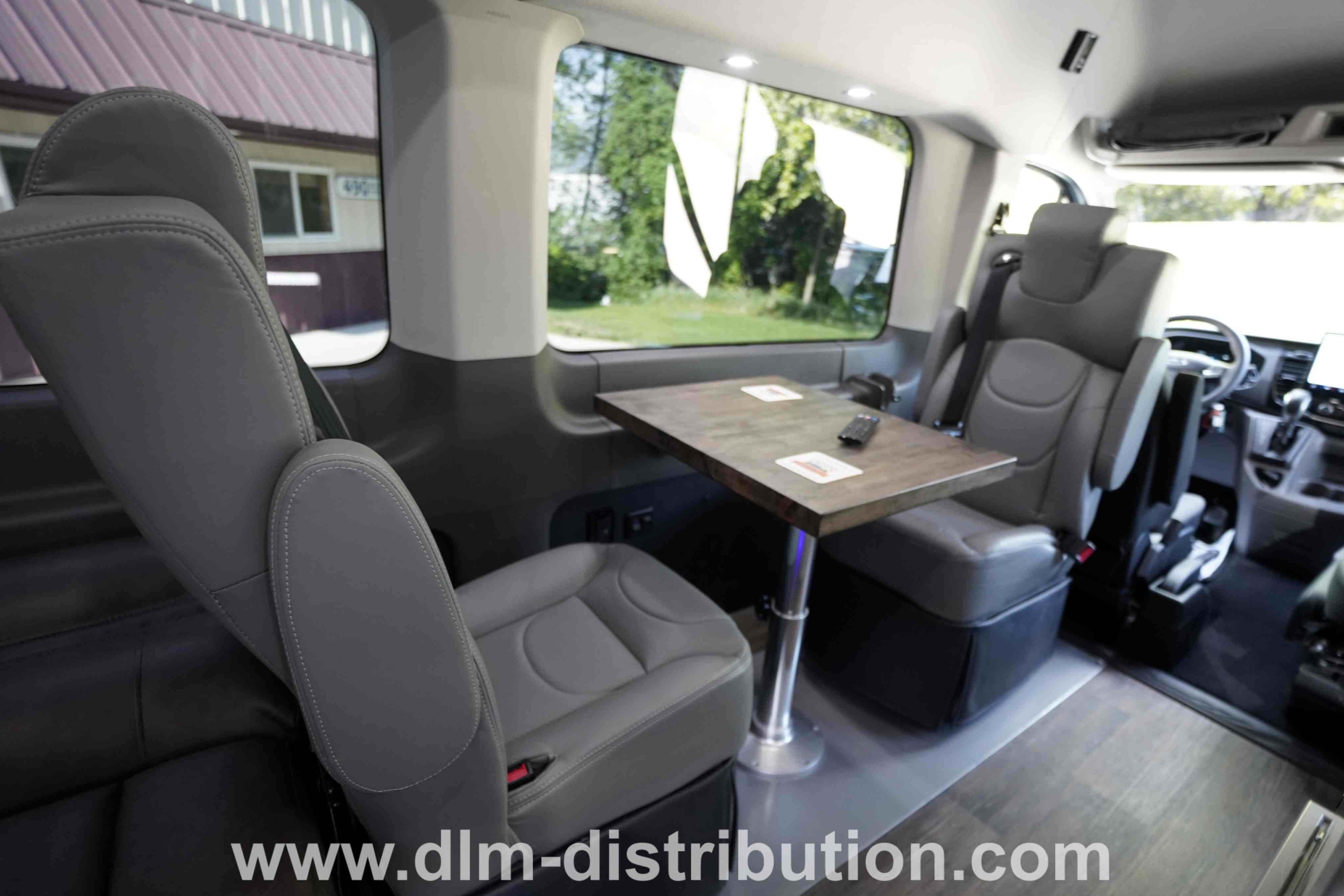
Every campervan carries more than passengers and luggage. The completed vehicle may include cabinetry, sleeping accommodations, batteries, an inverter, solar equipment, refrigeration, a microwave, water storage, plumbing, heating and cooling equipment, and the supplies people bring with them when they travel.
Those systems have weight, and their location within the vehicle matters. That is why payload capacity and gross vehicle weight rating are important considerations when evaluating a campervan platform.
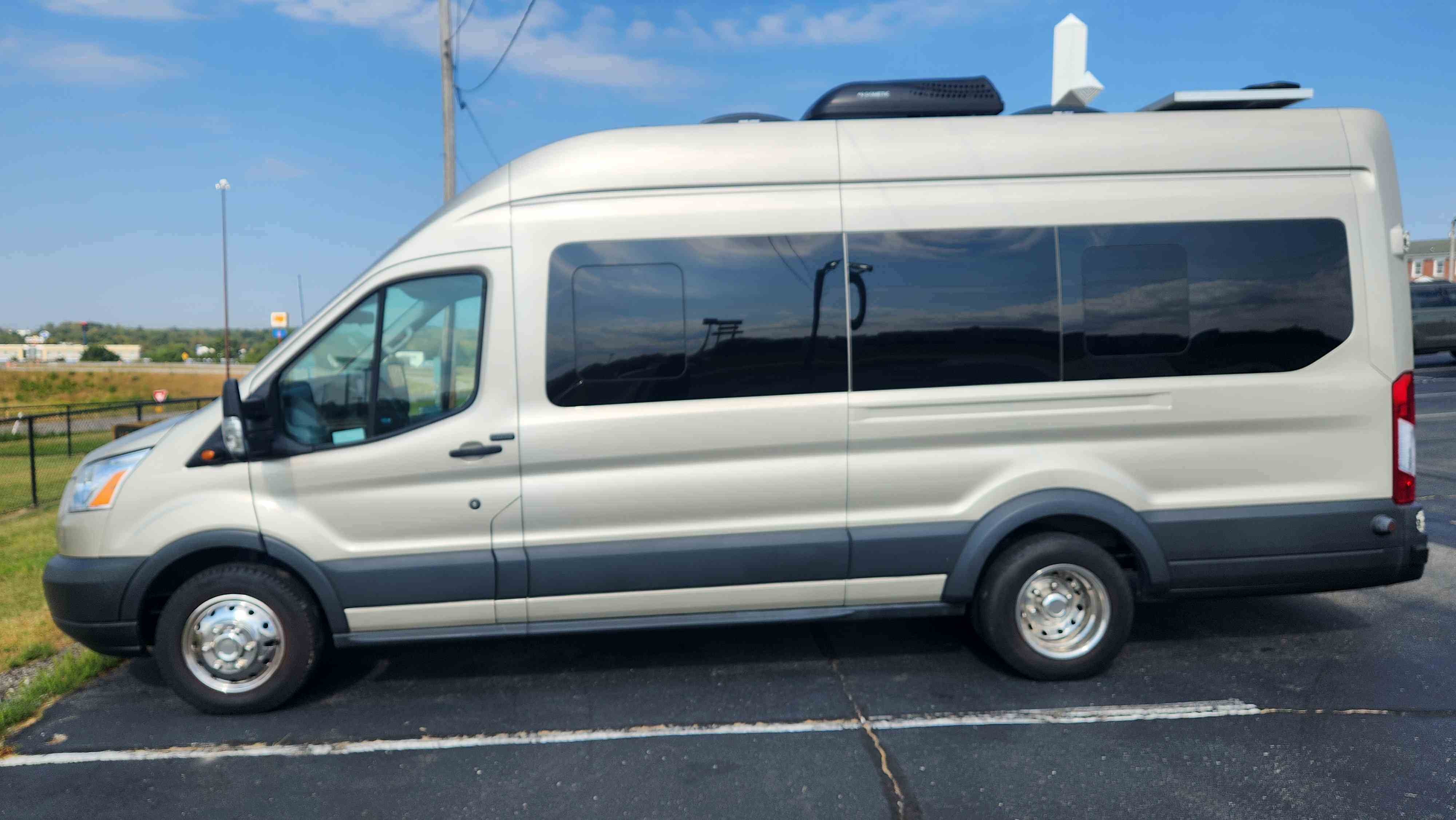
The Transit lineup is offered in a wide range of configurations, and the T-350HD occupies the heavy-duty end of that range. Depending on configuration and model year, Ford offers T-350HD models with higher gross vehicle weight ratings, single or dual rear wheels, different body lengths and roof heights, and rear-wheel drive or all-wheel drive.
For an RV manufacturer, those choices make it possible to match the chassis more closely to the size, equipment, and intended use of the completed campervan rather than treating every Transit as though it has the same capabilities.
Why Payload Matters After the Campervan Is Finished
A manufacturer's advertised payload figure describes the vehicle in a particular factory configuration. Once a campervan is manufactured, the finished vehicle has additional equipment and therefore additional weight. What matters to the traveler is not simply the chassis's original maximum payload specification, but the capacity that remains after the completed RV and its permanently installed equipment are accounted for.
That remaining capacity is what must accommodate occupants, personal belongings, food, water, recreational equipment, and other items carried during travel.
This is one reason a heavier-duty chassis can make sense beneath a more extensively equipped campervan. The objective is not to select the heaviest chassis simply because a larger number sounds impressive. It is to begin with a platform appropriate for the weight and intended use of the completed vehicle.
For travelers comparing campervans, the vehicle's actual weight ratings and carrying capacity are therefore worth understanding alongside the more visible features inside.
Why the Mini-T HR Uses a T-350HD
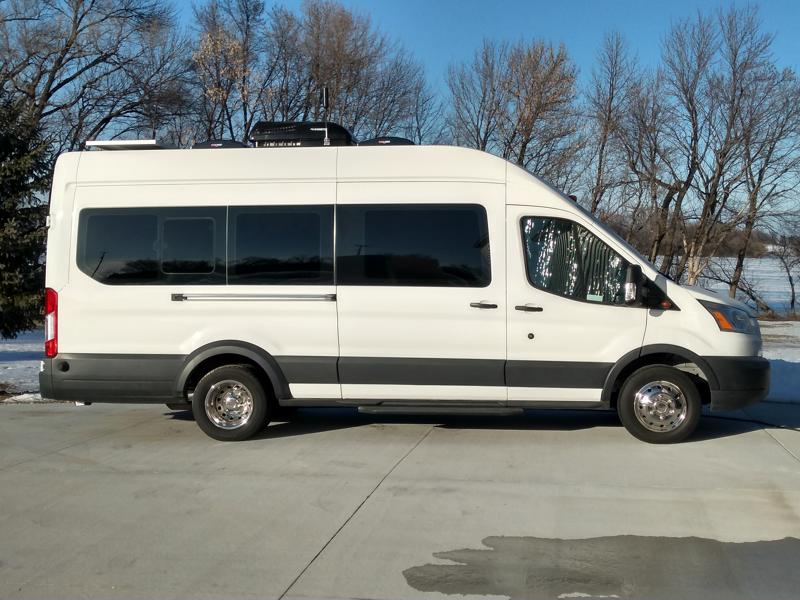
The Mini-T HR Campervan represents the larger end of the Mini-T lineup. Unlike the lower-profile Transit Connect, Pacifica, and Voyager Mini-T models, the HR provides a high-roof interior and the additional space associated with a full-size van.
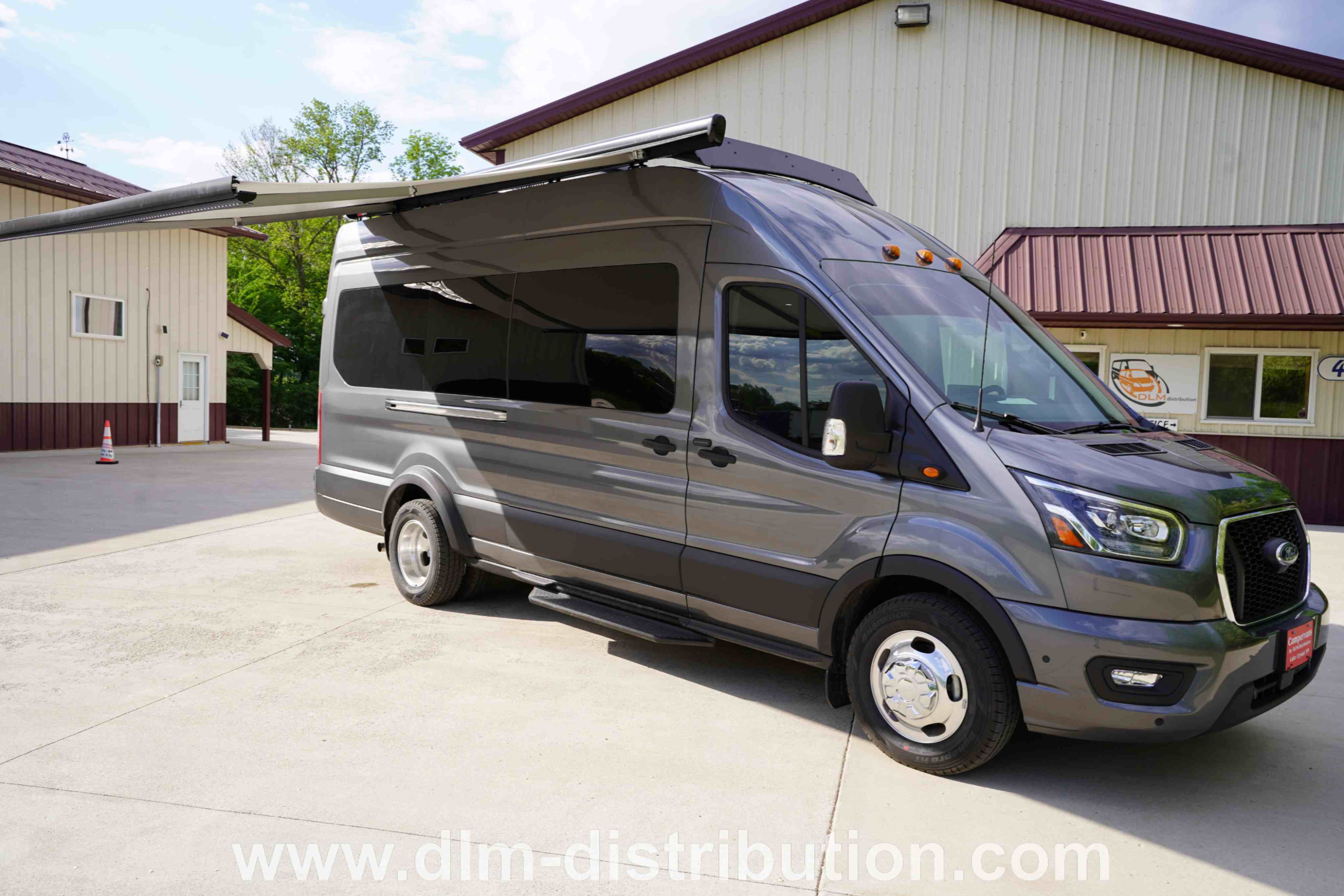
That larger format calls for a different foundation. The Mini-T HR uses a heavy-duty Ford Transit T-350HD configuration with all-wheel drive and dual rear wheels. Those characteristics are part of the complete chassis selection rather than isolated features added simply for specification-sheet appeal.
The heavy-duty chassis provides the load-carrying foundation for the completed campervan. Dual rear wheels distribute rear axle loads across four rear tires, while AWD can provide additional traction when road surfaces become slippery. The Transit platform also incorporates braking, suspension, and electronic stability systems engineered as part of the vehicle itself.
The result illustrates an important principle in RV design: as the camper becomes larger, the chassis beneath it should remain part of the engineering conversation.
Understanding Dual Rear Wheels
Dual rear wheels are easy to recognize, but their purpose is sometimes oversimplified. Instead of one tire on each side of the rear axle, a dual-rear-wheel configuration uses two. Rear axle loads are therefore distributed across four rear tires rather than two.
For a heavy-duty campervan, that configuration is one part of a larger vehicle system that includes axle ratings, suspension, tires, brakes, wheelbase, vehicle weight, and weight distribution.
Dual rear wheels should not be interpreted as making a vehicle immune to crosswinds or difficult road conditions. A high-roof van still presents considerable surface area to the wind. Likewise, AWD should be understood primarily as a traction feature rather than a substitute for appropriate tires, speed, and driving decisions.
Looking at these features as parts of a complete chassis provides a much more useful understanding than assuming any one of them determines how the vehicle will behave.
AWD Has a Specific Job
All-wheel drive is another feature that benefits from being understood in context. Its primary contribution is traction. When acceleration occurs on rain, snow, loose surfaces, or other low-traction conditions, an AWD system can distribute driving force through more than one axle.
That can be useful for a campervan because travel does not always take place on dry interstate pavement. A trip may include wet campground roads, gravel, changing elevations, winter conditions, or an unexpected weather system encountered hundreds of miles from home.
AWD does not increase tire grip beyond what the road and tires can provide, and it does not shorten stopping distances simply because all four wheels can be driven. For that reason, tire selection, condition, inflation, vehicle speed, and driver judgment remain fundamental.
The value of AWD is not that it makes a campervan an all-terrain vehicle. It is that it adds another layer of capability when ordinary travel encounters less-than-ideal traction.
Stability Is More Than the Number of Rear Tires
A full-size campervan's road behavior is the product of the entire vehicle. Wheelbase, overall height, weight distribution, suspension, steering, tires, brakes, and electronic vehicle controls all contribute.
The Transit platform incorporates systems designed to assist the driver in maintaining vehicle stability. Depending on model year and configuration, these can include AdvanceTrac with Roll Stability Control, anti-lock braking, and other driver-assistance technologies.
These systems do not remove the effects of vehicle weight, height, wind, road conditions, or speed. They work within the physical limits of the vehicle and available tire traction. Understanding that distinction is particularly important with a high-roof campervan, where the advantages of additional interior room naturally come with a taller exterior profile.
Good chassis selection is therefore not about claiming that a large campervan drives exactly like a small one. It is about matching the larger vehicle with a platform engineered for the job it is being asked to perform.
Long-Distance Travel Is About More Than Highway Miles
A campervan may spend hours on an interstate, but long-distance travel involves considerably more than highway cruising. The same trip can include mountain grades, construction zones, narrow park roads, city traffic, grocery-store parking lots, campground loops, and miles of secondary roads.
A vehicle that will be used this way benefits from predictable road manners and systems that work together as an integrated vehicle. Steering, braking, suspension, drivetrain, and chassis capacity matter during ordinary travel just as much as they do under demanding conditions.
This is also where the distinction between a commercial vehicle platform and the completed campervan becomes important. Ford engineers the Transit as a vehicle. The RV manufacturer then has the responsibility of designing the camper around the capabilities and limitations of that platform.
When those two parts of the equation are well matched, the chassis does not need to be the most noticeable part of the campervan. It simply does its job beneath everything else.
Serviceability Matters When Travel Takes You Far from Home
There is another practical reason established commercial vehicle platforms are commonly used for RVs: serviceability.
The Ford Transit is widely used in commercial and passenger applications across North America. Ford maintains a large dealer network, including locations equipped to service commercial vehicles. For travelers covering substantial distances, having a widely used underlying vehicle can make routine maintenance and vehicle-related service easier to locate than it might be with a more specialized platform.
That does not mean every Ford dealership performs every repair or can accommodate every RV configuration. Service capabilities, vehicle-size limitations, appointment availability, and commercial-vehicle expertise vary by location. Travelers should confirm that a facility can service their particular Transit before arriving.
Still, the availability of a broad service network is a meaningful consideration for a vehicle intended to travel far from where it was manufactured or purchased.
Heavy Duty Does Not Automatically Mean Better
It can be tempting to assume that if a heavy-duty chassis is appropriate for one campervan, it must be preferable for every campervan. That misses the larger point.
A smaller campervan has different requirements. Lower-profile Mini-T models benefit from smaller dimensions, easier parking, garageability in applicable models, and driving characteristics closer to the passenger or compact-van platforms beneath them. They do not need an 11,000-pound-class chassis to accomplish their intended purpose.
The Mini-T HR has a different mission. Greater interior height and a larger vehicle provide different travel possibilities, and the heavy-duty T-350HD platform is matched to those requirements.
Neither approach is inherently better. The useful question is whether the chassis, completed campervan, and intended style of travel make sense together.
What to Look at When Comparing Full-Size Campervans
For someone evaluating a full-size campervan, the chassis specification sheet can reveal information that a walk through the interior cannot. Gross vehicle weight rating, axle ratings, actual completed vehicle weight, remaining carrying capacity, tire ratings, drivetrain, wheelbase, and towing specifications all help describe what the vehicle is designed to handle.
It is also worth considering less obvious questions. How common is the underlying vehicle? Where can it be serviced? Does the drivetrain fit the conditions in which the vehicle will actually be used? How much capacity remains once the RV conversion, passengers, water, and travel equipment are aboard?
Those questions may not be as visually interesting as countertops or cabinetry, but they can become considerably more important after thousands of miles of travel.
The Chassis Should Fit the Campervan
The Ford Transit T-350HD is useful as a campervan platform not simply because it is heavy duty, but because its available configurations allow a manufacturer to start with substantial vehicle capability and design the RV around it.
In the Mini-T HR, the combination of a high-roof body, heavy-duty chassis, AWD, and dual rear wheels reflects the requirements of a larger member of the Mini-T family. Other Mini-T models use smaller platforms because their dimensions and intended use call for a different balance.
That may be the most useful lesson when comparing campervans. Bigger numbers on a specification sheet are not automatically better, and neither is making every RV as small as possible. Good vehicle design is about matching the platform to the job.
When that relationship is right, the chassis and camper are not competing ideas. They become one travel vehicle.
Happy Camping!

DLM-Distribution / Campervans is a licensed manufacturer and dealer located in Lake Crystal, Minnesota, serving clients around the country.
Contact Dave: 651-285-7089 or Candy: 507-382-9446 today!