
NEWS
An Iconic High Point in the Land of Enchantment
Perched at 10,678 feet, Sandia Crest is the highest point of the Sandia Mountains and a crown jewel of central New Mexico. Located just east of Albuquerque, this dramatic summit is part of the Cibola National Forest and offers panoramic views that stretch for hundreds of miles on a clear day. The name “Sandia,” meaning watermelon in Spanish, comes from the mountain’s signature pink glow at sunset—an iconic sight that never fails to impress.
From geology and history to hiking and scenic drives, Sandia Crest provides a high-altitude experience rich in natural beauty and cultural heritage.
Getting There: The Sandia Crest Scenic Byway
The Sandia Crest Scenic Byway (NM 536) is a winding 13.6-mile paved road that climbs from the village of Sandia Park up to the summit. This stretch of highway is as enjoyable as the destination itself, with well-maintained pavement, forested switchbacks, and frequent pullouts for photos or quiet reflection.
Along the way, interpretive signs and picnic areas make it easy to pause and appreciate the transition in terrain—from arid scrublands at the base to thick conifer forests at higher elevations. The drive is particularly beautiful in autumn, when aspens turn the hillsides gold.

The Sandia Peak Tramway
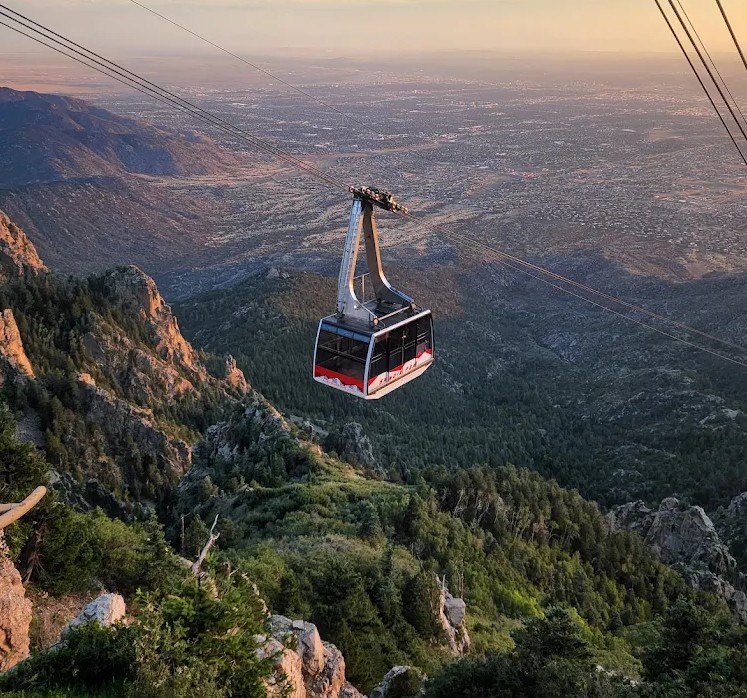
An alternate route to the top is the Sandia Peak Tramway, one of the longest aerial tramways in the Western Hemisphere. It departs from the northeast edge of Albuquerque and travels 2.7 miles up the mountain, gaining more than 3,800 feet in elevation. The ride takes about 15 minutes and offers a dramatic, bird’s-eye view of deep canyons, rugged cliffs, and distant horizons.
At the top station, visitors can step out onto a viewing deck just below the summit and enjoy access to several short trails and interpretive exhibits.
A Glimpse Into the Past
Sandia Crest has long held significance for the people of the region. The Southern Tiwa called it Posu gai hoo-oo, meaning “where water slides down arroyo.” Spanish explorers and settlers later gave it the name “Sandía,” inspired by the mountain’s pink hues and green treeline.
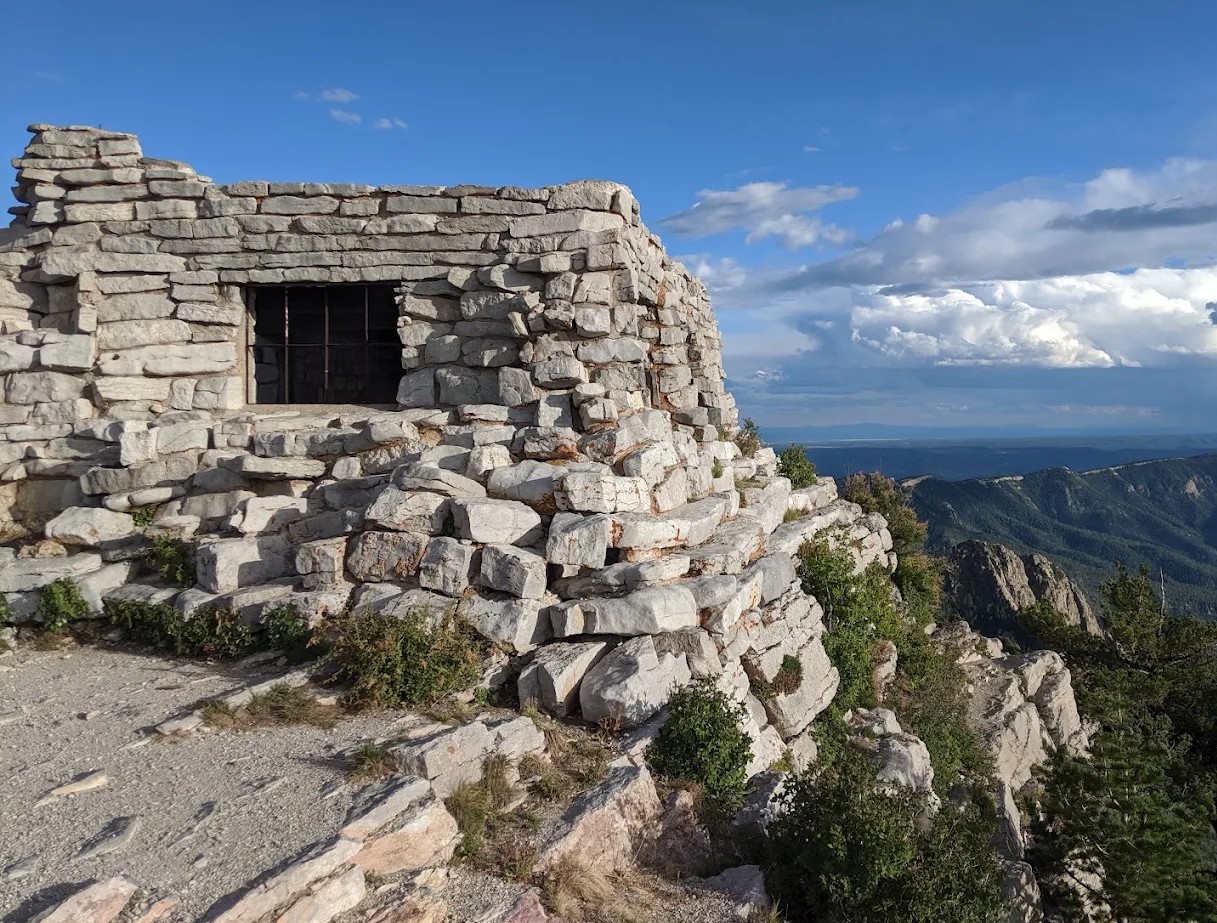
In the 1920s, the U.S. Forest Service built the first road to the summit. By 1960, it was fully paved, enabling wider public access. One of the most notable historical structures is the Kiwanis Cabin, a stone shelter constructed by the Civilian Conservation Corps (CCC) in the 1930s. It still stands today, perched dramatically on the cliffside, and can be reached by a short hike from the summit parking area.
In the 1960s, a proposed “Skyline Drive” along the ridgeline was ultimately canceled after public pushback, preserving the natural character of the mountaintop and its surrounding wilderness.
Hiking and Outdoor Recreation
Sandia Crest serves as the northern trailhead for several popular hiking routes. Among them, the La Luz Trail is perhaps the most famous—an 8-mile climb from the desert floor to the top, ascending through multiple ecological zones with stunning vistas along the way. For those starting at the top, various loop trails and overlooks are easily accessible, offering opportunities for birdwatching, photography, and quiet walks through alpine terrain.
The Crest Trail traverses much of the mountain ridge and connects with other trails for longer excursions. It’s part of the Grand Enchantment Trail, a long-distance route stretching from Arizona to New Mexico.
During the winter months, Sandia Peak is also home to a ski area located on the southern slopes. While it’s not visible from the crest itself, the area contributes to year-round visitation and recreation.
Geology, Ecology, and Wildlife
Sandia Crest is a classic example of a tilted fault-block mountain created by the tectonic activity of the Rio Grande Rift. The granite core of the mountain dates back over 1.4 billion years, with sedimentary layers of limestone and shale on top that are hundreds of millions of years old.
As visitors ascend, they pass through several distinct ecological zones:
- Piñon-juniper woodlands at lower elevations
- Ponderosa pine forests at mid-altitudes
- Spruce-fir forests at the summit
This ecological diversity supports a wide range of wildlife, including mule deer, black bears, bobcats, Abert’s squirrels, golden eagles, and a variety of songbirds. The temperature difference between base and summit can be dramatic—up to 30 degrees cooler at the top—so dressing in layers is recommended.
A View you will want to go back to
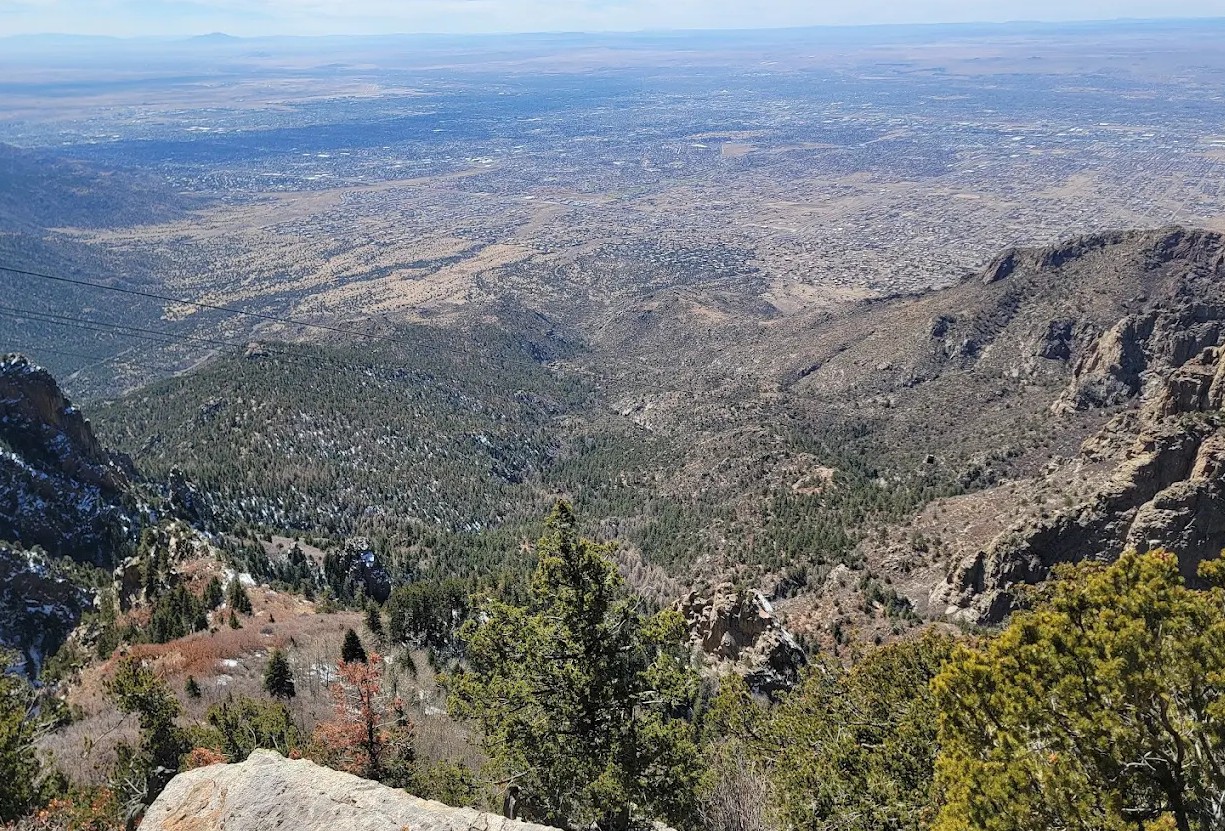
On a clear day, the view from Sandia Crest stretches for more than 100 miles. The city of Albuquerque lies far below to the west, while the Sangre de Cristo, Jemez, and Manzano Mountains dot the horizon in other directions. Sunsets from the crest are particularly memorable, as the cliffs glow with that signature watermelon hue that inspired the mountain’s name.
Make the trip you will remember
Sandia Crest is one of New Mexico’s most accessible high-altitude experiences. Whether you drive, hike, or take the tram, the summit rewards visitors with sweeping views, rich natural history, and a peaceful atmosphere above the hustle of city life.
From the pink glow of the rocks at sunset to the whisper of wind through spruce trees, Sandia Crest invites visitors to slow down and enjoy the beauty of the Southwest from one of its most remarkable vantage points.
Happy Travels!
DLM-Distribution / Campervans is a licensed manufacturer and dealer located in Lake Crystal, Minnesota, serving clients around the country.
Contact Dave: 651-285-7089 or Candy: 507-382-9446 today!