Published December 17, 2021  •  Updated July 28, 2026
Category: Camping & Outdoor Living

Wisconsin: A State That Rewards Taking the Scenic Route

The exit rarely looks important. It may point toward a town you have never visited, a county highway following the river, or a state park still thirty miles away. The interstate continues straight ahead, carrying travelers efficiently toward wherever they planned to be before breakfast. Wisconsin quietly offers another possibility.

Take the exit, and almost immediately the pace begins to change. The road narrows, farm fields rise and fall beyond weathered barns, a tavern sign announces Friday fish, and a small downtown appears around a bend, followed by a bridge, a river, or a glimpse of water through the trees. Nothing demanded that you stop, yet suddenly there is no reason not to. Getting off the highway rarely feels like a delay in Wisconsin. It feels like the trip has finally begun.

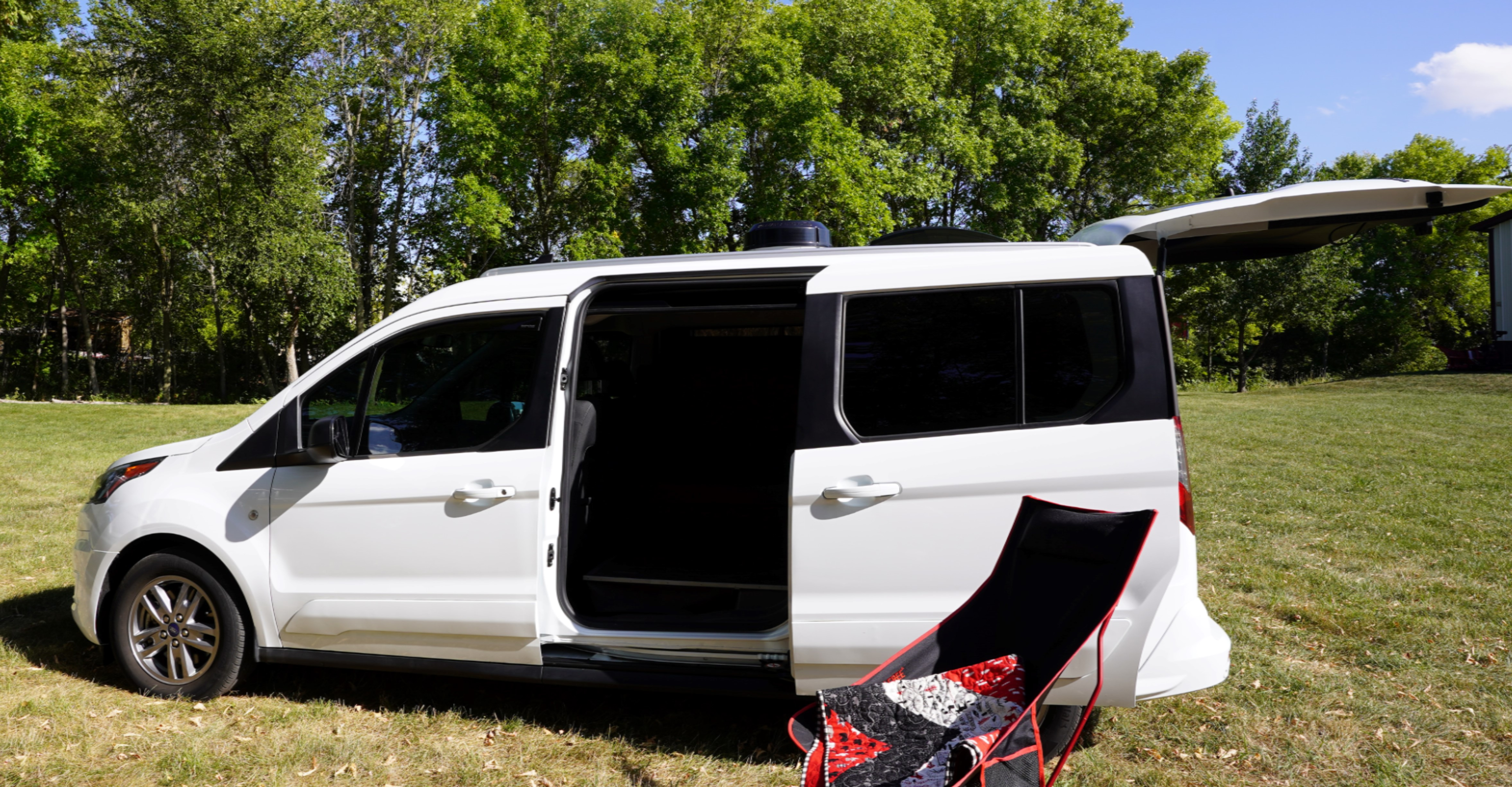
Mini-T Campervan traveling through a quiet Wisconsin landscape


Leave the Highway

Wisconsin is filled with roads that do not appear remarkable on a map. They carry local names and county letters, following rivers, crossing farmland, entering pine forest, and passing through communities built around mills, harbors, railroads, dairy farms, and old commercial streets. Some are scenic by designation. Many are scenic simply because they stayed close to the land.

The best moments often arrive without warning. A hillside opens toward the Mississippi. A church steeple rises above a small town. A handwritten sign leads to a cheese shop, or a roadside market is busy enough to suggest that stopping would be wise. A lake appears between trees, and the road offers a place to pull over before anyone has decided whether the view is important. This is not travel that depends on arriving at one major attraction. It depends on remaining curious long enough to notice what the interstate was designed to pass.


Follow the Mississippi

Western Wisconsin feels different almost immediately. The terrain begins folding into steep ridges, narrow valleys, wooded slopes, and farm fields tucked into places where the land allows them. The Mississippi is often nearby, though not always visible. Roads rise away from it, disappear behind bluffs, and return with a new view.

The Driftless Area escaped the flattening effects of the most recent continental glaciers. That absence left behind a landscape of ridges, coulees, limestone and sandstone bluffs, spring-fed streams, and roads that rarely travel in straight lines for long. Near Trempealeau, Perrot State Park gives the river country a natural center.

Trails climb above Trempealeau Bay toward views of the Mississippi, wetlands, islands, and the Minnesota shore. From the bluffs, the river spreads outward in channels and backwaters rather than appearing as one simple line. Boats move slowly below, trains follow the valley, and birds cross a landscape that has guided movement for centuries.

Mississippi River bluffs near Perrot State Park in Wisconsin

Back on the road, the park does not feel isolated from the surrounding region. The same bluffs continue beyond its boundaries, river towns appear below wooded slopes, farms occupy the flatter ground, and small roads disappear into coulees before returning somewhere unexpected. Western Wisconsin remains with travelers as much for the roads between places as for the places themselves.


Let the Land Change

Travel east from the Driftless Area and Wisconsin begins changing under the wheels. The ridges soften, fields widen, and lakes and wetlands become more frequent. In many regions, the shape of the land was left by ice.

Massive glaciers once moved across much of Wisconsin, carrying rock and soil, altering drainage, creating depressions, and leaving behind moraines, kettles, eskers, drumlins, and thousands of places where water later collected. The Ice Age National Scenic Trail follows that history for roughly 1,200 miles across the state. Most travelers will never hike its full length, nor do they need to. A short section can change the way an entire road trip is seen.

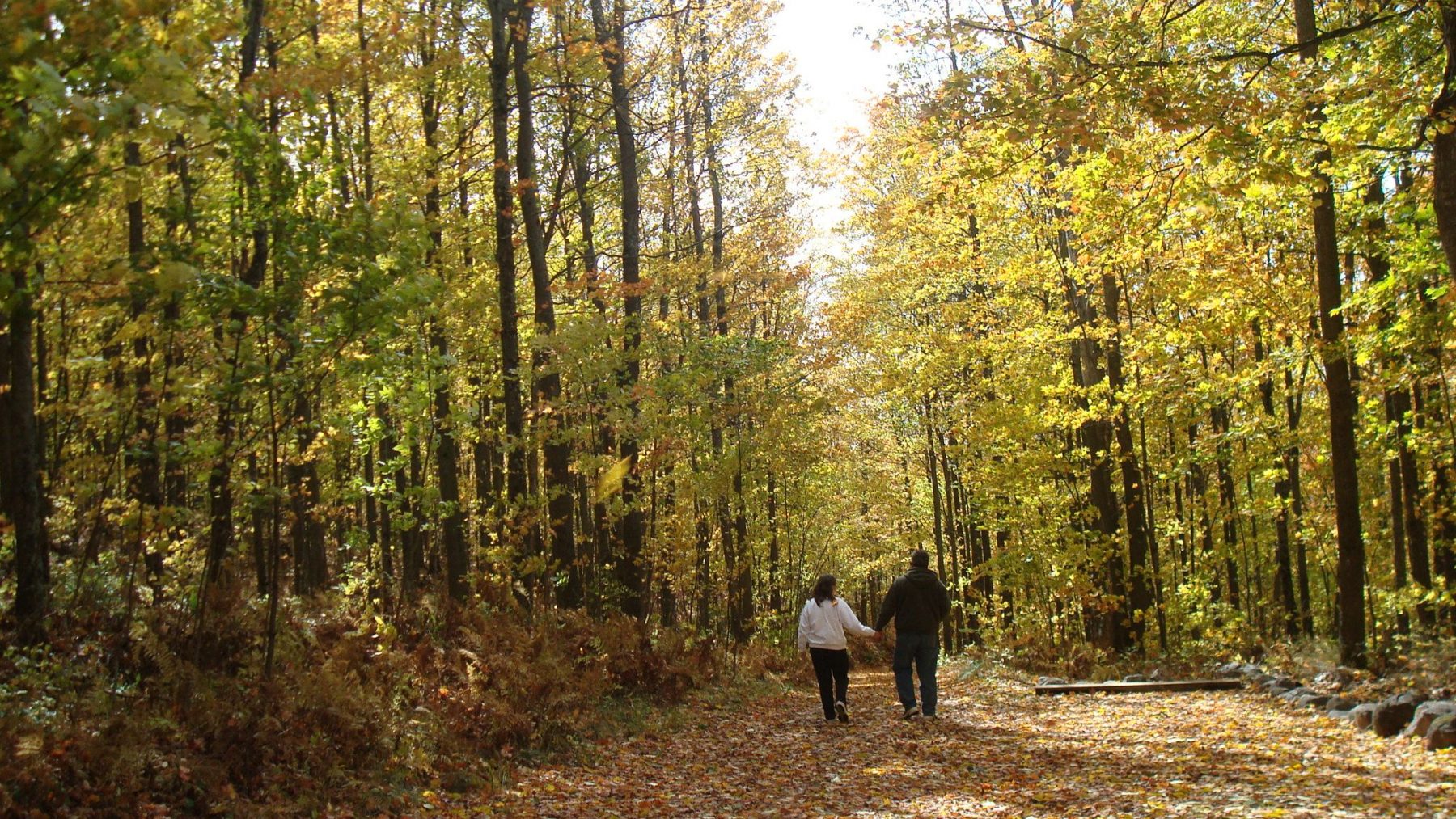
Glacial landscape along Wisconsin's Ice Age National Scenic Trail

A round lake becomes more than a pleasant place to stop. A ridge becomes evidence of ice that once stood hundreds of feet thick. A rolling road begins following landforms created thousands of years before the first vehicle crossed them. Wisconsin's geology rarely announces itself from a single overlook; it appears gradually, one hill, one lake, and one bend at a time.


Devil's Lake Before the Day Gets Busy

At Devil's Lake State Park, the scale changes again. Quartzite bluffs rise hundreds of feet above the water, and trails climb through forest and over rock toward viewpoints where the lake rests below like a quiet opening in the land.

Devil's Lake State Park and quartzite bluffs in Wisconsin

The park is popular, and summer afternoons can feel very different from early mornings. Before the beaches fill and parking areas become busy, the lake can still feel reflective and still. Hikers move quietly along the first sections of trail, the air remains cooler beneath the trees, and the bluffs catch the light before much of the shoreline does. Staying nearby turns the trail into tomorrow morning's first decision rather than something squeezed between driving and dinner, allowing the park to become part of the rhythm of the trip instead of another stop completed before moving on.


Through Kettle Moraine

Kettle Moraine does not reveal itself from one viewpoint. It is understood from within, as the road rises and falls through wooded ridges, lakes occupy deep depressions, trails disappear into forest, and open areas interrupt the trees before the landscape closes again.

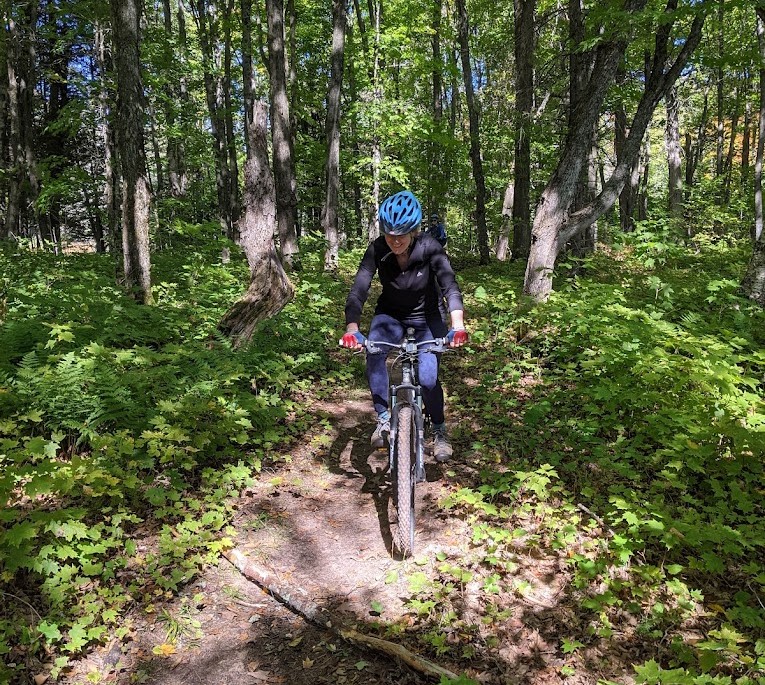
Hiking through Kettle Moraine State Forest in Wisconsin

The Northern and Southern Units of Kettle Moraine State Forest protect a long band of glacial terrain in southeastern Wisconsin. Campgrounds, hiking routes, lakes, prairies, forests, and scenic roads make it possible to experience the area at several speeds. A trail reveals details the road cannot, while the road reveals distances the trail cannot. Together, they create a place that rewards travelers who arrive without trying to reduce it to one photograph.


Stay for Dinner

Wisconsin road trips are remembered through meals as often as landscapes. A supper club begins filling before sunset, cars gather outside a tavern on Friday evening, and a cheese shop offers samples at a counter near the road. A bakery, brewery, roadside stand, fish boil, or small-town café becomes the stop that changes the day's schedule.

Those traditions grew from agriculture, immigration, local industries, community routines, and the practical need for places where people could gather. The farm fields passed during the afternoon become part of dinner: milk becomes cheese, orchards become pies and cider, lakes and rivers become fish traditions, and old commercial buildings become restaurants where the walls carry as much history as the menu. Slowing down for a meal is another way of staying close to the place.


Small Towns That Give the Road a Reason to Pause

Wisconsin's small towns rarely ask for much attention, which may be why they reward it. A main street may contain only a few blocks of storefronts, a courthouse, a park, a tavern, a bakery, and buildings whose original purposes remain visible in the brickwork. Some towns grew along rivers. Others served farms, railroads, forests, mines, mills, or harbors.

Each carries the shape of the landscape around it. River towns often turn toward the water. Northwoods communities feel tied to forest, lakes, and seasonal travel. Door County villages gather around harbors, while agricultural towns open toward wide fields and county roads. A traveler may stop for coffee and leave with a local history, a trail suggestion, or a road someone insists is worth taking. That is how an ordinary stop becomes part of the trip's memory.


The Road North

Northern Wisconsin arrives gradually. Fields become less frequent, forest takes over more of the view, and towns spread farther apart. Lakes begin appearing so often that the first few cause excitement and the next several simply become part of the landscape.

The Chequamegon-Nicolet National Forest covers more than 1.5 million acres across northern Wisconsin. Its forests, rivers, wetlands, trails, campgrounds, and lakes create countless reasons to leave the main route.

Camping in Chequamegon-Nicolet National Forest in northern Wisconsin

A day in the Northwoods may contain very little that looks dramatic on paper: a walk beside a lake, a forest road, a stop for supplies in a small town, or an evening at camp with no attraction scheduled and nowhere else that needs to be reached. The farther north the road goes, the less necessary it seems to account for every hour.


Lake Superior Changes the Scale

Then the forest opens, and Lake Superior appears. The water is too large to feel like an ordinary lake. It changes color with the sky, disappears into weather, and can move from calm to dangerous with little concern for anyone's itinerary. Near Bayfield, the Apostle Islands spread across the lake in a landscape of sandstone shoreline, forests, beaches, historic light stations, and open water.

Sandstone shoreline at Apostle Islands National Lakeshore in Wisconsin

Boat tours, ferries, paddling, hiking, sailing, and island camping offer different ways to experience the area. The lake deserves respect. Water temperatures remain cold, conditions change quickly, and some experiences require equipment, planning, or professional guidance.

Bayfield makes a natural place to begin. Its harbor, streets, orchards, ferry traffic, shops, and views toward the islands create a town that feels inseparable from the water beyond it. By the time Lake Superior fills the horizon, Wisconsin no longer feels like one state crossed from south to north. It feels like several journeys connected by the same road.


Two Shores in Door County

Door County offers two versions of the Great Lakes within the same peninsula. On the Green Bay side, harbors and villages often feel sheltered. Sunsets settle across the water, boats gather near marinas, and roads pass orchards, galleries, restaurants, parks, and small communities shaped by generations of seasonal travel. On the Lake Michigan side, the shoreline can feel cooler and more exposed, with forest, dunes, rock, and open water creating a different mood.

Door County shoreline and outdoor recreation in Wisconsin

Peninsula State Park, Newport State Park, Whitefish Dunes, Potawatomi State Park, and other protected areas give travelers places to hike, bike, paddle, camp, and spend time along the shore. Yet Door County is not only a collection of parks. It is also Fish Creek before the shops become busy, Ephraim beside the bay, Sister Bay in the evening, and Bailey's Harbor when the wind comes off Lake Michigan. It is a roadside stand, a lighthouse road, or a harbor bench that becomes more important than the next planned stop. The peninsula works best when it is allowed to unfold slowly.


Green Bay Before Door County

Many travelers pass through Green Bay thinking first about football and then about the peninsula farther north. The city deserves more attention than that. It sits where the Fox River enters the bay, a location that shaped Indigenous travel, European exploration, fur trading, industry, transportation, and settlement long before the modern stadium became its most familiar landmark.

The riverfront, museums, historic sites, neighborhoods, restaurants, and Lambeau Field reveal different parts of the city while helping explain why Green Bay became important where it did. North of the city, the trip changes again. Traffic thins, water draws closer, and the road begins dividing between inland routes and shoreline towns. Green Bay is not merely the last large city before Door County; it is where the history of the Great Lakes begins turning into the geography of the peninsula.


Roads That Do Not Need a Famous Name

Wisconsin has designated scenic byways, but many of its best roads carry no title travelers are expected to recognize. They are county highways beside the Mississippi, roads crossing Kettle Moraine, forest routes in the north, peninsula roads moving between harbors and Lake Michigan, and farm roads connecting towns that would be easy to miss from the interstate.

Travelers who enjoy America's great scenic roads may find Wisconsin memorable for a quieter reason. The state rarely announces the exact moment when the drive becomes special. The road simply begins following the land, the view opens, a lake appears, and the next town looks worth exploring. The day becomes less concerned with arrival, and by then the highway may be miles behind.


Camping Keeps the Evening in the Story

Wisconsin offers state park campgrounds, state forest sites, national forest campgrounds, county parks, municipal campgrounds, private resorts, and places near the Great Lakes, rivers, and inland lakes. What matters most is not simply the number of places to stay, but how camping changes what the trip can become.

A campground allows Devil's Lake to be seen before the crowds arrive. It makes an evening beside the Mississippi possible after day visitors have left, keeps the Northwoods quiet close at hand, and gives Lake Superior time to change through several kinds of weather rather than being reduced to one afternoon view. A campsite near the next day's trail, harbor, or scenic road does more than provide a place to sleep. It preserves the hours that are easiest to lose when every day begins and ends with a long drive.

Mini-T Campervan at a Wisconsin state park campground


Wisconsin in Different Seasons

Spring begins with cold water, moving rivers, migrating birds, wet trails, and roads emerging from winter. Summer brings campgrounds, beaches, paddling, festivals, markets, long evenings, and busy weekends in the most popular parks and lake communities.

Autumn moves across the state from north to south, changing forests, river bluffs, orchards, and county roads. The color is beautiful, but so is the cooler air, the quieter campgrounds, and the feeling that every good day outdoors has become more valuable. Winter belongs to another Wisconsin entirely. Snow changes the Northwoods, frozen lakes reshape recreation, and Lake Superior may create ice formations when conditions allow, though safety and access must always be confirmed. Small towns, supper clubs, and indoor traditions become more important as daylight shortens. The same road can feel like four different journeys depending on when it is followed.

Mini-T Campervan traveling through Wisconsin in winter


The Exit You Almost Passed

Wisconsin is filled with famous places worth planning around. Devil's Lake deserves its reputation. Door County can fill a weekend or an entire week. The Apostle Islands belong on any serious list of Great Lakes destinations, and Perrot State Park reveals a side of the Mississippi many travelers never see from the main highway.

Yet the state is often remembered through smaller moments: a road chosen because it looked interesting, a town entered without expectations, a supper club found before dark, a lake seen through the trees, or a campground that made it possible to wake up close to the next trail. Wisconsin does not require travelers to abandon a plan. It simply keeps offering reasons to loosen it.


Where Tomorrow Might Begin

By evening, the interstate may be far behind. The Mini-T is parked near a lake, beside the river, or beneath trees in a quiet campground. The day's purchases are tucked away, a trail map sits on the table, and tomorrow's road has not been chosen yet. Perhaps it will continue north, follow the Mississippi, or change again because of a roadside sign noticed at the right moment.

That possibility is one of the reasons Wisconsin travel feels so natural in a small campervan. There is room to continue, room to stop, and very little need to decide too far ahead.


View current Mini-T Campervan inventory from DLM-Distribution


DLM-Distribution / Campervans is a licensed manufacturer and dealer located in Lake Crystal, Minnesota, serving clients around the country.

Contact Dave: 651-285-7089 or Candy: 507-382-9446 today!

```