
Can you live full-time in a Mini-T Campervan? For the right traveler, the answer can be yes. But a more useful question is whether you would actually enjoy living and traveling that way.
Full-time campervan living is not simply an extended camping trip. The vehicle becomes your transportation, bedroom, kitchen, storage space, shelter from bad weather, and home base all at once. That can create an extraordinary amount of freedom, but it also means accepting limitations that are easy to overlook when imagining life on the road from home.
The Mini-T Campervan lineup offers several approaches to smaller RV travel, from garageable models designed to retain much of the practicality of an everyday vehicle to the Mini-T HR, which provides a taller campervan experience for travelers who place greater importance on standing height and interior living space. Which approach makes sense depends on how much time you expect to spend inside, how frequently you plan to move, what equipment you need to carry, and what you want daily life on the road to feel like.

For some people, the smaller dimensions and simpler routine are exactly the appeal. For others, a Mini-T may be an outstanding travel vehicle while a larger RV remains the better choice for full-time living.
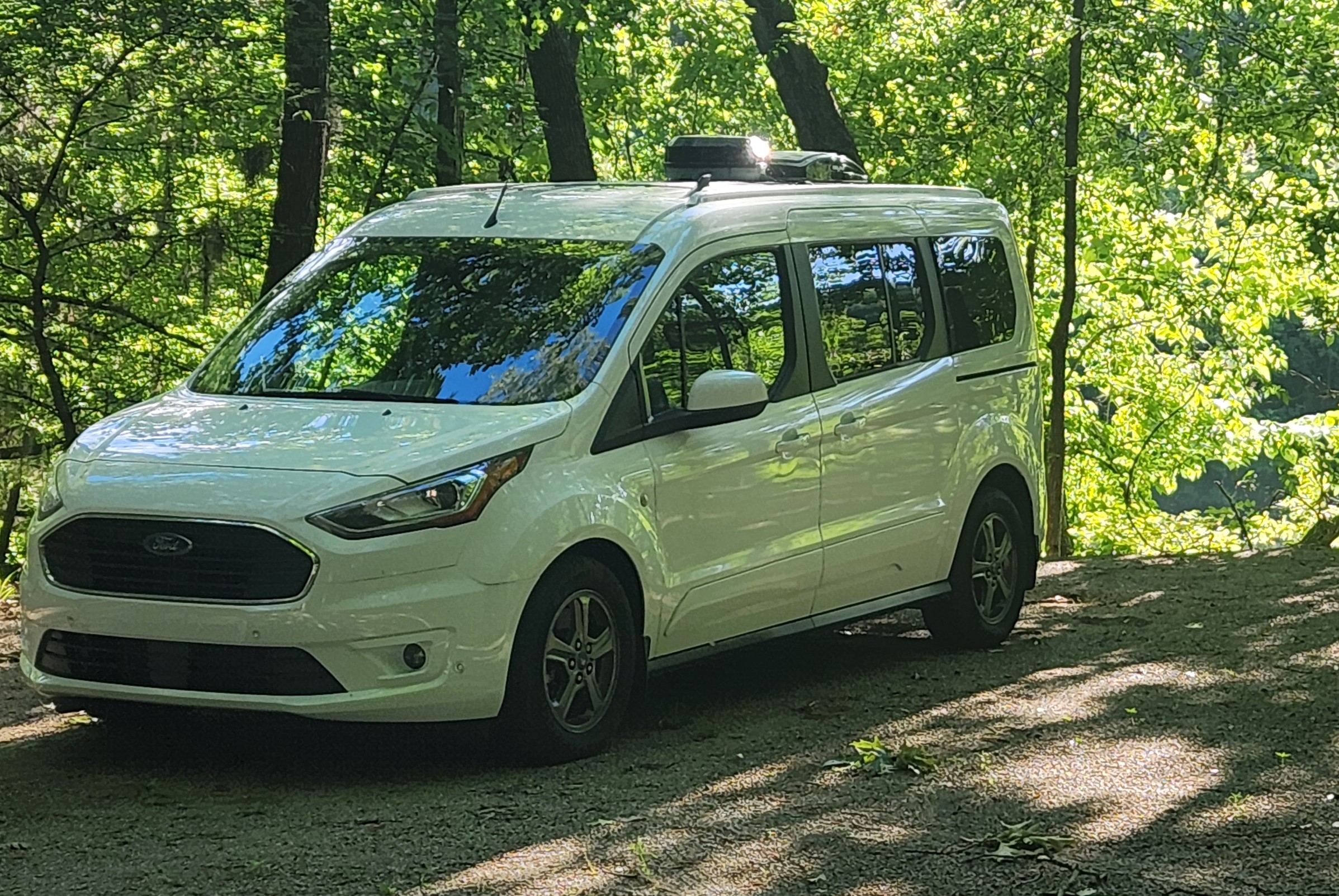
Full-Time Travel Is Different from Full-Time Stationary Living
One of the first things to consider is what you mean by “living full-time in a campervan.” There is an important difference between traveling continuously in a campervan and parking one somewhere for months at a time and trying to use it as a small stationary apartment.
The Mini-T concept is particularly well suited to movement. The same vehicle can carry you from one campground to another, explore towns after you arrive, handle grocery stops and ordinary parking, travel scenic roads, visit family, and continue toward the next destination without requiring a separate tow vehicle or daily driver.
For someone who wants to move frequently, that mobility can be one of the greatest advantages. Your home base travels with you, but it does not have to dominate every part of the trip.
If the plan is primarily to remain in one location for long periods, priorities may change. A larger RV can provide more interior living room, larger water capacity, a bathroom, additional storage, and greater separation between sleeping, cooking, and relaxing. Those features can become increasingly important when the outdoors and the road are no longer providing much of the living space.
Neither approach is wrong. They simply support different ways of living.
How Much Space Do You Really Want to Live In?
Space is probably the most important consideration. Smaller Mini-T models intentionally preserve a vehicle footprint that remains practical for driving, parking, and, in appropriate configurations, residential garage storage. That advantage comes with a corresponding reality: interior space is limited.
Traveling for a weekend makes that easy to accept. Living that way for several months requires a different mindset.
You need to think about clothing, bedding, food, cooking equipment, outdoor gear, electronics, medications and personal items, hobby equipment, seasonal clothing, and everything else that normally occupies drawers, closets, cabinets, garages, and spare rooms at home. In a campervan, every item competes for a finite amount of space.
This does not necessarily require an extreme minimalist philosophy. It does require deciding what you actually use and being willing to leave many other things behind. Some travelers find that remarkably freeing. Others discover that constantly managing belongings makes a small space feel smaller over time.
The number of people matters too. A solo traveler has considerably more flexibility in a small campervan because the entire interior and storage capacity serves one person. Two people can certainly travel comfortably together, but full-time living means sharing not only the sleeping area but also storage, bad-weather space, morning routines, meals, and quiet time.
A pet introduces another consideration. Food, water, bedding, temperature management, exercise, and the animal’s comfort all become part of the space-planning equation.
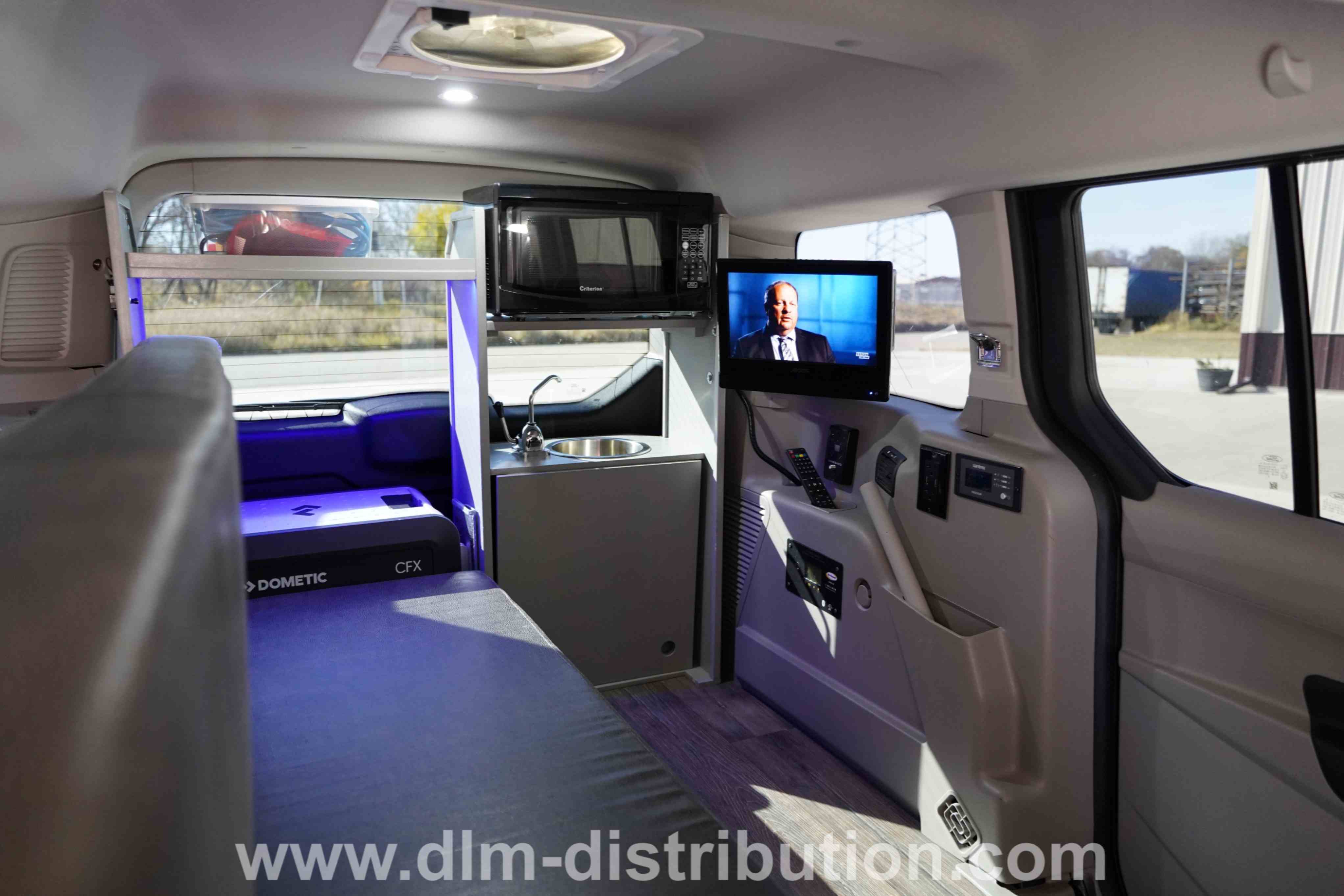
Garageable Mini-T or Mini-T HR: The Tradeoff Matters More Full-Time
The Mini-T lineup allows travelers to approach this question from different directions.
Garageable Mini-T models emphasize a smaller exterior footprint, everyday drivability, fuel efficiency, parking flexibility, and the ability to fit into an appropriate residential garage. For someone who spends much of the day outdoors, moves frequently, explores cities and parks, and values having one vehicle serve both camping and transportation roles, those characteristics can be extremely important.

The Mini-T HR takes a different approach. Its taller configuration gives travelers who value increased interior height another Mini-T option while maintaining the basic philosophy of a manageable campervan designed for travel.
For an occasional camping trip, standing height may be only one item on a feature list. When considering months of continuous use, it deserves considerably more thought. Ask yourself how often you expect to cook inside, change clothes inside, spend rainy days in the campervan, work on a laptop, or simply remain indoors for several hours at a time.
Some travelers will gladly exchange standing room for garageability and a lower exterior profile. Others will decide that standing upright inside is something they would appreciate every single day.
There is no reason to force the same answer on everyone. The better Mini-T is the one whose compromises match the way you intend to live and travel.
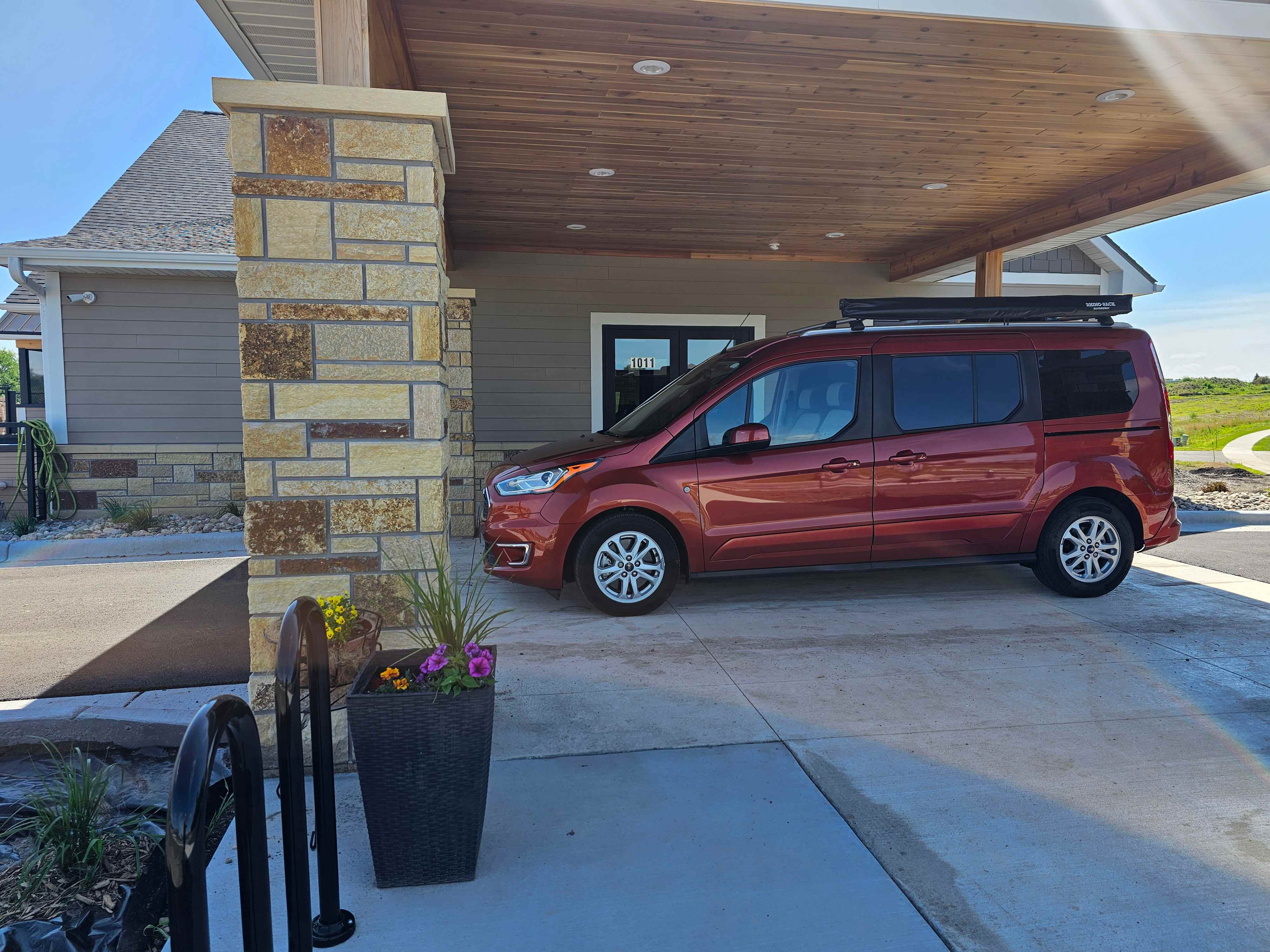
Think Carefully About Bathrooms, Water, and Daily Routines
One of the largest differences between campervan travel and living in a traditional home or larger motorhome is how everyday routines are handled.
Depending on Mini-T model and configuration, travelers have sleeping accommodations, refrigeration, microwave capability, water and sink facilities, ventilation, storage, solar-supported electrical capability, 120V off-grid power, and shore-power capability. Those systems make road-trip camping comfortable without requiring the vehicle to become a large motorhome.
But anyone considering full-time living should think beyond the feature list.
Where will you shower? Where will you use restroom facilities? How often will you need to refill water? Where will laundry be done? How will you handle cooking during several days of bad weather? What will your morning routine look like if two people are traveling together?
Campgrounds, recreation centers, gyms, truck stops, public facilities, friends and family, and other travel resources can become part of that routine depending on where and how someone travels. The important point is to develop a realistic plan rather than assuming these needs disappear simply because life has moved into a campervan.
Off-Grid Capability Helps, but It Does Not Mean Unlimited Resources
Mini-T Campervans are designed to provide useful electrical capability while traveling. Depending on the model, the house electrical system can be supported through solar charging, charging while driving, and shore power when an appropriate connection is available. The system can provide 120V off-grid power, including microwave capability, without requiring a generator.
That creates substantial travel flexibility, but full-time users should still understand energy management. Solar production varies with weather, season, location, shading, and available sunlight. Batteries have finite capacity. Refrigeration, ventilation, electronics, cooking, and other electrical use all draw from the available system.
The same is true of water, food, fuel, and storage. A campervan can support travel away from hookups, but “off-grid” does not mean permanently independent of resupply.
For many travelers, resupply simply becomes part of the rhythm of the trip. Drive for a few days, camp without hookups, replenish supplies, use shore power when convenient, explore another region, and continue. Long-term campervan travel can work particularly well when those routines become a normal part of the journey rather than unexpected complications.
Climate May Matter More Than Almost Anything Else
It is easy to picture full-time campervan living on a mild spring afternoon. The harder questions involve January nights, July heat, several days of rain, high humidity, snow, wind, or extended periods of extreme temperatures.
A mobile lifestyle provides one powerful option: you can often move with the seasons.
Some long-term travelers choose northern destinations during warmer months and move south as winter approaches. Others use elevation, coastal climates, or seasonal travel patterns to remain in more comfortable conditions. That mobility can be much more practical than expecting a relatively small campervan to function like a permanent house in every climate.
This is another reason to distinguish traveling full-time from simply living stationary in a vehicle. Mobility allows the traveler to use geography as part of the comfort strategy.
Weather still requires planning. Ventilation, shade, appropriate bedding, clothing, campground electrical access when needed, and careful awareness of temperature become much more important when the campervan is home rather than simply a weekend shelter.
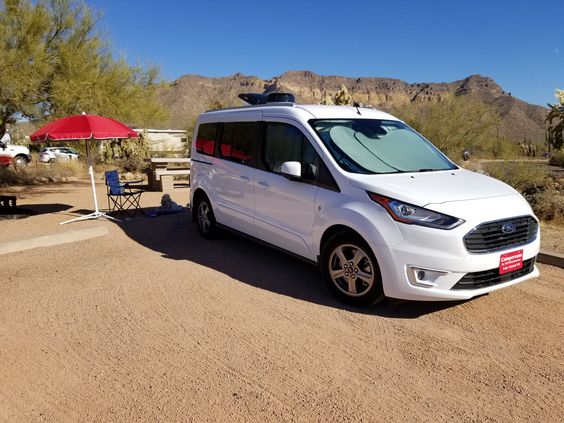
Where Will You Actually Sleep Each Night?
Full-time campervan living also requires understanding where overnight stays are permitted.
A vehicle fitting into an ordinary parking space does not automatically mean overnight camping is allowed there. Rest areas, businesses, public lands, city streets, trailheads, parking lots, and other locations all have their own rules, and those rules can vary considerably by state, municipality, land manager, or property owner.
Campgrounds remain one of the simplest options because overnight use is specifically intended. Public campgrounds, private RV parks, national and state forest campgrounds, state parks, county parks, and other appropriate camping locations can all become part of a longer route.
A smaller campervan can make many campsites physically easier to use because it does not require a long RV pad or large maneuvering area, but travelers still need to verify availability, reservations, length limits, seasonal closures, and local regulations.
A successful full-time travel plan is therefore not based on the assumption that you can simply sleep anywhere the campervan fits. It is based on having enough flexibility and knowledge to find appropriate places to stay as the journey unfolds.
Working From the Road Adds Another Layer
Remote work has made long-term travel possible for many people, but living and working inside the same small campervan changes the space calculation considerably.
A traveler who works several hours each day needs to think about cellular coverage, internet access, charging, lighting, seating position, screen visibility, temperature, background noise, and where work equipment will be stored when the workday ends.
Someone who works outside the campervan may have very different needs. Traveling nurses, airline employees, seasonal workers, contract employees, and other mobile professionals may use the vehicle primarily for transportation, sleeping, and personal space between work periods. In those situations, the workplace itself may provide much of the structure missing from campervan life.
The profession does not determine whether a Mini-T is appropriate. The daily routine does.
Full-Time Does Not Have to Mean Forever
Another useful way to approach the question is to stop treating full-time campervan living as an all-or-nothing lifestyle decision.
Someone might travel for three months through the Southwest during winter. Another owner might spend an entire summer exploring national parks. A traveler might alternate between a home base and several months on the road. Someone between homes or work assignments might use a campervan extensively for one season and then return to more conventional living.
That type of extended travel can provide many of the experiences people associate with “van life” without requiring someone to sell everything they own and commit indefinitely.
It also allows travelers to discover their preferences gradually. After several weeks on the road, you will know much more about whether you need more interior space, whether you enjoy moving frequently, what equipment matters, how comfortable you are sharing a small space, and whether campervan life feels liberating or restrictive.
A few extended trips can answer those questions far better than imagining the lifestyle from a feature list.
The Financial Side Deserves Realistic Planning Too
Living in a campervan can change household expenses, but it should not automatically be described as inexpensive living. Costs depend heavily on how and where someone travels.
Campground fees, fuel, insurance, maintenance, food, laundry, cellular service, recreation, repairs, vehicle registration, and other everyday expenses continue. Someone moving frequently may spend more on fuel. Someone staying primarily in commercial campgrounds may spend considerably more on nightly accommodations than a traveler using lower-cost public campgrounds.
Fuel efficiency can help. Depending on model and driving conditions, Mini-T Campervans can achieve approximately 24-28 MPG, which can be meaningful when a long-term trip covers thousands of miles.
But the stronger reason for choosing a Mini-T should be that the vehicle fits the lifestyle you want, not an assumption that living in it automatically eliminates normal living expenses.
So, Can You Live Full-Time in a Mini-T Campervan?
Yes, a Mini-T Campervan can support full-time or extended travel for someone whose expectations, routines, and priorities fit the space and capabilities of the campervan.
But we would not suggest that everyone should.
The decision is less about proving that a person can live in a campervan and more about understanding how that person wants to live and travel.
If your ideal day involves moving frequently, exploring outdoors, visiting towns and parks, spending much of your waking time outside the vehicle, carrying relatively few possessions, and having a campervan that remains easy to drive and park, a garageable Mini-T may fit that lifestyle remarkably well.
If you expect to spend many hours every day inside, remain stationary for longer periods, or simply place a greater value on being able to stand and move around inside the campervan, the Mini-T HR gives you another way to approach Mini-T travel. And if your priorities include considerably more interior room, a permanent bathroom, larger tanks, a larger kitchen, or substantial storage, a larger RV may ultimately be the better fit.
There is nothing wrong with reaching any of those conclusions.
The best campervan is not the smallest vehicle someone can tolerate or the largest RV someone can afford. It is the one whose advantages matter to you and whose compromises you are comfortable living with.
For many Mini-T owners, full-time residence will never be the goal. They may keep a home, store a garageable Mini-T at home, and leave for a weekend, a month, or an entire season whenever the opportunity appears. An owner choosing the Mini-T HR may place greater value on interior height during those same extended journeys.
For others, the road itself may become home for a while.
Both can be excellent ways to travel.
Happy Camping!
DLM-Distribution / Campervans is a licensed manufacturer and dealer located in Lake Crystal, Minnesota, serving clients around the country.
Contact Dave: 651-285-7089 or Candy: 507-382-9446 today!