
RV shopping often begins with questions about travel: Where will you go? How will you camp? What will you want with you when you arrive? An equally important question receives far less attention: How will the RV fit into your life when you are not camping?
That question can change the way a campervan is evaluated. Interior space and camping amenities certainly matter, but so do parking, storage, fuel economy, driving characteristics and how easily the vehicle can be used throughout the year. An RV that works well at a campsite but creates obstacles everywhere else may spend considerably more time parked than its owner originally imagined.
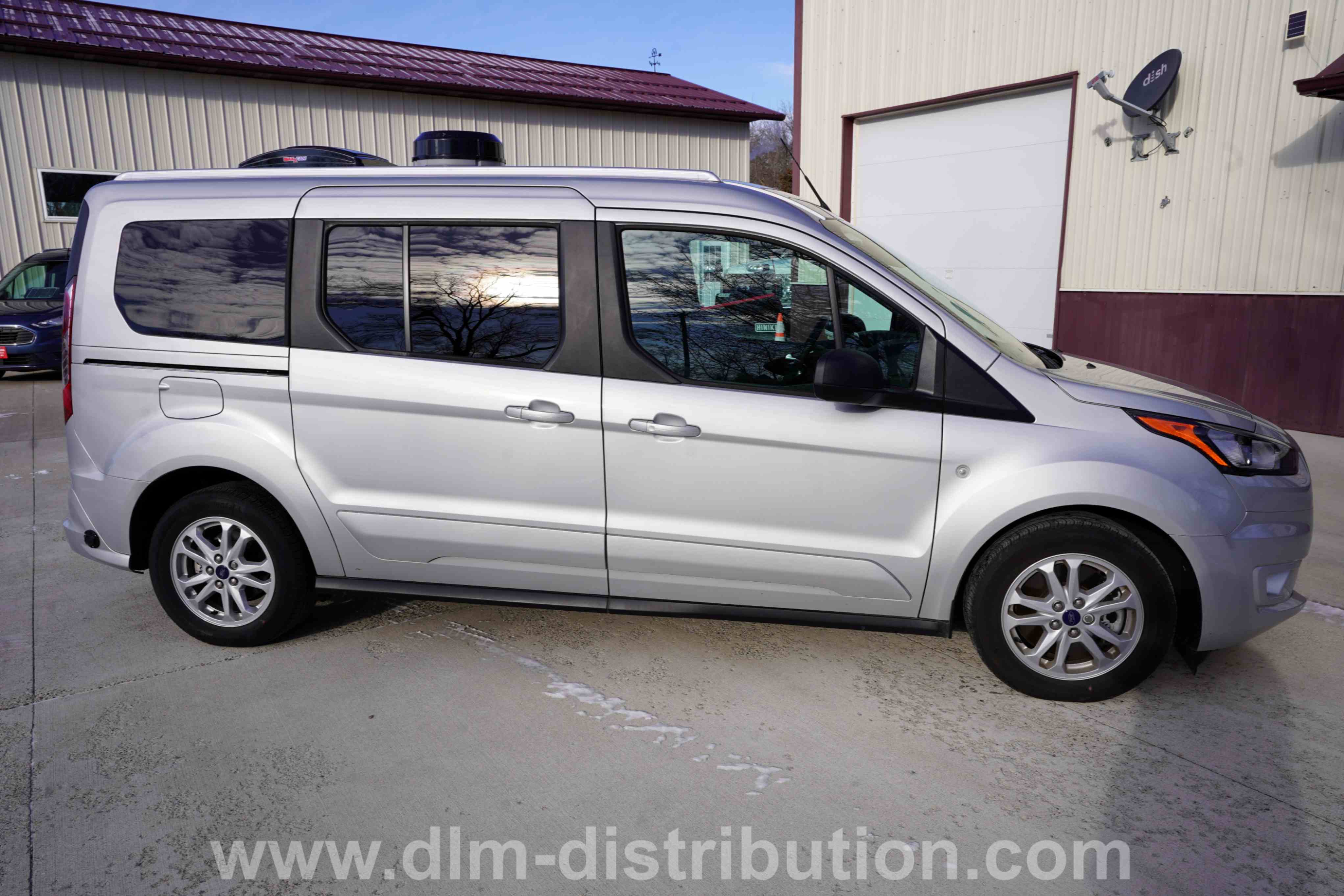
The Mini-T Campervan by DLM-Distribution takes a different approach. Rather than treating everyday usability as secondary to RV capability, its design brings the two together. The result is a Class B campervan equipped for travel and off-grid use while retaining the dimensions and driving characteristics that allow it to function much like an everyday vehicle.

Garageability Changes RV Ownership
Where an RV will be stored is one of the most practical questions a prospective owner can ask. Many motorhomes are simply too tall or too large for a residential garage, leaving outdoor parking or a separate RV storage facility as the alternatives. That can add expense, require additional trips before and after traveling, and put physical distance between an owner and a vehicle that was purchased to make travel easier.
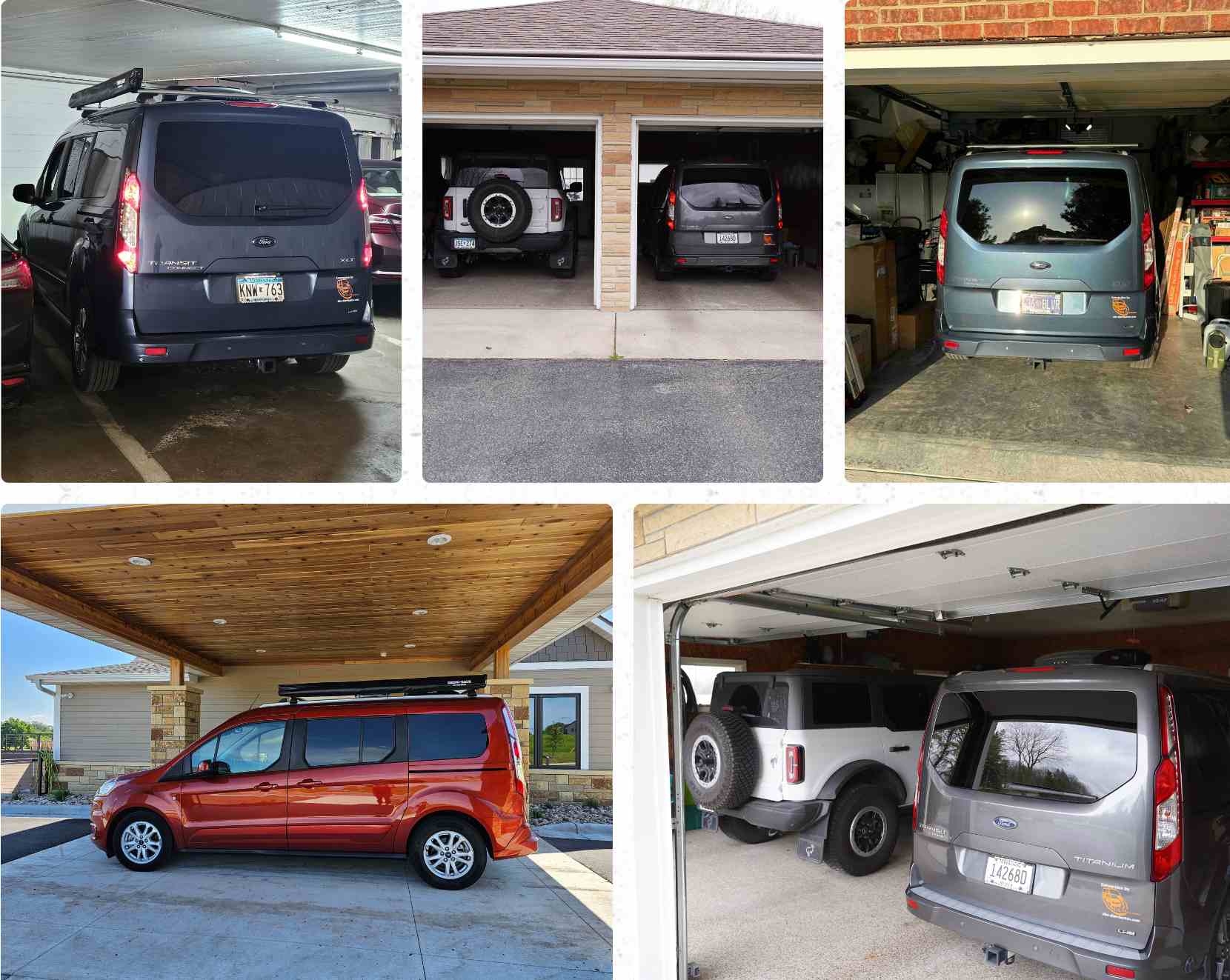
Garageability has therefore been a fundamental part of the Mini-T design. Mini-T models based on the Ford Transit Connect, Chrysler Pacifica and Chrysler Voyager platforms are designed to fit in a residential garage and standard parking spaces. For owners with available garage space, the campervan can simply come home with them instead of being taken to a separate RV storage facility after every trip.
That seemingly simple difference can have a considerable effect on how an RV is used. When the campervan is already at home, packing for an overnight trip is easier. An unexpected free weekend can become an opportunity to travel. There is no separate trip to retrieve the RV and no need to return it to storage afterward.
Everyday Infrastructure Still Works
The advantages of vehicle size continue after leaving home. Roads, parking spaces, parking garages, restaurants, stores and many other everyday destinations are designed around passenger vehicles and light trucks. Keeping a campervan within those familiar dimensions allows travelers to use much of that same infrastructure without planning their day around the size of an RV.
This can be particularly noticeable once travelers reach their destination. A campground does not have to become the place where the RV remains while another vehicle is used for exploring. A Mini-T can leave the campsite for breakfast, fit into a normal parking space downtown, continue to a trailhead, stop for groceries and return to camp at the end of the day.
Those same characteristics make everyday use practical between trips. Grocery shopping, commuting, appointments, visiting family or simply taking a drive do not require a separate vehicle simply because there is camping equipment on board. For some owners, the campervan can serve as their primary vehicle; for others, it becomes another vehicle in the household that happens to offer considerably more capability when the road leads farther from home.

Fuel Economy Becomes More Important When an RV Is Used More Often
Fuel consumption is sometimes viewed primarily as a road-trip expense, but it also influences how practical an RV feels during ordinary use. Large differences in fuel economy become increasingly noticeable when a vehicle is driven regularly rather than only for occasional vacations.
Depending on model and driving conditions, Mini-T Campervans have offered fuel economy in a range more closely associated with passenger vehicles than traditional motorhomes. That efficiency supports the same broader philosophy as garageability and easy parking: using the campervan should not require reserving it only for occasions important enough to justify taking out the RV.
A trip across several states certainly benefits from using less fuel, but so does a Saturday drive to a state park or an afternoon spent exploring somewhere close to home. When an RV is practical for shorter trips as well as longer journeys, there are simply more opportunities to use it.
Small Dimensions Do Not Mean Giving Up RV Capability
There is an important distinction between interior size and RV capability. A larger motorhome naturally provides more physical space, but vehicle size alone does not determine how well equipped an RV is for camping or off-grid travel.
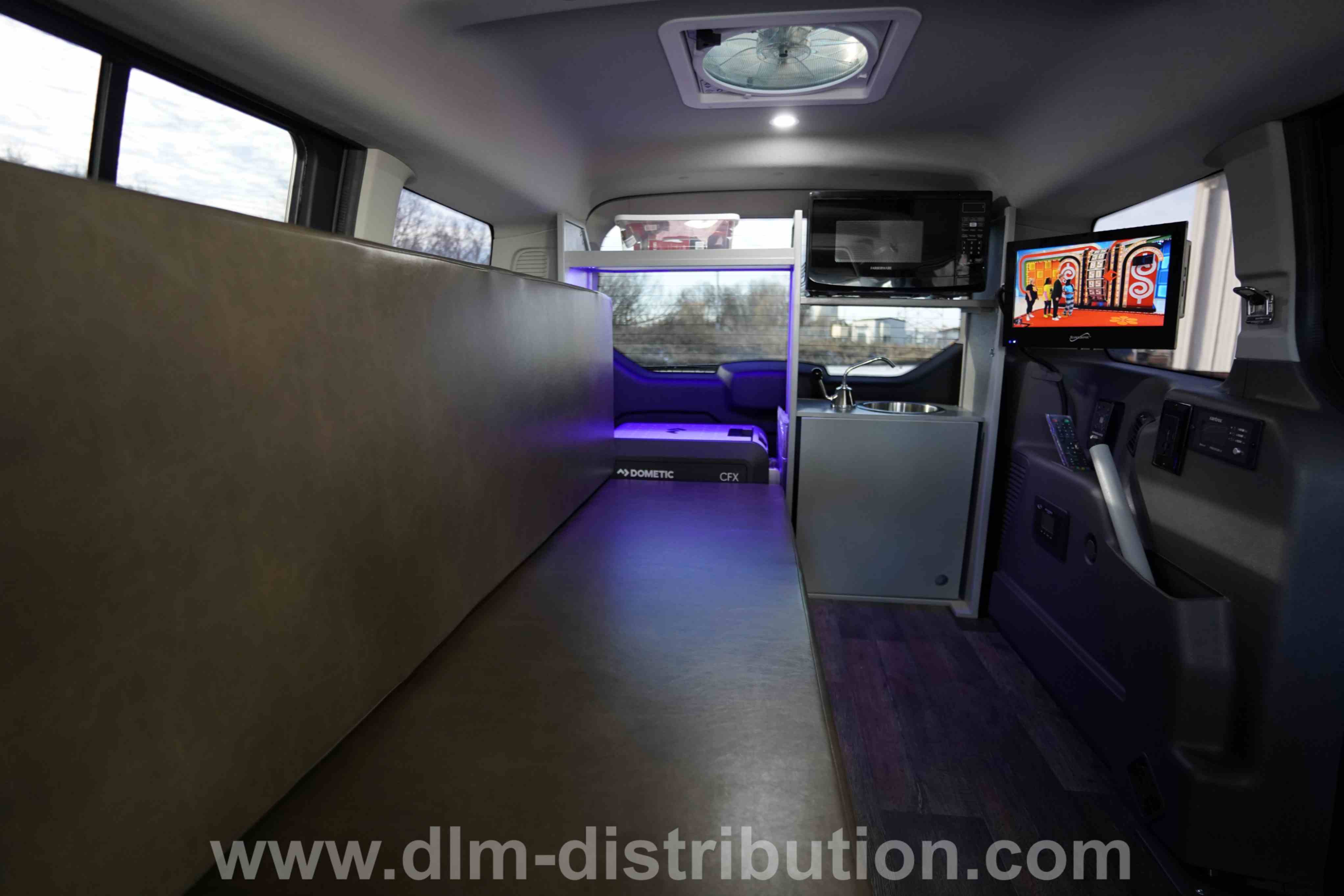
The Mini-T incorporates sleeping accommodations, refrigeration, a microwave, 120V electrical capability, solar charging, charging while driving, shore power capability, storage and entertainment features within its smaller vehicle footprint. Its electrical system provides practical off-grid capability without requiring a generator, including the ability to operate equipment such as the microwave when camping away from shore power.
That combination is central to the Mini-T concept. Garageability is not achieved simply by removing the features that make an RV useful. The design challenge is to provide meaningful camping capability while preserving the vehicle dimensions that make ownership, driving and storage easier.
Why HOA-Friendly Campervans Matter
For RV owners living in HOA communities, garageability can take on even greater importance. Restrictions on outdoor RV parking are common considerations in planned communities, townhome developments and other neighborhoods where vehicles must be kept within designated areas.
A garageable Mini-T provides an unusually practical answer. Instead of requiring outdoor RV parking or off-site storage, the campervan can be kept at home inside the garage. This makes the Mini-T an HOA-friendly campervan and allows RV ownership to fit into communities where storing a conventional motorhome at home would otherwise be difficult or impractical.
The benefit extends beyond satisfying a storage requirement. Keeping the campervan at home means it remains accessible throughout the year. It can be loaded gradually before a trip, used between camping adventures and protected inside the garage just as another household vehicle would be.
What Does “Everyday Use” Really Mean for a Campervan?
Calling a campervan an everyday vehicle should mean more than saying it is technically possible to drive it to the grocery store. The more meaningful test is whether owners would actually want to do so.
Can it fit in the garage when they get home? Can they park it where they normally park a vehicle? Can they comfortably navigate the places they visit in ordinary life? Is its fuel economy reasonable enough that every outing does not need to become an RV trip? And when they decide to travel, does it still provide the equipment and independence they purchased a campervan to have?
Those questions reveal why everyday usability and camping capability do not have to be competing priorities. A campervan can provide both when those objectives are considered together from the beginning.
The RV You Use More May Be the Better RV
There will always be travelers who place a high priority on greater interior floor space, standing room or larger permanently installed living areas, and a larger motorhome may be the appropriate choice for them. But additional vehicle size also affects where the RV can be stored, where it can be parked, how it moves through everyday environments and how naturally it can serve purposes beyond camping.
For travelers considering a small campervan, that creates a different way to think about value. Instead of evaluating an RV only by how much can be placed inside it, it can be equally useful to consider how many days throughout the year the vehicle might actually be used.
A campervan may spend one weekend beside a lake, the next month carrying its owners across several states and another afternoon parked at a local event. It might provide a comfortable place to stop during a long drive, transportation for visiting family or simply become the vehicle whose keys are chosen for an ordinary day out.
That is where everyday usability becomes more than a convenience. An RV that fits naturally into daily life creates more opportunities for travel because using it requires fewer special arrangements. The campervan does not have to wait for the next major vacation to become useful again.
For many travelers, the best small campervan for everyday use may ultimately be the one that does both jobs without asking its owner to choose between them: a capable campervan when it is time to travel and a practical vehicle during all the days in between.

DLM-Distribution / Campervans is a licensed manufacturer and dealer located in Lake Crystal, Minnesota, serving clients around the country.
Contact Dave: 651-285-7089 or Candy: 507-382-9446 today!