Choosing the Right RV Van: Why Practicality Matters More Than Size
Shopping for an RV van is easier than it has ever been. There are more manufacturers, more floorplans, more luxury interiors, more electrical systems, more drivetrain options, and more online reviews than most buyers can realistically sort through. Ironically, all of those choices can make the decision harder.
Many people begin by comparing features: bed size, battery capacity, roof height, horsepower, cabinetry, screens, storage, solar, and price. Those things matter, but they do not answer the most important question.F
Which RV van will actually fit the way you travel?
The best RV van is not always the largest one. It is not always the most expensive one. It is not always the one with the longest list of features. For many travelers, the best RV van is the one they feel comfortable driving, can store at home, can afford to use often, and do not hesitate to take on ordinary roads, into ordinary towns, and through ordinary daily life.

Most RV Buyers Compare the Wrong Things First
It is natural to compare specifications. Buyers want to know how much space an RV has, how large the battery bank is, whether it has a bathroom, how much water it carries, what kind of refrigerator it uses, and how many people it can sleep. Those details are useful, but they can distract from the larger ownership picture.
Before choosing an RV van, it may be more helpful to ask different questions:
Will I feel comfortable driving it?
Will my spouse or travel partner drive it too?
Can I park it at a grocery store, trailhead, visitor center, or restaurant?
Can I store it at home?
Will it work in my neighborhood, condo, townhome, or HOA community?
Will I use it for weekend trips, or will I wait for long vacations?
Will it fit into the kind of travel I actually enjoy?
These questions may not sound as exciting as feature lists, but they often determine whether an RV van becomes a vehicle you truly use or something that spends most of its life waiting for the next big trip.
The Best RV Van Is the One You Will Actually Use
One of the most overlooked truths in RV ownership is that value comes from use. A large luxury RV that is used a few days a year may provide less real value than a compact campervan that supports frequent weekend trips, scenic drives, day trips, family visits, and long-distance travel.
The best RV van encourages you to go. It should make travel easier to begin, not harder. It should reduce friction rather than create more planning. It should fit your confidence level, your parking needs, your budget, your storage situation, and your preferred pace of travel.
This is where practicality becomes more important than size. An RV that is simple to drive, easy to store, fuel efficient, and useful between trips often becomes part of everyday life. That means it gets used more often, and more use usually means more memories.
Bigger Is Not Always Better
Larger RV vans have their place. For travelers who spend months at a time on the road, need standing room, require a built-in bathroom, want more indoor living space, or plan extended full-time travel, a larger Class B or Class C motorhome may be the right choice.
But many buyers are not trying to live in an RV. They want to travel. They want to camp. They want to visit national parks, state parks, small towns, scenic highways, beaches, trailheads, friends, family, and historic places. They want comfort, but they do not necessarily want size.
More square footage can create more comfort in some ways, but it can also add trade-offs. Larger RV vans may be harder to park, harder to store, more expensive to fuel, less convenient in cities, and more intimidating for drivers who are new to RV ownership.
The right size is not the biggest size. The right size is the one that fits your life.
Everyday Usability Matters
Most RV discussions focus on what happens at the campground. That is important, but it is only part of ownership. What happens before and after the trip matters too.
Can you take the RV van through town without stress?
Can you park it at a medical appointment, coffee shop, grocery store, or friend's house?
Can you use it for errands?
Can you wash it easily?
Can you keep it nearby and ready?
These ordinary details often decide whether an RV van feels freeing or frustrating. A vehicle that is easy to use in normal life is more likely to become a regular part of travel. A vehicle that requires special planning for every outing may slowly become something owners use less than they expected.
Storage Can Make or Break RV Ownership
Many RV buyers focus on the purchase decision but overlook the storage decision. A large RV van may not fit in a residential garage. It may violate HOA rules if parked in the driveway. It may require rented storage, which adds cost and inconvenience.
Off-site storage also changes spontaneity. Before every trip, the owner must retrieve the RV. After every trip, it must be returned. If gear needs to be added, cleaned, charged, or reorganized, that process becomes more complicated.
A garageable RV van solves a major ownership problem. When a campervan can be stored at home, it is protected from weather, easy to access, easier to maintain, and ready for short-notice travel. That convenience may matter more than many buyers realize when comparing floorplans.

Freedom Is Not Measured in Square Feet
RV marketing often emphasizes size, luxury, and features. But travel freedom is not measured in square feet. It is measured in the ability to leave on a Friday afternoon, take the scenic route, stop at a state park, watch the sunrise, visit a national park, take a ferry, or spend a quiet night beside a lake.
Freedom is also the ability to use the vehicle without hesitation. If an RV is easy to drive, easy to park, easy to fuel, and easy to store, the owner is more likely to use it. A smaller campervan may provide less interior space, but it may create more actual travel.
For many people, that is the better trade.
Practicality Expands Where You Can Go
A practical RV van opens doors. It can make smaller campgrounds more accessible. It can fit in older state park loops. It can visit towns with limited parking. It can stop at roadside overlooks. It can handle daily driving between camping nights. It can be used for short trips without feeling like a production.
This is especially important for travelers who enjoy national parks, historic districts, small towns, scenic byways, beaches, lakes, ferry routes, and public lands. Many of the best travel moments happen in places that were not designed around large RVs.
A compact campervan does not eliminate every limitation, but it reduces many of the daily travel barriers that come with larger vehicles.
Comfort Still Matters
Choosing practicality over size does not mean giving up comfort. It means choosing the kind of comfort that supports how you actually travel.
A good compact RV van should provide a comfortable sleeping space, organized storage, lighting, refrigeration, power, a way to prepare simple meals, and the ability to camp without unnecessary setup. It should feel useful, efficient, and easy to live with for the kinds of trips the owner actually takes.
The goal is not to bring everything from home. The goal is to bring enough comfort to enjoy the road without being weighed down by excess.
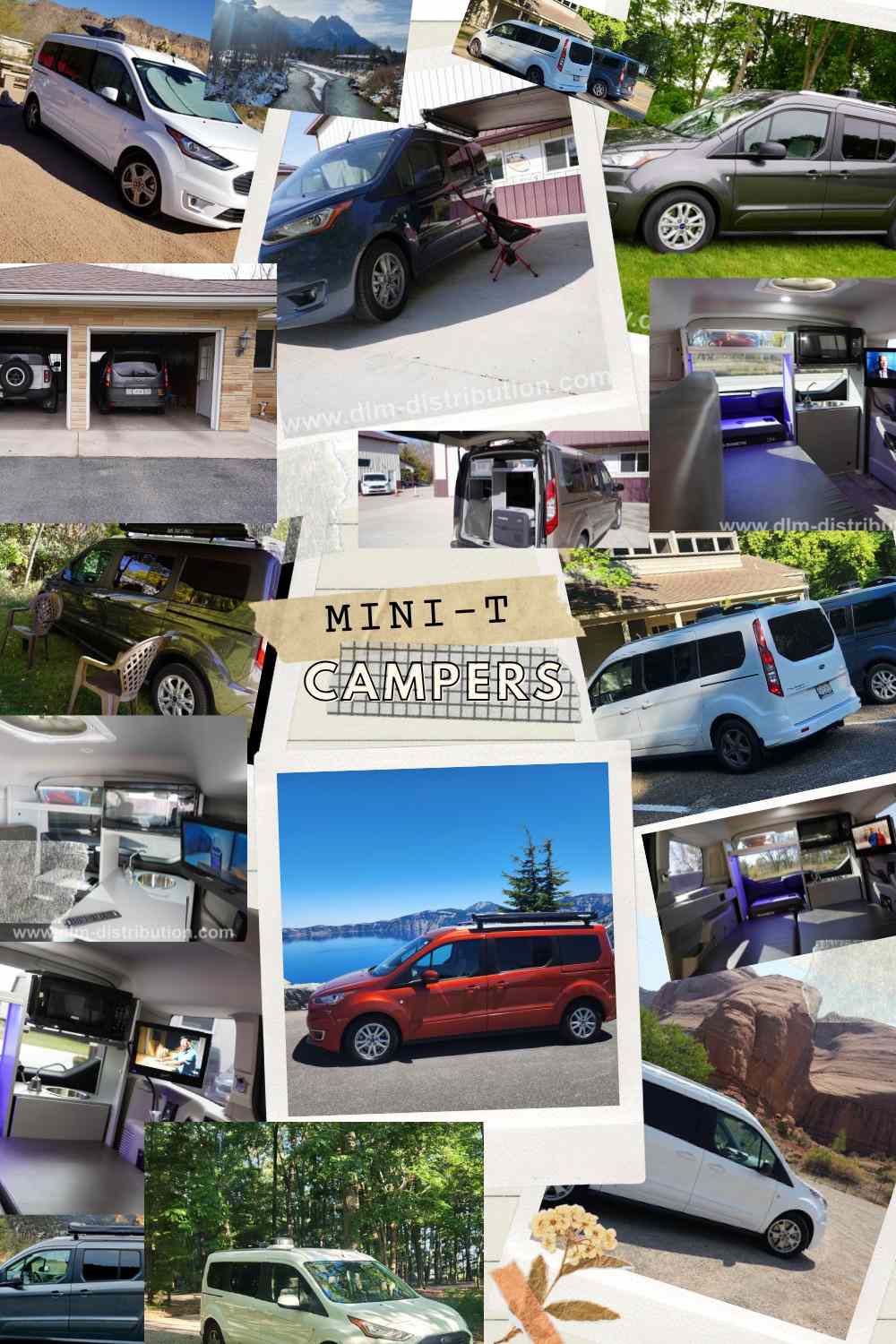
Why the Mini-T Campervan Exists
The Mini-T Campervan was designed around a different philosophy than many traditional RV vans. Instead of asking how much RV could fit into a vehicle, DLM-Distribution asked a more practical question:
How much freedom can fit into everyday life?
That question shaped the Mini-T's purpose. It is compact, garageable, easy to drive, fuel efficient, and designed to serve as both transportation and a true campervan. It supports camping, road trips, dry camping, scenic travel, and everyday errands without requiring owners to take on the size and complexity of a large motorhome.
This is not about being the biggest RV in the campground. It is about being the campervan that is ready when the owner is ready.
A Garageable RV Van Changes the Equation
One of the Mini-T Campervan's most important advantages is garageability. For many buyers, this is not a minor feature. It can be the difference between owning an RV and not owning one at all.
Because many Mini-T models fit in a standard residential garage, owners can keep the campervan at home, protected, accessible, and out of sight when not in use. That matters for HOA communities, condominiums, townhomes, neighborhoods with parking restrictions, and anyone who does not want to pay for off-site RV storage.
Garageability also makes spontaneous travel easier. If the campervan is already at home and ready, a weekend trip does not require a trip to the storage lot before the adventure can begin.
Daily Driver Capability Creates More Value
A Mini-T Campervan can be used as more than a camping vehicle. It can function as daily transportation, a road trip vehicle, and a compact Class B RV. That dual-purpose role is one of the strongest reasons practical buyers consider a smaller RV van.
When one vehicle can support errands, commuting, appointments, family visits, camping, and long-distance travel, ownership becomes easier to justify and easier to enjoy. The vehicle does not sit unused waiting for vacation. It becomes part of everyday life.
This is especially valuable for buyers who do not want to own a separate car and a separate RV, or who want their RV investment to serve multiple purposes throughout the year.
Fuel Efficiency Supports More Travel
Fuel costs influence travel habits. Larger RVs often make owners think twice about long-distance trips, extra detours, or frequent weekend travel. A compact campervan helps reduce that hesitation.
The Mini-T Campervan is designed for efficient travel compared with larger motorhomes. Lower fuel use can make long road trips more approachable, short trips more affordable, and spontaneous travel easier to justify.
Fuel efficiency is not just about saving money. It is about expanding the range of places people feel comfortable visiting.
Off-Grid Capability Without the Big-RV Burden
Many travelers want the ability to camp without always depending on full hookups. That does not mean they want a large RV or a generator running at night. The Mini-T Campervan includes an integrated off-grid electrical system designed to support real travel needs in a compact platform.
With battery storage, solar charging, vehicle charging while driving, shore power charging when available, and usable household-style power inside the campervan, the Mini-T supports dry camping, state park stays, travel days, and flexible routing.
This kind of power system makes compact travel more capable without turning the vehicle into something oversized or difficult to own.
The Hidden Cost of an RV That Is Too Big
Sometimes the biggest cost of an oversized RV is not fuel, insurance, or maintenance—it is hesitation. When a vehicle feels difficult to drive, challenging to park, or inconvenient to retrieve from storage, owners naturally begin taking fewer spontaneous trips. Weekend getaways become "maybe next month," scenic detours are skipped, and quick overnight escapes become less common.
The easiest RV to use is often the one that gets used the most. A practical campervan encourages travel because it removes barriers instead of adding them. When your RV is easy to drive, easy to store, and always ready, taking one more trip becomes an easy decision instead of a major commitment.
Confidence Leads to More Adventures
One benefit that rarely appears on an RV specification sheet is confidence. A vehicle that feels familiar behind the wheel encourages owners to explore more often. Confidence makes scenic backroads feel inviting, parking lots less intimidating, and weekend trips easier to begin. Practicality does not limit freedom—it often creates more of it.
Who Should Consider a Practical RV Van?
A practical RV van may be the right choice for first-time RV buyers, solo travelers, couples, retirees, HOA residents, road-trippers, campground travelers, national park visitors, and anyone who wants the freedom of RV travel without the size of a large motorhome.
It may also appeal to people who already enjoy road trips but want more comfort and flexibility than hotels, tent camping, or car travel alone can provide.
The common thread is not age or travel style. It is the desire for a vehicle that makes travel easier rather than more complicated.
The Right RV Van Should Fit Your Life
Before choosing an RV van, look beyond the feature list. Think about where you will store it, who will drive it, how often you will use it, how far you want to travel, whether you need a large interior, and whether the vehicle will make spontaneous trips easier or harder.
The right answer will not be the same for everyone. Some travelers truly need a larger RV van. Others will find that a smaller, more practical campervan gives them more usable freedom.
The best RV van is not necessarily the one with the largest refrigerator, tallest roof, biggest battery bank, or most dramatic brochure photos. It is the one that quietly becomes part of your life.
The one waiting in your garage.
The one you do not hesitate to drive.
The one that turns a free weekend into a road trip.
The one that gets used.
Because in the end, the value of an RV van is not measured by how much space it occupies. It is measured by how many places it takes you.
DLM-Distribution / Campervans is a licensed manufacturer and dealer located in Lake Crystal, Minnesota, serving clients around the country.
Contact Dave: 651-285-7089 or Candy: 507-382-9446 today!