Free Camping in America: Understanding BLM Land, Dispersed Camping, and the Freedom to Explore
For many Americans, spending a night on public land can feel like one of the simplest forms of travel.
You leave the highway, follow a quiet gravel road, find an established clearing, and settle in beneath a desert sky or among tall pines. There may be no reservation desk, numbered campsite, electrical pedestal, restroom building, or campground host. Often there is no fee.
For travelers arriving from other parts of the world, that freedom can be surprising.
In many countries, camping outside established campgrounds is limited, regulated, or dependent on permission from a landowner. The United States is different because enormous areas of the West and many national forests remain publicly managed and open to responsible recreation. In appropriate locations, travelers may camp outside developed campgrounds and experience landscapes that feel remarkably quiet, spacious, and unstructured.
This style of travel is commonly called dispersed camping. Some people call it free camping, wild camping, primitive camping, dry camping, or boondocking. The terms overlap, but the central idea is simple: camping outside a developed campground, usually without services and with a greater responsibility to understand the land and leave it undamaged.

Why America Offers an Experience That Feels So Different
One of America's greatest travel resources is not a single national park, mountain range, or scenic highway. It is the extraordinary amount of land held for public use.
The Bureau of Land Management, commonly known as the BLM, manages vast areas concentrated primarily in the western states. The U.S. Forest Service manages national forests and grasslands across much of the country. Other federal, state, tribal, and local agencies oversee additional lands, each with its own rules and purpose.
Some of these lands allow dispersed camping. Others restrict it to designated areas, require permits, close certain roads seasonally, or prohibit overnight use entirely. National parks, wildlife refuges, state trust lands, recreation areas, and other public properties should never be assumed to follow the same rules as nearby BLM or national forest land.
That distinction is important. Public land does not automatically mean camping is allowed everywhere.
The freedom is real, but it begins with learning who manages the land and what that specific area permits.
What the Different Camping Terms Usually Mean
Travelers use several phrases to describe camping away from developed campgrounds. They are often treated as synonyms, but each carries a slightly different emphasis.
Dispersed camping is the term commonly used by federal land agencies for camping outside a developed campground. There are typically no assigned sites, hookups, toilets, potable water, trash collection, or other services. Travelers are expected to be self-contained and use places where camping is legally allowed.
Free camping simply describes camping without paying a nightly fee. Many dispersed sites are free, but not every free campsite is dispersed. Some agencies and communities also operate no-fee designated campgrounds.
Boondocking is an RV and campervan term often used for camping without water, sewer, or electrical hookups. It may occur on public land, private property with permission, or in a designated dry campground.
Dry camping also refers to camping without utility hookups. A developed campground can be dry even when it has marked sites, toilets, tables, and a fee.
Wild camping is more common in international travel language. In the United States, people may use it casually to describe remote camping, but land agencies are more likely to use terms such as dispersed or backcountry camping.
Primitive camping usually describes a low-service experience. Depending on the location, it may mean an undeveloped dispersed site or a designated campground with few amenities.
The words matter less than the rules attached to the location. Before staying overnight, determine who manages the land, whether vehicle camping is permitted, whether a permit is required, and whether any local restrictions are in effect.
BLM Land: The Landscape Many Travelers Imagine
When people picture free camping in the American West, they are often imagining BLM land.
BLM-managed landscapes include open desert, red-rock country, sagebrush plains, remote valleys, mountain foothills, coastal areas, and recreation corridors. Arizona, Utah, Nevada, California, New Mexico, Oregon, Wyoming, Montana, Idaho, and Colorado contain many of the best-known opportunities.
In suitable areas, travelers may find established clearings and previously used sites along legal roads. The experience can range from camping within sight of a small town to spending the night in a place where the horizon seems almost uninterrupted.
BLM dispersed camping is generally intended for short-term recreation rather than residential living. A common rule is a stay limit of up to 14 days within a specified period, but the exact limit and required relocation distance vary by state, district, and field office. Some heavily visited areas now allow camping only in designated dispersed sites, require permits, charge fees, or close certain locations to protect natural and cultural resources.
The familiar statement that people may simply camp anywhere on BLM land is therefore misleading.
The better approach is to treat every destination as its own trip. Consult the current BLM page for that district, review maps and closure notices, and contact the local field office when the rules are unclear.

National Forests Offer a Different Kind of Freedom
National forests often provide dispersed camping opportunities in landscapes that feel very different from BLM country.
Instead of open desert, travelers may follow forest roads into pine-covered mountains, high meadows, lake country, or wooded foothills. National forests can be especially appealing during summer because elevation and shade may offer cooler conditions than nearby valleys.
Rules vary considerably by forest. Some allow vehicle camping near designated roads within a specified distance. Others restrict camping around lakes, trailheads, developed recreation sites, or heavily used corridors. Motor Vehicle Use Maps may identify roads legally open to motor vehicles, but they do not necessarily guarantee that every roadside location is suitable or legal for camping.
Stay limits, fire rules, water setbacks, road restrictions, and seasonal closures are set locally. A rule that applies in one national forest may be different in the next.
That local variation is not a flaw in the system. It reflects the fact that a dry forest in Arizona, a mountain forest in Colorado, and a rain-soaked forest in Oregon face very different environmental pressures.
National Parks Are Usually a Different Conversation
Many first-time visitors assume that dispersed camping is available inside national parks because the surrounding region may include large areas of public land.
Usually, that is not the case.
Most national parks limit vehicle camping to developed or specifically designated campsites. Backcountry camping may be available, but it often requires a permit and may be intended for hikers, paddlers, or travelers using designated backcountry routes rather than roadside campervans.
Some parks have unusual exceptions, but those should never be assumed. Rules can change at the park boundary even when the landscape appears identical.
This creates a useful travel pattern: visit the national park during the day, then stay in a national forest, on BLM land, or at a developed campground outside the park when legal and practical.
Why International Travelers Find This So Remarkable
Travelers from Europe and other densely populated regions often arrive with a very different understanding of where overnight camping is allowed.
In England and Wales, camping on open-access land generally requires the landowner's permission except in limited situations. Scotland provides broader responsible-access rights for lightweight wild camping, but those rights are not the same as parking a campervan wherever desired. Across Europe, rules differ by country, region, municipality, landowner, and vehicle type.
The United States can therefore feel unusually spacious and permissive, especially in the West. A traveler can move from desert to mountains, forest to grassland, and public land to small-town services across a single road trip.
The appeal is not merely that the campsite may be free.
It is the scale of the experience.
A desert sunrise with no neighboring tent. A forest morning interrupted only by birds. A night sky free from city light. The ability to change direction because the weather looks better fifty miles away.
That sense of space is one reason international visitors rent, purchase, or sometimes bring campervans to explore America.
Free Camping Is Not Primarily About Saving Money
The phrase free camping naturally emphasizes cost, but the absence of a nightly fee is rarely the most memorable part of the experience.
Travelers choose dispersed camping because they want quiet, flexibility, dark skies, open space, and a closer connection to the landscape.
A developed campground may offer showers, water, reservations, restrooms, electricity, and the comfort of knowing exactly where the night will be spent. Dispersed camping offers something different. It replaces amenities with self-reliance and structure with freedom.
Neither style is inherently better.
Many of the best road trips use both. A traveler may spend one night at a full-service campground, two nights on public land, another night in a state park, and then return to a developed campground for water, laundry, and a shower.
Freedom often comes from having choices rather than committing to only one way of camping.
How to Find a Legal Place to Camp
Finding a beautiful pullout is not the same as confirming a legal campsite.
Begin by identifying the land manager. Federal recreation maps, BLM field-office maps, national forest maps, Motor Vehicle Use Maps, and official agency websites are the best starting points. Third-party apps can be useful for discovering possibilities, but comments and map pins may be outdated, misplaced, or based on rules that have since changed.
Look for current alerts, temporary closures, fire restrictions, permit requirements, stay limits, and road conditions. Pay attention to signs on the ground, even when an app says camping is allowed.
When possible, use an existing campsite rather than creating a new one. Previously disturbed clearings reduce damage to soil, vegetation, and biological crusts. In desert environments, a tire track across apparently empty ground can damage living soil that may take decades to recover.
Never cross private property without permission. Western land ownership can form a patchwork, and an unmarked road may pass between public and private parcels.
When uncertainty remains, call the local land-management office. A brief conversation can prevent an illegal stay, a damaged vehicle, or an arrival at a road that has been closed for the season.
The Road Matters as Much as the Campsite
Dispersed camping begins before the vehicle is parked.
Unpaved roads can change quickly with rain, snow, washouts, deep sand, sharp rock, fallen trees, or heavy use. A route that looks easy on a map may become rougher with every mile. Cell coverage may disappear before road conditions worsen.
Travelers should honestly evaluate the vehicle, tires, clearance, drivetrain, weather, and their own ability to turn around safely.
A legal campsite is not useful if reaching it risks damage or leaves the vehicle stranded.
The wisest decision is often to stop earlier than planned, choose a more established location, or return to pavement before conditions deteriorate. Dispersed camping is not a test of how far a vehicle can be pushed.
It is an opportunity to enjoy public land responsibly and return home without creating an emergency for yourself or others.
What to Expect When There Are No Services
The defining feature of dispersed camping is not solitude. It is the absence of campground infrastructure.
There may be no potable water, toilet, trash service, picnic table, fire ring, lighting, host, or reliable phone signal. Travelers must arrive prepared to handle basic needs without depending on the site.
Carry enough drinking water for the stay and a reserve for delays. Plan how human waste will be managed under the rules for that area. Pack out trash, food scraps, toilet paper when required, and anything brought to the site. Keep food secured from wildlife and never assume a remote location eliminates the need for careful storage.
Fuel planning matters as well. Long stretches of public land may be far from gas stations, groceries, repair facilities, or emergency services.
Self-reliance does not mean bringing every possible item. It means understanding which systems and supplies are essential when no one else is responsible for providing them.
Fire Changes Everything
A campfire may seem inseparable from camping, but fire is never guaranteed on public land.
Restrictions may prohibit fires entirely during dry periods. Some locations require permits. Others allow fires only in existing metal rings or prohibit them outside developed campgrounds. Wind can make a technically legal fire unsafe within minutes.
Check current restrictions on the day of arrival. Never rely on an old app comment or assume that a previous visitor's fire ring means fires are currently permitted.
A propane stove or a quiet evening without flame may be the only responsible choice.
In much of the West, respecting fire restrictions is not merely good etiquette. It protects communities, wildlife habitat, historic resources, and the very landscapes people came to enjoy.
Freedom Comes With Responsibility
Dispersed camping remains possible because most visitors treat public land as something shared rather than something disposable.
Use existing sites. Stay on legal roads. Avoid widening pullouts or driving across vegetation. Keep noise low. Do not leave furniture, fire rings, food, pet waste, or trash for the next visitor. Respect wildlife, nearby residents, other campers, and cultural sites.
Leave No Trace is not simply a slogan for backpackers. It is the principle that allows vehicle-based camping to remain sustainable.
The goal should be simple: after you leave, the next traveler should not need to clean up after you or see evidence that the site was treated carelessly.
This becomes even more important as dispersed camping grows in popularity. A location can quickly change from quiet public land to a damaged, restricted, or closed area when too many visitors create new roads, leave waste, ignore fire rules, or stay beyond legal limits.
The freedom to camp depends on the willingness to protect it.

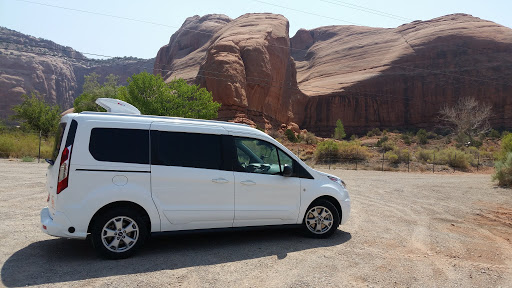
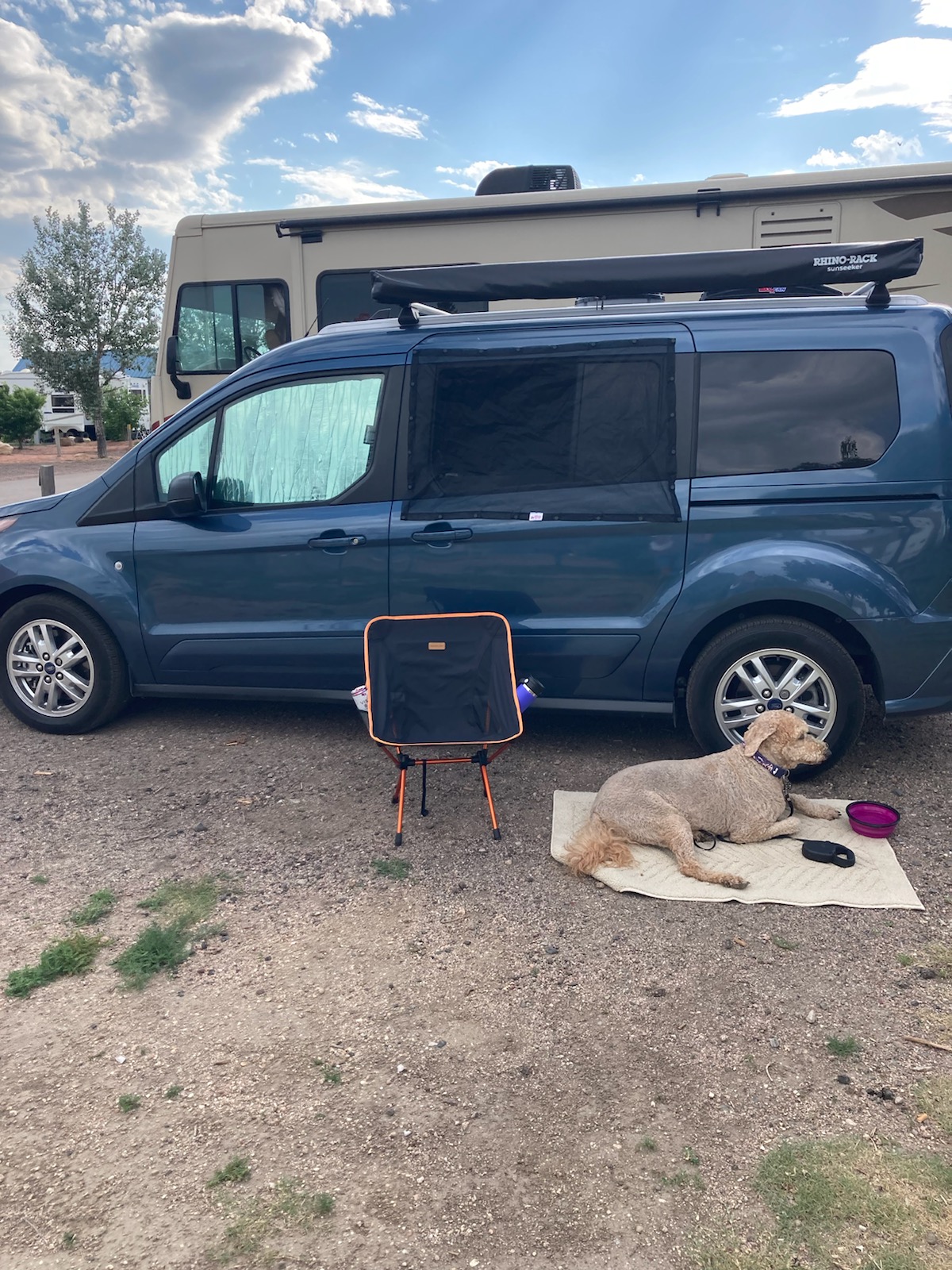
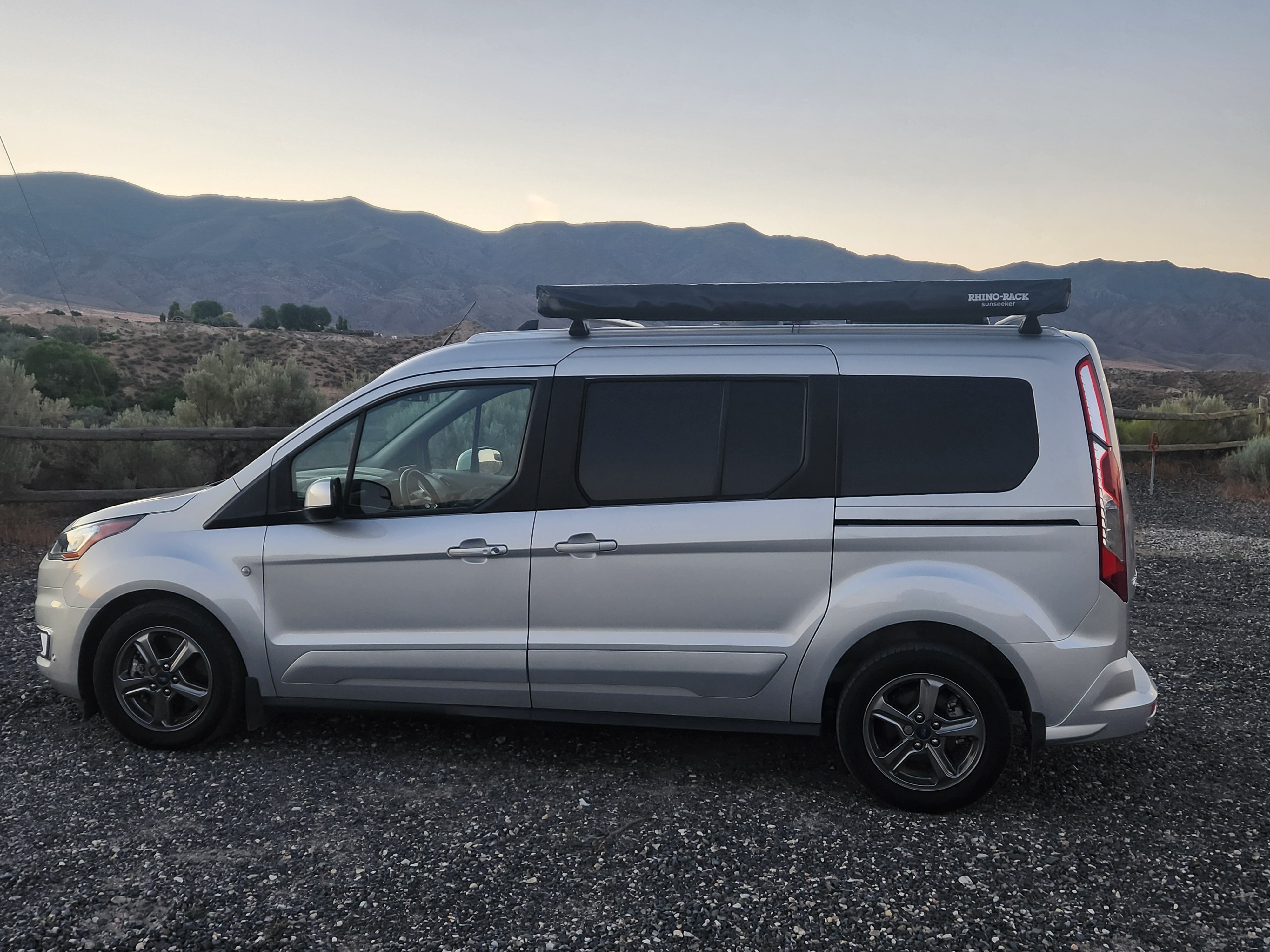
Why a Small Campervan Fits This Style of Travel
Small campervans are naturally suited to many dispersed-camping trips because they require relatively little space and remain practical before, during, and after the public-land portion of the journey.
A campervan may spend the morning in a small town, the afternoon on a scenic highway, and the evening at an established public-land site. It can carry food, water, bedding, clothing, refrigeration, electrical power, and weather protection without requiring the footprint of a larger motorhome.
Manageable size can also make it easier to turn around when a road becomes unsuitable, fit within an existing clearing, and avoid expanding the disturbed area around a campsite.

A Mini-T Campervan does not make every road appropriate or every public-land site accessible. No campervan removes the need to check rules, weather, road conditions, and ground clearance.
What it can do is make the transition between ordinary travel and a quiet night outdoors feel natural. The same vehicle used for groceries, museums, state parks, national parks, and scenic towns can become a comfortable place to rest when the legal campsite is simply an open clearing beneath the stars.

A Practical First Dispersed-Camping Trip
The first experience does not need to be deep in the wilderness.
Choose a well-known public-land area near a paved road or small community. Arrive during daylight. Confirm the weather, fire restrictions, and legal access before leaving reliable service. Select an established site with enough space to turn around and firm ground beneath the vehicle.
Keep the first stay short. One night is enough to learn how much water you use, which supplies matter, how the electrical system performs, whether the location feels comfortable, and what you would change next time.
Dispersed camping becomes easier with experience because the unknowns gradually disappear. Travelers learn how to read roads, recognize established sites, estimate water needs, organize gear, and decide when a developed campground is the better choice.
The goal is not to prove self-sufficiency.
It is to develop enough confidence and judgment that the freedom feels relaxing rather than reckless.
Before You Stay, Verify the Current Rules
Public-land regulations are local and can change because of fire danger, resource damage, wildlife protection, road work, overcrowding, or seasonal conditions.
Before every trip, check the official website for the managing agency and the specific district or forest. The Bureau of Land Management camping guide provides an overview of BLM camping, while the U.S. Forest Service camping information helps travelers begin researching national forest opportunities.
Those national pages are starting points, not substitutes for local rules.
Confirm the stay limit, road access, water setbacks, permit requirements, fire restrictions, and any designated-site rules for the exact place you plan to visit.
The Freedom to Explore
One of America's greatest natural resources is not simply its mountains, forests, deserts, rivers, or open skies.
It is the opportunity to experience many of those places in a way that still feels remarkably free.
Responsible dispersed camping allows travelers to wake to desert sunrises, mountain silence, prairie skies, and forest mornings without campground schedules or neighboring rows of RVs.
That sense of possibility is one reason travelers from around the world dream of exploring America by campervan.
The destination is only part of the experience.
Sometimes the quiet place chosen for the night becomes the memory that lasts the longest.
Happy Camping!
DLM-Distribution / Campervans is a licensed manufacturer and dealer located in Lake Crystal, Minnesota, serving clients around the country.
Contact Dave: 651-285-7089 or Candy: 507-382-9446 today!