Can an HOA Require You to Park in Your Garage? What Homeowners Should Know
Many homeowners are surprised to learn that some Homeowners Associations do more than regulate street parking. In some communities, the governing documents may require residents to use their garages for vehicle parking before relying on driveways, guest spaces, or neighborhood streets.
That raises a common question: Can an HOA require you to park in your garage?
The answer is: sometimes. It depends on the HOA’s governing documents, applicable state law, how the rule is written, and how the association enforces its parking policies. Because every HOA community is different, homeowners and prospective buyers should review the specific rules for the neighborhood involved.

Where HOA Garage Parking Rules Come From
HOA rules are usually found in the community’s governing documents. These often include the Declaration of Covenants, Conditions, and Restrictions, commonly called CC&Rs, along with bylaws, rules and regulations, architectural guidelines, parking policies, and any amendments adopted over time.
When a person buys a home in an HOA community, they generally agree to follow those rules as part of ownership. That is why it is so important to review the actual documents before buying a home or purchasing a vehicle that may be affected by parking restrictions.
Some HOAs have simple parking rules. Others are very detailed. A community may require vehicles to be parked inside garages whenever possible, limit driveway parking, prohibit overnight street parking, or restrict recreational vehicles, trailers, boats, and commercial vehicles from being stored outdoors.
Can an HOA Really Require Garage Parking?
In many cases, an HOA may be able to require garage parking if that requirement is clearly stated in the governing documents and is enforceable under applicable law. For example, an association may have a rule stating that garages must be used for vehicle parking and not converted entirely into storage, workshops, or living space if doing so prevents required parking.
However, the details matter. A rule must usually be properly adopted, consistently enforced, and applied according to the association’s procedures. State laws can also affect how HOA rules are interpreted or enforced, so homeowners with serious concerns should consult the association documents and, when needed, a qualified real estate attorney.
The practical takeaway is simple: never assume all HOA parking rules are the same. The answer depends on the specific community.
Not every HOA requires garage parking, and not every community regulates vehicles the same way. Some associations allow driveway parking but prohibit overnight street parking. Others regulate recreational vehicles separately from passenger vehicles. Understanding the specific rules before buying a home—or purchasing an RV—can help avoid expensive surprises later.

Why Some HOAs Require Garage Parking
Garage parking requirements are usually tied to broader community goals. While these rules may feel inconvenient to some homeowners, associations often adopt them for practical reasons.
Neighborhood Appearance: Requiring garage parking can reduce the number of vehicles visible in driveways and along streets, helping maintain a cleaner, more consistent community appearance.
Street Safety: Fewer vehicles parked on narrow streets can improve visibility for drivers, pedestrians, cyclists, and children. It can also make it easier to back out of driveways or navigate intersections.
Emergency Access: Fire trucks, ambulances, police vehicles, snowplows, and service vehicles need adequate room to move through a neighborhood. Limiting street parking can help keep roads accessible.
Guest Parking Availability: In communities with limited visitor spaces, garage parking can help prevent residents from using guest parking as everyday overflow parking.
Preventing Long-Term Outdoor Storage: Some HOAs want to avoid driveways becoming long-term storage areas for extra vehicles, trailers, recreational vehicles, or vehicles that are not regularly used.
Does Every HOA Require Garage Parking?
No. HOA parking rules vary widely.
Some associations require garage parking whenever garage space is available. Some simply encourage garage use but do not require it. Others focus primarily on street parking, guest parking, or recreational vehicle storage. Some neighborhoods may not regulate garage use at all.
Even when two communities appear similar, their rules may be very different. One HOA may allow driveway parking for everyday vehicles but prohibit RVs and trailers. Another may allow short-term driveway parking for loading and unloading but require long-term storage inside a garage or off-site. Another may require residents to keep garages available for parking at all times.
This is why reading the CC&Rs and parking rules is essential.
What Happens If You Do Not Follow an HOA Parking Rule?
Enforcement procedures vary by association, but many HOAs follow a process that may include a warning, written notice, an opportunity to correct the issue, a hearing or appeal process, and then possible fines if the violation continues.
Some associations are strict and quick to enforce parking rules. Others focus on repeated or obvious violations. Homeowners should not rely on what a neighbor says is allowed. The written rules and enforcement history are both important.
If you receive a violation notice, review the exact rule being cited. Ask for clarification if needed. If the rule seems unclear or incorrectly applied, follow the association’s appeal process. It is usually better to communicate early than to ignore the notice and allow fines to accumulate.
Garage Parking Rules and Recreational Vehicles
Garage parking rules become especially important for homeowners who own or want to own an RV, campervan, boat, trailer, or other recreational vehicle.
Many larger RVs cannot fit inside a standard residential garage. As a result, owners may need to rent off-site storage, park the vehicle elsewhere, or limit where they can live if they want to keep the RV at home. This can add cost, reduce convenience, and make spontaneous travel more difficult.
Some HOAs allow recreational vehicles temporarily for loading, unloading, or cleaning but prohibit long-term driveway or street storage. Others may allow recreational vehicles only if they are fully enclosed inside a garage. The exact wording matters.
Why Vehicle Size Matters Before You Buy
For homeowners who enjoy RV travel, vehicle size can be just as important as floorplan, features, or price. A campervan that is too tall or too long for the garage may create storage challenges in an HOA community even if it is easy to drive on the road.
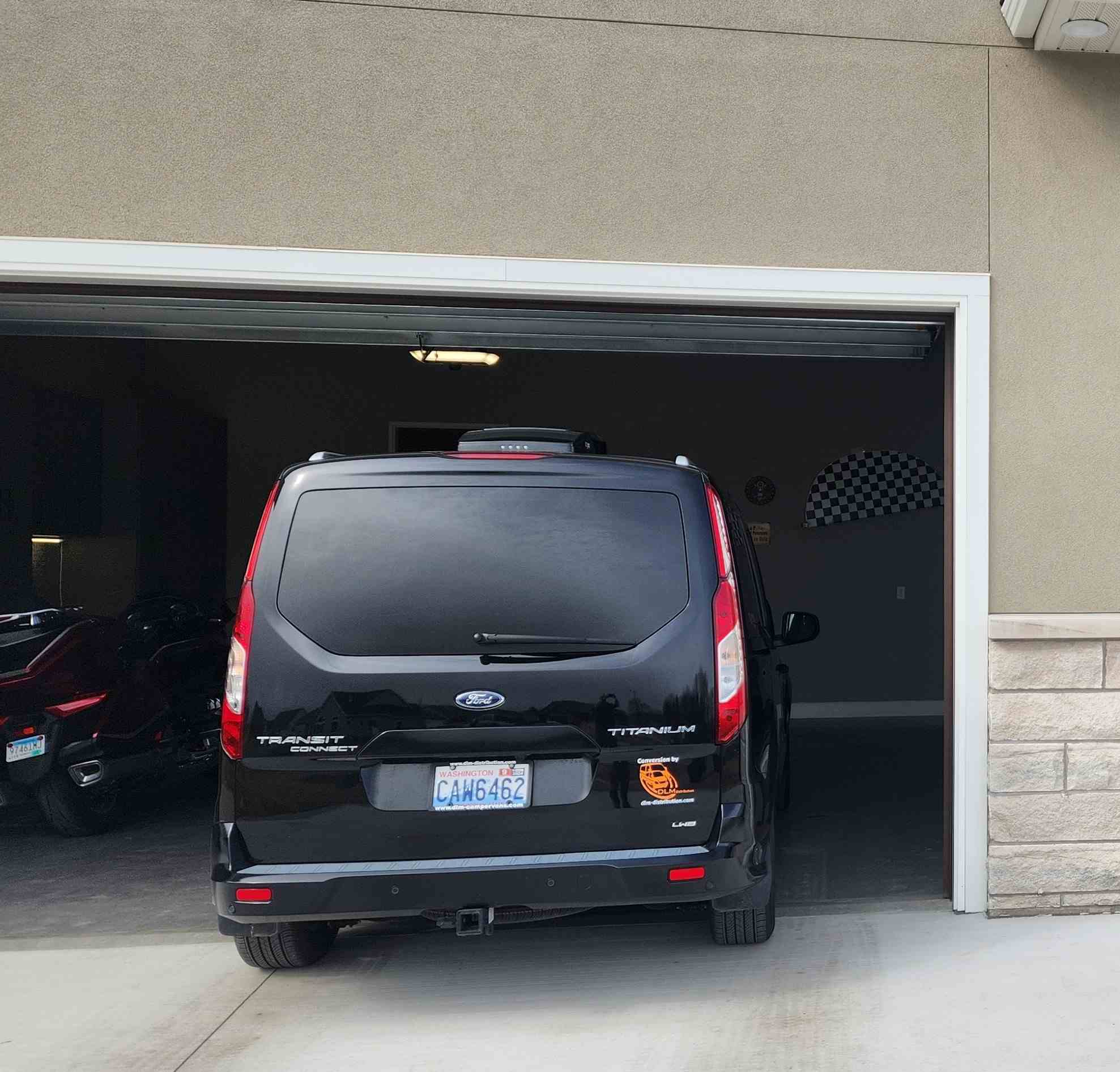
A compact campervan designed to fit inside many standard residential garages can offer a different ownership experience. Instead of renting off-site RV storage or worrying about driveway restrictions, the owner may be able to keep the campervan at home, protected, accessible, and out of view.
For many travelers, choosing a campervan that fits inside a standard residential garage can eliminate many of the storage challenges associated with larger RVs.

Choosing a Campervan That Works in HOA Communities
For homeowners who want to enjoy RV travel while living in an HOA community, the right campervan can make a major difference. A compact, garage-friendly campervan may allow owners to keep their travel vehicle at home, protected from the weather, and out of sight from the street.
The Mini-T Campervan was designed with everyday practicality in mind. Unlike many traditional RVs, the Mini-T is compact enough to fit inside many standard residential garages while still offering real campervan capability.
For homeowners in HOA-regulated neighborhoods, condos, townhomes, or communities with parking restrictions, this can be a meaningful advantage. A garageable campervan can help owners enjoy road trips, camping, and flexible travel while avoiding many of the storage concerns associated with larger RVs.
As always, homeowners should confirm their specific HOA rules. But when a campervan can be stored inside the garage, it may be far easier to comply with many common parking requirements.
Questions to Ask Before Buying a Home or Campervan
Before buying into an HOA community, or before purchasing a recreational vehicle, consider asking these questions:
- Does the HOA require vehicles to be parked in the garage?
- Are driveways allowed for everyday parking?
- Is overnight street parking permitted?
- Are RVs, campervans, boats, or trailers allowed?
- Is temporary loading and unloading permitted?
- Are garage-stored recreational vehicles treated differently from driveway-stored vehicles?
- Are there height, length, or vehicle-type restrictions?
- Are there rules about using garages for storage instead of parking?
- What is the enforcement process for parking violations?
- Are there recent meeting minutes showing parking disputes or rule changes?
These questions can help prevent surprises and make it easier to choose both the right community and the right vehicle.
Related HOA Parking Information
If you are researching HOA rules before buying a home, this related article may also be helpful: Buying a Home in an HOA Community: What Every Homebuyer Should Know Before You Purchase.
For a broader look at why communities regulate vehicle storage, see: HOA Parking Rules Explained: Why Communities Regulate Parking and Vehicle Storage.
The Bottom Line
An HOA may be able to require homeowners to park vehicles in their garage if that requirement is included in the community’s governing documents and is enforceable under applicable law. But every association is different, and the details matter.
For homeowners who value both neighborhood compatibility and travel flexibility, garage storage can be a major advantage. A compact campervan that fits inside many standard residential garages can make RV ownership much more practical in HOA communities.
Buying a home in an HOA community does not mean giving up RV travel. It simply means understanding the community’s rules before making major decisions. For many travelers, selecting a compact campervan that can be stored at home offers the freedom to travel while remaining compatible with the neighborhood they chose to live in.
DLM-Distribution / Campervans is a licensed manufacturer and dealer located in Lake Crystal, Minnesota, serving clients around the country.
Contact Dave: 651-285-7089 or Candy: 507-382-9446 today!