
Can You Park an RV or Campervan on the Street? What Travelers and Owners Should Know
Can you park an RV or campervan on a public street? Sometimes—but there is no single rule that applies everywhere.
A city may allow an RV to park on a residential street for a limited period while it is being loaded for a trip. Another may restrict oversized vehicles overnight, prohibit RV parking on certain streets, require permits, or regulate how close a large vehicle can be parked to intersections and driveways. Some communities treat parking and sleeping in the vehicle as two entirely different issues.

That means the useful question is not simply, “Can an RV park on the street?” It is: What does the local ordinance allow this particular vehicle to do on this particular street?
For RV owners, campervan travelers, and people considering an RV purchase, understanding that distinction can prevent parking tickets, towing problems, neighborhood conflicts, and an unpleasant surprise after bringing a new RV home.
Street Parking and RV Storage Are Not the Same Thing
One of the first distinctions to understand is the difference between temporarily parking a vehicle on a public street and using that street as long-term RV storage.
A community may permit a legally registered RV or campervan to occupy an otherwise legal parking space while still limiting how long it can remain there. Some municipalities provide exceptions or specific time periods for loading, unloading, cleaning, or preparing an RV for a trip. Others regulate oversized vehicles based on length, height, weight, classification, or the type of street.
Long-term storage can be considerably more restrictive. A vehicle that can legally stop or park somewhere for part of a day should not automatically be assumed to have permission to remain there indefinitely.
This matters at home. If the only practical place to keep an RV is on the street in front of the house, local parking regulations should be investigated before buying the RV, not after bringing it home.

Parking Overnight Does Not Necessarily Mean You Can Sleep There
Another important distinction is the difference between parking a campervan overnight and using it for overnight accommodations.
A municipality may have one set of rules governing whether a vehicle can remain parked on a street overnight and another governing sleeping, camping, or habitation in a vehicle. A parking space that is legal at 2:00 a.m. does not necessarily make it legal to spend the night sleeping inside the vehicle.

Likewise, the fact that other vans, trucks, or passenger vehicles are parked on a street overnight does not establish that overnight RV use is permitted there.
When traveling, look specifically for regulations addressing overnight parking, RVs, oversized vehicles, vehicle habitation, and camping. If the rules are unclear, a campground or another location that explicitly permits overnight RV use removes the uncertainty.
Why Do Communities Regulate RV Street Parking?
RV parking restrictions are not all written for exactly the same reason. Depending on the community and the vehicle involved, regulations may address traffic visibility, snow removal, street maintenance, emergency access, congestion, neighborhood parking availability, or the obstruction created by larger vehicles near intersections and driveways.
That is also why the word RV by itself may not tell you enough. An ordinance might apply to recreational vehicles specifically. Another might regulate vehicles exceeding a certain length, width, height, or weight. Yet another may address trailers separately from motorized RVs. Some communities may have seasonal restrictions, overnight restrictions, permit systems, or different rules for residential and commercial areas.
The actual ordinance matters more than assumptions about what an RV looks like.
A Campervan May Be Treated Differently—But Never Assume It Is
Smaller campervans introduce an interesting issue because they can be much closer in physical size to ordinary passenger vans than larger motorhomes are.
That can make them considerably easier to maneuver and fit into normal parking spaces. But physical size alone does not determine whether a particular street-parking rule applies. Depending on the jurisdiction, regulations may consider vehicle dimensions, weight, registration, vehicle type, use, or some combination of those factors.
A campervan that physically fits into an ordinary parking space therefore should not automatically be assumed to be exempt from RV restrictions. The safest approach is simple: determine how your particular vehicle is treated under the rules where you intend to park it.
Street Parking at Home Deserves Special Attention
For many people, this question is not really about traveling. It is about what happens to the RV during the weeks or months when they are home.
Where will it live?
If the answer is “on the street,” several questions become important. Does the city permit it? Is overnight parking allowed? Are there time limits? What happens during snow emergencies or street cleaning? Does the vehicle fall under an oversized-vehicle ordinance? Can it remain there for several consecutive days?
Then there is a separate question for people living in an HOA or other community with private restrictions. A city allowing a vehicle to park somewhere does not mean an HOA must allow the same thing, just as an HOA rule does not replace municipal parking law.
These are two separate sets of rules, and both can matter.
Garageability Changes the Ownership Question
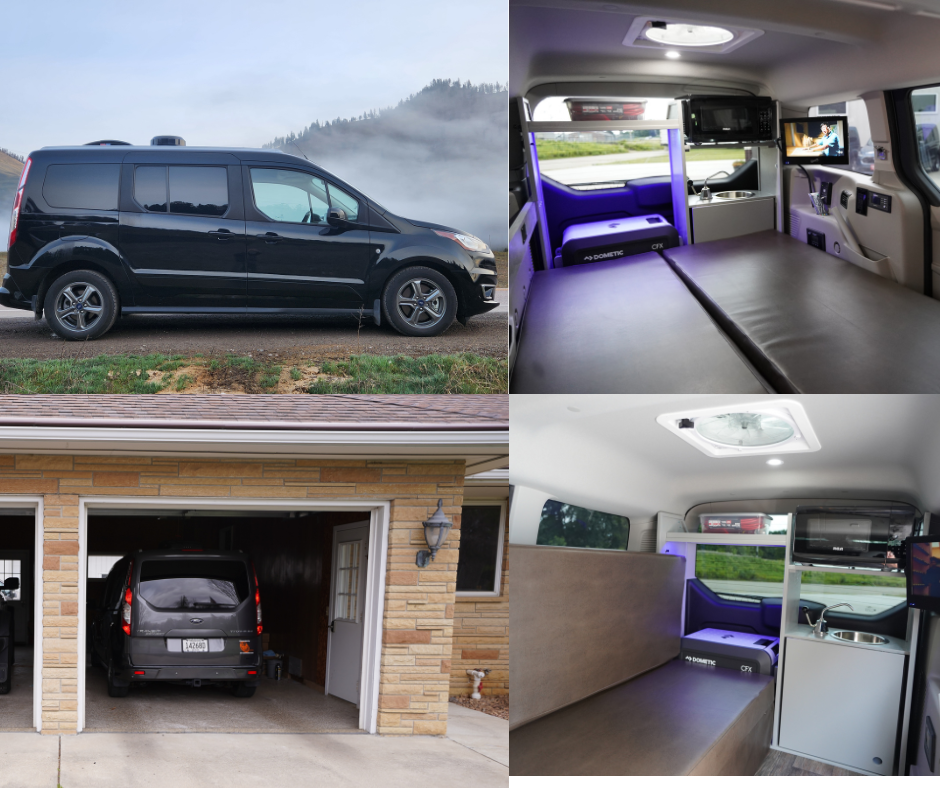
This is where the physical size of a campervan can make a meaningful difference—not because being smaller guarantees permission to park on the street, but because it may reduce the need to rely on street parking at all.
Garageable Mini-T Campervans are designed around that practical ownership consideration. Current Chrysler Pacifica and Chrysler Voyager Mini-T models are under 80 inches tall and are designed to fit through a standard 7-foot residential garage opening, although owners should always measure their actual garage opening and available interior space.

For someone who wants to keep a campervan at home, that can fundamentally change the storage problem. Instead of depending on long-term street parking, leaving a larger RV exposed in a driveway, or routinely traveling to an off-site storage facility, a garageable campervan may be able to stay in the garage when the home and applicable rules allow it.
Garageability does not guarantee compliance with every HOA, condominium association, municipal ordinance, or property restriction. Those rules still need to be checked. But physically fitting inside a residential garage can provide an ownership option that many larger RVs simply cannot offer.
Smaller Size Helps in Other Ways, Too
The advantage does not disappear once the trip begins. A smaller campervan that fits into ordinary parking spaces can make restaurants, grocery stores, museums, trailheads, downtown areas, and other everyday stops easier to navigate than they may be in a much larger motorhome.
That does not create special parking privileges—a posted restriction still applies—but it can make legal parking easier to find. Easy to park is not the same as exempt from parking rules.
That is a better way to think about campervan size. The goal is not to disguise an RV or hope nobody notices it. The advantage is having a vehicle that can fit more naturally into many of the places travelers actually want to visit while still providing campervan capabilities when the day is over.
Before Parking an RV or Campervan on the Street, Check These Things
Start with the signs on the street itself. Posted parking restrictions, permit zones, snow-emergency rules, street-cleaning schedules, time limits, and temporary restrictions can apply regardless of the type of vehicle you are driving.
Then check the municipality’s current parking ordinances. Search specifically for recreational vehicles, oversized vehicles, overnight parking, trailers, vehicle habitation, and residential street parking. If you are parking near your home, check any applicable HOA, condominium, lease, or property rules separately.
When traveling, do not assume that because an overnight stop worked in one community it will be permitted in the next. Local rules can change from one city to another. If you cannot determine whether overnight parking or sleeping in the vehicle is permitted, choose a campground or another location that explicitly allows the type of overnight use you have in mind.
Think About Parking Before You Choose the RV
Street parking is easy to overlook while shopping for an RV. At that point, attention naturally goes toward beds, kitchens, bathrooms, storage, batteries, solar, and where the vehicle might take you.
But an RV spends far more time at home than it does on vacation.
Where it will be stored, whether it fits at home, how easily it can be parked during everyday travel, and whether local restrictions create additional complications can have a significant effect on how easy that RV is to live with.
That makes parking more than a legal question. It is an ownership question.
Before buying any RV or campervan, consider both sides of the experience: Where can it take you, and where will it go when you come home?
Choosing a vehicle that works for both can make RV ownership considerably simpler.
Happy Travels & Happy Camping!
DLM-Distribution / Campervans is a licensed manufacturer and dealer located in Lake Crystal, Minnesota, serving clients around the country.
Contact Dave: 651-285-7089 or Candy: 507-382-9446 today!