
Finding a motorhome or camper that fits inside a residential garage can make RV ownership considerably more convenient. Indoor storage keeps a camper close to home, reduces exposure to weather, and may eliminate the expense of commercial RV storage. For homeowners facing neighborhood parking restrictions, garage compatibility can also be an important consideration when choosing a recreational vehicle.
However, not every compact motorhome or Class B campervan will fit through a residential garage door. Exterior height, overall length, vehicle width, and the garage's usable dimensions all matter. Understanding these measurements before purchasing can help buyers select an RV that fits both their travel plans and their available storage space.
What Size Camper Will Fit in a Standard Garage?
Many residential garages have doors approximately seven feet high, with interior depths commonly ranging from 20 to 24 feet. However, dimensions vary by home, and the advertised door size does not always represent the actual unobstructed opening.
Height is usually the first consideration. A seven-foot garage door has a nominal opening of 84 inches, but weather seals, door hardware, and other obstructions can reduce the usable clearance. The camper's overall height must include installed roof equipment such as ventilation fans, solar panels, air-conditioning components, and other accessories.
Length and width are equally important. A camper might pass through the garage opening but leave insufficient room to close the door, walk around the vehicle, or access storage areas. The most dependable approach is to compare the camper's complete exterior dimensions with the garage's actual usable space rather than rely on descriptions such as "compact RV" or "standard garage."
Which Types of RVs Can Fit in a Residential Garage?
Traditional Class A and Class C motorhomes generally exceed the height of a conventional residential garage door. Many full-size Class B motorhomes are also too tall, particularly those built on high-roof Ford Transit, Mercedes-Benz Sprinter, and Ram ProMaster chassis.
Some pop-up campers, compact travel trailers, and low-profile campervans can fit inside residential garages, depending on their dimensions. Towable RVs require additional consideration for the trailer tongue, hitch, and space needed to maneuver the trailer into position. Even a relatively small camper may be too tall once rooftop accessories are included.
For buyers who want indoor storage, the important distinction is not simply whether an RV is small, but whether its complete dimensions are compatible with the available garage.
Why Residential Garage Storage Matters
Keeping a camper at home can make spontaneous travel much easier. Instead of retrieving an RV from a storage facility, owners can prepare for a weekend getaway, load their supplies, and leave when their schedule allows. Returning home is equally convenient, without an additional trip to a storage lot.
Indoor storage also helps protect a recreational vehicle from prolonged sun exposure, snow, hail, and other weather conditions. While routine maintenance remains necessary, keeping an RV under cover can help preserve its exterior during periods when it is not being used.
For homeowners living in communities with homeowners associations, garage storage may offer another advantage. Some neighborhoods restrict outdoor RV parking or limit how long recreational vehicles may remain in driveways. Storing a camper inside a residential garage can help address certain parking restrictions, although individual HOA requirements and local regulations should always be reviewed.
Commercial RV storage can also represent a recurring expense. Avoiding monthly or seasonal storage fees may provide meaningful savings over several years of ownership, particularly for travelers who use their RV primarily during the camping season.
Garageable Mini-T Campervans: Compact RVs for Everyday Use
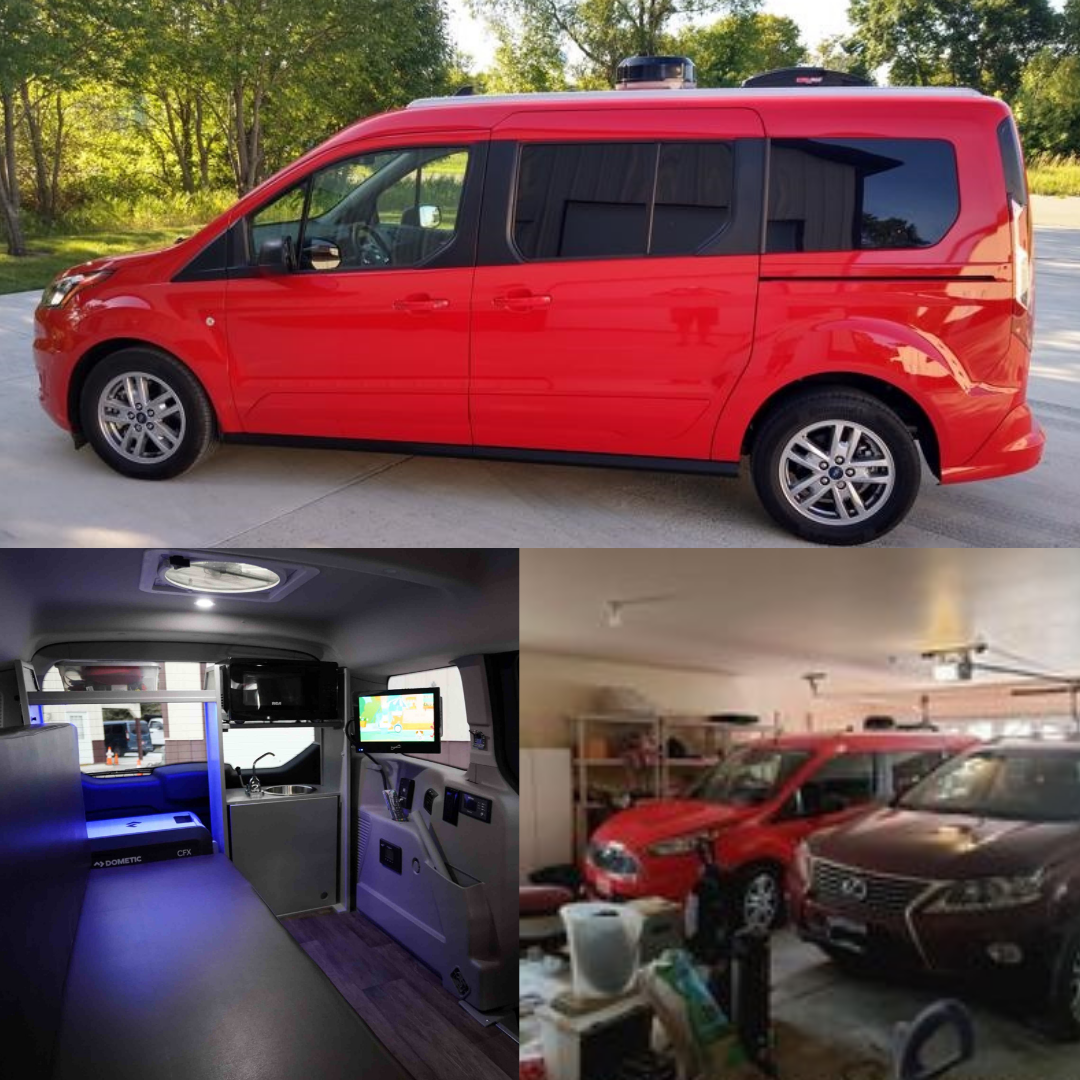
DLM-Distribution manufactures several Mini-T Campervan models designed to combine recreational travel with everyday vehicle practicality. The Ford Transit Connect, Chrysler Pacifica AWD, and Chrysler Voyager Mini-T Campervans have exterior heights of approximately 80 inches, including their installed roof equipment, making them suitable for many residential garages with seven-foot doors.
The Ford Transit Connect Mini-T measures approximately 189.7 inches in overall length, or just under 16 feet. Its compact dimensions make it convenient for residential garage storage, everyday driving, and travel through destinations where maneuvering a larger motorhome may be less practical.
The Chrysler Pacifica AWD Mini-T measures approximately 204.5 inches in length, or just over 17 feet. It combines all-wheel-drive capability and passenger-vehicle comfort with the conveniences of a compact campervan. The Chrysler Voyager Mini-T provides another garageable option, with actual fit depending on the vehicle's dimensions and available garage space.

These Mini-T models provide sleeping accommodations for two, a refrigerator, microwave, sink, ventilation, privacy features, and integrated electrical systems that support camping away from electrical hookups. Their compact dimensions also allow them to serve as everyday transportation, giving owners the flexibility to use one vehicle for errands, sightseeing, road trips, and camping.

What About High-Roof Class B Campervans?
Not every Mini-T Campervan is intended for residential garage storage. The Mini-T HR, manufactured on the Ford Transit 350 HD AWD dual-rear-wheel chassis, is approximately 10 feet tall and provides an interior standing height of about 6 feet 4.5 inches.
The Mini-T HR offers additional interior space and amenities for travelers who prefer a high-roof Class B motorhome, but its exterior height makes it unsuitable for a conventional garage with a seven-foot door.
This illustrates an important consideration when comparing campervans. A high-roof model may provide greater interior room and different accommodations, while a lower-profile campervan may offer easier residential storage and greater everyday versatility. The right choice depends on personal preferences, travel plans, and available storage space.
Check Your Garage With the Free RV Garage Fit Calculator
Before purchasing a campervan, motorhome, or towable RV, it is important to confirm whether the vehicle will actually fit inside the intended garage. Even a few inches can make the difference between comfortable clearance and a vehicle that cannot safely enter.
To help travelers evaluate garage compatibility, DLM-Distribution offers a free RV Garage Fit Calculator. The tool compares the garage's usable dimensions with the full exterior measurements of a recreational vehicle, helping identify potential clearance concerns before purchasing.
The calculator considers garage door opening height and width, interior depth and width, and ceiling height. Users can enter the vehicle's overall height, entry width, parked width, and total length, including accessories or extensions that affect the space required. It also allows users to select preferred clearances above the vehicle, along its sides, and at the front and rear.
Before using the calculator, measure the garage door's smallest unobstructed opening when fully raised, along with the usable interior dimensions. Account for shelving, steps, garage door hardware, and other fixed obstacles. Vehicle measurements should include roof-mounted equipment, mirrors in their entry position, and any rear-mounted accessories or hitch extensions.
Driveway conditions deserve attention as well. A sloped driveway, raised threshold, or change in grade can affect clearance as a vehicle enters. The calculator provides a useful planning assessment, but actual physical clearances and the approach into the garage should always be verified before attempting entry.
Users can begin with illustrative vehicle examples or enter their own measurements, review the remaining clearance, and print an assessment for reference when comparing different RVs.
How Garage Storage Affects the Cost of RV Ownership
Garage compatibility can influence more than convenience. Storage fees, insurance, maintenance, depreciation, fuel consumption, and transportation requirements all contribute to the long-term cost of owning a recreational vehicle.
A garageable campervan may eliminate the need for commercial storage and, in some households, replace an everyday passenger vehicle. Those potential savings depend on how the vehicle is used and whether another vehicle is actually replaced.
For buyers comparing different RV classifications, DLM-Distribution also provides a free RV & Vehicle Cost of Ownership Calculator. This tool helps travelers estimate and compare expenses associated with motorhomes, campervans, towable RVs, and everyday vehicles, including storage and towing costs.
Considering garage compatibility alongside the full cost of ownership can help buyers make a more informed decision about which recreational vehicle best fits their circumstances.
Choosing a Camper That Fits Your Home and Travel Plans
For some travelers, the additional living space of a larger motorhome will outweigh the need for specialized storage. Others may prefer a compact campervan that can be kept at home and used throughout the year for everyday transportation and recreational travel.
For those interested in a garageable Class B RV, the Ford Transit Connect, Chrysler Pacifica AWD, and Chrysler Voyager Mini-T Campervans offer practical options worth exploring. Visit the Mini-T Campervan inventory at DLM-Distribution to view available models, photographs, and specifications.
Whether planning weekend trips or extended journeys, choosing an RV that fits both your garage and your travel preferences can make ownership simpler and more enjoyable.
Happy Travels & Happy Camping!
DLM-Distribution / Campervans is a licensed manufacturer and dealer located in Lake Crystal, Minnesota, serving clients around the country.
Contact Dave: 651-285-7089 or Candy: 507-382-9446 today!