Published June 11, 2020  •  Updated July 16, 2026
Category: Campervan Travel

Exploring the Black Hills? Start in Spearfish, South Dakota

Looking at a map, it is easy to underestimate the Black Hills. Distances seem short, attractions appear close together, and it is tempting to believe the region can be covered in two or three days. Most travelers discover otherwise.

In practice, the Black Hills are larger, more varied, and more connected than many first-time visitors expect.

Spearfish, located along the northern edge of the Black Hills, offers one of the most practical places to begin. It provides the services travelers need, but more importantly, it places several entirely different kinds of experiences within reach. One day can begin in Spearfish Canyon, another in Deadwood, another on the road to Devils Tower, and another farther south among the granite spires and wildlife of Custer State Park.

That flexibility is what makes Spearfish useful. It is not simply a town to pass through. It can become a basecamp for understanding how the northern Black Hills connect with the rest of the region.

Spearfish Canyon Scenic Byway in the northern Black Hills of South Dakota.

The Black Hills Are Larger Than They Look

Many travelers arrive with a list: Mount Rushmore, Custer State Park, Deadwood, Spearfish Canyon, Wind Cave, Jewel Cave, Devils Tower, and perhaps Badlands National Park on the way in or out.

It is possible to move quickly through those places, but doing so can make the Black Hills feel like a collection of stops rather than one connected landscape. The region reveals itself more naturally when travelers leave room between the major attractions.

Needles Highway leads toward Sylvan Lake. Sylvan Lake becomes the starting point for Black Elk Peak and Little Devils Tower. Wildlife Loop Road connects naturally with Iron Mountain Road and Mount Rushmore. Spearfish Canyon introduces the limestone cliffs and waterfalls of the northern hills, while Deadwood adds history and a completely different atmosphere only a short drive away.

Black Elk Peak and surrounding granite terrain in the Black Hills.

The more time spent here, the more the region begins to feel less like separate destinations and more like one enormous system of roads, trails, parks, towns, forests, and viewpoints.

Why Spearfish Works So Well as a Starting Point

Spearfish sits where the open prairie begins to rise into pine-covered hills. The town offers groceries, fuel, restaurants, repairs, lodging, and other practical services without feeling disconnected from the landscape travelers came to see.

Its real advantage, however, is direction. Each morning can begin differently.

Head south into Spearfish Canyon. Continue southeast toward Deadwood and Lead. Travel west toward Wyoming and Devils Tower. Drive farther south toward Mount Rushmore, Custer State Park, Black Elk Peak, and the Needles Highway. Stay closer to town and explore local trails, parks, and the northern forest.

That variety makes Spearfish useful for travelers who prefer to adjust plans around weather, crowds, energy, or curiosity rather than committing every day to a rigid route. Rather than packing up each morning and relocating, travelers can spend more of the day exploring instead of checking in and out of accommodations.

Spearfish Canyon Is the Natural First Drive

Spearfish Canyon Scenic Byway is one of the easiest ways to enter the Black Hills landscape. The road follows Spearfish Creek beneath high limestone walls, passing waterfalls, trailheads, pullouts, and changing forest along the way.

Unlike a destination that requires hours of preparation, the canyon can be experienced gradually. A traveler can stop at Bridal Veil Falls, continue toward Roughlock Falls, walk a short trail, enjoy lunch beside the creek, or simply drive slowly and allow the scenery to set the pace.

The canyon is especially appealing because it works for different kinds of visitors. Some come for photography, others for hiking, fishing, fall color, or simply a scenic drive. It can fill several hours or become the route into a longer day.

It also establishes one of the central themes of the Black Hills: the road itself often becomes part of the experience.

Deadwood and Lead Add History to the Landscape

From Spearfish, the historic towns of Deadwood and Lead are close enough to visit without turning the day into a long relocation.

Deadwood is known for its mining-era history, steep streets, preserved buildings, and famous figures from the American West. Lead offers a different perspective, shaped by the Homestake Mine and the science now taking place deep underground at the Sanford Underground Research Facility.

Together, the two towns show how the Black Hills were shaped not only by geology and wilderness, but also by mining, migration, ambition, conflict, and reinvention.

Travelers who spend time in both places often come away with a better understanding of the region than those who treat Deadwood only as an entertainment stop.

Devils Tower Is a Natural Extension of the Northern Black Hills

Although Devils Tower National Monument lies across the state line in Wyoming, it fits naturally into a trip based in Spearfish.

The drive west crosses open country and gradually reveals the tower rising above the surrounding landscape. Its shape is familiar from photographs, yet seeing it in person changes the scale completely.

A day trip can include the drive, the loop trail around the base, time in the visitor area, and stops in the surrounding small towns. Because the route returns naturally toward Spearfish, travelers can visit one of the region's most recognizable landmarks without changing camp or hotel every night.

This is one of the broader advantages of using Spearfish as a base: major destinations in different directions can be explored while keeping the practical parts of the trip simple.

Custer State Park Deserves More Than a Quick Drive

South of Spearfish, Custer State Park becomes the emotional and geographic center of many Black Hills trips.

The park is known for Wildlife Loop Road, Needles Highway, Sylvan Lake, granite formations, campgrounds, and free-roaming bison, but its hiking may be what leaves the strongest impression. Black Elk Peak provides the major summit and historic stone tower, while Little Devils Tower offers a shorter, more physical granite scramble with panoramic views.

A quick visit may include the drives and a short stop at Sylvan Lake. A fuller visit requires more time. Wildlife changes the pace of the roads, trail days stretch longer than expected, and the granite country rewards slow exploration.

Mini-T AWD Campervan traveling through the Black Hills of South Dakota.

Spearfish can still serve as the northern starting point for the trip, but travelers planning substantial time in Custer State Park may prefer to move south and camp closer to the trails. That is part of good regional planning: use a base when it helps, then relocate when the landscape deserves more than a day trip.

Wind Cave National Park Reveals Another Side of the Hills

Farther south, Wind Cave National Park offers a landscape that feels very different from Spearfish Canyon or the granite terrain near Sylvan Lake.

The cave itself is known for its extensive passages and rare boxwork formations, but the prairie above ground is just as important to the experience. Bison, prairie dogs, pronghorn, and rolling grasslands create a quieter and more open atmosphere than many visitors expect from a national park in the Black Hills.

Wind Cave National Park prairie landscape in the southern Black Hills.

Wind Cave works best when it is not treated as a quick cave tour alone. Time above ground helps connect the park with nearby Custer State Park and the broader prairie ecosystem that surrounds the southern Black Hills.

Mount Rushmore Is One Part of a Much Larger Day

Mount Rushmore remains one of the most recognizable landmarks in the United States, and most Black Hills visitors will want to see it at least once.

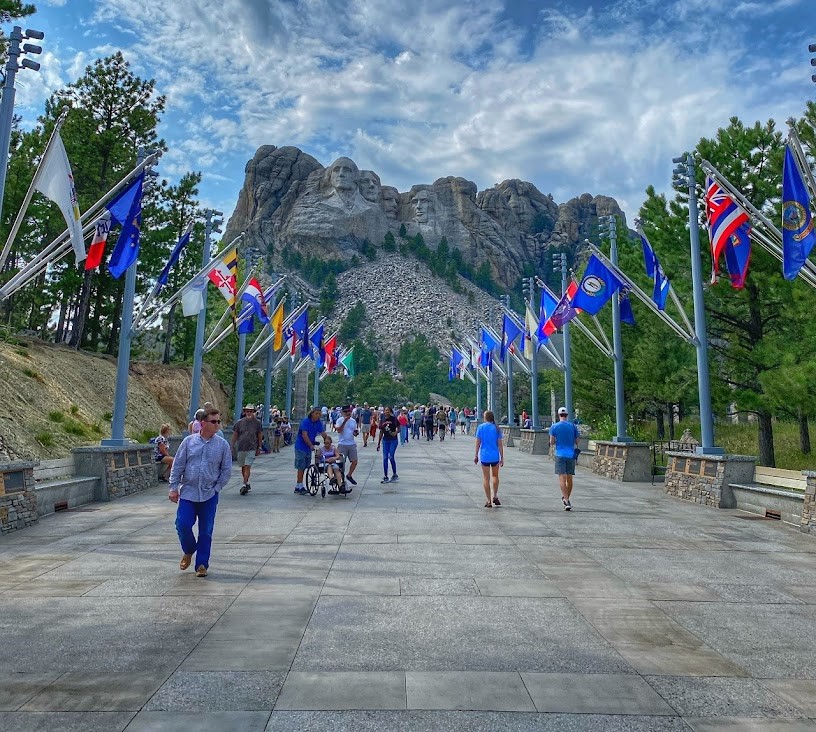
Mount Rushmore National Memorial in the Black Hills of South Dakota.

The memorial, walking paths, exhibits, and surrounding granite setting provide historical and visual context, but the visit becomes more interesting when connected with the roads around it.

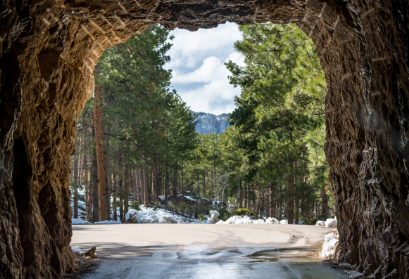
Iron Mountain Road, Needles Highway, and Custer State Park can turn a Mount Rushmore stop into part of a complete driving day rather than an isolated monument visit. Tunnels frame distant views, curves reveal granite formations, and the transition from memorial to forest and wildlife feels natural.

This is another reason the Black Hills resist checklist travel. The places are close enough to connect, but different enough that each deserves attention.

Black Hills National Forest Fills the Space Between the Landmarks

Black Hills National Forest surrounds and connects many of the region's best-known destinations. It includes scenic roads, lakes, campgrounds, trailheads, higher elevations, quiet valleys, and large areas that receive far less attention than the major parks.

Black Hills National Forest with pine-covered hills and open views.

For many travelers, the forest is where the journey becomes more self-directed. A day may begin with a known destination, then change because of a lake, forest road, trail sign, or overlook encountered along the way.

Developed campgrounds and legal dispersed-camping opportunities may be available in portions of the forest, but rules, closures, road conditions, fire restrictions, and stay limits vary. Travelers should confirm current information with the appropriate Forest Service office rather than assuming every open road or clearing permits overnight use.

The forest is not empty space between attractions. It is what allows the Black Hills to feel continuous.

The Region Rewards Travelers Who Slow Down

It is easy to create an ambitious Black Hills itinerary. Mount Rushmore in the morning, Needles Highway at midday, Wildlife Loop in the afternoon, Deadwood the next morning, Spearfish Canyon after lunch, and Devils Tower before sunset.

That schedule is possible. It is also a good way to miss why the region is special.

The best moments are often the ones that were never planned. A lake that was not on the itinerary, a herd of bison bringing traffic to a standstill, mountain goats climbing granite beside the road, or an extra mile on a trail because the view around the next bend looks too inviting to ignore can reshape the day completely. Those moments are difficult to schedule, and they are often the ones remembered most.

The Black Hills are not difficult to reach.

They are difficult to rush well.

Camping Creates the Flexibility the Region Deserves

Camping plays an important role in exploring the Black Hills because it allows travelers to remain close to the landscape and adjust the trip as it develops.

A few nights near Spearfish can support exploration of the canyon, Deadwood, Lead, and Devils Tower. Moving south can place travelers closer to Custer State Park, Black Elk Peak, Little Devils Tower, Wind Cave, and the Needles Highway.

This is often more practical than trying to hold one base for the entire region. The distances are manageable, but repeated day trips can consume hours that would be better spent on the trails, scenic roads, or at the campground.

A mix of state park campgrounds, national forest campgrounds, private campgrounds, and other legal overnight options gives travelers the ability to shape the route without booking a separate hotel for every night.

A Campervan Supports the Journey Without Defining It

One advantage of traveling the Black Hills by campervan is that the day does not have to end because the drive did. A scenic overlook can become a place for dinner, a quiet campground can become home for the night, and tomorrow's hike can begin only minutes away instead of after another hotel checkout and morning drive.

A smaller campervan fits naturally into a region where travelers move between towns, trailheads, narrow scenic roads, wildlife areas, lakes, campgrounds, and national park sites throughout the day. The vehicle simply supports the journey without becoming the center of it.

That flexibility matters when weather changes, wildlife appears, one stop deserves more time, or another can wait until tomorrow. Camping allows the Black Hills to be experienced as a connected region rather than as a sequence of appointments tied to distant hotel reservations.

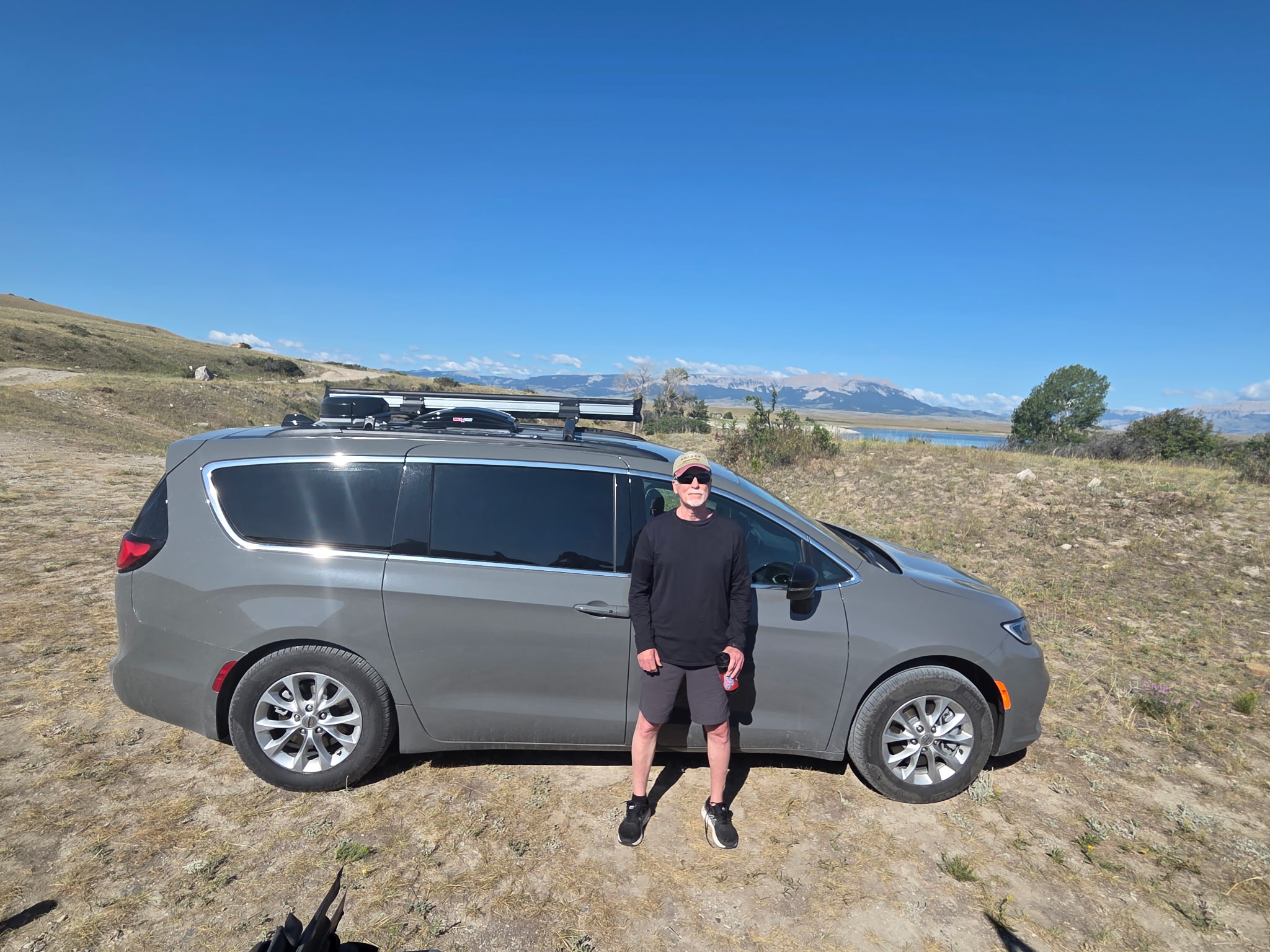
Pacifica AWD Mini-T Campervan traveling through the Black Hills region.

How the South Dakota Road Trip Fits Together

For travelers arriving from the east on Interstate 90, the journey can begin long before the Black Hills appear.

Mitchell and the Corn Palace provide a memorable stop in eastern South Dakota. The Missouri River near Chamberlain marks a major change in the landscape. Badlands National Park and Wall introduce the dramatic western terrain before the road reaches Rapid City and the Black Hills.

From there, Spearfish becomes a natural northern base, while Custer State Park anchors the southern portion of the trip.

Seen this way, the South Dakota journey is not a collection of unrelated destinations. It is a progression. Prairie, river, badlands, forest, granite, wildlife, historic towns, and mountain roads all unfold along the same route.

That is what makes the three articles work together: the I-90 and Corn Palace story explains the journey west, the Custer State Park guide explores the park in depth, and this Spearfish article helps travelers understand how the larger Black Hills region connects.

The Black Hills Are Defined by Connection

Many destinations are defined by one landmark. The Black Hills are different.

They are defined by how everything connects.

Spearfish Canyon leads into the northern hills. Deadwood and Lead reveal the region's history. Devils Tower extends the journey west. Mount Rushmore, Custer State Park, Wind Cave, and the national forest create an entirely different experience farther south.

Spearfish may be where many journeys begin, but what most travelers remember are the miles in between: the winding canyon roads, granite peaks, wildlife beside the highway, quiet evenings at camp, and the unexpected places that were never part of the original itinerary.

The Black Hills have a way of turning a destination into a journey. That may be why so many people find themselves planning a return trip before the first one is even over.

Happy Travels!

Learn more about Mini-T Campervans from DLM-Distribution.

DLM-Distribution / Campervans is a licensed manufacturer and dealer located in Lake Crystal, Minnesota, serving clients around the country.

Contact Dave: 651-285-7089 or Candy: 507-382-9446 today!

```