
From Balloons to Byways: Exploring Albuquerque and Northern New Mexico by Campervan
Albuquerque is one of those places where the landscape seems to explain the city. The Rio Grande cuts a green corridor through an otherwise dry country. The Sandia Mountains rise dramatically to the east. Historic neighborhoods reflect centuries of Native American, Spanish, Mexican, and American influence, while roads leading away from the city quickly return to open desert, volcanic terrain, mountain forests, and small communities scattered across northern New Mexico.
For a campervan traveler, that combination makes Albuquerque more than a destination. It can become the center of a road trip. You can spend a morning walking through Old Town, follow the Rio Grande beneath cottonwoods in the afternoon, watch the Sandias change color toward sunset, and then begin the next day on a road leading toward Jemez Springs or another corner of New Mexico. In October, hundreds of hot-air balloons add something altogether different to the landscape.
Old Town Is a Good Place to Begin
Albuquerque's history is easiest to appreciate when you slow down enough to walk through it. Old Town dates to the city's Spanish colonial beginnings in the early 1700s, and the streets surrounding the central plaza remain a natural starting point for exploring Albuquerque on foot.
Adobe architecture, courtyards, shops, galleries, museums, restaurants, and narrow streets create a very different experience from the modern city surrounding them. At the north side of the plaza stands San Felipe de Neri Church, one of Albuquerque's enduring landmarks and a reminder that this part of the city has been a gathering place for generations.
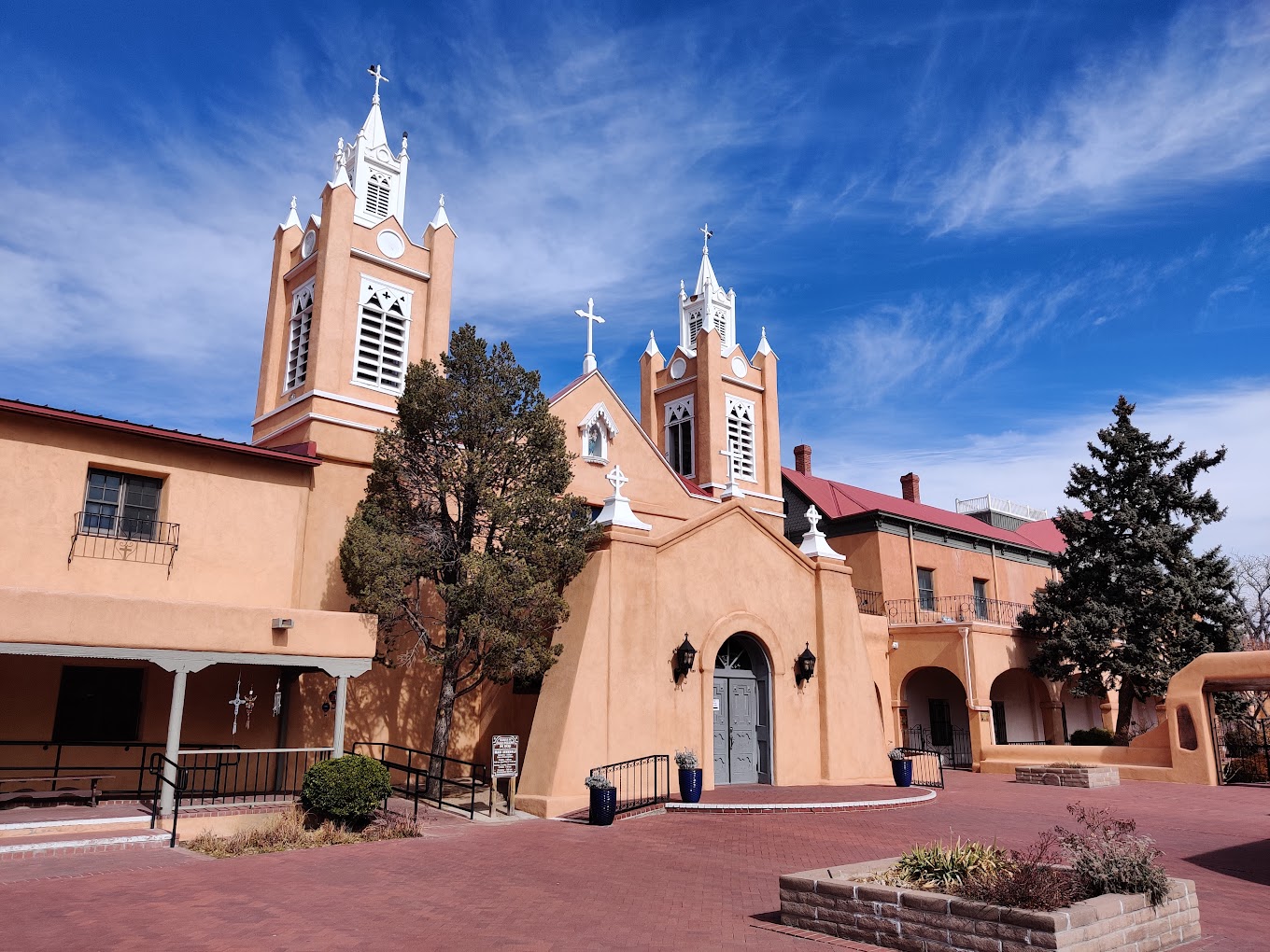
Old Town is also a good introduction to something that becomes increasingly apparent as you travel through New Mexico: its history is not represented by a single culture or period. Pueblo communities were here long before Albuquerque was established, Spanish settlement added another layer, Mexico governed the region for a time, and the arrival of the United States brought still more change. Modern Albuquerque carries pieces of all of those histories.
The Rio Grande Creates a Different Albuquerque
From a distance, Albuquerque can appear to belong entirely to the high desert. Get close to the Rio Grande and the landscape changes. Cottonwoods and other riparian vegetation form the bosque, a ribbon of green following the river through the metropolitan area and providing habitat for birds and other wildlife.
Rio Grande Nature Center State Park offers one of the easiest ways to experience it. The park sits along the Rio Grande flyway and includes wildlife-viewing areas, ponds, gardens, interpretive trails, and access to the larger network of city trails along the river. It is a day-use park rather than a campground, making it a place to explore before returning to camp elsewhere. The adjacent trail system also connects with Albuquerque's miles-long Paseo del Bosque corridor.
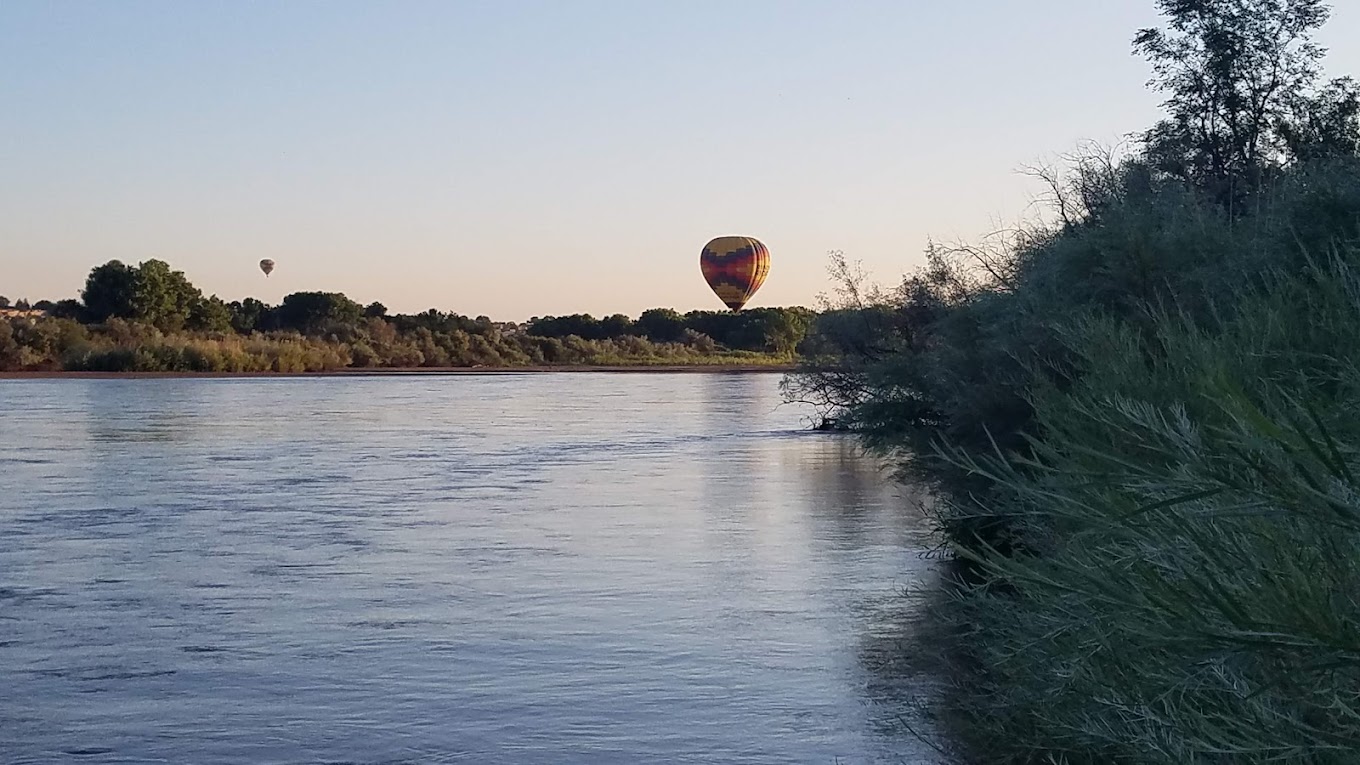
The contrast is part of what makes Albuquerque interesting. Within the same day, a traveler can move from historic adobe buildings to a cottonwood forest along the Rio Grande and then look east toward mountains rising thousands of feet above the city.
The Sandia Mountains Are Always Part of the View
The Sandia Mountains form Albuquerque's eastern horizon, but they are more than scenery. Roads and trails lead from the desert foothills toward higher elevations where the environment changes dramatically. Depending on the season and route, a day can begin among cactus and desert vegetation and end among mountain forests.
That elevation is worth remembering when planning an Albuquerque trip. The city itself sits roughly a mile above sea level, while the surrounding mountains rise considerably higher. Temperatures can change quickly with elevation, and a warm afternoon in Albuquerque does not necessarily tell you what conditions will be like higher in the Sandias.
For road travelers, that vertical landscape adds another dimension to exploring the city. Albuquerque is not simply surrounded by scenery; the scenery can become the next part of the trip.
Then October Arrives and Albuquerque Looks Up
For nine days each October, Albuquerque's relationship with the sky becomes impossible to miss. The Albuquerque International Balloon Fiesta brings hundreds of hot-air balloons to Balloon Fiesta Park for mass ascensions, balloon glows, competitions, and other events. The 2026 Balloon Fiesta is scheduled for October 3 through October 11.
Seeing photographs of the Fiesta is one thing. Being there early in the morning as balloons inflate across the field is something else entirely. Albuquerque's cool autumn mornings and local wind patterns can produce the famous “Albuquerque Box,” atmospheric conditions that sometimes allow balloon pilots to navigate in different directions at different elevations.
For RV travelers, the event is especially interesting because Balloon Fiesta offers official RV camping at the event itself. Options vary from dry camping in the South RV Lot to premium areas near the launch field, and reservations are a significant part of planning a Fiesta trip. Availability, pricing, and policies can change from year to year, so travelers should check current Balloon Fiesta information well before arriving.
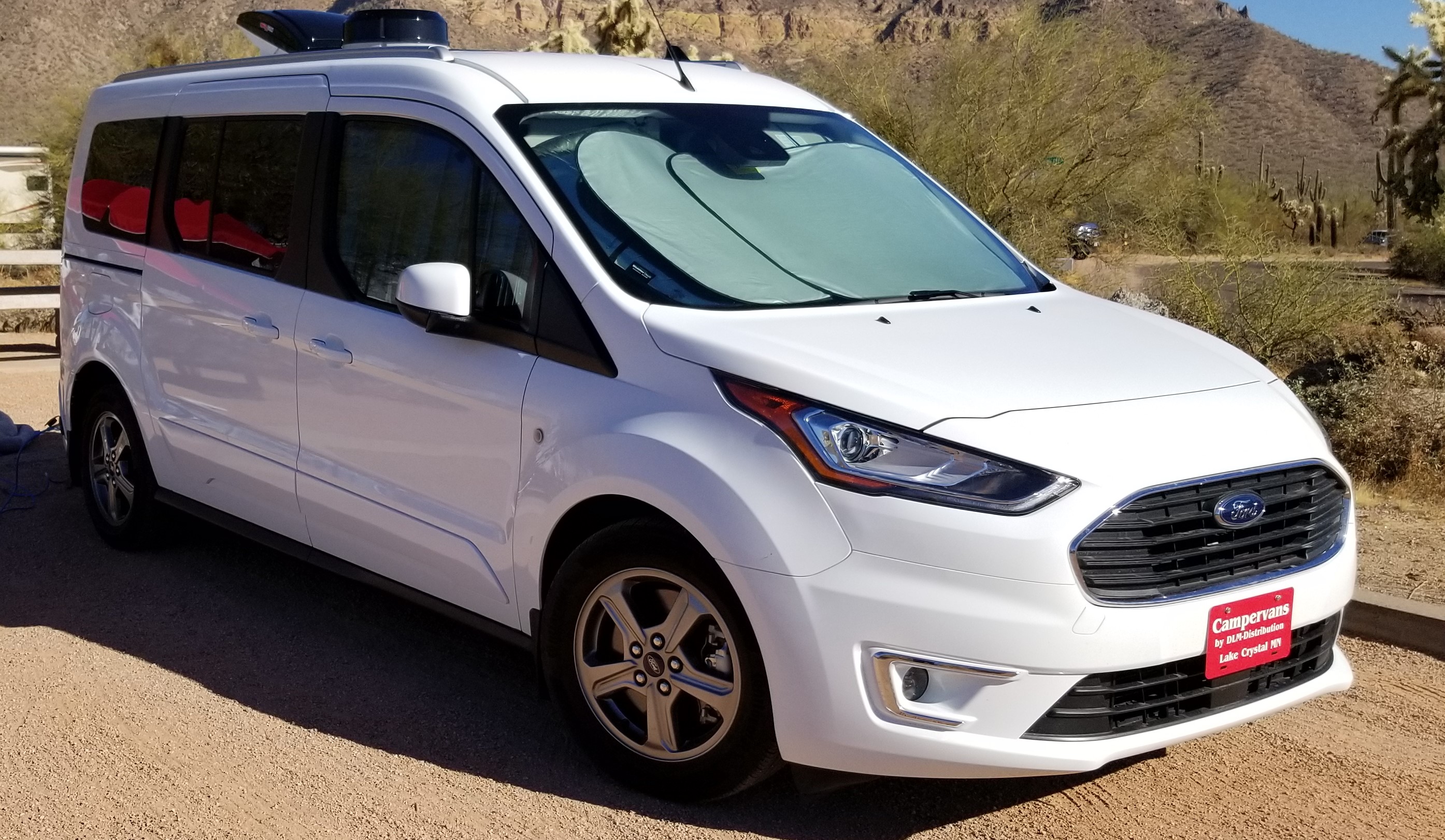
A campervan can work particularly well for an event like this because Balloon Fiesta mornings begin early. Having your own sleeping space, clothing, food, and travel necessities together in one vehicle can simplify a trip built around predawn starts and long days exploring Albuquerque.
New Mexican Food Belongs in the Road-Trip Story
Some destinations are remembered through landscapes. Albuquerque is also remembered through meals. New Mexican cooking has its own identity, with red and green chile appearing throughout menus alongside enchiladas, carne adovada, posole, sopapillas, breakfast burritos, and other regional dishes.
The familiar question “red or green?” refers to the choice of chile sauce, while ordering “Christmas” brings both. For a traveler, the food becomes another way of understanding the place rather than simply something to eat between attractions.
That makes Albuquerque especially well suited to the kind of campervan travel that mixes camping with time in town. Breakfast might come from your campsite one morning and a local restaurant the next. Lunch can follow a museum visit or a walk through Old Town, while dinner becomes part of an evening exploring the city rather than something that always has to happen back at camp.
Camping Around Albuquerque
Where you camp should depend on the kind of Albuquerque trip you want. Travelers primarily interested in exploring the city may prefer a developed campground with easy access to streets and services. Those using Albuquerque as the beginning of a larger New Mexico road trip may be happier gradually moving outward toward national forest country and smaller communities.
Albuquerque KOA Journey provides a developed campground option for travelers who want to remain close to the city and have traditional campground amenities. For a trip centered on museums, Old Town, restaurants, Balloon Fiesta activities, or other urban attractions, that convenience can matter more than having a remote campsite.
During Balloon Fiesta, the event's own RV camping provides another possibility and a completely different experience. Staying near Balloon Fiesta Park can put the event itself at the center of the trip, although reservations and advance planning become especially important during one of Albuquerque's busiest periods of the year.
Coronado Campground in Bernalillo provides another base north of Albuquerque, placing travelers closer to the Rio Grande while also positioning them well for continuing north or west into other parts of New Mexico.
The larger lesson is not to choose a campground simply because it appears on a list. Choose it according to what you want to do the following morning. A city-focused day, a Balloon Fiesta morning, and a departure toward the Jemez Mountains may each favor a different location.
Cibola National Forest Opens the Door to a Different Landscape
Albuquerque sits beside an enormous amount of public land, and Cibola National Forest encompasses mountain ranges and landscapes spread across a broad portion of New Mexico. For travelers accustomed to developed campgrounds, national forest travel can introduce a very different style of camping.
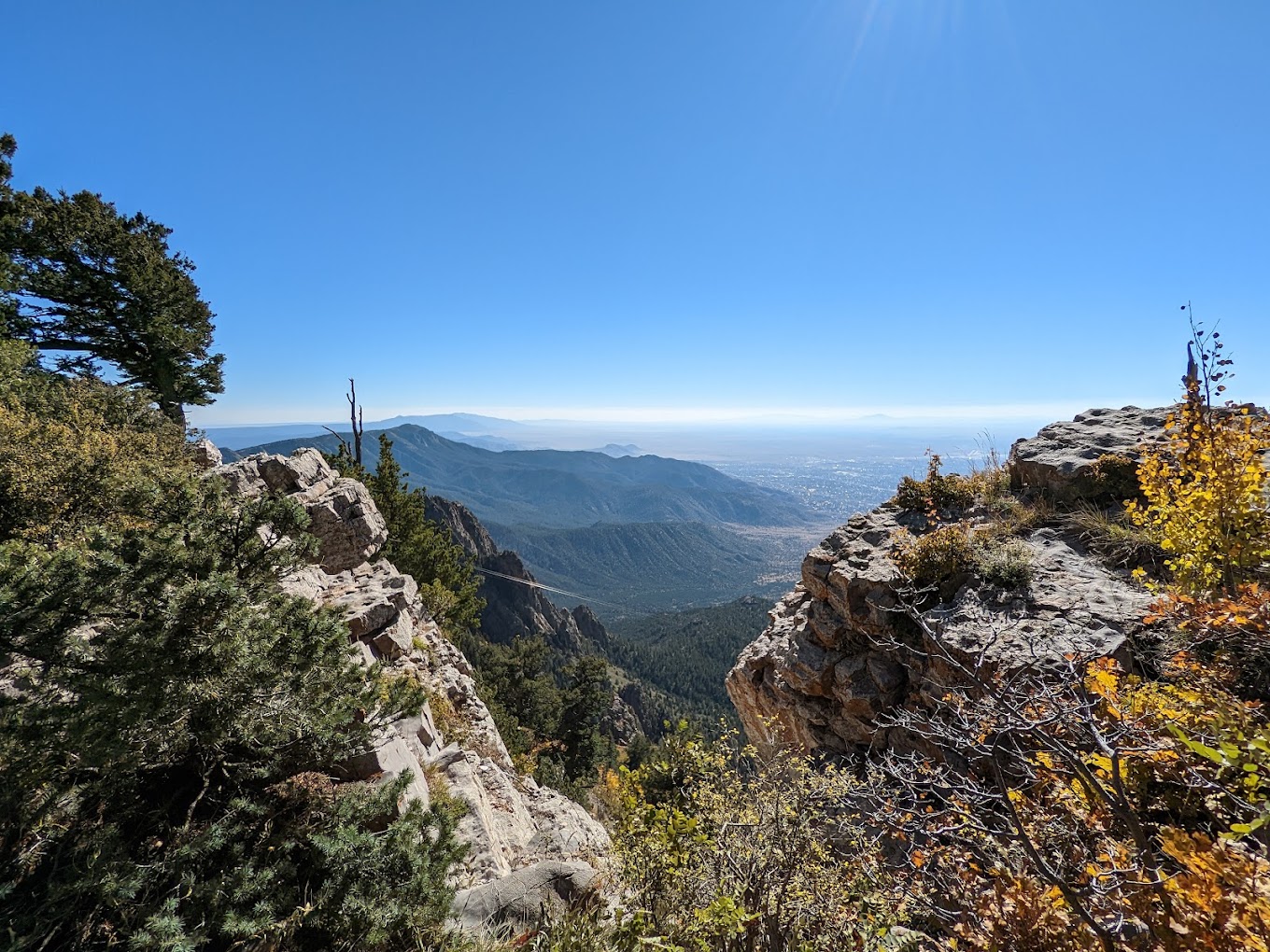
Some areas provide developed campgrounds, while dispersed camping may be permitted in appropriate locations under current forest rules. Conditions, road access, fire restrictions, seasonal closures, and camping regulations can change, so checking with the appropriate Forest Service district before heading into a remote area is part of responsible trip planning.
This is also where a smaller campervan begins to show a different kind of advantage. The goal is not to treat it as an off-road vehicle, but simply to have a travel vehicle that remains manageable as roads become narrower, campsites become smaller, and the journey moves farther from city streets.
Follow the Road Toward Jemez Springs
If Albuquerque is the center of the trip, the Jemez Mountains make a compelling extension. The road toward Jemez Springs leads into a landscape shaped by volcanic activity, flowing water, red rock, forest, and elevation. The transition from Albuquerque's urban high desert to mountain country is part of the experience.
Campgrounds in the Jemez area can provide a base for hiking and exploring, including developed Forest Service camping in season. Rather than treating Jemez Springs as another attraction to check off a list, it can be worth allowing a night or two for this part of the journey. The slower pace lets the landscape change around you instead of turning the drive into an out-and-back excursion from Albuquerque.
That is one of the pleasures of traveling with your accommodations. When a road becomes interesting, you do not necessarily have to turn around simply because your hotel is back in the city.
Military Travelers Have Another Albuquerque Option
For eligible travelers with military access, Kirtland Air Force Base FamCamp can provide another camping option in Albuquerque. Access requirements and current availability should be confirmed directly before making it part of a trip plan.
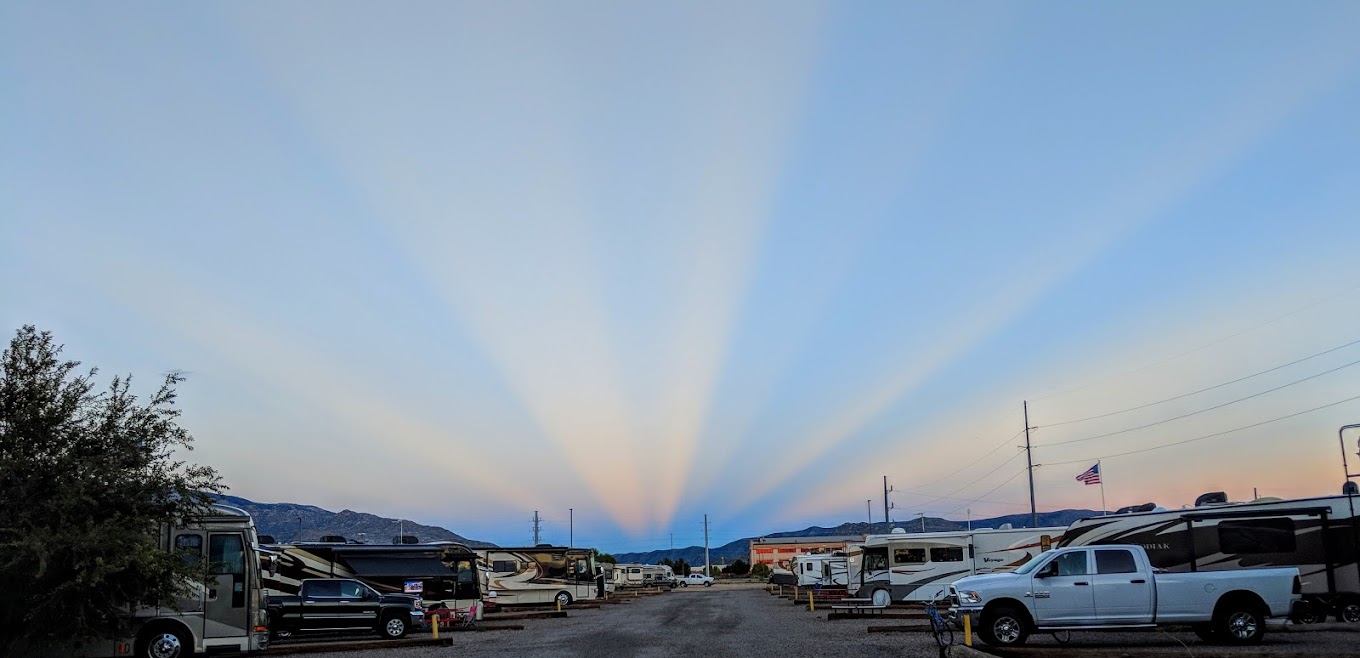
A Campervan Lets Albuquerque Become Part of the Road
Albuquerque illustrates something that is easy to miss when travel is planned entirely around individual attractions: the memorable part may not be any single stop, but the transition between them.
You leave a campground in the morning and drive into Old Town. Later, the road follows the Rio Grande beneath cottonwoods. The Sandia Mountains remain on the horizon while the city gives way to open country. Another day begins before sunrise beneath hundreds of balloons. Then Albuquerque falls behind as the campervan climbs toward the Jemez Mountains.
A smaller campervan fits this kind of trip particularly well because the same vehicle can move between campground and city without requiring a second vehicle for exploring. It can park for a museum or restaurant, carry everything needed for the day, return to camp in the evening, and continue down another road the following morning.
That practicality matters in a place like New Mexico, where some of the most interesting experiences are separated by miles of road and dramatic changes in landscape.
Let Albuquerque Be the Beginning, Not Just the Destination
Come for the balloons if that is what first puts Albuquerque on the map. Walk through Old Town. Spend time beside the Rio Grande. Look toward the Sandias as the light changes late in the day. Try the chile. Then leave enough room in the itinerary for the road itself.
Albuquerque's real strength as a campervan destination may be what happens when the city and the landscape begin to blend together. One day is urban and historic, another follows a river, another begins beneath a sky filled with balloons, and the next can lead into mountains, forests, volcanic country, or another small New Mexico community.
The campervan does not need to be the center of that story. It simply makes it easier to keep following it.
Happy Travels & Happy Camping!
DLM-Distribution / Campervans is a licensed manufacturer and dealer located in Lake Crystal, Minnesota, serving clients around the country.
Contact Dave: 651-285-7089 or Candy: 507-382-9446 today!