
Minimalist Travel: Discovering the Freedom of Traveling with Less
There is something appealing about leaving home with only what you need. A few changes of clothes, comfortable shoes, a place to sleep, and enough flexibility to decide where the next day might take you. No elaborate itinerary, no collection of reservations to manage, and no need to bring along everything you own simply because there is room for it. The idea is refreshingly simple: travel comfortably, carry what matters, and leave enough time to enjoy the places you came to see.
For many travelers, this is the appeal of minimalist travel. It isn't necessarily about giving up comfort, counting possessions, or fitting everything into the smallest possible space. It is about making thoughtful choices that reduce unnecessary complications. A quiet morning beside a lake, an afternoon exploring a small town, or an unexpected stop along a scenic highway can be more memorable than an itinerary filled with attractions. Sometimes the most rewarding journeys are the ones that leave enough room for those moments to happen naturally.
Minimalist travel begins with a useful question: What do we actually need to enjoy the journey? The answer is different for everyone, but the process of considering it can change the way we plan, pack, and experience the road.

Making Room for Experiences Rather Than Possessions
Minimalism is often associated with owning fewer things, but its principles extend naturally to travel. The objective isn't simply to pack a smaller bag. It is to reduce the number of things competing for your time, attention, and energy. Instead of measuring the success of a vacation by how many attractions you visit, the emphasis shifts toward the quality of the experiences themselves.
Consider the difference between a vacation that requires months of carefully coordinated arrangements and a road trip that begins with a general direction and a few destinations you'd like to explore. Both approaches have their place, but the second offers a particular kind of freedom. You can spend an extra afternoon somewhere interesting, change your route because of the weather, or discover a campground you hadn't originally considered. A scenic two-lane highway might become more appealing than the interstate, and a small-town restaurant might turn into one of the most enjoyable stops of the trip.
That flexibility doesn't mean abandoning plans or avoiding popular destinations. It means recognizing that a memorable journey is often shaped by the experiences between the places marked on a map. When every hour isn't committed in advance, there is more opportunity to appreciate the surroundings, meet people, and enjoy the unexpected.

Less Planning, More Flexibility Along the Way
Travel can become surprisingly complicated when every day depends on a series of reservations, schedules, and carefully coordinated activities. Hotels need to be booked, check-in times must be considered, and meals and transportation often revolve around where you're staying. There is nothing inherently wrong with that approach, particularly when visiting destinations where advance arrangements are essential. But for travelers who enjoy flexibility, reducing the number of moving parts can make the experience considerably more relaxing.
Campervan travel offers an interesting alternative because transportation and overnight accommodations travel together. You might spend the morning exploring a state park, stop for lunch in a nearby community, and continue toward your next campground without needing to return to a hotel or coordinate separate transportation. Having your personal belongings and everyday conveniences along also makes it easier to adjust plans when an interesting opportunity presents itself.
Of course, popular national parks, coastal campgrounds, and holiday destinations can require reservations well in advance. Weather, seasonal road closures, and campground operating schedules deserve attention as well. Minimalist travel isn't the absence of preparation; it is about making arrangements where they matter while avoiding an unnecessarily rigid schedule. Reserving a few important overnight stops while leaving other days open for exploration can provide a comfortable balance between certainty and spontaneity.
Traveling Light Without Sacrificing Comfort
One of the misconceptions about minimalist travel is that it requires sacrificing the comforts that make a journey enjoyable. In reality, the objective is to identify which conveniences genuinely improve the experience and which ones add little value. A comfortable place to sleep, food and cold drinks, clothing suited to changing weather, and a practical way to prepare simple meals can make a substantial difference. Beyond those essentials, individual interests determine what deserves a place in the vehicle.
Some travelers enjoy bringing bicycles, fishing equipment, or hiking gear. Others are happiest with a camera, a good book, and a pair of walking shoes. The important distinction is between carrying something because you'll use and enjoy it and bringing it simply because there is room available. Most experienced travelers eventually discover that certain items rarely leave their storage compartments, whether it's extra clothing, duplicate equipment, or accessories purchased for situations that never occur.
A thoughtful approach is to begin with the essentials and add items as experience demonstrates a genuine need. Clothing that works in several situations reduces packing requirements, while a modest collection of utensils and dishes can handle everyday meals. Keeping frequently used items accessible makes life easier than filling every compartment. After each trip, consider what you actually used and what remained untouched. Over time, your travel equipment becomes better suited to the way you personally enjoy exploring.
Traveling light doesn't mean traveling without the things you love. It means giving those things a purpose and a place, creating an organized environment that requires less attention and leaves more time for the journey.
Why Smaller Vehicles Can Make Travel Feel Bigger
There is an interesting contrast in traveling with a smaller vehicle: having less interior space can sometimes provide greater freedom outside it. Think about the places that make a road trip enjoyable. Historic downtowns, coastal communities, scenic overlooks, national parks, local restaurants, and small shops are often part of the experience. A large recreational vehicle can provide generous living space, but its dimensions may also influence where you park, which roads you take, and how easily you can stop along the way.
A smaller campervan changes that equation. Parking becomes more familiar, fuel stops are generally easier to navigate, and exploring a community doesn't necessarily require finding an oversized parking area or arranging another vehicle for local transportation. For travelers who spend most of their days sightseeing, hiking, visiting friends, or enjoying the outdoors, those practical advantages can matter more than having a larger living area.
There is also a difference in how a smaller vehicle fits into an ordinary day of travel. Stopping at a grocery store, visiting a restaurant, or taking an unplanned detour can feel much like traveling in a passenger vehicle. You can enjoy the conveniences of having your camping accommodations along without making every stop revolve around the size of the RV. In this way, the vehicle supports the trip rather than becoming the center of it.
Discovering More by Slowing Down
Minimalist travel encourages a different relationship with time. It can be tempting to plan a road trip around the greatest possible number of destinations, perhaps visiting a national park in the morning, a historic attraction in the afternoon, and covering another hundred miles before sunset. There is satisfaction in seeing new places, but some of the best travel experiences happen when you allow yourself to stay a little longer.
Imagine arriving at a quiet campground near a river. You planned to spend one night, but the walking trails are beautiful, the weather is pleasant, and there's a nearby town you'd like to explore. If your schedule allows, staying another day might lead to an afternoon watching wildlife, visiting a local museum, or simply enjoying the surroundings without a particular agenda. What began as an overnight stop becomes one of the more memorable parts of the journey.
There is value in seeing famous destinations, but there is also value in experiencing ordinary places at an unhurried pace. A county park, a small community, or an unexpected stretch of coastline may not appear on a list of major attractions, yet these places often provide the atmosphere and experiences travelers remember long afterward. Slowing down makes it easier to notice what would otherwise pass by the window.
Enjoying Travel Without Making Every Experience Expensive
Minimalist travel can also change how people think about the cost of a vacation. Memorable experiences don't always require expensive attractions, elaborate accommodations, or a carefully planned schedule of paid activities. A walk along a public beach, a scenic drive through the mountains, an afternoon in a historic downtown, or a visit to a state park can provide an enjoyable day without a substantial entertainment budget.
Public lands offer opportunities for hiking, wildlife viewing, photography, and spending time outdoors, while smaller communities frequently have interesting museums, waterfront parks, local festivals, and historical sites worth exploring. These experiences are often among the most enjoyable parts of a road trip because they encourage travelers to become familiar with the places they're visiting rather than simply passing through.
Having your own sleeping accommodations and basic food preparation conveniences can provide additional flexibility in how you spend your money. Fuel, campground fees, maintenance, and other travel expenses remain part of the equation, of course. Minimalism doesn't make travel free, but it can encourage more intentional spending. Rather than paying for every available convenience, you can choose the experiences that are genuinely important to you and direct your travel budget accordingly.
Keeping Life Simple Between Trips
The practical benefits of traveling simply don't necessarily end when the trip is over. One of the considerations of RV ownership is what happens between journeys. Larger motorhomes and travel trailers may require dedicated storage, additional parking space, or a separate vehicle for everyday transportation. For some owners, those arrangements are worthwhile, but for others, they introduce responsibilities that don't fit the simpler travel experience they're looking for.
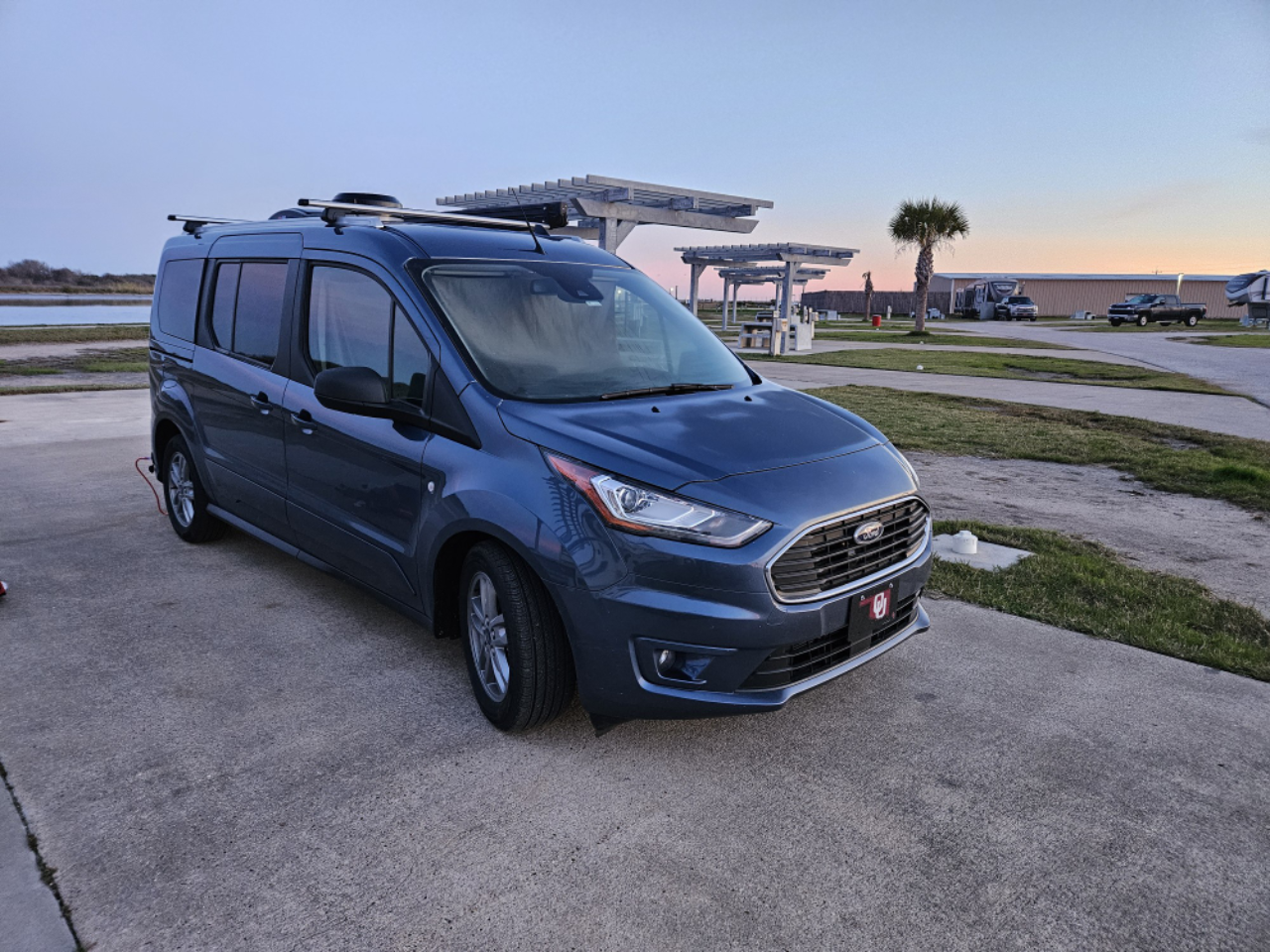
A smaller campervan that can also serve as everyday transportation offers another approach. Garageable campervans, including the Ford Transit Connect, Chrysler Pacifica AWD, and Chrysler Voyager Mini-T models, are manufactured to fit through a standard seven-foot residential garage door, subject to individual garage dimensions and clearance. This allows owners to store their campervan at home, protected from the weather and readily available for regular driving as well as longer journeys.
Indoor storage can also be helpful in neighborhoods with restrictions on visible outdoor RV parking, although individual homeowners association rules should always be reviewed. For someone who values simplicity, reducing the need for separate storage arrangements or an additional travel-only vehicle can be an important part of the ownership experience. The same vehicle used for a weekend at a state park can also handle errands, appointments, and ordinary transportation during the week.

How the Mini-T Fits a Minimalist Approach to Travel
The Mini-T Campervan reflects many of the practical ideas behind minimalist travel, not because it eliminates useful conveniences, but because it brings them together in a compact, manageable vehicle. Sleeping accommodations for two, a refrigerator, microwave, sink with fresh water, and onboard electrical capability provide the essentials for comfortable travel and camping without requiring the size of a conventional motorhome.
Solar-assisted charging, alternator charging while driving, shore power, and 120V off-grid electrical power allow travelers to enjoy everyday conveniences without depending on a generator for normal operation. The smaller Mini-T platforms also retain familiar passenger-vehicle driving characteristics, making them practical for daily errands, sightseeing, and longer highway journeys. These capabilities help support a travel style in which the vehicle remains easy to use, whether the destination is a nearby campground or a cross-country adventure.
There are larger RVs with more living space and additional amenities, and those may be the right choice for travelers who want them. The Mini-T takes a different approach by providing the equipment needed for comfortable travel while maintaining the convenience of a smaller vehicle. For people who enjoy spending their days exploring rather than remaining inside their RV, that balance can be especially appealing.
The Real Reward of Traveling With Less
Minimalist travel isn't about proving how little you can live with. It is about recognizing what makes a journey worthwhile and arranging the rest of the experience around those priorities. For one traveler, that might mean spending weeks exploring national parks, following scenic highways, and discovering new communities. For another, it could be a series of weekend trips to nearby lakes, small towns, and favorite campgrounds. Both approaches offer the opportunity to enjoy travel without unnecessary complications.
Some people will enjoy preparing meals at their campsite and watching the sunset, while others will spend their days visiting museums, restaurants, and local attractions before returning to a quiet place for the evening. There is no single correct way to travel simply, and there is no need to sacrifice the activities or comforts that make a trip personally rewarding.
What these experiences share is the freedom to enjoy the destination without allowing possessions, equipment, or complicated arrangements to dominate the journey. When the practical details become easier to manage, there is more time to appreciate the landscapes, communities, and unexpected discoveries along the way. That is the real appeal of minimalist travel: not necessarily having less, but making more room for what matters.
Happy Travels & Happy Camping!

DLM-Distribution / Campervans is a licensed manufacturer and dealer located in Lake Crystal, Minnesota, serving clients around the country.
Contact Dave: 651-285-7089 or Candy: 507-382-9446 today!