
How Are Campervans Classified? Understanding RV Classes and Where Campervans Fit In
When exploring recreational vehicles for the first time, it does not take long to encounter terms such as Class A, Class B, Class C, travel trailer, fifth wheel, and campervan. These classifications describe different types of RVs, but understanding what separates them can be confusing for buyers beginning their research.
One of the most common questions is straightforward: What exactly is a campervan, and how is it classified?
In the RV industry, a purpose-built campervan is generally classified as a Class B motorhome. Class B motorhomes are built using van-based vehicle platforms, with sleeping accommodations and camping systems incorporated into the vehicle itself.
However, understanding the Class B designation is only part of the picture. Recreational vehicles range from compact campervans and lightweight camping trailers to large motorhomes designed for extended living. Each type offers a different balance of interior space, driving convenience, fuel economy, storage requirements, and ownership expenses.
Learning how these classifications differ can help buyers choose an RV that supports the way they actually want to travel, rather than simply purchasing the largest vehicle or the one with the most features.

Understanding the Two Main Types of Recreational Vehicles
Recreational vehicles generally fall into two broad categories: motorized RVs and towable RVs. This distinction matters because it influences how the vehicle is driven, maintained, stored, and used after arriving at a destination.
Motorized RVs combine transportation and camping accommodations in one vehicle. The three familiar motorhome classifications are Class A, Class B, and Class C. Each has its own construction characteristics, size range, and approach to living space.
Towable RVs are separate camping units pulled by a suitably equipped car, SUV, or pickup truck. These include travel trailers, fifth wheels, pop-up campers, and teardrop trailers. Owners can generally disconnect the trailer at a campground and use the tow vehicle independently, although they must also account for towing capability, equipment, and trailer storage.
Neither approach is inherently better. A motorhome provides the convenience of having transportation and accommodations together, while a towable RV allows the camping unit to remain at the destination when the owner wants to drive elsewhere. The better choice depends on travel habits, household needs, and the vehicles already available.
What Is a Class A Motorhome?
Class A motorhomes are generally the largest of the three primary motorized RV classifications. Built on dedicated motorhome or commercial-style chassis, they typically have a broad, bus-like appearance and provide substantial interior living space.
Many Class A motorhomes measure approximately 26 to 45 feet or more in length. Depending on the model, they may include multiple slide-outs, large refrigerators, extensive storage compartments, spacious bathrooms, separate sleeping areas, and other amenities suited to extended travel.
These motorhomes are particularly appealing to travelers who spend weeks or months at campgrounds and RV resorts. Their generous interiors can provide comfortable living arrangements for seasonal travelers and people who use their RV as a full-time residence.
That additional space comes with practical considerations. Large motorhomes generally consume more fuel, require more room for maneuvering and parking, and cannot fit inside standard residential garages. Owners may need dedicated RV storage, larger campsites, and additional planning when traveling through smaller communities or visiting destinations with vehicle-length restrictions.
Some Class A owners also tow a passenger vehicle, often called a towed vehicle or "toad," for local transportation after arriving at their destination. This can provide welcome flexibility but may introduce additional equipment, maintenance, and ownership expenses.
For travelers who value substantial living space and spend extended periods in one location, a Class A can be an excellent choice. For those who prefer frequent stops, spontaneous detours, and exploring smaller destinations, its size may be less convenient.

What Is a Class C Motorhome?
Class C motorhomes are commonly built on truck or van cutaway chassis, with a separate motorhome body constructed behind the original driving compartment. Many are recognizable by an over-cab section that provides additional sleeping accommodations or storage, although not every Class C uses that space as a bed.
Class C motorhomes cover a wide range of sizes, from relatively compact models to larger coaches with slide-outs and extensive living accommodations. They often appeal to families and travelers who want more sleeping capacity and interior room than a typical campervan provides.
Depending on the floorplan, a Class C may include a dedicated bedroom, dining area, bathroom with shower, refrigerator, cooking appliances, and substantial storage. Some smaller Class C motorhomes can be easier to maneuver than large Class A coaches, although they remain considerably larger than most compact campervans.
Class C ownership also brings many of the considerations associated with larger motorhomes. Storage space, fuel consumption, tire replacement, maintenance, and campsite dimensions can all influence operating costs. Larger models may also be less convenient for everyday transportation or destinations with limited parking.
For families who need additional sleeping accommodations or travelers who prefer a larger living area, Class C motorhomes offer a useful balance of interior comfort and vehicle size.

What Is a Class B Motorhome?
A Class B motorhome is the RV classification most closely associated with a campervan. Rather than having a large motorhome body constructed on a separate chassis, Class B RVs generally retain the underlying van structure while incorporating sleeping accommodations and camping systems into the vehicle.
Class B motorhomes can be built on several types of van platforms, ranging from compact passenger and cargo vans to full-size high-roof vehicles. This creates considerable variation within the classification itself.
Some Class B campervans are designed primarily for extended travel, with standing-height interiors, bathrooms, larger refrigerators, and additional storage. Others emphasize compact dimensions, fuel economy, everyday driving, and convenient home storage.
The common advantage is that transportation and camping accommodations are combined in one vehicle. Travelers can move between destinations without towing a trailer or managing a separate motorhome and passenger vehicle.
Class B campervans are often easier to drive and park than larger motorhomes, and many can access destinations where vehicle length or parking availability makes a larger RV less practical. Their fuel economy and operating expenses can also be more favorable, although actual results depend on the chassis, engine, vehicle weight, and driving conditions.
For travelers who enjoy scenic byways, state parks, national parks, small towns, and frequent changes of destination, these characteristics can make the journey itself more convenient.

Not All Class B Campervans Are the Same Size
One of the most important distinctions within the Class B category is the difference between compact, garageable campervans and larger high-roof campervans. Both are Class B motorhomes, but their dimensions can create very different ownership experiences.
Many full-size Class B motorhomes are built on high-roof van chassis. Their increased interior height can provide standing room and additional living space, but it also makes them too tall for a typical residential garage door.
Compact Class B campervans take a different approach. By using lower-profile vehicle platforms, they can provide camping accommodations while retaining dimensions suitable for many residential garages and ordinary parking spaces.
For example, the garageable Mini-T Campervan models manufactured by DLM-Distribution include the Ford Transit Connect Mini-T, Chrysler Pacifica AWD Mini-T, and Chrysler Voyager Mini-T. These models have exterior heights of approximately 80 inches, making them suitable for many standard seven-foot residential garage doors when adequate clearance is available.
The Ford Transit Connect Mini-T measures approximately 189.7 inches in length, while the Chrysler Pacifica AWD Mini-T measures approximately 204.5 inches. These compact dimensions contribute to their everyday-driving practicality and convenient home storage.
By comparison, the larger Ford Transit-based Mini-T HR is a high-roof Class B motorhome with approximately 6 feet 4.5 inches of interior standing height. Its exterior height is approximately 10 feet, so it requires substantially more clearance and is not designed for standard residential garage storage.
The distinction illustrates why buyers should look beyond the Class B label. A campervan's classification describes its general construction, but its actual dimensions determine where it can be parked, how easily it can be maneuvered, and whether it can be stored at home.

What About Travel Trailers, Fifth Wheels, Pop-Ups, and Teardrops?
Although Class A, B, and C are familiar motorhome designations, many recreational vehicles do not belong to any of these three classes. Towable RVs have their own classifications based on their construction and how they connect to the tow vehicle.
Travel trailers are available in a wide variety of sizes and floorplans. They typically connect to a hitch at the rear of a vehicle. Smaller models may be compatible with properly equipped SUVs, while larger trailers often require capable pickup trucks. Travel trailers can provide substantial living space while allowing owners to use their tow vehicle separately at the destination.
Fifth-wheel trailers connect to a specialized hitch mounted in the bed of a pickup truck. They often offer generous interior space, multiple levels, and layouts well suited to extended stays. However, they require an appropriately equipped pickup and considerable room for storage and maneuvering.
Pop-up campers generally fold or collapse into a lower profile for towing and storage. Some can fit inside residential garages, making them attractive to buyers with limited storage space. They typically require more campsite setup than a motorhome, and owners need a vehicle with sufficient towing capacity, payload, and the necessary hitch and electrical equipment.
Teardrop trailers are compact towable campers that often emphasize simple sleeping accommodations and lightweight construction. Many are suitable for smaller campsites, and certain models can be stored in residential garages. Their features vary considerably, with some offering sophisticated electrical systems, refrigeration, and additional camping conveniences.
These towable options can be economical and practical, particularly for households that already own a suitable tow vehicle. Buyers should consider whether additional towing equipment is needed, whether their current vehicle is properly rated for the trailer, and where the trailer will be stored when not in use.
Why RV Classification Affects More Than Interior Space
RV classification influences nearly every aspect of ownership, including where the vehicle can be parked, how much fuel it uses, how easily it can be maneuvered, and what preparations are needed before a trip.
For example, a large Class A motorhome may provide outstanding comfort during an extended stay but require commercial RV storage when not in use. A Class C may offer sleeping accommodations for a family while still requiring a dedicated parking area. A travel trailer may provide excellent value when the owner already has a capable tow vehicle and a suitable place to store it.
A compact Class B campervan may offer less interior room but greater flexibility for everyday driving, shorter trips, and parking at home. A high-roof Class B may provide more interior comfort while giving up the garage-storage advantage of smaller campervans.
These differences matter because the purchase price represents only part of the financial picture. Insurance, registration, financing, maintenance, tires, fuel, depreciation, storage, campground fees, and towing-related expenses can vary substantially between RV types.
Buyers should also consider how often they intend to travel. A vehicle used for occasional weekend camping has different ownership considerations from one used for months of seasonal travel or as a full-time residence.
Comparing RV Classes and Their Ownership Costs
Understanding the differences between RV classifications becomes even more useful when buyers compare the expenses associated with each type. A larger RV may provide more interior space but require paid storage and higher operating expenses. A compact campervan may cost more to purchase than some towable alternatives but offer savings in storage, fuel, or everyday transportation, depending on how it is used.
To help travelers evaluate these differences, DLM-Distribution offers a free RV & Vehicle Cost of Ownership Calculator. The tool allows users to compare different RV classifications using adjustable estimates for purchase costs, financing, depreciation, fuel, insurance, maintenance, and storage. It also considers practical ownership differences, including towing requirements, garage storage, and whether a campervan could serve as an everyday vehicle.
Rather than assuming one RV classification is always the most economical, the calculator allows buyers to explore how their own driving habits, storage arrangements, and intended use can affect the results.
For someone comparing a Class A motorhome, Class C motorhome, garageable Class B campervan, or towable RV, this broader perspective can be valuable before making a purchase. It helps bring attention to expenses and practical considerations that may not be obvious when comparing vehicles on a dealership lot.
Why Garageability Matters When Choosing a Class B
For many RV buyers, storage is one of the most overlooked considerations. Traditional motorhomes and larger campervans frequently exceed the height of standard residential garage doors, leaving owners to consider outdoor parking, covered storage, or a commercial storage facility.
A garageable Class B campervan offers a different ownership experience. The vehicle can remain at home, protected from much of the weather and conveniently accessible for routine use, trip preparation, and maintenance.
For homeowners living in HOA communities, indoor garage storage can be particularly valuable. Many associations restrict outdoor RV parking, making it difficult to keep a conventional motorhome or trailer in the driveway. A campervan stored inside the residential garage avoids the outdoor parking issue that creates difficulties for many RV owners.
Garage storage can also eliminate recurring commercial storage fees and the inconvenience of retrieving an RV before each trip. For travelers who enjoy spontaneous weekends, nearby state parks, and frequent road trips, having the vehicle readily available can make a meaningful difference.
Actual garage dimensions should always be checked before purchasing. A nominal seven-foot garage door does not necessarily provide a full 84 inches of clear opening, and interior depth, overhead obstructions, and driveway approach angles also matter.
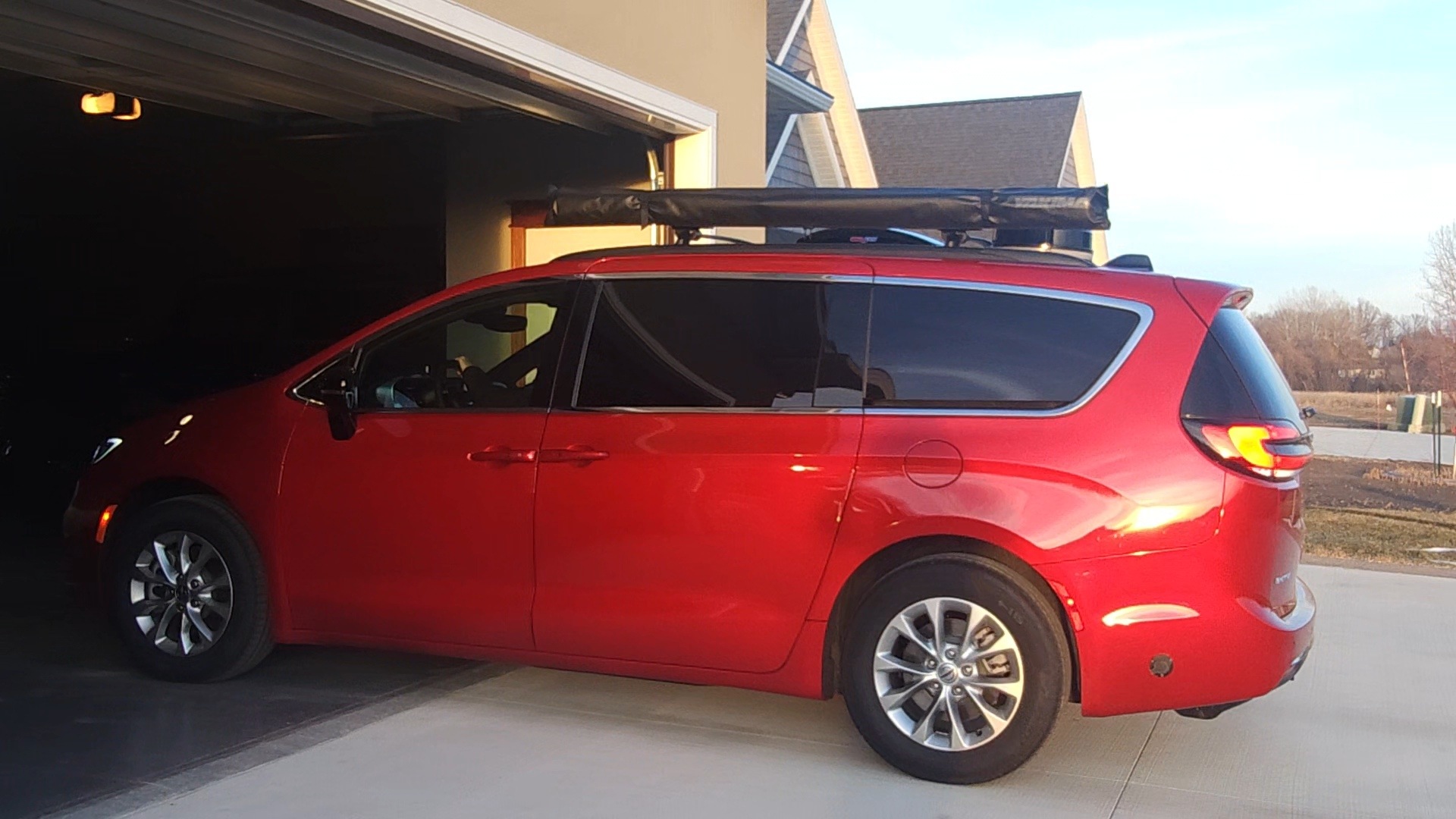
Everyday Driving and the Flexibility of a Smaller Campervan
One reason travelers choose compact Class B campervans is that they can be useful even when no camping trip is planned. A vehicle that fits into ordinary parking spaces and handles much like a passenger vehicle can serve purposes beyond recreation.
Depending on the model and household needs, a compact campervan may be used for commuting, shopping, appointments, visiting family, and other everyday transportation. This dual-purpose capability can be especially appealing to people who prefer not to maintain a separate recreational vehicle that spends most of the year parked.
It can also change how owners travel. Instead of planning every trip around retrieving, loading, and returning a large motorhome, they can leave directly from home, explore a destination, and return without extensive preparation.
Travelers interested in this ownership approach may also enjoy One Vehicle, Two Purposes: Why More Travelers Are Choosing Small Campervans as Everyday Vehicles, which explores the advantages of combining daily transportation and RV travel.
The Mini-T Campervan Within the Class B Category
The Mini-T Campervan is a Class B motorhome manufactured by DLM-Distribution in Lake Crystal, Minnesota. Its compact models are designed to combine camping accommodations with everyday driving practicality and residential garage storage.
The Ford Transit Connect Mini-T, Chrysler Pacifica AWD Mini-T, and Chrysler Voyager Mini-T provide sleeping accommodations for two, along with a refrigerator, microwave, sink, ventilation, and solar-supported electrical capability. Dedicated house batteries and an inverter provide 120-volt power away from campground hookups, including the ability to operate the microwave without a generator.
These features allow travelers to enjoy overnight camping and extended road trips without requiring a large motorhome. Their compact dimensions also make them practical for visiting scenic destinations, navigating smaller communities, and using the vehicle between camping trips.
The larger Mini-T HR serves a different purpose within the same Class B classification. Built on the Ford Transit 350 HD AWD dual-rear-wheel platform, it offers additional interior height and accommodations for travelers who prioritize more living space over garageability.
This variety illustrates why buyers should look beyond the Class B label alone. Two campervans can share the same classification while providing very different experiences in driving, parking, storage, and everyday use.

Which RV Classification Is Right for Your Travel Style?
The best RV classification depends less on which vehicle has the most features and more on how those features support the owner's preferred way of traveling.
For someone planning to spend several months at an RV resort, a Class A motorhome or spacious fifth-wheel trailer may offer the comfort and living space they want. Families who need additional sleeping capacity may find a Class C motorhome or travel trailer particularly appealing.
Travelers who already own a capable tow vehicle may appreciate the flexibility and value of a pop-up camper, teardrop trailer, or conventional travel trailer. Those who prefer a motorhome with standing room and additional interior amenities may favor a larger high-roof Class B.
For one or two travelers who enjoy scenic drives, state parks, national parks, small towns, and frequent changes of destination, a compact Class B campervan can provide an appealing combination of mobility and camping convenience.
It is worth considering not only how an RV will perform at the campsite but also how it will fit into everyday life. Where will it be stored? Will it require another vehicle for transportation? How much preparation is needed before traveling? Will its size make visiting the intended destinations easier or more difficult?
Answering these questions can help buyers select an RV that they will enjoy using regularly rather than simply choosing the largest or most extensively equipped model within their budget.
Understanding RV Classes Makes Choosing Easier
Campervans are generally classified as Class B motorhomes, but the Class B category includes a broad range of vehicles, from compact garageable models to larger high-roof campervans. Class A and Class C motorhomes offer different combinations of space and accommodations, while towable RVs provide additional options for travelers with suitable vehicles and storage arrangements.
Each classification has advantages, and none is automatically the right choice for every buyer. The most satisfying RV ownership experience comes from matching the vehicle to the way it will actually be driven, stored, maintained, and enjoyed.
Whether your plans include weekend camping, cross-country travel, visiting family, exploring national parks, or spending an extended season away from home, understanding RV classifications is an important first step toward choosing a vehicle that makes those experiences easier.
For travelers interested in compact Class B models that combine camping accommodations with everyday transportation, explore the Mini-T Campervans currently available from DLM-Distribution.
Happy Travels & Happy Camping!
DLM-Distribution / Campervans is a licensed manufacturer and dealer located in Lake Crystal, Minnesota, serving clients around the country.
Contact Dave: 651-285-7089 or Candy: 507-382-9446 today!