
Four Wheels, Four Paws: Rolling Through Life with the Mini-T
Dogs have a way of understanding road trips better than we do. They do not care how many miles are on the itinerary, whether the destination made somebody’s list of must-see attractions, or if you arrive twenty minutes later than planned. Open the door at a new park, campground, lakeshore, or trailhead and they are ready. There are unfamiliar scents to investigate, another path to walk, and an entirely new patch of grass that apparently deserves their immediate attention.
Traveling with a dog can add a little complexity to a trip, but it can also make the journey more enjoyable. You stop more often, walk more, and notice parks and trails you might otherwise have driven past. Lunch beside a lake can become every bit as memorable as the attraction you originally planned to see that afternoon. And when your campervan is small enough to go many of the same places you would ordinarily take a car, bringing your four-legged traveling companion along can feel surprisingly natural.
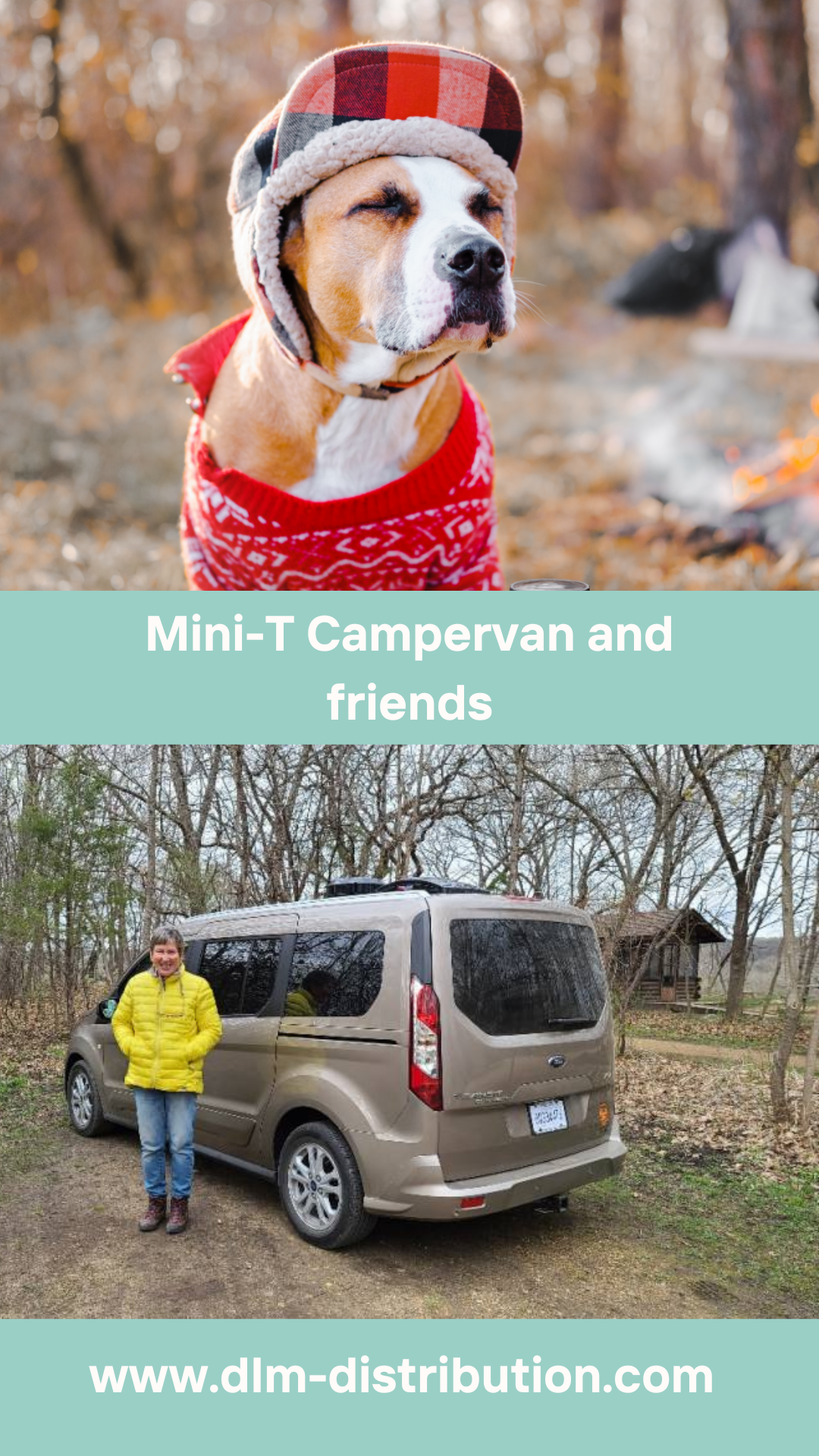
The Road Trip Changes When a Dog Comes Along
Traveling with a dog encourages a different pace. A fuel stop may also become a short walk. A scenic overlook becomes an opportunity to stretch everyone’s legs. Instead of driving another two hours simply because you can, a green space on the map may be reason enough to stop for a while. Those interruptions are not necessarily interruptions at all; before long, they become part of the trip.
A campervan makes that kind of spontaneous travel easier because your basic accommodations are already with you. Food, water, a refrigerator, a place to sit, a comfortable sleeping area, and your everyday travel gear are right there when you stop. There is no need to unpack a hotel room every evening or repeatedly carry belongings back and forth. For the dog, there is another advantage that may matter even more: familiarity. Although the scenery outside keeps changing, the campervan does not. The same bed, blankets, water bowl, familiar smells, and people arrive at every destination. After a day filled with unfamiliar places, the van can become a recognizable home base.
Some of the Best Stops Were Never on the Itinerary
One of the pleasures of campervan travel is discovering how little is sometimes required to make a good day. You may have a campground reservation several hours away but notice a county park beside a river. There is a walking path, a picnic table beneath the trees, and enough time to explore. The dog gets a walk, you make lunch, and an intended ten-minute stop becomes an hour. Nothing about the trip suffers because of it.
Those moments are easy to overlook when travel becomes a race between destinations. A dog is often quite good at reminding us that the patch of woods we are standing in right now is worth exploring too. That fits particularly well with a Mini-T Campervan. Its smaller footprint makes ordinary stops part of the journey rather than something that always requires planning around the size of an RV. Parks, trailheads, scenic roads, downtown areas, grocery stores, restaurants, and everyday parking lots can remain accessible along the way.
You can spend the morning walking a trail, stop in town during the afternoon, pick up groceries, and continue to a campground that evening without changing vehicles or reorganizing the trip around a large motorhome. That ability to mix sightseeing, ordinary errands, spontaneous stops, and camping into the same travel day is part of what makes a smaller campervan so enjoyable on the road.
Camping With Your Best Traveling Companion
Campgrounds can be especially enjoyable with a dog because so much of the day already happens outside. Morning begins with a walk rather than an alarm clock. A trail through the campground may lead to a lake, river, or overlook, and dinner can be followed by another walk as the campground settles down for the evening. Then there are the wonderfully uneventful afternoons: a chair outside the campervan, a book, something cold from the refrigerator, and a dog perfectly content to lie nearby and watch the campground go by. Not every memorable travel day needs a major attraction attached to it.
Of course, traveling with a pet also means planning around its needs. Campground and park rules vary, leash requirements are common, and some trails, beaches, buildings, and natural areas do not allow dogs. Checking the rules before arriving can prevent disappointment and may reveal nearby alternatives that are just as enjoyable.
Weather deserves particular attention as well. A campervan should never be treated as a safe place to leave an animal unattended simply because it is larger than a car or contains camping equipment. Interior temperatures can change quickly, and travel plans should account for the animal’s comfort and safety throughout the day.

A Campervan Can Simplify Pet-Friendly Travel
Anyone who has planned a longer trip with a dog knows that accommodations can influence the route. Hotels may have pet restrictions, size limitations, additional fees, or rules that vary from one property to another. Finding the right room can become another task at the end of a travel day. A campervan changes much of that because your sleeping accommodations travel with you. Once you have chosen a pet-friendly campground or other appropriate overnight location, there is no hotel check-in and no unfamiliar room for the dog to investigate at every stop.
There is also something nice about waking up already where you wanted to be. Open the door in the morning and the first walk of the day may begin beneath tall pines, beside a lake, or along a quiet campground road. Make breakfast, decide what looks interesting on the map, and continue when you are ready. The vehicle does not need to become the destination; it provides a familiar place to sleep, carry what you need, prepare something to eat, and recharge before heading outside again.
That simplicity is one of the reasons smaller campervans can work so well for people who travel with pets. Instead of organizing each day around checking into and out of accommodations, the trip can develop around the places you actually came to experience.
Enough Room for the Things That Matter
Traveling with a dog inevitably adds a few things to the packing list: food, bowls, leash, waste bags, bedding, medications if needed, towels for muddy paws, and perhaps a favorite toy that apparently could not survive a weekend at home without its owner. Good organization matters more than simply having a large vehicle. Keeping frequently used pet supplies together makes stops easier, while food and other items can remain stored until they are needed. A towel near the door can become surprisingly valuable after a rainy campground walk.
Water is particularly important. Keeping drinking water readily available makes it easy to offer the dog a drink during travel stops, hikes, and warm afternoons rather than waiting until the next destination. The goal is not to bring everything the dog owns; it is to bring enough familiar equipment that everyday routines remain easy wherever the campervan happens to be parked.

Travel Should Feel Easy for Both of You
A good road trip does not need to be complicated to be memorable. Sometimes it is a national park or a destination you have wanted to visit for years. Sometimes it is a campground you discovered almost by accident. And sometimes it is simply pulling into a quiet park, opening the door, and watching an enthusiastic dog discover somewhere new.
The Mini-T Campervan was manufactured around the idea that travel should remain easy to use and easy to fit into everyday life. Its manageable size means the vehicle can serve as transportation during the trip as well as the place you return to at the end of the day. You do not need a separate tow vehicle simply to explore after setting up camp, and you do not have to leave the campervan behind when the day includes ordinary stops along the way.
That matters when traveling with a dog because some of the best days include a little bit of everything: a morning walk, a scenic road, lunch somewhere unexpected, an afternoon trail, groceries on the way back, and a campground waiting at the end of it. None of those things individually needs to be the highlight of the trip. Together, they become the day you remember.
The Journey Looks Different From Four Paws Down
Perhaps dogs make good traveling companions because they are naturally interested in the part of travel we sometimes hurry through. We tend to think about where we are going while they are fascinated by where we have stopped. We see the campground as tonight’s destination; they find twenty interesting things before reaching the campsite. We may remember the famous overlook, while they would probably vote for the trail beside the river, the afternoon spent outside the campervan, or that picnic stop where part of somebody’s sandwich mysteriously disappeared.
There is something useful in that perspective. The best road trips are rarely just a collection of destinations. They are the mornings, stops, walks, meals, conversations, changing scenery, and unexpected places that fill the miles between them. A campervan gives you the freedom to keep moving toward the places you want to see, while a four-legged traveling companion has a way of reminding you that there is plenty worth enjoying before you get there.
Four wheels can take you a very long way, but four paws have a way of reminding you to enjoy where you are.
Happy Travels & Happy Camping!
DLM-Distribution / Campervans is a licensed manufacturer and dealer located in Lake Crystal, Minnesota, serving clients around the country.
Contact Dave: 651-285-7089 or Candy: 507-382-9446 today!