
Gas vs. Diesel Campervans: Understanding Fuel Costs, Maintenance, and Long-Term RV Ownership
When shopping for a small RV or Class B campervan, one of the most common questions is whether a gasoline or diesel engine is the better choice. Both have established advantages, and each can provide dependable transportation for weekend getaways, cross-country journeys, and extended travel. However, the differences become particularly important when comparing purchase prices, fuel economy, maintenance requirements, and the overall cost of ownership.
Diesel engines have long been associated with commercial trucks, heavy-duty towing, and large motorhomes. Their torque characteristics and efficiency under substantial loads make them well suited to demanding applications. Gasoline engines, meanwhile, offer their own advantages in purchase cost, service availability, maintenance, and everyday driving convenience.
For travelers considering a compact campervan or small Class B RV, the decision deserves a closer look. A vehicle used primarily for scenic road trips, campground visits, and everyday transportation has different operating requirements from a large motorhome or heavy-duty tow vehicle.
The most useful comparison is not simply which engine gets better fuel mileage. It is which vehicle provides the right combination of capability, operating expense, reliability, and convenience for the way its owner intends to travel.
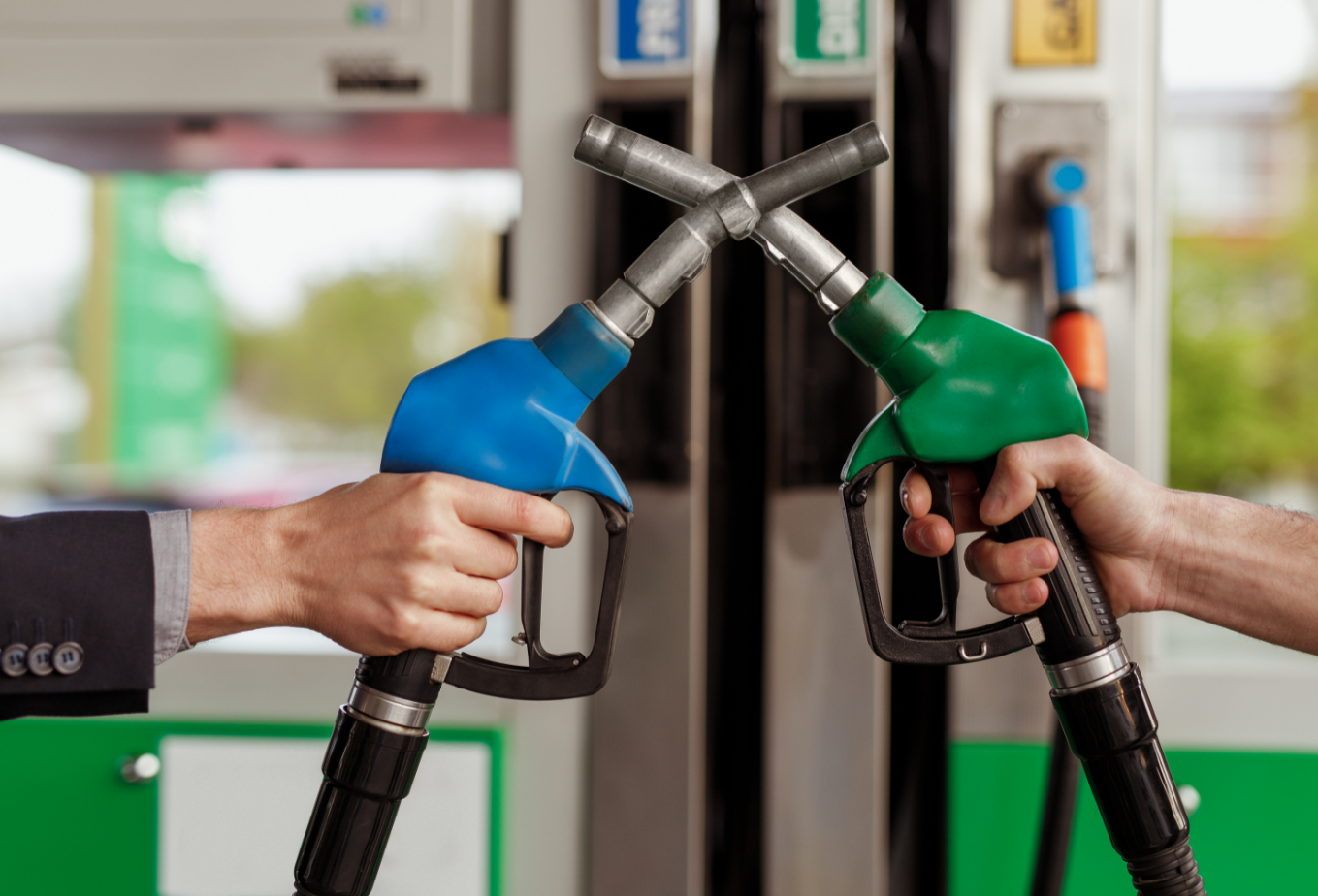
Purchase Price: Understanding the Initial Investment
One of the first differences buyers may encounter is the purchase price. Diesel-powered campervans often carry a higher initial cost than gasoline-powered alternatives, although the actual difference depends on the vehicle platform, equipment, conversion design, and manufacturer.
Diesel engines and their associated systems can add expense, particularly in vehicles designed for heavy-duty use. In some cases, a diesel campervan may also be built on a larger or more specialized chassis, making it important to distinguish the cost of the engine from the cost of the vehicle itself.
For example, comparing a compact gasoline campervan with a substantially larger diesel motorhome does not isolate the difference between gasoline and diesel power. The larger vehicle may include additional living space, equipment, weight capacity, and other features that contribute to its price.
When evaluating comparable vehicles, buyers should consider how much additional money is required to purchase the diesel model and whether its advantages are likely to be meaningful during their ownership. A traveler who drives relatively few miles each year may have limited opportunity to recover a substantial price difference through improved fuel economy.
On the other hand, someone who travels extensively, carries heavier loads, or needs greater towing capability may find that a particular diesel platform offers advantages worth the additional investment.
Fuel Economy: Why Miles Per Gallon Tell Only Part of the Story
Diesel engines are often more fuel-efficient than comparable gasoline engines, especially when operating under sustained loads. Diesel fuel contains more energy per gallon than gasoline, and diesel engines can convert that energy into useful work efficiently.
However, fuel economy varies considerably among campervans. Vehicle size, weight, aerodynamics, driving speed, terrain, engine design, and transmission characteristics all influence how many miles a vehicle travels on a gallon of fuel.
A compact gasoline-powered campervan may achieve better fuel economy than a much larger diesel motorhome simply because it weighs less and requires less energy to move down the highway. Conversely, a diesel-powered campervan of similar size and weight may offer a fuel economy advantage over its gasoline counterpart.
The important consideration is actual fuel consumption for the vehicles being compared, rather than assuming that every diesel campervan will be more economical than every gasoline model.
Fuel prices add another variable. Diesel may cost more or less than gasoline depending on location, season, taxes, and market conditions. Even when a diesel vehicle travels farther on each gallon, a higher price per gallon can reduce or eliminate the financial advantage.
Comparing the Actual Cost of Fuel
A useful way to compare gasoline and diesel campervans is to calculate fuel expense per mile. Dividing the price per gallon by the vehicle's fuel economy shows how much fuel costs for each mile traveled.
For example, consider two hypothetical campervans. The gasoline model averages 20 miles per gallon, while the diesel model averages 24 miles per gallon. The diesel vehicle achieves 20 percent better fuel economy, but whether it costs less to operate depends on the price of each fuel.
If gasoline costs $3.50 per gallon and diesel costs $4.20 per gallon, both vehicles have exactly the same fuel cost per mile: 17.5 cents. Over a 10,000-mile journey, each would consume approximately $1,750 in fuel.
In this example, the diesel vehicle's fuel economy advantage is completely offset by its higher fuel price. If diesel becomes less expensive relative to gasoline, the diesel vehicle gains an operating advantage. If the price difference grows, gasoline may become the less expensive choice.
These are illustrative prices rather than current fuel quotations, but the calculation remains useful regardless of what fuel costs at the pump.
The comparison becomes even more interesting when the initial purchase price is considered. If one vehicle costs thousands of dollars more to purchase, relatively small fuel savings may take many years and substantial mileage to recover.
For travelers who want to understand how fuel expense fits into the larger financial picture, an RV cost of ownership calculator can help compare fuel, maintenance, insurance, storage, depreciation, and other expenses over time.
Maintenance Costs: Different Engines, Different Requirements
Maintenance is another important consideration when comparing gasoline and diesel campervans. Both engine types require regular service, including oil changes, filter replacements, cooling system maintenance, and attention to manufacturer-recommended service intervals.
Modern diesel engines can be exceptionally durable, particularly when operated and maintained according to their intended duty cycle. However, diesel-powered vehicles may also have additional service requirements involving fuel filtration, emissions equipment, and specialized engine components.
Many newer diesel vehicles use diesel exhaust fluid, commonly called DEF, as part of their emissions control systems. These systems are designed to reduce harmful exhaust emissions but introduce another fluid that owners must monitor and replenish. Diesel particulate filters and related emissions equipment may also require attention, particularly when a vehicle is frequently used for short trips that do not allow normal regeneration conditions.
Gasoline engines generally avoid diesel-specific DEF and particulate filter systems, although modern gasoline vehicles also incorporate sophisticated emissions controls, electronic management, and components that can require specialized repairs.
Routine maintenance on a gasoline-powered campervan may be less expensive, depending on the engine and service requirements. Diesel oil changes, fuel filters, and certain repairs can cost more, but actual expenses vary significantly among vehicle platforms and service providers.
The best approach is to review the manufacturer's recommended maintenance schedule and typical service costs for the specific vehicles under consideration. A well-maintained gasoline or diesel campervan can provide years of dependable travel, while neglected maintenance can become expensive regardless of fuel type.
Service Availability During Cross-Country Travel
Service availability can become particularly important when traveling far from home. A campervan may be used to explore national parks, rural highways, smaller communities, and remote destinations where specialized repair facilities are not always nearby.
Gasoline-powered vehicles built on widely used Ford and Chrysler platforms often benefit from extensive service networks and technicians familiar with their engines and drivetrains. Routine maintenance and many common repairs can be performed at facilities that regularly service similar passenger and commercial vehicles.
Diesel service is also widely available throughout the United States, especially along major transportation routes and in communities that support commercial trucking, agricultural equipment, and heavy-duty vehicles. However, some diesel campervan platforms may require technicians with particular training, diagnostic equipment, or access to specialized parts.
Not every dealership or repair facility is equipped to service every motorhome or campervan. Vehicle height, weight, chassis configuration, and the type of repair can affect whether a facility can accommodate the RV, regardless of its engine type.
Before purchasing, travelers should consider the service network associated with the specific chassis and engine. Access to qualified service providers can be just as important as fuel economy when a vehicle is used for extended journeys.
Cold Weather Operation: Gasoline and Diesel Considerations
Travelers who use their campervans during colder months should also consider how each engine type performs in low temperatures. Modern gasoline and diesel engines are designed to operate in a wide range of climates, but their cold-weather requirements differ.
Gasoline engines generally offer straightforward cold-weather operation, particularly when the battery, ignition system, and other components are properly maintained. They do not require diesel exhaust fluid or the cold-weather fuel considerations associated with diesel engines.
Diesel engines rely on compression ignition and may use glow plugs or other starting aids when temperatures fall. Diesel fuel can also be affected by extremely cold conditions, making winter-grade fuel and appropriate preparation important in colder regions.
DEF systems have their own cold-weather provisions, including heating arrangements designed to manage freezing conditions. Modern diesel vehicles are engineered with these requirements in mind, but owners should understand the operating procedures recommended by the vehicle manufacturer.
For travelers who frequently drive through northern states during winter, either engine type can be suitable with proper preparation. Gasoline may offer somewhat simpler operation, while diesel remains a practical choice when its other capabilities are desirable.
Towing and Mountain Driving: Where Diesel Can Shine
Diesel engines are especially well suited to certain demanding applications. Their ability to produce substantial torque at relatively low engine speeds can be beneficial when moving heavy vehicles, climbing grades, and towing substantial loads.
Many heavy-duty diesel vehicles also offer strong engine-braking capability, which can be useful when descending long mountain grades. These characteristics help explain why diesel remains popular in commercial transportation, heavy-duty pickups, and larger motorhomes.
However, towing capacity depends on the complete vehicle, not simply the engine. Chassis design, transmission, cooling capacity, axle ratings, brakes, and manufacturer specifications all determine what a particular campervan can safely tow.
Gasoline-powered campervans can also provide capable highway and mountain performance. Modern gasoline engines and transmissions are designed to operate across a broad range of driving conditions, and many provide more than enough power for a compact campervan carrying passengers and normal camping equipment.
For travelers who do not regularly tow heavy trailers or operate at the upper limits of a vehicle's weight ratings, the additional torque of a diesel engine may offer less practical benefit than expected.
The most important consideration is matching the vehicle's actual capabilities to the intended use rather than choosing an engine based solely on its reputation.
Everyday Driving and Short Trips
Many campervan owners use their vehicles differently from traditional motorhome owners. A compact campervan may serve as transportation for grocery shopping, visiting friends, attending events, or taking spontaneous day trips in addition to longer camping journeys.
For this type of mixed use, gasoline-powered vehicles can offer practical advantages. They are familiar to many drivers, can be serviced through widespread automotive networks, and generally do not require the same attention to diesel emissions system operating conditions.
Frequent short trips can be a consideration for certain modern diesel engines because diesel particulate filter regeneration may require appropriate operating temperatures and driving conditions. Owners who primarily drive short distances should review the manufacturer's guidance to determine whether a particular diesel platform is well suited to that pattern of use.
Vehicle dimensions are equally important. A smaller gasoline-powered campervan may be easier to park, maneuver, and store than a larger diesel model, although these differences result from vehicle design rather than fuel type alone.
For travelers who want one vehicle to serve both everyday transportation and recreational travel, evaluating the complete campervan is often more useful than focusing exclusively on its engine.
Fuel Costs Over the Life of a Campervan
Fuel economy becomes more meaningful when viewed across several years of ownership. A difference of a few miles per gallon may seem substantial during a single fill-up, but its financial significance depends on how far the vehicle is driven and the relative prices of gasoline and diesel.
Consider a traveler who drives 8,000 miles annually. At 20 miles per gallon, a gasoline campervan would use approximately 400 gallons of fuel. A diesel campervan averaging 24 miles per gallon would consume about 333 gallons over the same distance.
The diesel vehicle saves approximately 67 gallons annually, but the dollar value of that difference depends on fuel prices. If diesel costs sufficiently more per gallon, those savings may disappear. If fuel prices are similar, the diesel vehicle may offer a measurable advantage.
Travelers who drive 20,000 miles annually have more opportunity to benefit from improved fuel efficiency than those who drive only a few thousand miles. However, higher annual mileage can also increase maintenance, tire, and other operating expenses for either vehicle.
When evaluating a campervan purchase, it is helpful to consider expected annual mileage rather than relying on assumptions about how much travel will occur. This provides a more realistic basis for comparing fuel expenses and potential savings.
The Importance of Total RV Ownership Costs
Fuel is one of the most visible expenses associated with campervan travel, but it is only part of the overall cost. Purchase price, financing, insurance, maintenance, repairs, tires, registration, storage, and depreciation can represent substantial expenses over the life of an RV.
For some owners, choosing a compact campervan that fits in a residential garage can reduce or eliminate the need for paid off-site storage. Others may benefit from using the same vehicle for everyday transportation and camping rather than maintaining a separate recreational vehicle.
These considerations can have a greater financial impact than a modest difference in fuel economy. For example, avoiding a recurring storage expense or purchasing a less expensive vehicle may provide meaningful savings even if another campervan achieves slightly better miles per gallon.
Maintenance requirements and long-term repair expenses also deserve consideration. A vehicle with excellent fuel economy may still cost more to own if its initial price, service requirements, or repair costs are substantially higher.
Depreciation is another important factor, although future resale values cannot be predicted with certainty. Vehicle condition, mileage, age, equipment, and market demand all influence what an RV may be worth when it is eventually sold.
Comparing the complete ownership picture helps buyers make decisions based on their actual travel habits and financial priorities rather than focusing on one operating expense.
Why Gasoline-Powered Mini-T Campervans Appeal to Many Travelers
The Mini-T Campervan lineup by DLM-Distribution illustrates how gasoline-powered vehicles can provide an appealing combination of comfortable camping accommodations, practical driving characteristics, and manageable ownership costs.
The Ford Transit Connect Mini-T offers compact dimensions and efficient fuel economy, making it well suited to scenic road trips and everyday transportation. The Chrysler Pacifica AWD Mini-T provides all-wheel-drive capability, comfortable highway travel, and convenient camping features, while the Chrysler Voyager Mini-T offers another practical gasoline-powered option.
These garageable Mini-T models are designed to combine recreational travel with everyday usability. Their compact dimensions allow them to fit in many residential garages with appropriate clearance, providing a convenient storage option for owners who prefer keeping their campervan at home.
For homeowners living in communities with recreational vehicle parking restrictions, the ability to store a campervan indoors may be particularly valuable. Understanding residential garage storage considerations and the advantages of a garage-friendly campervan can help buyers evaluate how a particular model fits their property and lifestyle.
The larger Ford Transit-based Mini-T HR offers a different approach, combining gasoline power with all-wheel drive, additional interior room, and standing height. Although its larger dimensions mean it is not a garageable everyday-driver model, it demonstrates that gasoline-powered campervans can also provide the capability and space desired for extended travel.
Across the lineup, the emphasis is on combining practical vehicle operation with comfortable camping equipment, allowing owners to enjoy the journey without automatically requiring a large diesel-powered motorhome.
When a Diesel Campervan May Be the Better Choice
Despite the advantages of gasoline, diesel remains an excellent choice for many RV travelers. A diesel-powered campervan may be particularly appealing to someone who travels extensively, regularly carries substantial loads, or values the driving characteristics of a specific diesel platform.
Travelers who cover significant highway mileage may benefit from improved fuel efficiency when the difference in fuel prices supports lower operating costs. Those who frequently drive through mountainous regions or tow heavier equipment may also appreciate the torque and engine-braking characteristics available in certain diesel vehicles.
Diesel can also make sense when a buyer prefers a particular campervan design that is available only on a diesel chassis. Interior layout, vehicle capacity, equipment, and overall suitability should remain central to the purchasing decision.
The key is recognizing that diesel's advantages are most valuable when they match the vehicle's intended use. Paying more for capabilities that will rarely be needed may not provide the best overall value, while choosing gasoline for a demanding application that would benefit from diesel could be equally shortsighted.
Gas vs. Diesel Campervans: Choosing What Fits Your Travel Style
There is no universal answer to whether gasoline or diesel is better for RV travel. Both engine types have proven their value, and both can support enjoyable journeys across the country. The better choice depends on the vehicle, the owner's driving habits, the equipment being carried, and the balance between purchase price and ongoing operating expenses.
For many travelers considering a compact Class B campervan, gasoline offers a practical combination of affordability, service availability, familiar maintenance requirements, and everyday convenience. Diesel may provide advantages in fuel efficiency, torque, and heavy-duty operation, particularly when those characteristics are important to the intended use.
Before making a decision, compare actual vehicle specifications, realistic fuel economy, local fuel prices, maintenance requirements, and expected annual mileage. Consider where the campervan will be stored, how frequently it will be driven, and whether it will serve as everyday transportation or primarily as a recreational vehicle.
Most importantly, remember that the purpose of a campervan is to make travel enjoyable. The right vehicle is one that provides the comfort, capability, and dependability needed to explore scenic highways, visit favorite destinations, and spend more time enjoying the outdoors.
Choosing the engine and campervan that best match those goals is far more valuable than selecting a fuel type based on reputation alone.
Happy Travels & Happy Camping!

DLM-Distribution / Campervans is a licensed manufacturer and dealer located in Lake Crystal, Minnesota, serving clients around the country.
Contact Dave: 651-285-7089 or Candy: 507-382-9446 today!