
For many cyclists, the ride itself is only part of the adventure. Reaching a new rail-trail, mountain-bike network, scenic road route or unfamiliar town can be every bit as rewarding as the miles spent on the bike. The challenge is often everything surrounding the ride: transporting bicycles, finding lodging near the route, storing gear, recovering afterward and deciding where to go next.
A campervan can bring many of those pieces together. Instead of treating cycling and travel as separate parts of the trip, the vehicle becomes transportation, gear carrier and overnight basecamp all at once. That can make it easier to build a journey around several rides rather than a single destination.
The Ride Can Begin Closer to the Trail
One of the biggest advantages of campervan travel is the ability to stay closer to where the riding begins. A cyclist exploring a long rail-trail, state park or mountain-bike system can choose a nearby campground rather than organizing the trip around whatever hotel happens to be available in the area.
That can change the rhythm of the trip. Instead of driving a long distance to the trailhead in the morning, the day can begin with breakfast at camp and a shorter trip to the ride. Afterward, there is no need to immediately find a restaurant, hotel or another place to regroup. The campervan remains nearby as a familiar base.
This works particularly well when a destination offers several routes worth exploring. One campground can become the starting point for a weekend of different rides, while a longer road trip can connect several cycling areas over the course of a week or more.
Bike Transport Becomes Part of the Campervan Setup
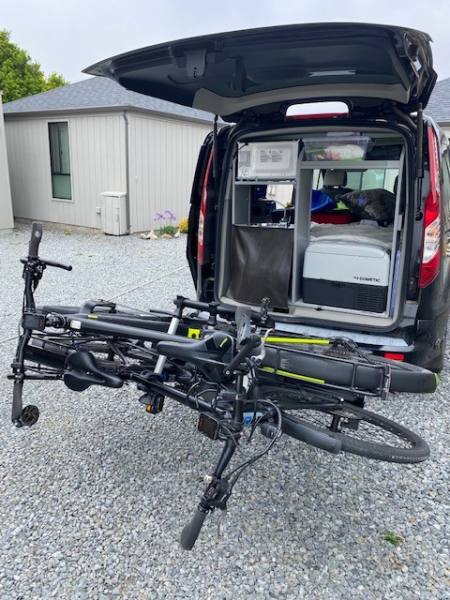
Transporting bicycles is one of the practical questions that can shape an entire cycling trip. Roof racks, hitch racks and other systems all have advantages, but for many campervan travelers a hitch-mounted rack provides a useful balance of accessibility and manageable loading height.
Mini-T Campervans are equipped with a 2-inch hitch receiver, allowing owners to choose a bike rack that fits the bicycles they actually travel with. Road bikes, gravel bikes, mountain bikes and many e-bikes can all be carried with the appropriate rack, provided the rack, bicycles and hitch loading remain within the applicable weight limits.
The details matter. E-bikes can weigh considerably more than conventional bicycles, so rack capacity, individual bike weight and total hitch load should all be considered together. Riders carrying heavier bikes may also prefer racks with ramps or lower loading heights to make repeated loading easier during a long trip.

Rear Access Matters More Than It First Appears
Bike racks are often evaluated primarily by how securely they carry bicycles, but campervan travelers have another question to consider: how easily can the rear of the vehicle still be accessed?
Rear-hatch access can become part of daily camping life. Bedding, food, clothing and other gear may be stored behind the rear seats or beneath the sleeping area, meaning the hatch may be opened several times during a normal day.
Some hitch-mounted racks tilt away from the vehicle, while others swing completely to the side. A tilt feature may provide enough access for occasional use, while a swing-away design can be particularly convenient for travelers who expect to open the rear hatch frequently without removing the bicycles.
The best rack is therefore not always the one with the most features or the highest bike capacity. It is the one that works with the way the campervan is actually used throughout the trip.

Comfort Matters More After the Ride
A long ride changes what feels important at the end of the day. A place to sit, cold food and drinks, dry clothing, electrical power and a comfortable place to sleep can suddenly matter far more than they did before the first mile.
This is where a campervan becomes more than transportation for the bicycles. Refrigeration can keep food and beverages cold throughout the day. The onboard electrical system can provide power for devices and other equipment. Clothing and gear remain protected inside the vehicle, and the sleeping area is already waiting when the rider is finished for the evening.
There is also something convenient about being able to finish a ride without immediately having to leave the area. A cyclist can return to camp, change clothes, prepare food and spend the rest of the evening where the day’s adventure took place.
E-Bikes Add New Possibilities—and New Planning
Electric bicycles have expanded the range of people who can enjoy cycling trips and have also changed the distances many riders are comfortable covering. They can make longer routes more approachable, help riders manage hills and provide another way for people with different riding abilities to enjoy the same destination together.
E-bikes also introduce another logistical consideration: charging.
The Mini-T Campervan’s onboard electrical system provides 120V power while camping off-grid, which can make compatible e-bike charging more practical during a trip. Battery size, charger requirements and available electrical capacity still need to be considered, and riders should always follow the charging and storage instructions provided by the bicycle and battery manufacturer.
For cyclists planning multiple days of riding, that capability can be useful because the trip does not necessarily have to revolve around finding a campground with an electrical pedestal every night.
A Smaller Campervan Can Be Useful at the Trailhead
Cycling destinations are not always designed around large RVs. Trailhead parking lots can be tight, downtown bike routes may begin in ordinary parking areas, and scenic roads can pass through towns where oversized-vehicle parking is limited.
A smaller campervan helps preserve the mobility that makes cycling trips enjoyable in the first place. The same vehicle used for camping can fit naturally into standard parking spaces, move through towns and reach many trailheads without requiring the day’s itinerary to be planned around the size of the RV.
That becomes especially useful when cycling is only one part of the trip. A morning ride might be followed by lunch in town, a stop at a museum, a scenic drive and a different campground that evening. The campervan remains practical through all of it.
One Trip Can Include More Than One Kind of Riding
A campervan road trip makes it easier to connect different cycling experiences. A rider might spend one day on a paved rail-trail, another exploring gravel roads, and the next at a mountain-bike trail system several hours away.
That variety is part of what makes cycling travel interesting. America’s riding destinations are spread across very different landscapes, from Midwestern rail-trails and prairie routes to mountain roads, desert trails, coastal paths and state-park networks.
Instead of choosing one cycling destination and building the entire vacation around it, a campervan allows the route itself to become part of the experience. A particularly good ride can justify staying another day, while changing weather or trail conditions can become a reason to continue somewhere new.

The Campervan Is the Basecamp, Not the Destination
The best cycling trips are usually remembered for the roads, trails and landscapes rather than the vehicle that carried the bikes there. That is exactly where a campervan can be most useful. Its role is to remove some of the friction surrounding the ride.
The Mini-T Campervan fits naturally into that approach by combining everyday drivability with sleeping accommodations, refrigeration, off-grid electrical capability and a hitch receiver for carrying bicycles. Across the Mini-T lineup, the goal remains the same: provide the equipment needed for travel without making the vehicle itself unnecessarily difficult to park, store or use.
For cyclists, that can mean more freedom to follow the riding rather than the lodging. Stay close to the trail, move easily between destinations, keep the bikes and gear together, and have a familiar place to return to when the day’s miles are finished.
The Best Cycling Trips Often Start Before the First Pedal Stroke
Choosing a route, loading the bikes and heading toward somewhere new is already part of the adventure. A campground beside a trail can become a weekend base. A recommendation from another rider can change the next stop. A road trip built around several cycling destinations can reveal places that would never have appeared on a single-day ride.
That may be why campervan travel and cycling complement one another so naturally. Both reward flexibility, curiosity and the willingness to see what is around the next bend.
Sometimes the best ride begins long before the bike comes off the rack.
Happy Cycling and Happy Camping!
DLM-Distribution / Campervans is a licensed manufacturer and dealer located in Lake Crystal, Minnesota, serving clients around the country.
Contact Dave: 651-285-7089 or Candy: 507-382-9446 today!