
NEWS
The Real Cost of Towing Campers and Fifth Wheels
For many RV travelers, towing a travel trailer or fifth wheel has long been the traditional way to explore the open road. Towable RVs can offer spacious interiors, residential-style amenities, and the flexibility to detach the camper once you arrive at your destination.
However, towing a large camper involves more than simply purchasing the trailer itself. The vehicle required to safely tow these rigs is often a heavy-duty pickup truck, and the combined cost of the truck, equipment, fuel, and storage can be significantly higher than many buyers initially expect.
Understanding the full cost of towing campers and fifth wheels can help travelers make better decisions when choosing the type of RV that fits their travel style and budget.
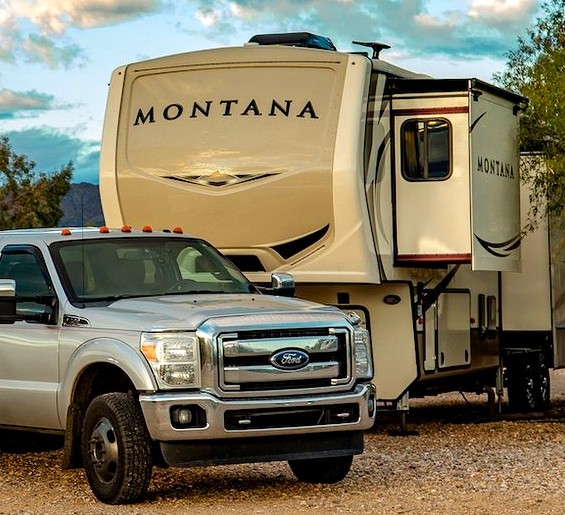
Why Larger Campers Require Heavy-Duty Trucks
Travel trailers and fifth wheels vary widely in size and weight, but many larger models require trucks with substantial towing capacity. For this reason, most owners rely on heavy-duty pickups such as three-quarter-ton or one-ton trucks.
These vehicles are designed with stronger frames, larger braking systems, heavier suspension components, and more powerful engines to manage the additional weight safely. Popular examples include trucks in the Ford Super Duty, Ram Heavy Duty, and Chevrolet Silverado HD lineups.
While these trucks are extremely capable, they also represent a major investment beyond the purchase price of the camper itself.
The Purchase Price of Tow Vehicles
Heavy-duty pickup trucks have evolved significantly in recent years. Today’s models often include advanced driver-assistance systems, premium interior features, integrated towing technology, and powerful engine options.
As a result, the purchase price of trucks commonly used for towing RVs has risen accordingly.
In the United States, new heavy-duty trucks typically fall within the following ranges:
Three-quarter-ton pickups often begin in the upper $40,000 range and can easily exceed $70,000 depending on trim level and equipment.
One-ton trucks designed for maximum towing capacity frequently start around $55,000 and may climb well past $80,000 when equipped with diesel engines, premium packages, and advanced towing systems.
For many buyers, the truck itself becomes one of the largest expenses in the entire RV ownership equation.
Additional Equipment Required for Safe Towing
Towing a camper or fifth wheel safely requires more than engine power alone. Trucks used for RV towing are typically equipped with specialized systems designed to handle the added load.
Factory towing packages often include reinforced hitch assemblies, trailer brake controllers, upgraded cooling systems, and dedicated wiring for trailer lighting and electronics.
Many RV owners also choose diesel engines because they provide increased torque for pulling heavier trailers. While diesel engines offer excellent towing performance, they typically increase the purchase price and may introduce higher long-term maintenance costs.
Four-wheel drive is another common option for RV travelers, particularly those who camp in mountainous terrain, rural areas, or regions with winter weather.
Each of these upgrades improves towing capability, but they also increase the overall investment required to tow larger RVs.
Fuel Consumption While Towing
Fuel economy is another factor many RV owners only fully appreciate after they begin towing.
Heavy-duty trucks pulling large travel trailers or fifth wheels often experience significantly reduced fuel efficiency. Depending on trailer weight and driving conditions, fuel economy while towing frequently falls into the single-digit or low-teens range in miles per gallon.
During long road trips or frequent travel, fuel costs can become a noticeable part of the RV ownership experience. Insurance costs may also be higher due to the value and size of heavy-duty trucks.
The Practical Challenges of Towing
Beyond financial considerations, towing campers introduces practical challenges that many new RV owners do not initially anticipate.
Driving and maneuvering with a large trailer requires additional awareness and skill. Parking becomes more complicated, especially in small towns, urban areas, or older campgrounds designed before large RVs became common.
Backing trailers into campsites often takes practice, and navigating fuel stations, steep grades, or narrow roads can sometimes be challenging with longer rigs.
Wind resistance, mountain passes, and traffic conditions can also affect stability and driver fatigue during long travel days.
Storage Considerations
Storage is another commonly overlooked factor when purchasing a large towable RV.
Travel trailers and fifth wheels require dedicated parking space when not in use. Many residential neighborhoods and homeowners associations restrict large RV parking, which may require off-site storage.
RV storage facilities typically charge monthly fees, adding another ongoing expense to ownership. For travelers who only take a few trips each year, these costs can add up quickly.
Why Some Travelers Choose Smaller RV Options
As these costs and logistical considerations become more widely understood, many RV buyers begin exploring alternatives that simplify travel.
Compact RVs, particularly Class B campervans, have grown in popularity because they eliminate many of the complexities associated with towing.
A campervan combines both the vehicle and the living space into one unit, removing the need for a separate tow vehicle and eliminating trailer hookups, hitching procedures, and towing logistics.
For travelers who prefer easier maneuverability, improved fuel economy, and the ability to travel more spontaneously, smaller RVs can offer a very practical solution.
A Practical Alternative for Frequent Travel
One example of this approach is the Garageable Mini-T Campervan produced by DLM-Distribution in Lake Crystal, Minnesota.
Unlike large towable RV setups that require heavy-duty trucks, the Mini-T Campervan is designed as a compact Class B campervan that can serve both as a daily driver and a travel vehicle.
Its manageable size allows it to navigate cities easily, park in typical parking spaces, and be stored at home while still offering the core features needed for comfortable camping and road travel.
For many travelers, this type of RV makes it easier to travel more often without the added complexity of towing large trailers.
Choosing the Right RV for Your Travel Style
Towing campers and fifth wheels remains a popular option for travelers who want larger living spaces and extended stays at campgrounds. With the right equipment and preparation, these setups can provide comfortable long-distance travel.
At the same time, understanding the true cost and practical considerations involved with towing allows buyers to evaluate whether a large towable RV—or a smaller, more versatile RV—best fits how they truly plan to travel.
For some travelers, the space of a towable camper is worth the investment. For others, a compact RV that is easier to drive, store, and use regularly may provide a more practical path to enjoying life on the road.

DLM-Distribution / Campervans is a licensed manufacturer and dealer located in Lake Crystal, Minnesota, serving clients around the country.
Contact Dave: 651-285-7089 or Candy: 507-382-9446 today!