
Campervans Under 20 Feet Long: Small RVs with Big Possibilities
A good road trip is often about the places you discover along the way. Scenic overlooks, small towns, national parks, and unexpected stops can become some of the most memorable parts of traveling. For those who enjoy the freedom of RV travel but prefer not to drive a large motorhome, campervans under 20 feet long offer an appealing alternative.
These smaller campervans combine manageable vehicle dimensions with the convenience of having a comfortable place to sleep, prepare meals, and relax wherever the journey leads. Their appeal extends beyond easier driving and parking. A compact campervan can influence how often you travel, where you stop, and how conveniently an RV fits into everyday life.
Not all campervans under 20 feet are alike, however. Differences in length, height, interior layout, sleeping arrangements, and electrical systems can have a substantial effect on how the vehicle is used. Understanding those differences is an important part of choosing the right campervan.
Why the 20-Foot Length Matters
Twenty feet is a useful point of comparison when shopping for a smaller recreational vehicle. A campervan below that length can be easier to maneuver through parking lots, campground roads, fuel stations, and downtown areas than a longer motorhome. It may also be more practical for travelers who enjoy combining sightseeing, shopping, and camping into the same trip.
Imagine spending the morning driving a scenic highway, stopping for lunch in a small town, visiting a museum in the afternoon, and arriving at a campground before sunset. In a compact campervan, these activities can often be accomplished without the extra planning that a larger RV may require. You are less likely to need a separate vehicle simply to explore the area around your campsite.
Length is not the only consideration, though. Vehicle width, height, turning radius, wheelbase, and rear overhang all influence maneuverability. A campervan measuring 19 feet long but standing more than nine feet tall will have different parking and clearance considerations than one measuring approximately 16 feet long and under seven feet high.
For this reason, shoppers should compare actual vehicle dimensions rather than relying only on the general description of a small campervan.
More Freedom to Explore Along the Way
Some of the most enjoyable parts of a road trip are the stops that were never included in the original itinerary. A scenic overlook, an interesting roadside attraction, a small-town restaurant, or an unexpected hiking trail can become a favorite memory.
Traveling in a shorter campervan makes many of these stops more practical. Instead of searching for oversized parking or deciding whether a side trip is worth the difficulty of maneuvering a larger RV, travelers can often take advantage of ordinary parking areas and roads suitable for passenger vehicles.
This flexibility is particularly valuable on trips that involve frequent changes of scenery. Rather than remaining at one campground for several days, you may prefer to explore a different town, park, or stretch of scenic highway each day. A compact campervan supports that style of travel because driving and sightseeing remain central to the experience.
Of course, even a small campervan must comply with posted vehicle restrictions, parking rules, and roadway clearances. But reducing vehicle size can remove some of the practical obstacles that make larger motorhome travel more complicated.
Parking Convenience Makes a Difference
Parking is one of the most noticeable advantages of a shorter campervan. Many vehicles in this category can fit within ordinary parking spaces, although the exact fit depends on the vehicle's length and the dimensions of the space.
That can be useful when visiting grocery stores, restaurants, historic downtown districts, visitor centers, and popular attractions. It also means travelers can make routine stops without needing to plan every destination around RV parking availability.
At campgrounds, shorter vehicles may have access to a wider selection of campsites, including some locations where larger motorhomes are restricted by site length or access roads. Campsite availability still depends on individual campground rules, site dimensions, and other vehicle requirements.
The advantage is not that every parking space or campsite becomes available. It is that a smaller vehicle generally provides more choices and requires less maneuvering.
Garage Storage: An Advantage Not Every Small Campervan Offers
One of the most important distinctions among compact campervans is exterior height. A vehicle can be under 20 feet long and still be too tall for a typical residential garage. Many conventional Class B campervans have raised roofs that require outdoor parking or a specially designed storage building.
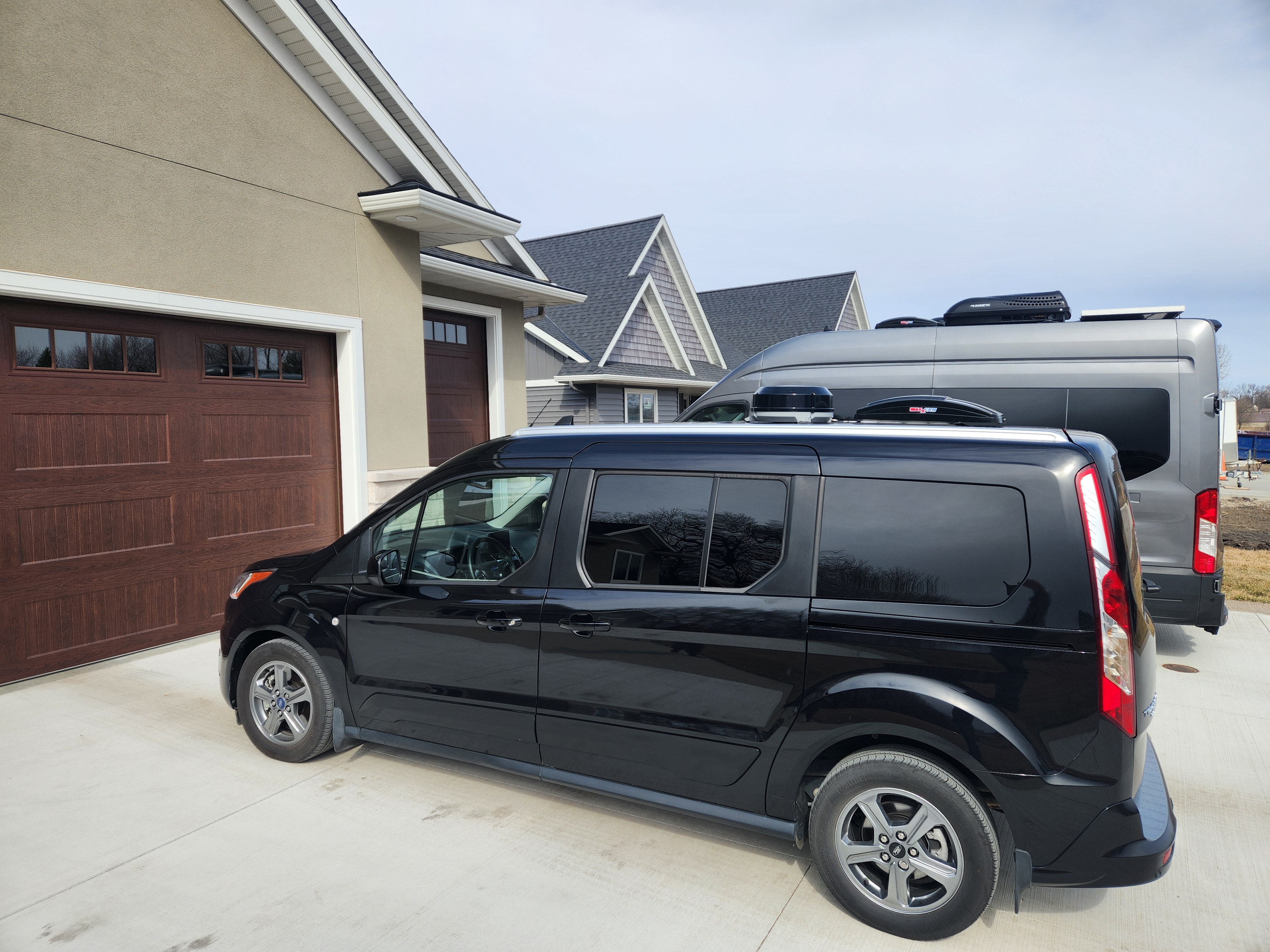
Garageable campervans take a different approach. The Ford Transit Connect Mini-T Campervan, for example, measures approximately 189.7 inches long, or just under 16 feet, and approximately 80 inches high. The Chrysler Pacifica Mini-T AWD measures approximately 204.5 inches long, or just over 17 feet, with a similar overall height. These dimensions make both models candidates for storage in many residential garages, provided the actual opening and interior clearances are sufficient.
Indoor storage can make RV ownership more convenient. The campervan remains close to home, protected from much of the weather, and readily accessible when it is time to prepare for another trip. It can also eliminate the need for a separate RV storage facility when the homeowner has adequate garage space.
For homeowners living in communities with recreational vehicle parking restrictions, indoor garage storage may be especially attractive. However, garageability does not guarantee compliance with every homeowners' association. Owners should verify their community rules and carefully measure garage door openings, overhead hardware, and available parking depth.

For a closer look at this important consideration, see The Best RV for a 7-Foot Garage? Why Garageability Changes Everything.
What Can You Actually Fit Inside a Campervan Under 20 Feet?
Compact dimensions naturally require thoughtful interior design. Every inch has a purpose, and the arrangement of sleeping space, storage, refrigeration, and other amenities can determine whether the campervan feels practical during a weekend trip or an extended journey.
Some smaller campervans offer little more than a bed and storage space, while others incorporate electrical systems, refrigeration, cooking conveniences, fresh water, and entertainment equipment. The difference is not always obvious from the exterior dimensions.
The garageable Mini-T Campervans manufactured by DLM-Distribution illustrate how much functionality can be incorporated into a smaller vehicle. Depending on the platform, amenities include sleeping accommodations for two, a refrigerator, microwave, sink, storage, ventilation, privacy shades, and a portable toilet. Solar-assisted charging, house batteries, and a 2,000-watt inverter provide access to electrical power while camping away from hookups.
Importantly, the inverter allows supported 120-volt appliances, including the microwave, to operate from the house battery system without requiring a portable generator. Driving and solar charging help replenish the batteries, while shore power remains available when desired.
The result is a campervan that supports comfortable travel without requiring a large vehicle or extensive campsite setup.

Understanding the Tradeoffs of a Smaller RV
Although compact campervans offer substantial convenience, they are not the best choice for every traveler. A smaller vehicle naturally provides less interior room than a full-size motorhome, and understanding that limitation before purchasing is important.
Travelers who want to stand upright throughout the living area, entertain several guests indoors, or have a permanent bathroom with a shower may prefer a larger Class B or Class C motorhome. Families needing additional belted passenger seating must also consider the seating configuration of the particular campervan.
The garageable Mini-T Campervans are designed for one or two travelers, with factory-installed driver and front passenger seating. Their rear camping furniture is not intended for passenger use while the vehicle is moving. This arrangement allows more of the available interior space to be dedicated to sleeping, storage, and camping conveniences.
For a couple who spends much of the day hiking, sightseeing, visiting attractions, or enjoying the campsite outdoors, that tradeoff may make excellent sense. For travelers who expect to spend extended periods indoors, a larger RV may be more suitable.
The best choice depends less on how many features a vehicle can contain and more on whether its layout supports the way its owners actually travel.
Fuel Economy and the Cost of Traveling
Fuel economy is another reason many travelers consider smaller campervans. Generally, a lighter, lower-profile vehicle requires less energy to move than a substantially larger motorhome, although actual fuel consumption depends on the engine, drivetrain, vehicle weight, speed, terrain, and driving conditions.
The Ford Transit Connect Mini-T offers EPA fuel economy figures in the approximate 24 to 28 MPG range, depending on model year and configuration. The Chrysler Pacifica AWD Mini-T has different fuel economy characteristics because it uses a larger V6-powered all-wheel-drive platform.
It is important not to assume that every campervan under 20 feet achieves the same mileage. High-roof vans, heavier conversions, and different powertrains can produce substantially different results.
Purchase price is equally important. A smaller campervan is not automatically less expensive than a larger RV, especially when comparing different manufacturers, equipment levels, and vehicle ages. Insurance, maintenance, depreciation, registration, fuel, and storage costs should all be considered when evaluating long-term ownership.
Travelers interested in examining these expenses can use DLM-Distribution's free RV True Cost of Ownership Calculator to compare different RV types and ownership scenarios using their own estimates.
One Vehicle for Travel and Everyday Transportation
For some owners, the greatest advantage of a garageable campervan is not limited to vacations. It is the possibility of using the same vehicle for ordinary transportation and camping trips.
A compact campervan can be driven to the grocery store, used for errands, parked at a restaurant, or taken on a scenic weekend getaway without changing vehicles. This makes it different from a motorhome that spends most of its time parked between vacations.
For households where a campervan can replace an existing passenger vehicle, dual-purpose use may reduce the need to own and maintain a separate RV and automobile. Whether that produces actual savings depends on the household's transportation needs, insurance arrangements, and ownership costs.
There is also a practical benefit that is harder to measure: convenience. When a campervan is parked at home and ready for travel, taking an overnight trip may require little more than packing clothing, loading groceries, and choosing a destination.
That convenience can make shorter, more frequent trips realistic rather than reserving RV travel only for major vacations.
Choosing Between Different Mini-T Campervan Platforms
Within the garageable Mini-T family, the Ford Transit Connect and Chrysler Pacifica AWD provide different approaches to compact travel. Both measure less than 20 feet long and approximately 80 inches high, but their driving characteristics, interior dimensions, and vehicle platforms differ.
The Transit Connect Mini-T emphasizes a particularly small exterior footprint and efficient travel. At approximately 189.7 inches long, it offers easy maneuverability while incorporating the essentials needed for comfortable camping.
The Pacifica Mini-T AWD provides a somewhat longer and wider vehicle, with a 48-by-75-inch sleeping area and the added traction capabilities of all-wheel drive. It retains the parking and garage-storage advantages that make a smaller campervan appealing.
DLM-Distribution has also manufactured the garageable Chrysler Voyager Mini-T, another compact platform designed around practical travel and camping.
The broader Mini-T Campervan lineup includes the larger Ford Transit Mini-T HR, which serves a different purpose. At just over 22 feet long and approximately 10 feet high, the Mini-T HR is outside the under-20-foot category and is not designed for residential garage storage. It provides substantially more interior height and room for travelers who prefer a larger Class B RV.
These differences demonstrate why choosing a campervan should begin with how it will be used rather than assuming one size or layout is right for everyone.
Is a Campervan Under 20 Feet Right for You?
Before choosing a smaller campervan, consider the destinations you enjoy, how many people will travel, how much time you expect to spend inside, and where the vehicle will be stored between trips.
If your travel plans involve scenic highways, state parks, national parks, historic towns, weekend getaways, and frequent sightseeing stops, a compact campervan may provide an excellent balance of mobility and camping comfort. If indoor garage storage or everyday transportation is important, exterior height and vehicle configuration deserve just as much attention as length.
On the other hand, if your priorities include a large interior living area, a permanent shower, additional sleeping accommodations, or extended stays with several occupants, a larger motorhome may be a better fit.
There is no single ideal RV size for everyone. The goal is to find a vehicle that supports the trips you want to take without introducing more complexity than you need.
Small Enough for Everyday Life, Equipped for the Open Road
Campervans under 20 feet offer a distinctive approach to recreational travel. Their manageable dimensions can make scenic drives, sightseeing stops, campground visits, and everyday parking more convenient, while a well-designed interior provides the essentials for comfortable time away from home.
The garageable Mini-T Campervans take that concept a step further by combining compact dimensions with sleeping accommodations, off-grid electrical capability, and practical camping amenities. For travelers who value both the journey and the convenience of owning a vehicle that fits naturally into daily life, this combination is worth considering.
Ultimately, the appeal of a smaller campervan is not simply that it takes up less space. It is the freedom to travel more often, explore more comfortably, and enjoy the places along the way without needing a large motorhome to make the trip possible.
Happy Travels & Happy Camping!
DLM-Distribution / Campervans is a licensed manufacturer and dealer located in Lake Crystal, Minnesota, serving clients around the country.
Contact Dave: 651-285-7089 or Candy: 507-382-9446 today!