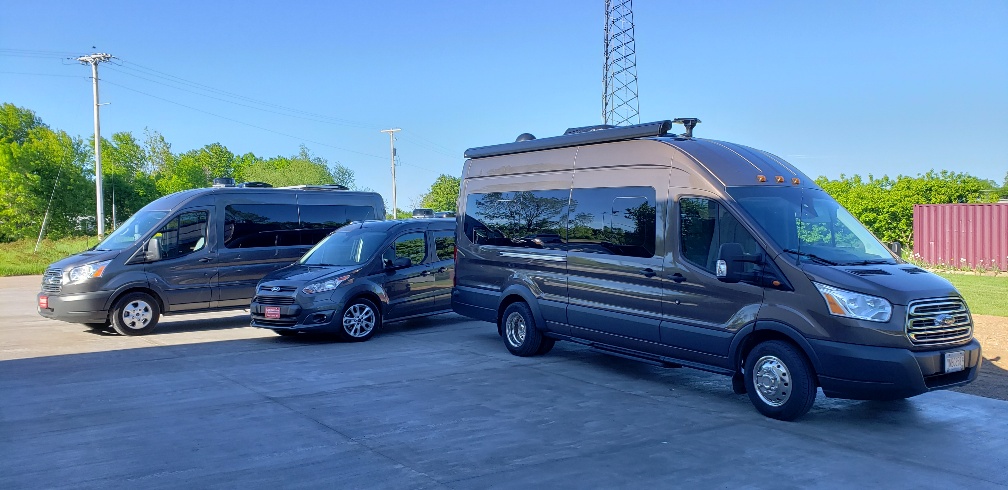
For many travelers, the words Class B RV bring to mind a tall campervan with standing room, a large interior, and many of the amenities found in a traditional motorhome. That is certainly one approach to a Class B, but it is not the only one. A campervan can also take a much smaller approach, providing sleeping accommodations, refrigeration, cooking capability, electrical power, ventilation, privacy, and storage while remaining closer to the dimensions and driving characteristics of an everyday vehicle.
The difference between the two approaches is about much more than how much room exists inside. Vehicle size influences nearly every part of RV ownership, from where the campervan is stored at home to how it handles a grocery-store parking lot, scenic overlook, trailhead, campground, or unfamiliar downtown street. For travelers comparing campervans, the better question may not be, “How large of an RV can I get?” It may be, “How much RV do I actually need?”

Class B Campervans Can Take Very Different Approaches
Class B motorhomes are generally van-based RVs in which transportation and camping accommodations are combined into one vehicle. Within that broad idea, however, campervans can take very different forms. Some emphasize interior living space, standing height, larger kitchens, bathrooms, additional storage, larger tanks, and other residential-style features. Those advantages can be especially valuable for travelers who spend considerable time inside their RV or remain at one campsite for extended periods.
A smaller campervan makes a different trade. Instead of maximizing interior volume, it concentrates on the features needed for comfortable road-trip camping while preserving a smaller exterior footprint. There is less room inside, but that smaller size travels with you everywhere the vehicle goes.
That distinction becomes important because relatively little of an RV trip may actually happen while standing inside the vehicle. The campervan also has to travel through towns, fuel stations, parking lots, national parks, restaurants, grocery stores, visitor centers, trailheads, scenic overlooks, campgrounds, and residential neighborhoods. A smaller vehicle can make many of those ordinary parts of a road trip easier. Standard parking spaces become realistic options, sightseeing does not necessarily require leaving the RV at the campground, and stopping for lunch or groceries can feel much like it does in an everyday vehicle.
This does not mean a smaller campervan can go everywhere. Road restrictions, parking regulations, campground rules, height limitations, and local conditions still apply. The advantage is simply having fewer situations where the dimensions of the RV determine what you can conveniently do next.
How Much Interior Space Does Your Style of Travel Require?
Standing height is one of the most noticeable differences between many larger Class B motorhomes and smaller campervans, and for some travelers it is an important feature. Someone spending long periods inside the RV, preparing elaborate meals, wanting a bathroom, or simply preferring more room to move around may reasonably place interior space near the top of the list. A larger Class B can be an excellent choice for that style of travel.
Other travelers use a campervan differently. Their waking hours may be spent hiking, sightseeing, fishing, cycling, visiting towns, exploring national parks, sitting outside at a campsite, or driving scenic roads. The campervan primarily needs to provide a comfortable place to sleep, keep food refrigerated, prepare simple meals, store belongings, provide electrical power, escape bad weather, and relax at the end of the day. For them, additional interior volume may matter less than having a vehicle that is easier to drive and park.
In that style of travel, the campsite often becomes part of the living space. A picnic table can become the dining room. A lake or mountain view becomes the living room. A national park becomes the backyard. The campervan supports the experience without needing to contain the entire experience.
There is also something to be said for carrying less. Smaller campervans naturally require travelers to think about what deserves space inside. There is less room for duplicate equipment, oversized camping furniture, or things packed simply because there was space available. Frequently used items earn their place, and over time many travelers develop a remarkably simple routine around what they actually need on the road. It is not minimalism for its own sake. It is recognizing that most of the reasons for taking the trip are outside the campervan.

What Happens When the Campervan Comes Home?
One of the biggest differences between a smaller campervan and many larger RVs becomes apparent after the trip is over. A campervan that fits inside an appropriate residential garage may be stored at home rather than at a separate RV storage facility. That can keep the vehicle protected from prolonged exposure to weather while also keeping it close enough to use whenever an opportunity to travel appears.
Garageability can also matter for people living in communities with restrictions on outdoor RV parking. Fitting inside a garage does not automatically satisfy every homeowner association or municipal rule, and individual requirements should always be verified, but indoor storage provides an option that simply is not available with many taller RVs.
There is another advantage that is more difficult to measure: a campervan sitting in your garage is easy to use. A favorable weather forecast, an unexpected free weekend, a family invitation several hours away, or simply the desire to spend a night at a nearby state park can be enough reason to go. There is no separate trip to retrieve the RV from storage before the actual trip can begin.
A smaller campervan can also remain useful when there is no camping trip planned. Depending on the platform and configuration, it can be used for grocery runs, family visits, appointments, day trips, hobbies, scenic drives, and ordinary transportation. The same vehicle carrying groceries during the week can be heading toward a campground on Friday afternoon.
That everyday usefulness changes the ownership equation. An RV’s value is not determined only by the number of features inside it. How often the owner actually uses it matters too. A vehicle that is easy to keep at home, easy to drive, and useful between trips may naturally become part of more trips simply because there is less effort involved in leaving.

Smaller on the Outside Can Still Mean Capable at Camp
A smaller exterior footprint does not necessarily mean a campervan is little more than a bed inside a van. Modern campervan systems can package substantial camping capability into a relatively small vehicle. Depending on the model, the Mini-T Campervan lineup can provide sleeping accommodations for two, refrigeration, microwave cooking, a sink and water system, roof ventilation, privacy features, storage, solar-supported electrical capability, 120V off-grid power, and shore-power capability.
The electrical system allows normal camping functions, including microwave use, without requiring a generator. That provides flexibility in how a trip unfolds. One night might be spent at a developed campground with shore power, while another may be spent at an appropriate campsite without an electrical hookup. The objective is not to squeeze every feature of a large motorhome into a smaller vehicle. It is to identify the features that make road-trip camping comfortable and provide them without giving up the advantages of a smaller platform.
Fuel economy becomes another part of that equation once the miles begin accumulating. Mini-T Campervans, depending on model and driving conditions, can achieve approximately 24-28 MPG, with some earlier Ford Transit Connect Mini-T configurations capable of fuel economy toward the upper 20s under favorable conditions. A difference in fuel economy may not seem particularly important on a short campground weekend, but it becomes much more noticeable during a 3,000-, 5,000-, or 10,000-mile road trip.
Fuel efficiency can also influence how the vehicle is used after reaching a destination. A scenic route that adds another 50 miles to the day becomes easier to consider. So does another state park, a restaurant someone recommended that morning, or a town that was never part of the original itinerary. Over a long journey, fuel economy is not simply about spending less at the pump. It can contribute to the freedom to explore.
Vehicle length can also affect campground choices. Many older public campgrounds were established long before large modern RVs became common. Individual sites may have shorter parking pads, tighter approaches, trees close to the road, or limited maneuvering room. A smaller campervan can fit comfortably into many sites where a longer motorhome or trailer may be less practical. That does not create camping rights where none exist, and travelers should always verify site dimensions, campground rules, and reservation requirements, but a smaller vehicle can increase the number of sites that are physically practical.
Choosing the Class B That Fits the Way You Actually Travel
A larger Class B and a smaller Class B solve the same basic problem in different ways. The larger vehicle provides more room when parked. The smaller vehicle preserves more of the mobility and everyday practicality of the van beneath the camper conversion. Neither approach represents the “right” way to travel.

Travelers who prioritize standing room, a bathroom, larger tanks, more interior storage, expanded kitchen facilities, or greater separation between sleeping and living areas may happily accept a larger exterior footprint to gain those amenities. Travelers who prioritize easier parking, fuel efficiency, garageability, everyday drivability, and frequent movement may reach the opposite conclusion.
The important thing is to consider the entire ownership experience rather than evaluating an RV only while standing inside it at a dealership or RV show. Think about where it will be stored for the months between trips. Think about the roads you enjoy driving, the campgrounds you prefer, the towns you want to explore, and whether you expect to establish a campsite for a week or move somewhere new almost every day. Think about whether the RV will be a dedicated recreational vehicle or something you would also enjoy driving when there is no campground involved.
The Mini-T Campervan represents the smaller end of the Class B philosophy. Rather than beginning with the goal of maximizing interior space, its design starts with a different question: how much camping capability can be provided while keeping the vehicle easy to own, drive, park, store, and use?
That question matters because every additional foot of RV exists on both sides of the equation. You gain that space inside when you are parked, but you also carry those dimensions through every parking lot, fuel stop, downtown street, trailhead, campground, scenic road, and mile of the journey.
For some travelers, the additional room will always be worth it. For others, choosing a campervan is not about finding the largest RV they are comfortable driving. It is about finding the smallest one that comfortably supports the way they actually travel.
And when that campervan is sitting nearby, easy to drive and ready for the next trip, something else tends to happen: there are fewer reasons not to go.
Happy Camping!
DLM-Distribution / Campervans is a licensed manufacturer and dealer located in Lake Crystal, Minnesota, serving clients around the country.
Contact Dave: 651-285-7089 or Candy: 507-382-9446 today!