E-Bikes and Campervans: A Smarter Way to Explore More From Every Campsite
Some of the best travel days begin after the campervan is already parked.
You arrive at a lakeside campground, a national forest site, a state park, or a quiet spot near town. The driving is done for the day. The chairs come out. The evening settles in. Then, the next morning, a different kind of freedom begins.
The e-bike comes off the rack.
Suddenly, the area around your campsite becomes larger. A nearby trailhead, marina, coffee shop, visitor center, scenic overlook, beach access, or historic downtown may be close enough to explore without moving camp. That is what makes the combination of a compact campervan and an e-bike so useful. One gives you the ability to travel comfortably between destinations. The other helps you experience each destination more fully once you arrive.

The Campsite Becomes a Basecamp
Many travelers think of a campsite as a place to sleep. With an e-bike, it can become something more interesting: a basecamp.
Instead of packing up the vehicle to run a short errand or explore a nearby area, you can ride. A campground loop becomes the starting point for a morning outing. A rail trail becomes an afternoon ride. A small town a few miles away becomes dinner. A lakeshore path becomes the highlight of the day.
This is especially useful in places where parking is limited or where roads are busy during peak season. National parks, state parks, coastal towns, lake communities, and popular trail areas often reward travelers who can leave their vehicle parked and explore at a slower pace.
An e-bike does not replace the road trip. It deepens it.
Why E-Bikes Fit the Way Many People Travel Today
E-bikes have changed cycling for many travelers. They make longer rides more approachable, hills less intimidating, and casual exploration more enjoyable. Riders who may not want a strenuous workout every day can still cover meaningful distance, carry a small backpack, visit nearby attractions, or explore campground roads without feeling limited by terrain.
That does not mean e-bikes remove the physical experience. They still let travelers feel the air, notice the landscape, stop for photos, hear birds, smell pine trees, and move through a place in a way that feels more personal than driving.
They simply remove another barrier.
For older travelers, couples with different fitness levels, photographers, birdwatchers, anglers, and anyone who enjoys slow exploration, an e-bike can make more of a destination accessible.
Travel Between Places. Ride Within Them.
A campervan is excellent for covering distance. It can take you from Minnesota to Colorado, from a state park to a national park, from a small town to a lakeshore campground, or from one season of travel to the next.
An e-bike is excellent for exploring the smaller radius around each stop.
Together, they create a rhythm many travelers appreciate:
Drive to the region.
Park in a good location.
Ride into the details.
The campground road. The shoreline path. The historic district. The overlook at sunset. The trail connector you might have missed from behind the windshield.
That rhythm encourages a different kind of travel. Less rushing. More noticing. Fewer short drives. More time outside.

Charging E-Bikes on the Road
One practical question often comes up for e-bike travelers: how do you charge the batteries?
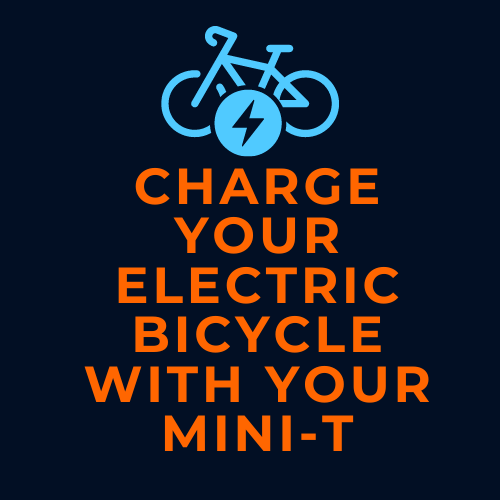
The answer depends on the campervan, the electrical system, the battery size, the charger requirements, and how much power is available. Many e-bike batteries can be charged from household-style 120-volt power when the appropriate charger is used. Travelers should always follow the e-bike manufacturer’s charging instructions, avoid unsafe adapters, monitor charging, and make sure batteries and chargers remain dry, ventilated, and protected.
For travelers using a campervan with a well-designed electrical system, e-bike charging may be possible while connected to shore power, while driving, or from stored battery power depending on the setup and energy use. This can be helpful during longer trips, especially when moving between campgrounds, trail systems, and public lands.
The important point is not to assume every setup is the same. Know your bike, know your charger, understand your campervan’s power system, and plan accordingly.
The Weight and Rack Question
E-bikes are often heavier than traditional bicycles. Before carrying one or more e-bikes, travelers should verify the weight of each bike, the rating of the bike rack, the hitch rating, and the vehicle’s tongue weight capacity. Batteries are often removable and may be carried inside the vehicle during transport when appropriate, which can reduce rack weight and protect the battery from weather and vibration.
A good rack matters. So does proper loading, secure tie-down, visibility, lighting, and license plate clearance. A poorly matched rack can turn a good idea into a frustrating or unsafe setup.
This is one of those practical details that may not sound exciting, but it directly affects the quality of the trip. When the bike is secure and easy to load, you are more likely to use it.
Where E-Bikes Shine During Campervan Travel
E-bikes can be especially useful in places where short-distance exploring is part of the experience.
In state parks, they can make it easier to move between the campground, beach, visitor center, trailheads, and picnic areas. In national parks, where allowed, they may help travelers explore paved roads, bike paths, and developed areas without constantly moving the vehicle. In small towns, they make it easy to ride to breakfast, a museum, a grocery store, or a waterfront path.
They also shine in campground life itself. Riding the loop in the evening, visiting friends at another campsite, checking out a boat landing, or heading to a sunset viewpoint becomes simple.
Travelers should always check local rules. E-bike access varies by park, trail, class of e-bike, surface type, and land manager. Some trails allow them. Some do not. Respecting those rules helps protect access and keeps trails enjoyable for everyone.
A Lighter Way to Experience a Destination
There is something different about exploring by bike.
You notice more. You move slowly enough to hear the wind and fast enough to cover ground. You can stop almost anywhere. A roadside view becomes a photo. A trail sign becomes an invitation. A bakery you would have driven past becomes breakfast.
That is why e-bikes pair so naturally with campervan travel. Both encourage independence. Both support curiosity. Both make it easier to experience the space between the big destinations.
The best road trips are often remembered through these smaller moments.
How a Compact Campervan Fits Into the Picture
A compact campervan can work especially well with e-bike travel because it keeps the overall setup manageable. The campervan remains easy to drive and park, while the e-bike expands what can be explored after arrival.
For travelers who prefer a simple setup, the Mini-T Campervan lineup is one example of this approach. Its compact size, efficient travel design, available power systems, and practical road-trip layout make it well suited to travelers who want to combine driving, camping, and local exploration without moving into a large RV.
The campervan gets you there. The e-bike helps you know the place more fully.
Planning Tips for Campervan and E-Bike Travel
Before heading out, think through the full travel day rather than only the drive.
Where will the bikes be carried?
How will they be secured?
Where will batteries be stored?
How will they be charged?
Are e-bikes allowed where you plan to ride?
Will you need helmets, locks, lights, rain gear, panniers, tools, spare tubes, or a tire pump?
Will the route include gravel, pavement, steep hills, busy roads, or shared-use trails?
These details do not need to make travel complicated. They simply help make the experience smoother. The goal is not to bring everything. The goal is to bring what helps you actually enjoy the ride.
More Than Transportation
An e-bike is not just a way to get around. In the context of a road trip, it becomes a way to connect with a place.
It turns a campground into a basecamp.
It turns a quick stop into a local ride.
It turns a destination into something you can explore at human speed.
That matters because travel is not only about arriving. It is about how deeply we experience the places we visit.
Final Thoughts: A Bigger Trip Without a Bigger RV
The partnership between campervans and e-bikes is not really about technology. It is about removing barriers.
The campervan makes it easier to reach the places you want to explore. The e-bike makes it easier to experience those places once you arrive.
Together, they can make travel feel larger without making the vehicle larger.
That may be the real beauty of the combination.
A bigger adventure does not always require a bigger RV.
Sometimes it only requires a smarter way to keep moving.
Happy Camping!
DLM-Distribution / Campervans is a licensed manufacturer and dealer located in Lake Crystal, Minnesota, serving clients around the country.
Contact Dave: 651-285-7089 or Candy: 507-382-9446 today!