Published April 8, 2024  •  Updated August 20, 2026
Category: Mini-T Campervan

Mini-T Campervan Towing Capacity: Pacifica and Transit Connect Tow Ratings

One advantage of traveling in a Mini-T Campervan is that choosing a smaller RV does not necessarily mean giving up the ability to bring larger recreational equipment along. Depending on the Mini-T model, a trailer can make it possible to bring a small boat, utility trailer or other equipment while still traveling in a campervan that remains easy to drive, park and use in everyday life. For travelers who rarely tow, the hitch may simply go unused most of the time, but having that capability available can considerably expand the possibilities for trips when additional equipment is worth bringing along.

Understanding that capability involves more than looking at a single towing number. Maximum trailer weight, tongue-weight capacity, the hitch receiver, trailer wiring and the ratings of the trailer or hitch-mounted equipment all play a part. Those numbers also matter differently depending on whether the Mini-T is actually pulling a trailer or carrying bicycles and cargo directly on the hitch, making it useful to understand what each rating means before deciding what to bring.

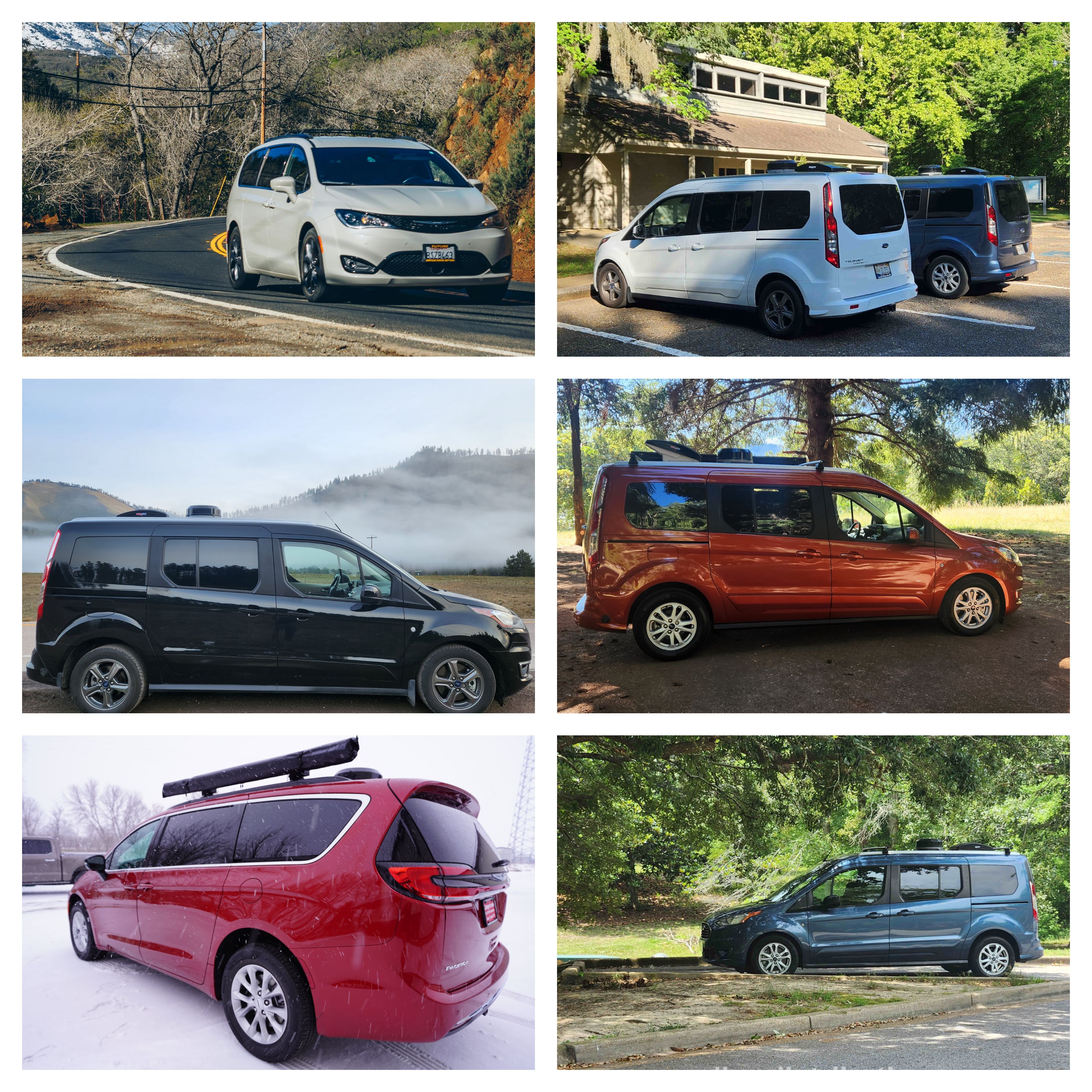
Ford Transit Connect and Chrysler Pacifica Mini-T Campervan models


Mini-T Campervan Towing Capacity by Model

The Mini-T has been manufactured on more than one vehicle platform, and towing capacity varies accordingly. The Ford Transit Connect Mini-T provides a lighter, smaller-footprint approach with a 2,000-pound maximum towing capacity, while the Chrysler Pacifica Mini-T increases that capability to 3,600 pounds. In either case, the idea is not to turn the Mini-T into a large tow vehicle, but to provide useful additional capability while retaining the everyday drivability and manageable size that make a small campervan appealing in the first place.

Ford Transit Connect Mini-T Campervan

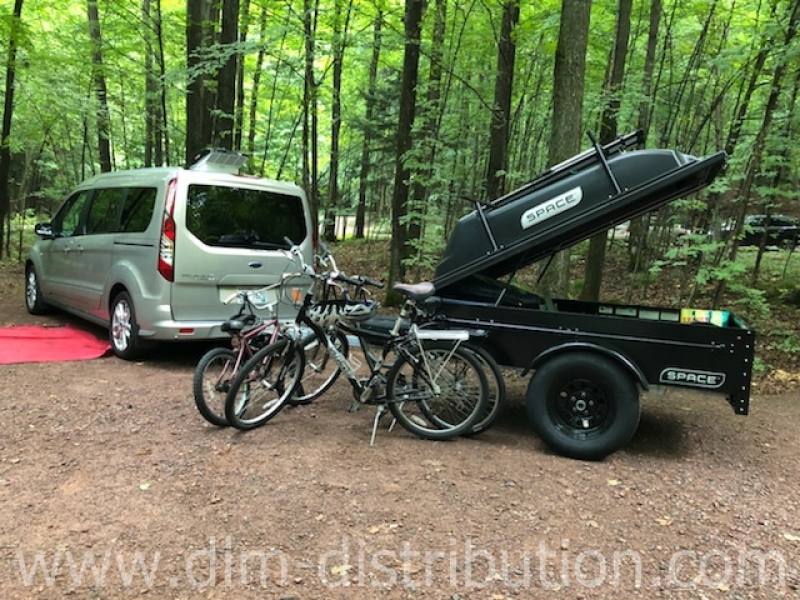
The Ford Transit Connect Mini-T Campervan has a maximum towing capacity of 2,000 pounds. That capacity can make a small trailer a useful extension of the campervan when a particular trip calls for equipment that would not otherwise travel inside the vehicle. Appropriately sized utility trailers and other small recreational trailers may fall within that range, allowing additional equipment to come along without requiring a larger RV for every trip.

For many owners, that capability may only be used occasionally, and that is part of its usefulness. The Transit Connect Mini-T can spend most of its time as the same easy-to-drive campervan, fitting into ordinary parking spaces and serving comfortably for travel or everyday transportation. When a trip calls for additional carrying capacity, an appropriately sized trailer can temporarily expand what comes along without permanently changing the vehicle itself.

Ford Transit Connect Mini-T Campervan towing a small recreational trailer

Chrysler Pacifica Mini-T Campervan

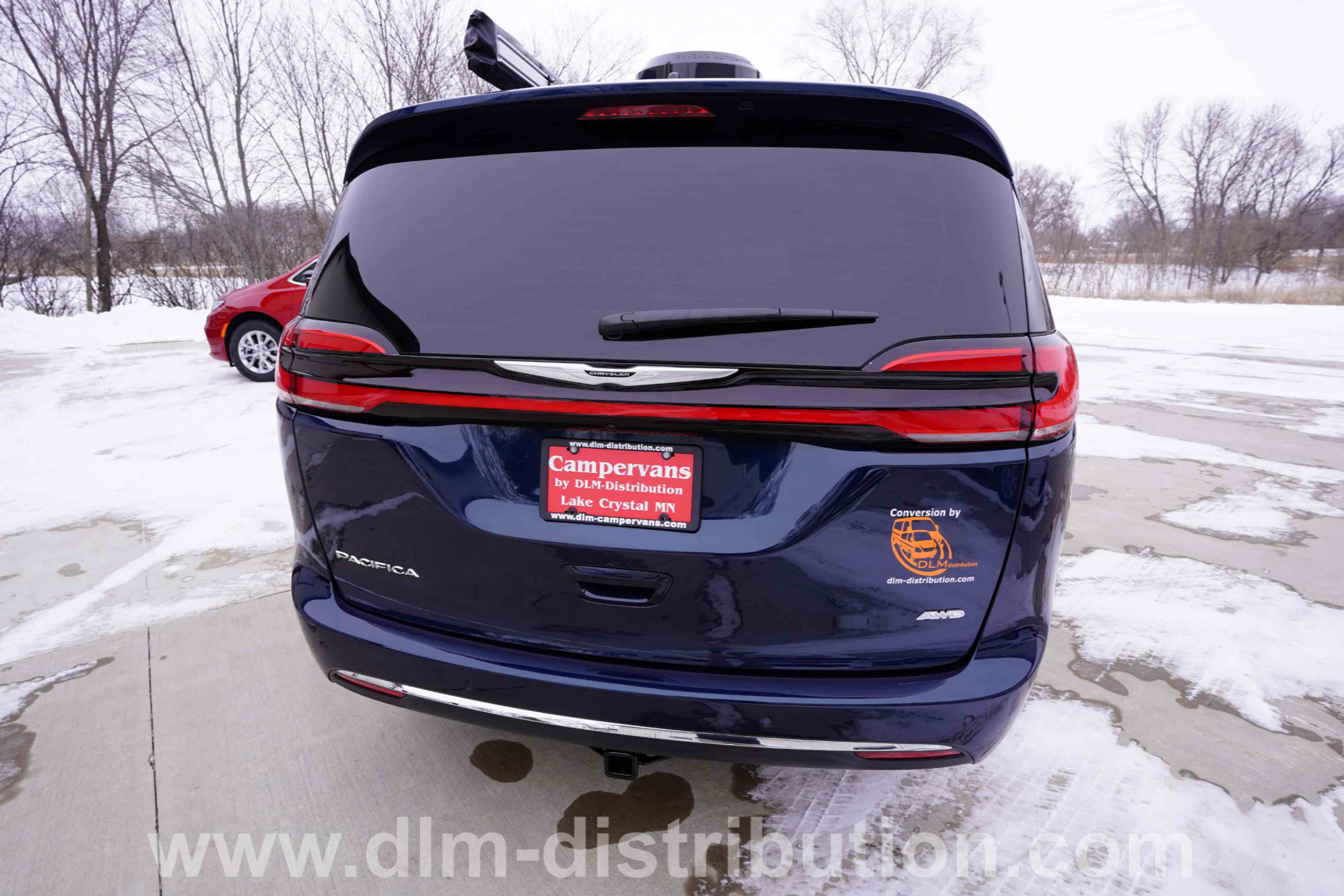
The Chrysler Pacifica Mini-T Campervan increases maximum towing capacity to 3,600 pounds, expanding the range of trailers and recreational equipment that can potentially travel behind the campervan. Depending on the weight and configuration involved, that might include a small boat and trailer, utility trailer or other recreational trailer that remains within the applicable vehicle, hitch and trailer ratings.

The value of that additional capability is not that a Pacifica Mini-T needs to tow something on every trip, but that the option is available when a particular trip calls for it. The campervan can remain manageable for ordinary travel, campground use and everyday driving, while a trailer temporarily expands what can come along for a weekend at the lake, a longer camping trip or another adventure where additional equipment is part of the plan.

Chrysler Pacifica Mini-T Campervan with towing capability


Every Mini-T Includes a 2-Inch Hitch Receiver

All Mini-T Campervans come equipped with a 2-inch hitch receiver, providing a common mounting point for appropriately rated trailers as well as compatible bike racks, enclosed cargo carriers and other hitch-mounted accessories. Mini-T Campervans are also equipped with a 4-pin flat trailer wiring connection for the basic stop, turn and tail-light functions of compatible trailers.

The hitch therefore remains useful even for Mini-T owners who rarely or never tow a trailer. For one traveler it may be used to pull a small recreational trailer, while another may primarily use it for bicycles or additional exterior storage. Being able to choose the equipment around a particular trip adds capability when it is useful without requiring that equipment to become a permanent part of the campervan.


Towing Capacity and Tongue Weight Are Different Ratings

Towing capacity and tongue-weight capacity are related, but they describe different things. Towing capacity refers to the maximum trailer weight the vehicle is rated to tow when properly equipped and operated within all applicable limits, while tongue weight refers to the downward load placed on the hitch by a trailer or hitch-mounted equipment. For the Ford Transit Connect Mini-T, those ratings are 2,000 pounds of maximum towing capacity and 200 pounds of tongue-weight capacity. The Chrysler Pacifica Mini-T provides 3,600 pounds of maximum towing capacity and 360 pounds of tongue-weight capacity.

That distinction becomes particularly important when the hitch is being used for something other than a trailer. A hitch-mounted bike rack, for example, is not part of the vehicle's 2,000- or 3,600-pound trailer load. Instead, the weight of the rack and the bicycles it carries contributes to the load placed on the hitch. The same principle applies to an enclosed cargo carrier: the carrier itself has weight before the first piece of camping equipment is placed inside it, and the complete loaded system needs to remain within the applicable limits.

The vehicle's tongue-weight rating is also not necessarily the limiting number. A bike rack, cargo carrier, trailer or individual component may have a lower maximum rating of its own. Safe use therefore means considering the entire combination and following the lowest applicable limit rather than looking only at the vehicle's maximum capacity.

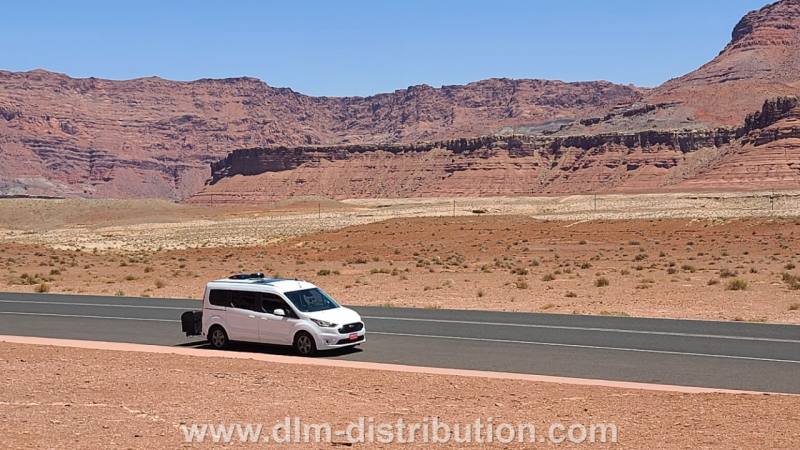
Mini-T Campervan traveling on the road


Bike Racks, E-Bikes and Cargo Carriers

For many Mini-T owners, the hitch may spend more time carrying recreational equipment than pulling a trailer. Hitch-mounted bicycle racks can be particularly useful because they keep bicycles at a more manageable loading height while leaving the roof available for the campervan's solar system, ventilation fan, antenna and other rooftop equipment. They also avoid adding bicycle height above the campervan, an important consideration for travelers who value garageability and access to lower-clearance parking areas.

E-bikes make tongue-weight and rack ratings especially important because they can weigh considerably more than conventional bicycles. The Chrysler Pacifica Mini-T's 360-pound tongue-weight capacity provides substantial capacity for many bike-rack and cargo-carrier configurations, while the Transit Connect Mini-T provides a 200-pound tongue-weight capacity. In either case, the weight of the rack itself, the bicycles and any other equipment must be considered together, along with the manufacturer's rating for the rack and its individual bike positions.

Travelers are not limited to choosing between bicycles and additional exterior storage, either. Modular hitch-mounted systems can combine bike carrying with enclosed cargo capacity, while swing-away designs can preserve access to the rear of the campervan. For Pacifica Mini-T owners considering these arrangements, our guide to Chrysler Pacifica bike racks and bike/cargo carrier combinations looks more closely at fixed, tilt-away and swing-away systems, rear-hatch access, e-bike considerations and the practical differences between carrying equipment on the roof and behind the vehicle.

The Mini-T's off-grid electrical system can also provide 120V power for compatible e-bike chargers, creating the possibility of charging an e-bike while camping away from shore power. Charging requirements vary by bicycle, battery and charger, so owners should consider the specifications and charging instructions for their particular e-bike system as part of their overall power use while traveling.

Bicycle and kayak carried with a Mini-T Campervan for an outdoor trip


Think About the Complete Combination

A maximum towing rating should not be viewed as the only number that determines whether a particular trailer is appropriate. Trailer weight, cargo loaded into the trailer, tongue weight, hitch and equipment ratings, and the vehicle's other applicable weight limits all need to be considered together. The same principle applies when nothing is being towed at all. A bike rack that weighs 60 pounds and carries two bicycles places more than just the weight of those bicycles on the hitch, just as an enclosed cargo carrier has its own weight before anything is placed inside it.

With modular systems, each additional component contributes to the total, which makes knowing the actual weights more useful than estimating them. This becomes particularly important with e-bikes, enclosed cargo carriers and combinations that place several pieces of equipment behind the vehicle at once. Taking a few minutes to understand those numbers before leaving home makes it easier to configure the Mini-T appropriately for the trip rather than trying to determine the limits after everything has already been loaded.


More Capability When a Trip Calls for It

The towing capability of the Mini-T is less about turning a small campervan into a tow vehicle and more about giving travelers another option. The Ford Transit Connect Mini-T provides up to 2,000 pounds of towing capacity and 200 pounds of tongue-weight capacity, while the Chrysler Pacifica Mini-T provides up to 3,600 pounds of towing capacity and 360 pounds of tongue-weight capacity. For one traveler, that capability might mean bicycles on a hitch-mounted rack; for another, an enclosed cargo carrier for a longer trip; and for someone heading to the lake, it might mean bringing an appropriately sized boat and trailer.

When none of that equipment is needed, it stays home and the Mini-T remains the same manageable campervan. That is ultimately where towing and hitch capability fit into the larger idea behind the Mini-T: bring more when a particular trip calls for it without having to travel in a larger RV every other day of the year.

Happy Camping!

Campervans for sale: In stock camper vans HERE

DLM-Distribution / Campervans is a licensed manufacturer and dealer located in Lake Crystal, Minnesota, serving clients around the country.

Contact Dave: 651-285-7089 or Candy: 507-382-9446 today!

```