
One Campervan, Many Ways to Travel
Not everyone travels the same way, and not everyone who owns a campervan thinks of themselves primarily as a camper. Some people spend weeks exploring state and national parks. Others use their campervan for weekend trips, sporting events, festivals, visiting family, or simply taking the scenic route somewhere they were already planning to go. For seasonal travelers, it may become part of the journey between homes. For others, it can serve as an everyday vehicle when there is no trip on the calendar at all.
That versatility is one of the advantages of a small Class B campervan. Rather than owning an RV that spends much of its life waiting for the next camping trip, a Mini-T Campervan can become part of everyday life while still being ready when the opportunity to travel appears.
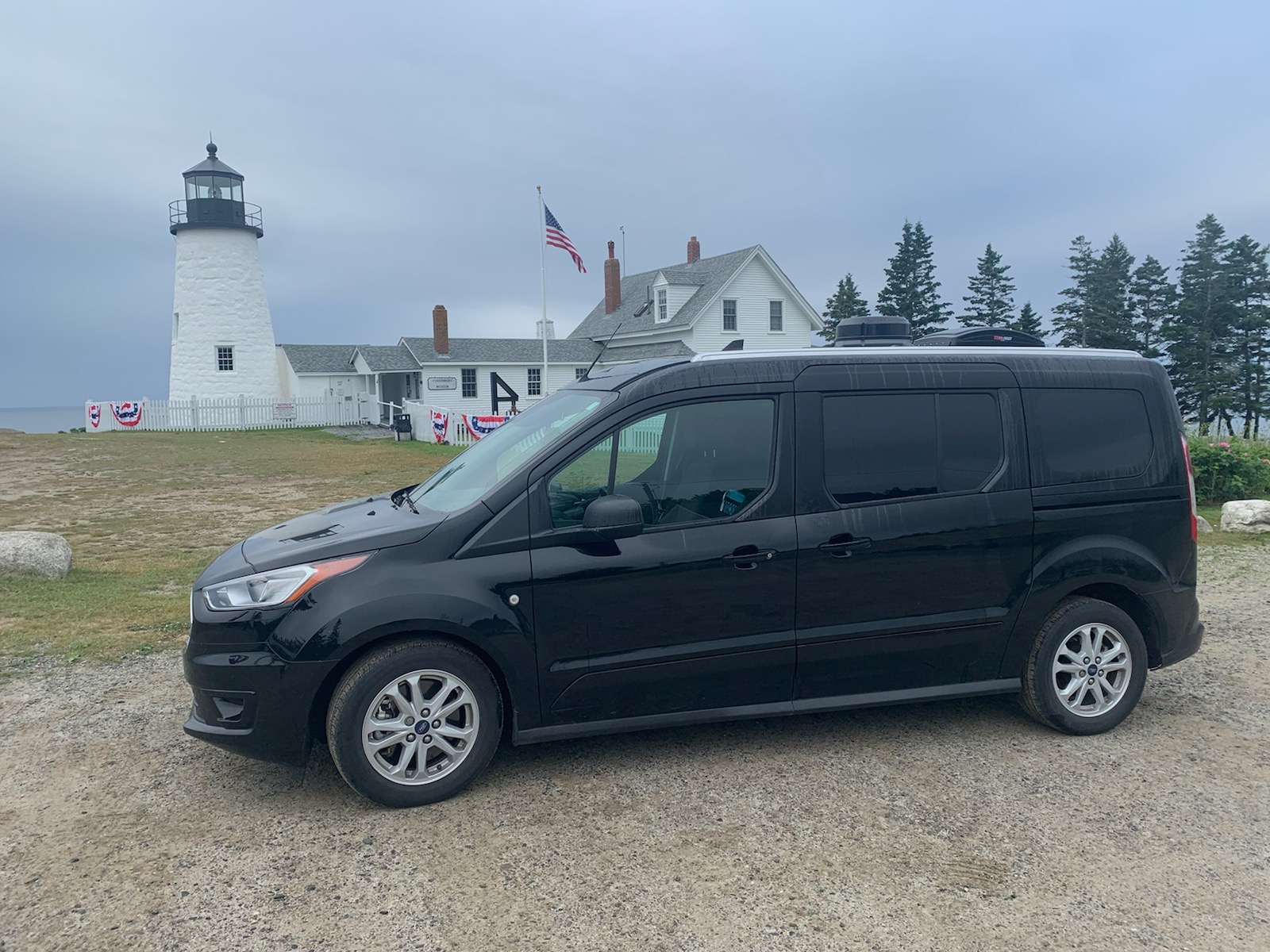
A campervan can change the way a trip unfolds because transportation and many of the comforts of home travel together. A refrigerator keeps food and drinks available along the way. A microwave, sink and portable cooking equipment make simple meals possible. The couch converts into a bed when it is time to stop for the night, while onboard electrical systems provide power through solar charging, charging while driving, or shore power when available.
The result is not simply a smaller version of a traditional motorhome. It is a different approach to travel—one that can make it easier to stop, explore, change plans and stay longer when an interesting place appears along the way.
Camping and Touring Without a Large RV
For travelers who enjoy campgrounds, scenic drives and road trips, vehicle size can influence much more than the drive itself. A smaller campervan can comfortably travel roads and visit destinations where maneuvering a larger RV may require more planning. It can pull into ordinary parking spaces, stop at restaurants and attractions along the route, and move through towns without making the RV the central consideration of the trip.
Consider a trip along Minnesota’s North Shore. The destination may include a campground, but much of the experience happens between campsites—small towns, overlooks, hiking trails, restaurants, waterfalls and unplanned stops along Lake Superior. A campervan that is easy to drive and park allows those places to remain part of the journey.
When the day is over, the same vehicle becomes the campsite. Shore power can be used when available, while solar and vehicle charging provide practical off-grid capability without the need for a generator. That flexibility makes it possible to choose destinations based more on where you want to go and less on what the RV requires.

Solo Travel and Traveling as a Couple
For solo travelers, a smaller campervan can make RV travel approachable. Driving, parking and navigating unfamiliar places feel much like traveling in a passenger vehicle, while the sleeping area, refrigerator, power system and other camping amenities remain close at hand. There is no trailer to connect, separate tow vehicle to manage, or large motorhome to maneuver once you reach a destination.
For couples, the same simplicity can make spontaneous travel easier. A weekend away does not necessarily require extensive preparation. Food, clothing and a destination may be all that is needed before heading out. And because the campervan travels easily beyond the campground, the trip does not have to revolve around staying in one place.
Seasonal Travel and the Journey Between Homes
For snowbirds and others who divide the year between residences, a campervan can serve a different purpose. Instead of treating the drive between homes as several days that simply need to be completed, the journey itself can become part of the season.
There may be a favorite campground along the route, a national park worth revisiting, friends or family to see, or a town you have passed many times but never stopped to explore. Having a comfortable place to rest, prepare food and spend the night provides more freedom to decide how quickly—or slowly—to make the trip.
Once you arrive, the campervan does not have to become another large vehicle that needs special parking or storage. It remains useful for day trips, errands and exploring the area throughout the season.
Travel That Has Nothing to Do With Camping
Some of the most useful trips in a campervan may never involve a campground. Owners use campervans for sporting events, concerts, festivals, photography trips, cycling, visiting friends and family, and long-distance travel where having food, refrigeration, power and a comfortable place to rest changes the experience.
A campervan can also be useful for work travel. The ability to stop comfortably between appointments, use onboard power, keep food and drinks refrigerated, or create a temporary place to work can be valuable even when there is no intention of camping. The same characteristics that make a smaller RV convenient at a state park can make it equally useful in a city parking lot or on a cross-country drive.

An RV That Can Come Home With You
One of the less exciting parts of RV ownership is figuring out what happens to the vehicle when the trip is over. Larger RVs may require outdoor parking, a storage facility, or special arrangements dictated by neighborhood or HOA restrictions.
At approximately 6 feet 8 inches tall and just over 17 feet long, the Mini-T fits in a residential garage and standard parking spaces. For owners with available garage space, that means the campervan can simply come home with them instead of being taken to a separate RV storage facility after every trip.
That may seem like a small distinction, but it can have a significant effect on how often an RV gets used. When the campervan is already at home and ready to go, an overnight trip, weekend getaway or unplanned drive becomes much easier to turn into an actual trip.

The Right RV Is the One That Fits the Way You Travel
There is no single way to use a campervan. For one owner, it may spend much of the summer moving between campgrounds. For another, it may travel between Minnesota and a winter home in Arizona or Florida. Someone else may use it during the week as a vehicle and head for a state park on Friday afternoon.
That is ultimately where a small campervan can make sense. The goal is not to carry the largest possible RV down the road. It is to have enough capability to travel comfortably without adding unnecessary obstacles to the places you want to go or the way you live when you return home.
Sometimes the best RV is simply the one that makes it easier to say yes when somewhere sounds worth going.
Happy Camping!
Campervans for sale: View current Mini-T Campervan inventory
DLM-Distribution / Campervans is a licensed manufacturer and dealer located in Lake Crystal, Minnesota, serving clients around the country.
Contact Dave: 651-285-7089 or Candy: 507-382-9446 today!