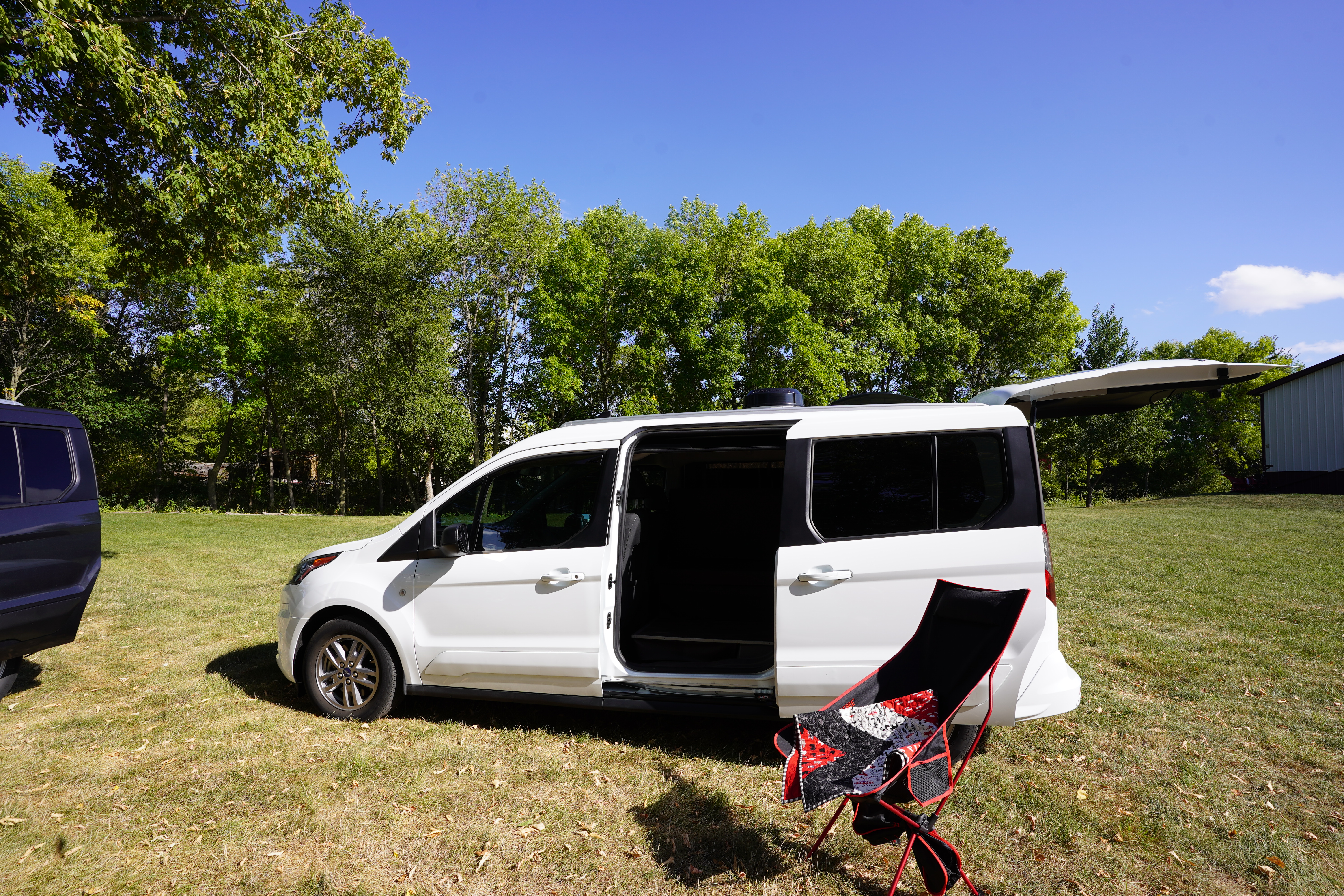
Fuel Economy in Class B Campervans: Why Smaller Can Mean Bigger Adventures
One of the greatest advantages of a compact campervan has nothing to do with luxury finishes, oversized floorplans, or how much equipment can be packed inside.
It has to do with something many travelers do not fully appreciate until they are already on the road:
Fuel economy.
Not because miles per gallon is exciting by itself. Most people do not dream about fuel economy. They dream about mountains, coastlines, national parks, quiet lakes, small towns, scenic highways, and the freedom to keep going when curiosity points in a new direction.
Good fuel economy matters because it quietly removes hesitation. It makes the scenic detour easier to justify. It makes the extra hundred miles feel less intimidating. It makes a long road trip feel more possible. It can turn a campervan from something used occasionally into something that becomes part of the way people travel.
That is where smaller Class B campervans can change the experience entirely.
Fuel Economy Is More Than a Number
When people compare campervans, fuel economy is often treated like a specification. One model gets this many miles per gallon. Another gets that many. The numbers are useful, but they do not tell the whole story.
The real question is not simply:
How many miles per gallon does it get?
The better question is:
How does fuel economy change the way you travel?
A campervan that is expensive to drive can subtly shape decisions. Owners may stay closer to home, shorten trips, avoid scenic detours, or think twice before adding another destination. Over time, those decisions matter. They can determine whether the campervan becomes part of everyday adventure or sits unused while bigger trips wait for “someday.”
A fuel-efficient campervan does the opposite. It makes movement feel easier. It encourages exploring. It invites travelers to keep the road open a little longer.

The Hidden Cost of Poor Fuel Economy
Most people understand the financial side of fuel economy. A campervan that uses less fuel generally costs less to operate. But the hidden cost of poor fuel economy is often psychological.
When every mile feels expensive, people naturally begin to limit themselves. They may choose the shortest route instead of the scenic one. They may skip the state park that is just a little out of the way. They may head home sooner because the return drive feels costly.
That kind of hesitation can change the entire character of a trip.
Travel should not feel like a meter is running. It should feel open. Flexible. Inviting.
Good fuel economy does not make travel free, but it can make travel feel more approachable. That matters for weekend trips, seasonal exploring, cross-country travel, and the spontaneous drives that often become the most memorable.
What Is Good Gas Mileage for a Class B Campervan?
Class B campervans vary widely in fuel economy depending on platform, engine, weight, roof height, drivetrain, aerodynamics, speed, terrain, weather, and how the campervan is loaded.
Many traditional Class B motorhomes commonly fall somewhere in the high teens to mid-20s for miles per gallon, with some models doing better and others doing worse. Larger, taller, heavier campervans generally require more fuel, especially at highway speeds or in mountain terrain.
Diesel campervans may offer strong fuel economy in some situations, but fuel cost, maintenance cost, emissions systems, service availability, and ownership preferences should all be considered. A higher mpg number is helpful, but it is only one part of the total ownership picture.
For many travelers, the best campervan is not simply the one with the highest possible fuel economy. It is the one that balances efficiency, comfort, reliability, ease of service, everyday usability, and the kind of travel they actually want to do.

Why Smaller Campervans Often Travel Differently
Smaller campervans tend to encourage a more mobile style of travel.
A large motorhome may be comfortable once parked, but it often rewards staying put. A compact campervan rewards motion. It is easier to drive through towns, easier to park at trailheads, easier to fuel, easier to maneuver at scenic overlooks, and often easier to use for everyday life.
That difference changes the rhythm of travel.
Instead of driving to one campground and staying there, a compact campervan can make it easier to follow a coastline, move between national parks, visit small towns, explore mountain passes, or take the long way home.
Camping remains part of the experience, but the road becomes part of the story.

How Fuel Economy Opens the Map
Imagine waking up in the Black Hills, crossing Wyoming by afternoon, and reaching Yellowstone the next day. A few days later, Glacier National Park begins to feel possible. From there, maybe the road points toward the Pacific Northwest, Vancouver Island, the Oregon Coast, or the redwoods of Northern California.
Or maybe the trip is much shorter.
Maybe it is a free weekend, a state park two hours away, a quiet lake, a favorite hiking trail, or a small town you have always meant to visit.
Either way, fuel economy matters because it supports choice. It does not require every trip to be long. It simply makes both short and long trips easier to say yes to.
That is the real value. Fuel efficiency does not create the memory. It helps make the trip practical enough to take.
Fuel Economy and Everyday Use
One of the reasons fuel economy matters so much in a compact campervan is that many owners use their campervan for more than camping.
A fuel-efficient Class B campervan can serve as a travel vehicle, daily driver, weekend escape vehicle, airport transportation, grocery getter, and road trip companion. When a campervan is practical enough to drive regularly, it stays familiar. It remains ready. It becomes part of life rather than something retrieved only for special occasions.
That familiarity matters. The more comfortable someone is driving their campervan, the more likely they are to use it.
A campervan that is easy to fuel, easy to park, and efficient enough for regular driving removes another barrier between the owner and the next trip.

Speed, Weight, and Driving Style Still Matter
Even the most efficient campervan is affected by how it is driven. Highway speed, wind, hills, cargo weight, tire pressure, idling, maintenance, and route choice can all influence fuel economy.
Driving a little slower, maintaining proper tire pressure, keeping up with regular service, avoiding unnecessary weight, and planning routes thoughtfully can all help improve efficiency. Mountain roads, strong headwinds, winter conditions, and stop-and-go traffic may reduce fuel economy, while steady highway travel in favorable conditions may improve it.
Fuel economy is never a fixed promise. It is a real-world result shaped by vehicle design and travel habits working together.
Where the Mini-T Campervan Fits
One reason the Mini-T Campervan has attracted travelers for many years is that it combines compact Class B campervan comfort with excellent fuel economy for its category. Depending on model, driving conditions, load, and travel habits, the garageable Mini-T Campervans are often known for fuel economy in the approximate 24 to 28 mpg range under favorable conditions.
That number matters, but not because it belongs on a specification sheet.
It matters because it helps remove another reason not to go.
With a fuel-efficient campervan, the extra scenic route becomes easier. The weekend trip becomes more realistic. The longer road trip feels less financially intimidating. The vehicle remains practical enough for daily driving, yet ready when travel calls.
That is the bigger story.
Smaller Can Mean More Freedom
In the RV world, bigger is often presented as better. More space. More features. More room. More everything.
But travel is not always improved by more size.
Sometimes smaller means the vehicle is used more often. Sometimes smaller means easier parking, easier ownership, lower operating costs, and more confidence behind the wheel. Sometimes smaller means you take the detour instead of skipping it.
That is why fuel economy belongs in a larger conversation about how people actually travel.
The best campervan is not necessarily the largest one or the one with the longest feature list. It is the one that fits your life well enough that you use it often.
Final Thoughts: Fuel Economy Helps You Say Yes
People often assume fuel economy is about saving money. It certainly can be.
But over time, many travelers discover something even more valuable.
Good fuel economy quietly removes hesitation.
The scenic detour becomes easier to justify. The extra national park fits into the itinerary. The weekend grows into four days. The road feels a little shorter. The possibilities become a little bigger.
Fuel economy is not one of the reasons people remember a great road trip.
It is one of the reasons they were able to take it in the first place.
Perhaps that is the real value of a fuel-efficient Class B campervan. It does not simply help you travel farther.
It helps you say yes more often.
DLM-Distribution / Campervans is a licensed manufacturer and dealer located in Lake Crystal, Minnesota, serving clients around the country.
Contact Dave: 651-285-7089 or Candy: 507-382-9446 today!