Published July 18, 2016  •  Updated July 28, 2026
Category: Scenic Destinations & Road Trips

Hershey, Pennsylvania: The Town Chocolate Built—and the Story Beyond the Candy

Most places are named first and become famous later.

Hershey happened differently.

The town, the chocolate company, the amusement park, the gardens, the school, and many of the buildings visitors see today grew from the vision of one man. That is what makes Hershey more interesting than a collection of chocolate-themed attractions. It is a place where a product became a community—and where the story of American industry can still be read in the streets, parks, institutions, and public spaces that followed.

Chocolate may be the reason many travelers arrive, but it is not the only reason Hershey is worth understanding.

Hershey's Chocolatetown and attractions in Hershey, Pennsylvania


A Town That Began with an Idea

Milton S. Hershey did not begin with guaranteed success. His early attempts in the candy business included failures, moves between cities, borrowed money, and years of uncertainty before his Lancaster Caramel Company finally prospered.

Chocolate changed the direction of his life. After seeing chocolate-making equipment demonstrated at the 1893 World's Columbian Exposition in Chicago, Hershey recognized the possibility of producing milk chocolate on a much larger scale. He eventually sold his successful caramel company and committed himself to an industry that was still developing in the United States.

The location he chose was practical. Central Pennsylvania offered access to dairy farms, available land, water, and rail transportation. It was also the region where Hershey had been born.

When the new chocolate factory was completed in the early twentieth century, Hershey did not stop at manufacturing buildings. Homes, schools, parks, public transportation, cultural institutions, recreational facilities, and community infrastructure followed. The result was not simply a factory with housing nearby. It was an effort to create a town where employees and their families could build lives.

That broader ambition still explains Hershey better than chocolate alone.


Hershey's Chocolate World: Where Most Visits Begin

For many visitors, the first stop is Hershey's Chocolate World. Located beside Hersheypark, the attraction serves as an introduction to the company's most familiar products and the process behind them.

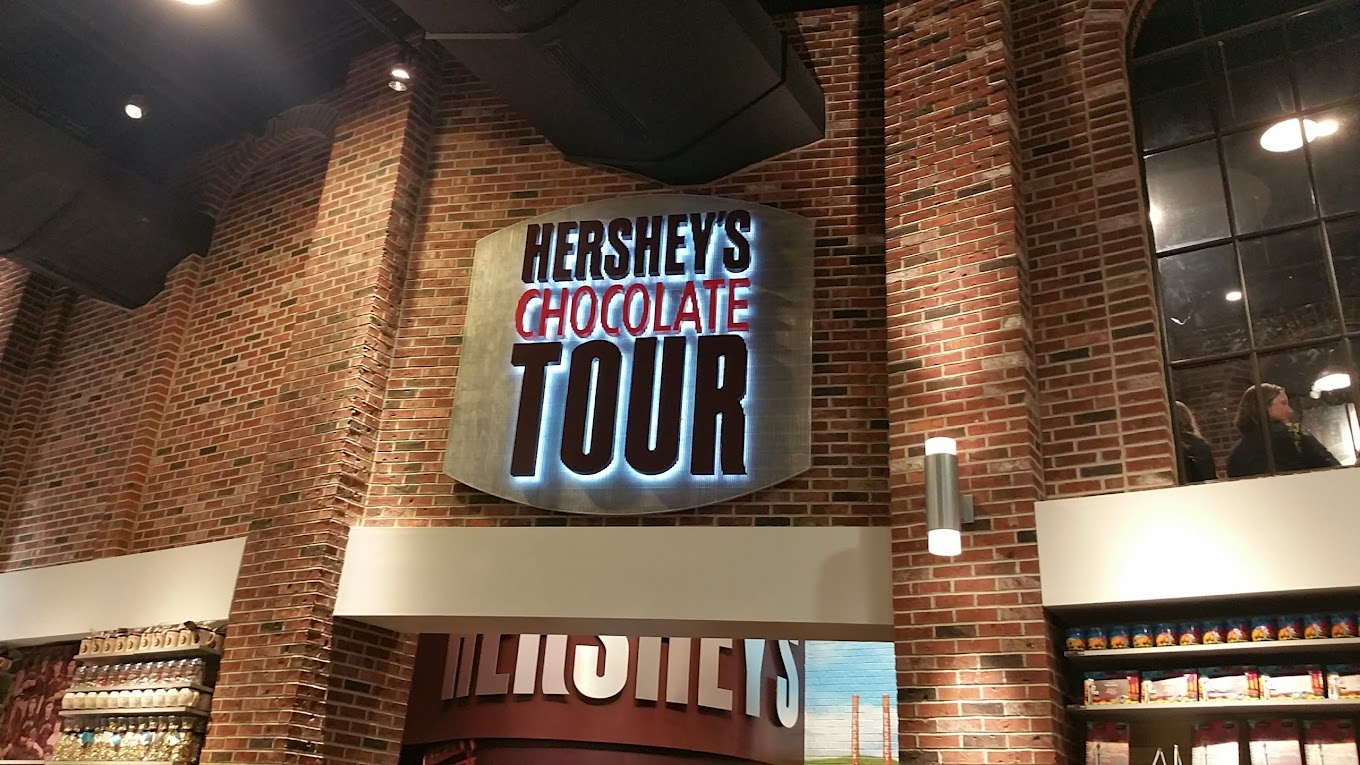
The free Hershey's Chocolate Tour ride follows the basic journey from cocoa beans to finished candy. It is theatrical rather than an operating factory tour, but it provides an accessible overview of how ingredients are combined, refined, formed, cooled, and packaged.

Chocolate-making experience inside Hershey's Chocolate World

Chocolate World also offers ticketed experiences that allow visitors to become part of the process. Create Your Own Candy Bar lets participants select ingredients, design a wrapper, and watch as a personalized bar moves through production. Other experiences, shows, trolley tours, character appearances, seasonal offerings, restaurants, and an enormous retail area can easily turn what sounds like a quick stop into several hours.

The atmosphere is intentionally playful. Familiar candy brands become characters, displays, desserts, souvenirs, and experiences. Yet the most interesting part may be recognizing how completely one ordinary product has shaped the identity of an entire destination.


The Hershey Story: Understanding the Man Behind the Name

Chocolate World explains the product. The Hershey Story explains the person and the town.

Located on Chocolate Avenue, the museum follows Milton Hershey's early struggles, business decisions, eventual success, community planning, and philanthropy. That context changes how the rest of Hershey is experienced.

Without it, the town can appear to be a highly coordinated collection of attractions carrying the same name. After learning the history, the connections become clearer. The factory created employment. Employment required homes and transportation. A growing community needed schools, recreation, cultural opportunities, and public spaces. Success created the resources to pursue ideas that extended far beyond candy.

The museum also makes Hershey's failures important. His story was not a straight path toward inevitable wealth. The wrong decisions, unsuccessful businesses, and willingness to begin again make the later achievements more human—and perhaps more useful to remember.

Hershey becomes more than the man pictured on packaging. He becomes someone who repeatedly tested what success could be used to accomplish.


A Community Was Part of the Product

Company towns occupy a complicated place in American history. Some were designed primarily to control labor and keep employees economically tied to an employer. Hershey's vision was more expansive, though it was still inseparable from the company that created it.

He wanted workers to have comfortable homes, green space, recreation, education, and cultural opportunities. Over several decades, the town gained schools, parks, public transportation, a theatre, an amusement park, and other amenities uncommon in many industrial communities of the era.

This does not make Hershey a simple story or a perfect model. It makes it an unusually visible example of how one industrialist imagined the relationship between a successful company and the place surrounding it.

That relationship is still present. Visitors may come for rides, chocolate, gardens, concerts, sports, or a weekend campground stay, yet many of those experiences exist because the original vision extended beyond factory walls.


Hersheypark: Recreation Becomes Part of the Town

Hersheypark began as a place of recreation for company employees and local residents. Over time, it expanded into a major amusement park with roller coasters, family rides, entertainment, food, seasonal events, a water park, and access to ZooAmerica.

Family attractions and rides at Hersheypark in Pennsylvania

The scale of the modern park can make its origins easy to forget. What began as a community amenity became one of the most recognizable attractions in Pennsylvania.

A full visit can easily occupy an entire day, particularly for travelers interested in major rides or the water park. Seasonal schedules, operating hours, ticket options, and attraction availability change, so planning ahead is worthwhile.

Yet even for travelers who do not consider themselves amusement-park enthusiasts, Hersheypark adds another chapter to the town's larger story. Recreation was not added as an afterthought. It was part of what Hershey believed a community should offer.


Hershey Gardens: A Quieter View from Above the Town

Hershey Gardens offers a very different pace.

The 23-acre property occupies higher ground overlooking portions of Hershey. Seasonal flower displays, mature trees, themed gardens, walking paths, and changing views make it possible to step away from the activity surrounding Chocolate World and Hersheypark without leaving town.

Seasonal flowers and landscaped grounds at Hershey Gardens

Inside the conservatory, the year-round Butterfly Atrium creates another environment entirely. Visitors walk among hundreds of butterflies from around the world in a warm tropical setting filled with plants and moving water.

The gardens are not simply a break between larger attractions. They reveal another part of Hershey's original thinking. Beauty, leisure, and public enjoyment were treated as meaningful parts of community life.

A town created around manufacturing did not have to look or feel only industrial.


Chocolate Avenue and the Details That Hold the Story Together

Hershey's larger attractions naturally command attention, but the town becomes more interesting when visitors notice the smaller details connecting them.

Chocolate Avenue, streetlights shaped like wrapped and unwrapped Hershey's Kisses, historic buildings, landscaped public spaces, and repeated references to familiar candy names create a setting unlike almost any other American town.

Some details are playful. Others point toward deeper history.

The Hershey Theatre reflects the cultural ambitions behind the community. High Point Mansion, the former home of Milton and Catherine Hershey, offers a more personal connection to the people behind the public story. The town's schools and institutions demonstrate that Hershey's legacy was not limited to entertainment or tourism.

Walking or driving through town after visiting The Hershey Story can feel like reading the next chapter outside the museum. Buildings and public spaces stop appearing coincidental. They become evidence of a plan that continued taking shape for decades.


The Automobile Has Its Own Story Here

Hershey is also home to the AACA Museum, an attraction that may initially seem unrelated to chocolate.

In reality, it fits naturally into a road trip. The museum explores the history of automobiles, buses, motorcycles, and transportation through rotating and permanent exhibits. Its collection provides a reminder that the way Americans traveled changed almost as dramatically as the communities they traveled through.

For campervan travelers, that history feels particularly relevant. Today's freedom to move between cities, parks, campgrounds, museums, and small towns grew from more than a century of changing vehicle design, road construction, tourism, and personal mobility.

A visit creates an unexpected connection between the destination and the journey used to reach it.


Camping Near Hershey

Camping near Hershey changes the visit from a long day at an attraction into a short regional journey.

Hersheypark Camping Resort is the most directly connected option. It offers RV sites, tent sites, cabins, seasonal pools, recreation facilities, a camp store, and activities within easy reach of Hershey's primary attractions. Its location and amenities make it especially practical for travelers whose main purpose is spending time in Hershey.

Campground setting near Hershey attractions in Pennsylvania

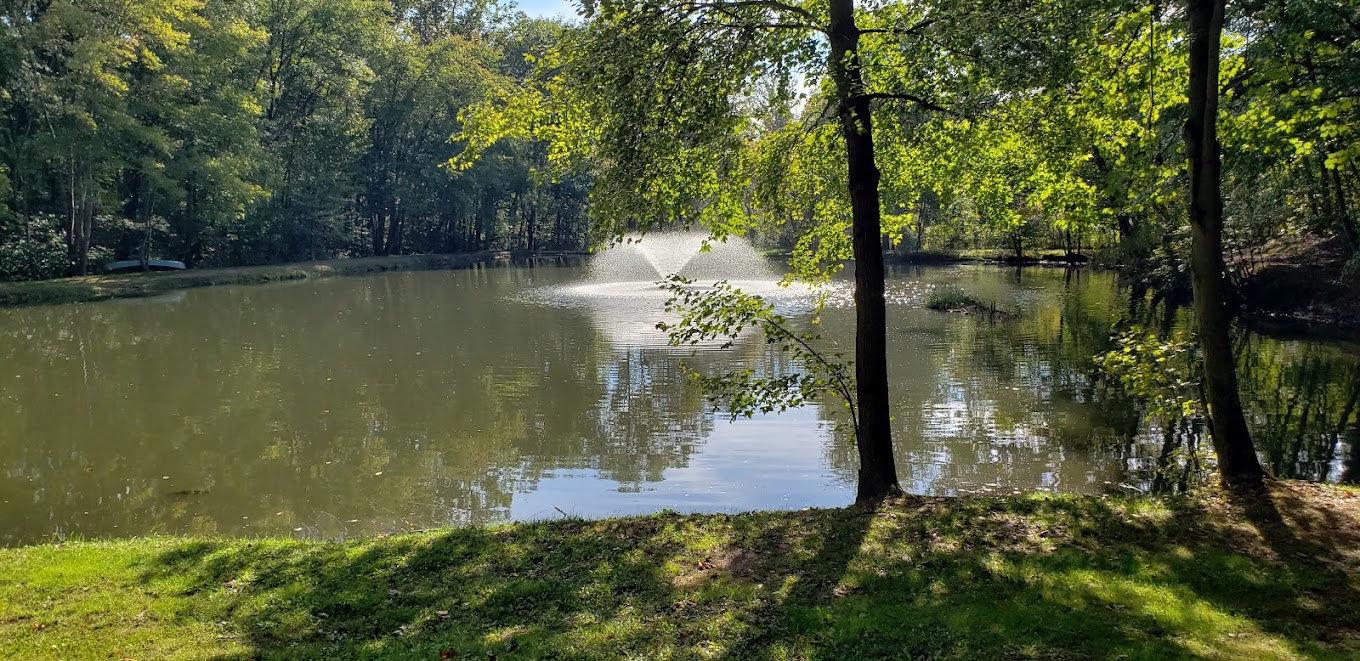
Travelers looking for a more traditional state-park setting can also consider Gifford Pinchot State Park southwest of Harrisburg. Its campground and lake create a quieter base that can be combined with a day in Hershey. The choice depends on the trip: convenience and resort amenities close to the attractions, or a greater separation between the day's activity and the evening at camp.

Private campgrounds throughout the surrounding region provide additional possibilities. Names, ownership, amenities, reservation policies, and operating seasons can change, so current details should always be confirmed directly before arrival.

The best campsite is not necessarily the one with the longest amenity list. It is the one that helps the next day begin the way you hoped it would.


Beyond Chocolate: Exploring Central Pennsylvania

Hershey works well as a destination, but its central location also makes it a useful starting point for a larger Pennsylvania trip.

Harrisburg sits along the Susquehanna River west of town, offering the State Capitol, riverfront areas, museums, restaurants, and neighborhoods shaped by the city's role in government and transportation.

To the south, Lancaster County introduces working farmland, markets, covered bridges, small towns, and communities whose traditions remain closely tied to the land. Farther southwest, Gettysburg National Military Park requires a different kind of attention. Its battlefield roads, monuments, museum, fields, and ridges reveal history through the landscape where it occurred.

North and east of Hershey, forested ridges, state parks, and smaller communities gradually replace the developed corridor. A trip that begins with chocolate can therefore continue toward rivers, farms, mountain roads, or some of the historic landscapes that make Pennsylvania feel like several journeys sharing one map.


How Much Time Does Hershey Deserve?

Chocolate World alone can be visited in a few hours, particularly when the free tour ride and shopping area are the main priorities.

But Hershey is more rewarding when given at least a full day. Adding The Hershey Story, Hershey Gardens, or Hersheypark can easily extend a visit into a weekend. The AACA Museum, performances, sporting events, seasonal celebrations, and nearby destinations can lengthen it further.

The answer depends on what drew you there.

Someone arriving for a favorite candy may be satisfied after an afternoon. Someone curious about how a chocolate company influenced an entire town may leave wishing they had allowed more time.


When to Visit Hershey

Hershey changes with the seasons.

Spring brings new growth to Hershey Gardens and generally comfortable conditions for walking around town. Summer offers the broadest amusement-park schedule and the greatest number of outdoor activities, along with the largest crowds.

Autumn brings cooler temperatures, regional foliage, harvest-season travel, and special events. Winter transforms Hershey through lights, decorations, seasonal entertainment, and indoor attractions that remain appealing when the weather turns cold.

Because attraction schedules, operating days, admission options, and special events change throughout the year, checking current information before traveling is more useful than relying on a fixed itinerary.

The season does not determine whether Hershey is worth visiting. It determines which version of the town you will meet.


The Story Beyond the Candy Wrapper

Hershey is easy to enjoy without thinking deeply about it.

You can ride the Chocolate Tour, create a candy bar, walk through the gardens, spend a day on roller coasters, buy more chocolate than originally planned, and return to camp satisfied.

But the town offers something more lasting to travelers who look beyond the attractions.

Hershey is a story about failure followed by persistence. It is a story about manufacturing becoming community planning, personal wealth becoming philanthropy, and a familiar product becoming the identity of a place.

The chocolate made the town possible.

What Milton Hershey chose to create around it is what makes the town worth remembering.


A Small Campervan in a Town with a Larger Story

A Mini-T Campervan fits naturally into a Hershey trip because the days can be so varied. It is compact enough for ordinary parking and practical driving around town, while still providing a comfortable place to camp nearby and continue exploring central Pennsylvania.

One day may revolve around chocolate and history. The next may begin beside a lake, follow the Susquehanna, cross Lancaster County, or continue toward Gettysburg.

The campervan does not need to become the story.

It simply makes it easier to remain curious about what lies beyond the next familiar name on the map.

Explore current Mini-T Campervan inventory

DLM-Distribution / Campervans is a licensed manufacturer and dealer located in Lake Crystal, Minnesota, serving clients around the country.

Contact Dave: 651-285-7089 or Candy: 507-382-9446 today!

```