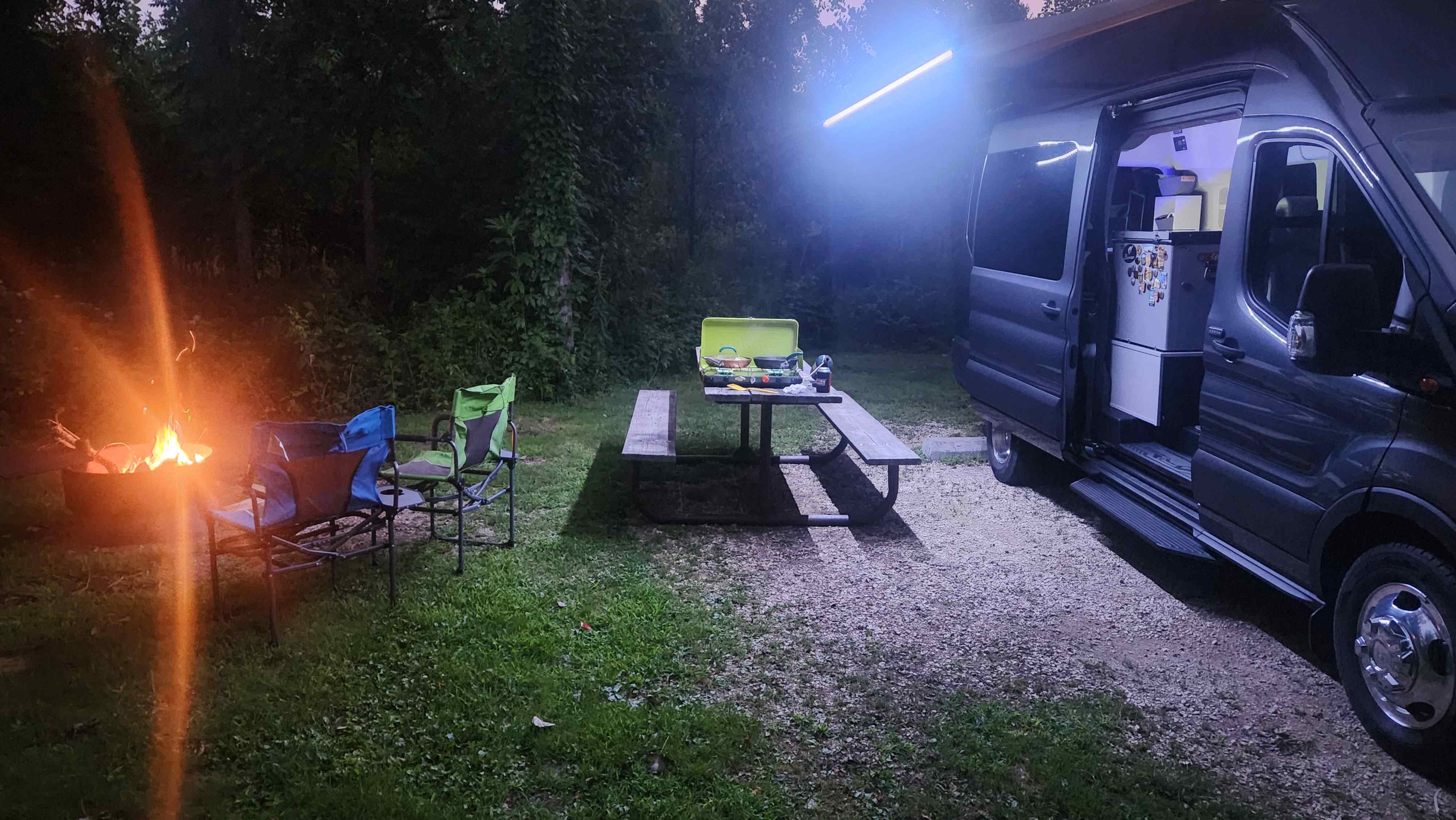
Campground Hosting: One of America's Best Ways to Travel Slowly

There is a different way to travel America.
It is not fast. It is not built around checking destinations off a list. It does not ask you to rush from one park to the next before you have really come to know the place you came to see.
Campground hosting invites you to slow down.
Instead of visiting a park for a night or two, you stay long enough to learn its rhythms. You notice where the morning light first reaches the trees. You learn which trail is quietest after breakfast, where wildlife tends to appear near dusk, and which campsites families hope to reserve year after year. You begin to recognize returning campers. You answer questions, offer directions, share local tips, and become part of the daily life of the campground.
For many people who love the outdoors, campground hosting is one of the most rewarding ways to travel. It combines service, community, nature, and extended time in places that most travelers only pass through.
What Is a Campground Host?
A campground host is usually a volunteer who lives on-site for a period of time and helps support the campground, park staff, and visitors. Duties vary by location, but campground hosts often greet arriving campers, answer questions, provide basic information, report maintenance concerns, monitor campground conditions, help with bulletin boards, and serve as a friendly presence in the campground.
Some assignments are quiet and informal. Others are more structured. A host at a busy state park may interact with dozens of visitors each day, while a host at a remote national forest campground may spend more time answering occasional questions, checking conditions, and helping campers understand local rules.
The common thread is simple: hosts help make campgrounds feel welcoming, organized, and cared for.
Why People Become Campground Hosts
Many people first consider campground hosting because it often includes a campsite in exchange for volunteer service. That practical benefit matters, but it is rarely the only reason hosts return year after year.
Campground hosting offers something deeper. It gives travelers the chance to live inside the landscapes they love.
Instead of hurrying through a park, hosts experience it through time. They see weekday mornings after the weekend crowds leave. They watch weather move across the lake. They hear owls at night, notice wildflowers changing week by week, and learn the difference between a place seen once and a place slowly understood.
Some hosts are retirees looking for a meaningful way to travel. Others are hikers, anglers, birdwatchers, photographers, paddlers, cyclists, or people who simply enjoy being outdoors and meeting other travelers. Many return to the same park because the place begins to feel familiar, and the people begin to feel like a seasonal community.
Living Somewhere Instead of Simply Visiting
One of the overlooked gifts of campground hosting is the opportunity to know a place beyond its brochure description.
Visitors may ask where the best trail begins. After a few weeks, a host often knows which trail is best in the morning, which one is shaded in the afternoon, which overlook catches sunset, and which route is better for families with young children.
That kind of knowledge comes only with time.
Hosting allows travelers to move beyond sightseeing and into belonging. You learn the campground's personality. You understand busy arrival days, quiet evenings, favorite campsites, weather patterns, wildlife habits, and the small details that make each park different.
For people who love public lands, that can be remarkably satisfying.
A Typical Day as a Campground Host
There is no single campground host schedule. Each park, forest, refuge, or recreation area operates differently. Still, many hosting days share a familiar rhythm.
Mornings may begin with a walk through the campground, a check of bulletin boards, a few conversations with campers, or answering questions from people preparing to hike, fish, paddle, or explore the area. Midday might bring arriving campers, maintenance reports, or simple tasks that help keep the campground running smoothly.
Afternoons and evenings often include more visitor interaction as campers return from their day. Hosts may answer questions about firewood, quiet hours, trailheads, nearby attractions, or where to watch the sunset.
Between responsibilities, there is often time to enjoy the place you are serving. That balance is part of the appeal. Campground hosting is work, but it is work rooted in the outdoors.

Who Offers Campground Host Positions?
Campground host opportunities exist across the United States. They may be available through national parks, national forests, state parks, county parks, wildlife refuges, recreation districts, Corps of Engineers campgrounds, and other public land agencies.
Assignments vary widely. Some last a few weeks. Others run for an entire season. Some include full hookups, while others may offer only a basic campsite. Some require many hours of volunteer service each week, while others require less. Some are in busy destination parks, and others are in quiet campgrounds tucked into forests, deserts, lakeshores, or mountain regions.
That variety is part of what makes campground hosting so interesting. A person might spend one season beside a northern lake, another near a desert trail system, another in a mountain forest, and another along a river corridor.
It is travel, but at a slower and deeper pace.
Do You Need a Large RV to Be a Campground Host?
Many campground hosts arrive in large motorhomes, fifth wheels, or travel trailers. Those can work very well, especially for long seasonal stays. But they are not the only option.
One of the surprises many new hosts discover is that they spend much of their time outside. The campground becomes the front porch. Trails become daily walks. The lake, forest, river, or desert becomes part of the living space.
For that reason, some hosts find they need less interior space than they once imagined. What matters most is comfort, reliability, simplicity, and the ability to rest well, prepare meals, stay organized, and handle changing weather.
A compact campervan can be a practical option for the right person or couple, especially for hosts who value mobility, simplicity, and the ability to explore beyond the campground on days off.
Why Smaller Can Make Sense for Campground Hosting
Campground hosting is not only about where you sleep. It is about how you move through the surrounding region.
A smaller vehicle can make everyday life easier. It can be simpler to drive into town for groceries, reach a nearby trailhead, visit another park, explore a scenic road, or move on to the next assignment when the season changes.
For hosts who enjoy exploring during their free time, mobility can matter as much as campsite comfort. A large RV may offer more interior space, but it can also make quick trips and spontaneous exploring more complicated.
A compact campervan offers a different approach. It keeps the essentials close while making it easier to keep moving, keep exploring, and keep saying yes to nearby places worth seeing.

Where a Mini-T Campervan Fits Into the Story
For those who prefer a compact, practical way to travel, the Mini-T Campervan lineup can fit naturally into the campground hosting lifestyle. It provides a comfortable place to sleep, prepare simple meals, keep food cold, charge devices, and rest after a day spent outdoors.
Its smaller size also makes it useful beyond the campsite. A campground host may need to drive into a nearby town, explore local attractions, visit a neighboring park, or relocate between seasonal assignments. Having one vehicle that can serve as both travel companion and living space can be a meaningful advantage.
That is especially true for hosts who view campground hosting not as a way to stay put, but as a way to travel slowly from one meaningful place to the next.
Days Off: The Hidden Reward of Hosting
Some of the best campground hosting memories happen on days off.
When your responsibilities are finished, you are already in the middle of a place worth exploring. You may drive to a trail you have been recommending all week. You may paddle a quiet lake, visit a historic town, photograph wildlife, fish a nearby river, or take a scenic road simply because the weather is right.
Unlike a short vacation, campground hosting gives you time to follow curiosity. You do not have to see everything in one afternoon. You can let a place reveal itself slowly.
That is one of the reasons hosts often return. The assignment may begin with volunteer service, but it often becomes a season of discovery.
What to Consider Before Becoming a Campground Host
Campground hosting can be rewarding, but it is not simply a free campsite. It requires responsibility, patience, communication, flexibility, and a genuine willingness to help others.
Before accepting an assignment, ask about expected hours, duties, days off, campsite size, hookups, cell service, internet availability, pets, length of stay, weather conditions, nearby services, and how after-hours concerns are handled.
It is also important to understand the setting. A busy destination campground may feel social and active. A remote forest campground may feel quiet and independent. A lakeside park may bring families and boaters. A mountain campground may require more preparation for weather and road conditions.
The best assignment is not necessarily the most famous park. It is the one that matches your personality, travel style, comfort level, and expectations.
Campground Hosting as Slow Travel
Slow travel is not about moving less. It is about experiencing more.
Campground hosting gives travelers the chance to step out of the rush and into the daily life of a place. Instead of arriving, sightseeing, and leaving, you remain long enough to understand what makes the area special.
You learn the quiet hours. You learn the busy weekends. You learn the best time to walk the trail, when the lake is calm, when the birds are active, and when the evening light turns ordinary campsites into something beautiful.
That kind of travel stays with people.
A Lifestyle Built Around the Outdoors
At its heart, campground hosting is not about the RV. It is about the outdoors.
It is about helping people feel welcome. It is about public lands, shared spaces, trails, lakes, campfires, and conversations with travelers from places you may someday visit yourself.
The vehicle matters because it supports the experience. It provides shelter, rest, mobility, and comfort. But the reason people become campground hosts is rarely the vehicle itself.
They do it for the place.
They do it for the people.
They do it because, for a few weeks or a few months, they get to become part of a park rather than simply pass through it.
Final Thoughts: A Deeper Way to Travel
Campground hosting is one of America's best ways to travel slowly. It offers time, purpose, community, and a deeper connection to the outdoors.
Some hosts stay for a short assignment and move on. Others return to the same park year after year. Some use hosting as a way to explore different regions of the country, one season at a time.
However it is done, campground hosting reminds us that travel is not always measured by distance. Sometimes it is measured by how well you come to know one remarkable place.
And sometimes, the best way to experience America is not to hurry across it.
It is to stay long enough to feel at home.
Happy Camping!
DLM-Distribution / Campervans is a licensed manufacturer and dealer located in Lake Crystal, Minnesota, serving clients around the country.
Contact Dave: 651-285-7089 or Candy: 507-382-9446 today!