
Looking for a Garageable Campervan? Here's Where to Start
Shopping for a campervan is exciting, but choosing the right one involves more than finding a comfortable bed and a few camping amenities. The best choice should also fit your everyday life. Where will you park it? How easy will it be to drive? Can you store it at home? And will it be convenient enough to use for everything from weekend camping trips to extended road travel?
For many travelers, those questions lead to an increasingly appealing option: a garageable campervan. A campervan small enough to fit in a residential garage can offer many of the conveniences of RV travel without requiring a separate place to store it between adventures.
Before deciding which campervan to purchase, it helps to understand what garageable really means, how to evaluate your available space, and which features will matter most once you begin traveling.

Start With the Way You Actually Travel
Before comparing campervan models, think about the trips you are most likely to take. Perhaps you enjoy weekend camping at state parks, visiting family across the country, exploring scenic highways, or spending several weeks traveling between national parks. Other travelers prefer seasonal snowbird travel, stopping along the way rather than driving directly to one destination.
These different travel styles influence what makes a campervan practical. Someone who spends weeks at a single campground may appreciate a larger RV with additional living space. Someone who enjoys moving between destinations, exploring small towns, visiting trailheads, and stopping at scenic overlooks may prefer a smaller campervan that is easier to drive and park.
Consider how often you expect to travel, whether you will usually camp alone or with another person, and which amenities you genuinely need. A thoughtfully equipped compact campervan can provide comfortable sleeping accommodations, refrigeration, food preparation, storage, and electrical power while remaining manageable on ordinary roads.
Measure Your Garage Before Shopping
One of the most important steps in choosing a garageable campervan is measuring the space where it will be stored. The advertised size of a garage door does not always represent the actual usable clearance, and even a few inches can make a difference.
Start with the garage door's clear opening height and width. Measure from the finished floor to the lowest point of the fully opened door or any hardware that reduces clearance. Then measure the available interior length, allowing room to walk around the vehicle, open doors, and access storage. Remember to account for overhead equipment, lighting, and anything mounted to the garage ceiling.
Driveway slope is another consideration. A campervan approaching a garage from an inclined driveway may have different clearance requirements than one entering from a level surface. Always compare your actual measurements with the completed campervan's dimensions, including roof-mounted equipment.
Garageability is particularly valuable because it allows a travel vehicle to remain at home, protected from much of the weather and conveniently available for loading, cleaning, and preparing for the next trip.
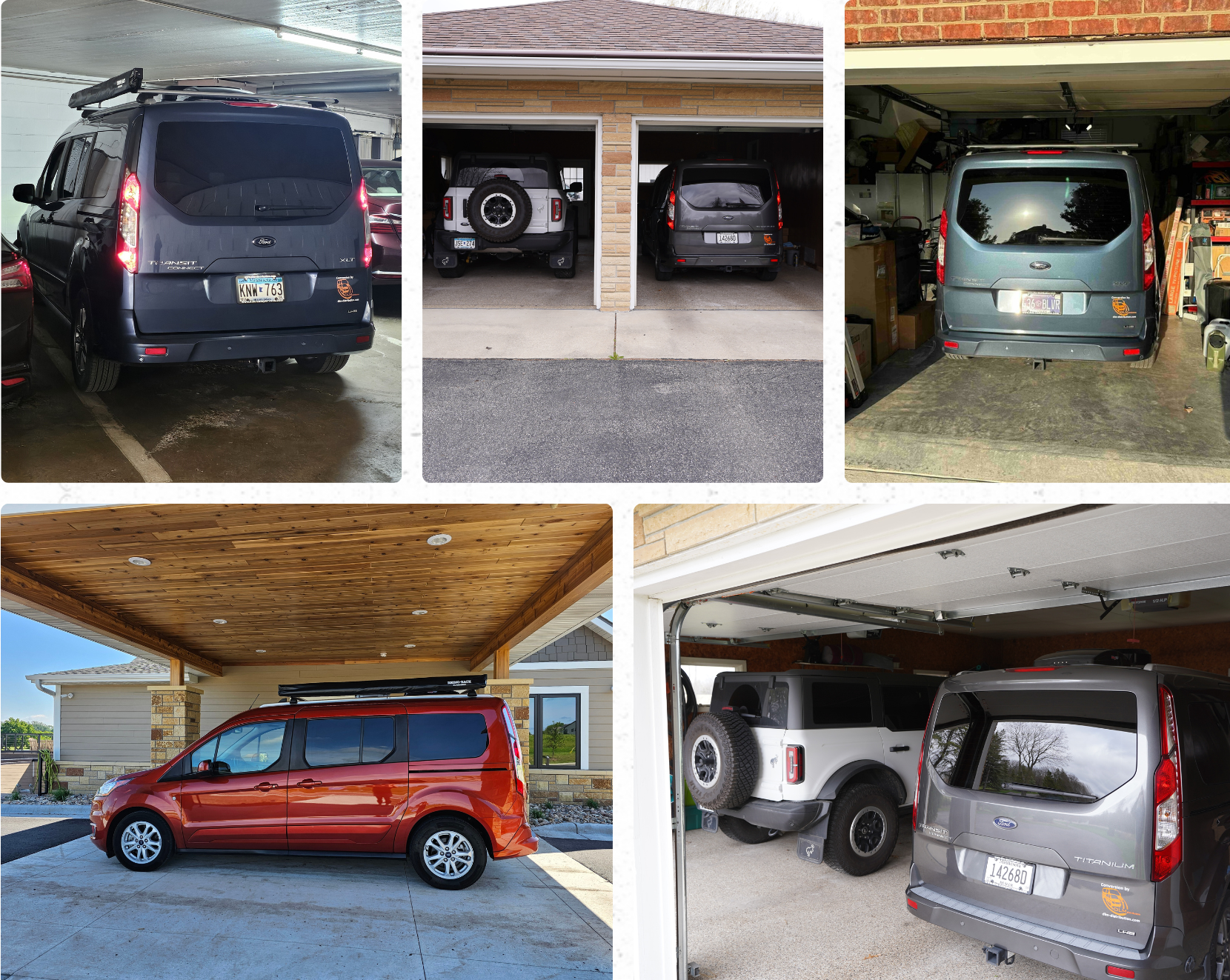
Understand Which Campervans Are Truly Garageable
Not every vehicle advertised as a small campervan will fit inside a residential garage. Many traditional Class B motorhomes are built on high-roof commercial vans that stand approximately nine to ten feet tall or more. Even when their overall length is relatively short, their height makes conventional garage storage impractical.
DLM-Distribution manufactures several Mini-T Campervan models designed around a different approach. The Ford Transit Connect Mini-T and Chrysler Pacifica AWD Mini-T are approximately 80 inches tall, allowing them to fit through many residential garage openings with sufficient clearance.
The Transit Connect Mini-T measures approximately 189.7 inches in length, while the Pacifica AWD Mini-T measures approximately 204.5 inches. Both are compact enough for ordinary parking spaces and are designed to function as everyday transportation as well as recreational vehicles.
The Mini-T HR is a different type of campervan. Built on the Ford Transit 350 HD AWD dual-rear-wheel chassis, it offers standing interior height and additional living space but stands approximately ten feet tall. It is not intended for residential garage storage. Buyers considering the Mini-T lineup should understand this distinction rather than assuming every model has the same dimensions or intended use.
Everyday Driving Matters More Than You Might Expect
Think about the places you may want to visit while traveling: grocery stores, restaurants, downtown shopping districts, ferry terminals, scenic overlooks, national park visitor centers, and trailheads. A campervan that fits into standard parking spaces can make these everyday stops considerably easier.
Smaller campervans also allow travelers to explore without always planning around the dimensions of a large motorhome. Narrow streets, crowded parking areas, and unfamiliar destinations become more approachable when the vehicle drives much like a passenger van.
This convenience matters between camping trips, too. A garageable Mini-T can be used for errands, day trips, and other everyday driving rather than spending most of its time parked until the next vacation. For some households, that flexibility may reduce the need to maintain a separate vehicle solely for recreational travel.
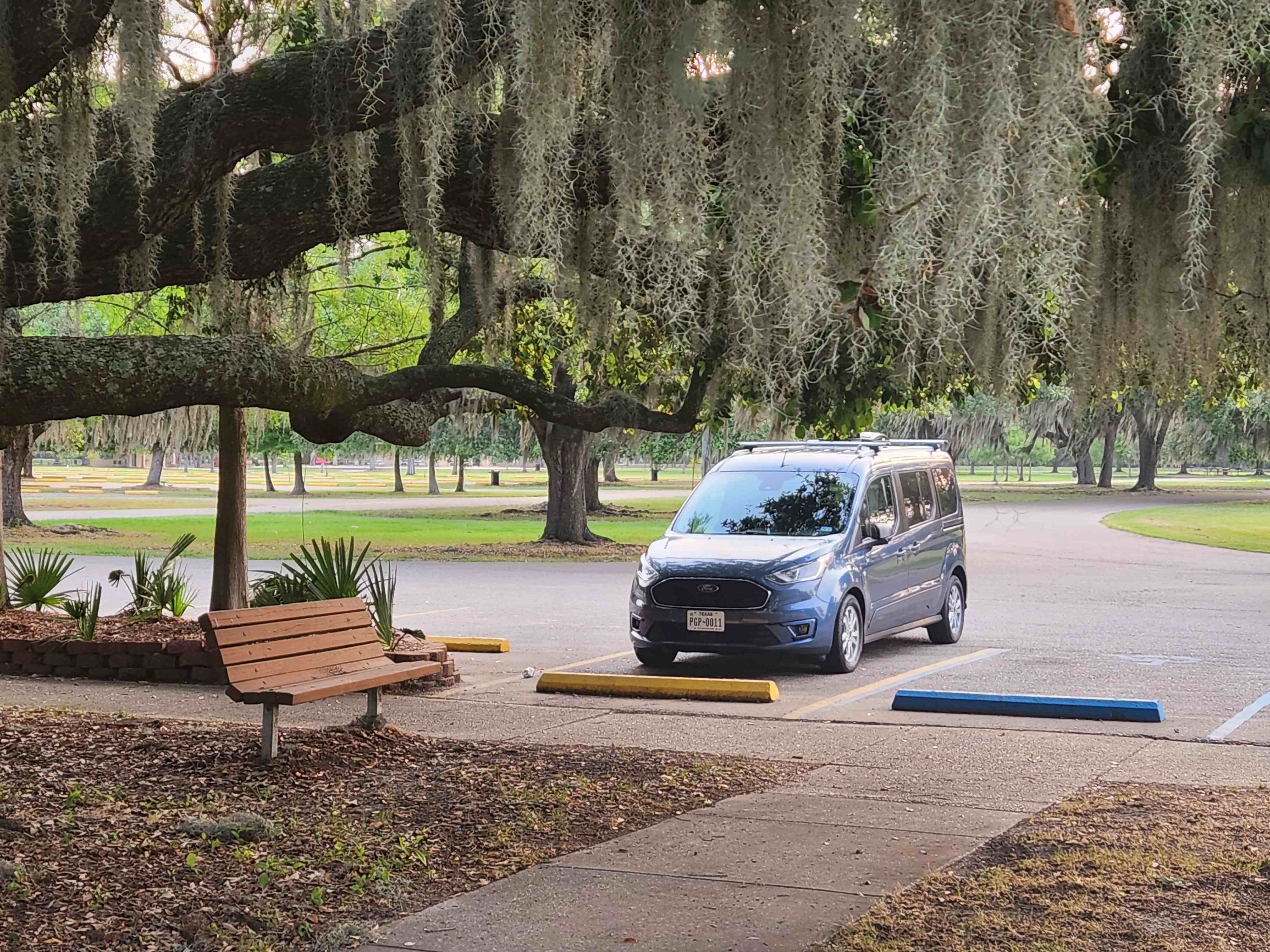
Look Closely at the Camping Amenities
Compact dimensions are useful, but a campervan also needs to provide the features that make camping comfortable. When comparing models, look beyond the exterior appearance and consider how the interior works during a real trip.
The garageable Mini-T Campervans are designed for one or two travelers, with sleeping accommodations, a refrigerator, microwave, sink, storage, ventilation, and other camping conveniences. Their electrical systems combine house batteries, solar-assisted charging, alternator charging while driving, and shore-power connections when available.
A 2000-watt inverter provides 120-volt electrical capability from the house battery system, allowing equipment such as the microwave to operate without requiring a generator. This can be particularly useful when stopping for lunch, spending time at a campsite without electrical hookups, or enjoying a more flexible travel schedule. Available power and operating time still depend on battery charge and electrical demand.
When evaluating a campervan, consider how easily you can prepare a meal, access your belongings, make the bed, and use the electrical system. These ordinary details often have a greater influence on camping enjoyment than an impressive list of features that rarely get used.
Think About Where the Campervan Will Live
Storage is one of the practical realities of RV ownership that deserves attention before purchasing. Larger motorhomes may require a dedicated parking area, an outdoor storage facility, or a rented indoor storage space. Those arrangements can work well, but they also introduce additional costs and another step between deciding to travel and actually leaving home.
Keeping a campervan in your own garage can simplify the routine. You can load clothing and supplies over several days, check the refrigerator and electrical system, and leave when your schedule allows. After returning, unloading and cleaning are equally convenient.
Garage storage may also be especially helpful in neighborhoods with HOA rules or local RV parking restrictions. However, garageability does not automatically guarantee HOA approval. Buyers should review their community's governing documents and applicable local regulations, particularly if they plan to park the vehicle outside for any period of time.
Finding a Garageable Campervan for Sale
Many shoppers begin by searching for a campervan near home. Visiting a local dealership can be convenient, especially when comparing familiar vehicle brands. However, garageable campervans with fully integrated camping amenities are a specialized category, and the available choices may be limited in any particular region.
Rather than limiting the search to nearby inventory, it can be worthwhile to compare the actual vehicles, their dimensions, camping systems, manufacturer support, and purchase arrangements. Ask how the campervan is built, what warranties apply, how the electrical equipment operates, and what assistance is available after the sale.
For a vehicle you may own and enjoy for years, understanding these details is more important than simply choosing from whatever happens to be on a nearby lot.
Why Factory-Direct Can Make Sense
DLM-Distribution manufactures Mini-T Campervans in Lake Crystal, Minnesota, and sells factory-direct to customers throughout the United States. Buyers work directly with the manufacturer rather than purchasing through a network of independent RV dealerships.
This provides an opportunity to discuss the campervan with people familiar with its construction, electrical systems, interior features, and intended use. Customers can review available inventory, ask detailed questions, and learn about the purchase and delivery process before making a decision.
For buyers traveling to Minnesota, DLM-Distribution offers complimentary pickup from Minneapolis-St. Paul International Airport and an approximately two-hour campervan orientation. Nationwide delivery can also be arranged at the buyer's expense. These options allow customers outside Minnesota to consider a Mini-T without needing a dealership in their immediate area.
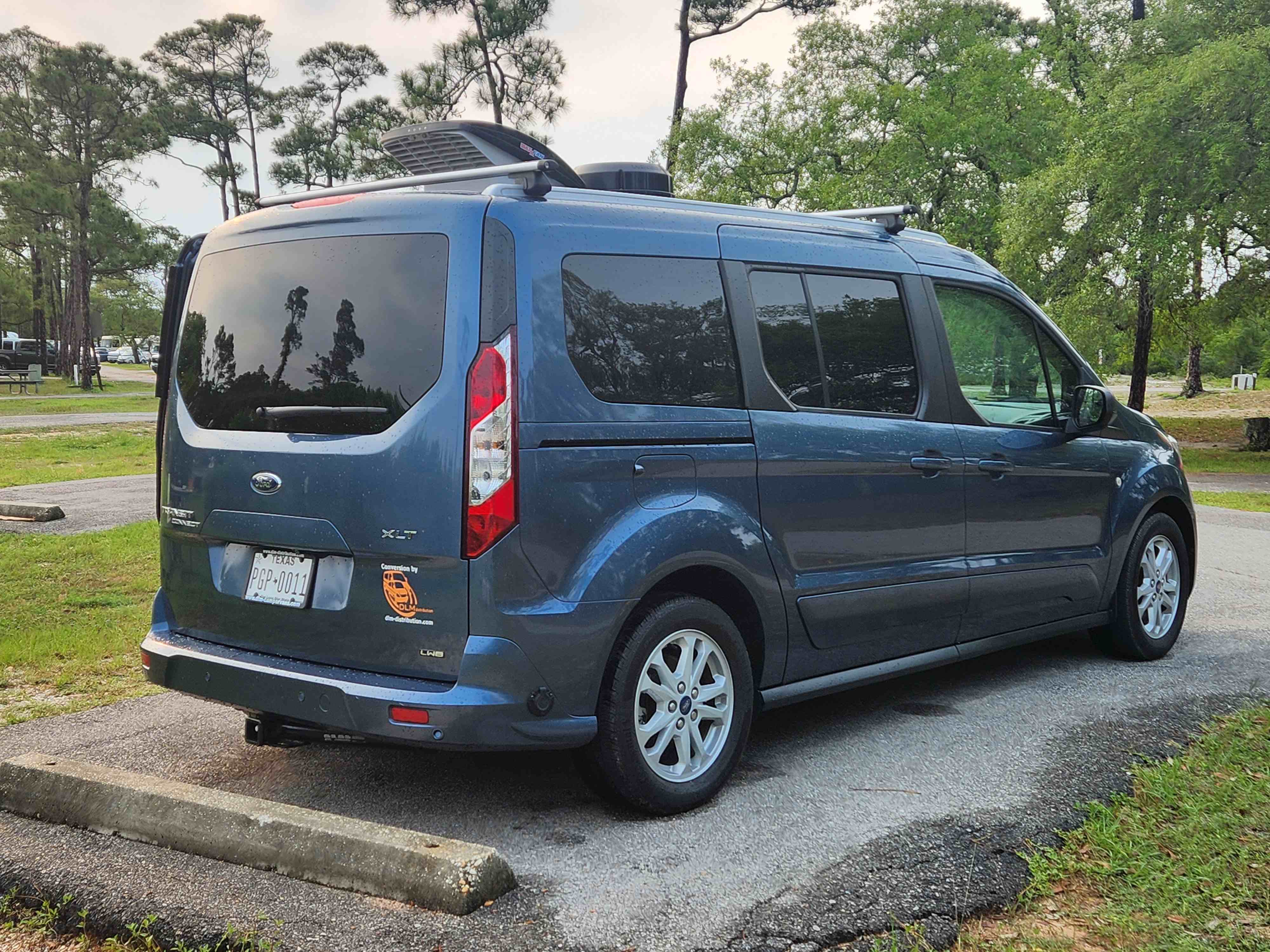
Seeing a Garageable Campervan in Person
Photographs and videos are helpful, but seeing a campervan in person provides a clearer understanding of its size, sleeping area, storage, and overall layout. It is also an opportunity to evaluate how comfortably you can move around the interior and whether the camping features match your expectations.
DLM-Distribution welcomes visitors by appointment at its Lake Crystal, Minnesota facility. Scheduling ahead helps ensure that appropriate vehicles are available to view and that sufficient time can be reserved to answer questions.
Prospective buyers can examine the available campervans, compare models, discuss travel plans, and better understand the advantages and limitations of a compact RV. It is also a useful opportunity to ask about garage dimensions, operating the electrical system, and maintaining the vehicle over time.
You may occasionally encounter Mini-T owners while traveling or camping. Conversations with fellow travelers can offer useful perspectives, although it is important to respect their privacy. DLM-Distribution does not share customer contact information.

Use Photos, Videos, and Practical Ownership Questions
If visiting the manufacturer is not immediately practical, detailed photographs and videos can help you evaluate a campervan from home. Pay attention to how the sleeping area is arranged, where camping supplies are stored, how the rear access works, and whether the equipment appears straightforward to operate.
It also helps to consider the less exciting parts of ownership. Will the vehicle fit in your garage? Is the bed comfortable for the people who will use it? Can you park at the destinations you enjoy? Does the electrical system support your camping habits? Will you feel comfortable driving the campervan on an extended trip?
These are the questions that turn an attractive vehicle into a practical travel decision.
Consider the Full Cost of Ownership
Purchase price is only one part of owning a campervan. Fuel, insurance, registration, maintenance, depreciation, and storage all contribute to the long-term cost. The amount you travel and whether the campervan can serve another transportation purpose also affect the overall picture.
For example, storing a campervan in your own garage may eliminate the expense of a rented RV storage space. Using one vehicle for both everyday transportation and camping may also reduce some duplicate ownership expenses, depending on your household's needs.
Even smaller conveniences can matter. A garageable Mini-T can use a suitable automatic car wash, making routine cleaning more familiar than washing a large motorhome. Afterward, the campervan can return to its garage until the next trip.
For a broader comparison of RV expenses, DLM-Distribution also provides a free RV True Cost of Ownership Calculator. It allows travelers to explore how different types of recreational vehicles compare when ongoing expenses are considered alongside purchase price.
Choosing a Campervan That Fits Your Life
The appeal of a garageable campervan goes well beyond its dimensions. It is about having a travel vehicle that can remain conveniently at home, handle ordinary roads and parking spaces, and provide comfortable accommodations when you reach your destination.
For travelers who enjoy scenic drives, state parks, national parks, weekend camping, and extended road trips, a compact campervan can make it easier to take advantage of opportunities to travel. The vehicle is already nearby, the camping equipment is already installed, and preparing for the next trip can be part of an ordinary routine.
The right choice begins with understanding how you want to travel, measuring where you intend to store the vehicle, and selecting the features that will genuinely improve your experience. When those pieces fit together, owning a campervan can be every bit as enjoyable as traveling in one.
Happy Travels & Happy Camping!

DLM-Distribution / Campervans is a licensed manufacturer and dealer located in Lake Crystal, Minnesota, serving clients around the country.
Contact Dave: 651-285-7089 or Candy: 507-382-9446 today!