
Mississippi by Campervan: From River Bluffs to Gulf Beaches, a State Best Explored One Scenic Road at a Time
Mississippi has a way of surprising travelers.
Many people arrive with one destination in mind: the historic homes of Natchez, the battlefields of Vicksburg, the blues clubs of Clarksdale, or the white sand beyond the Gulf Coast. What makes the state especially rewarding, however, is how naturally those places connect. River towns give way to quiet sections of the Natchez Trace Parkway. Cotton fields and Delta communities lead toward Jackson. Pine forests stretch south toward coastal wetlands, barrier islands, seafood restaurants, and the open horizon of the Gulf of America.
This is not a state that needs to be rushed. Mississippi is often best understood through the miles between its famous landmarks: a small-town café, a roadside blues marker, an old section of the Trace disappearing into the woods, or a campground where the evening settles quietly beneath tall pines.
A campervan makes that kind of journey easier. It allows the route to remain flexible, turns campgrounds into convenient basecamps, and makes it possible to linger when a scenic road, museum, trail, or conversation deserves more time than expected. In Mississippi, where history, music, food, and landscape are woven together, traveling one road at a time may be the best way to discover the state.

Begin Above the River in Natchez
Natchez stands on high bluffs above the Mississippi River, and that elevated setting immediately distinguishes it from the flat Delta country farther north. From overlooks near downtown, the river appears broad, slow, and powerful below. The view offers an appropriate beginning to a Mississippi road trip because the river is more than a geographic boundary here. It shaped trade, agriculture, architecture, migration, conflict, music, and nearly every community along the western side of the state.
Natchez is widely known for its historic homes, including Stanton Hall, Longwood, Rosalie Mansion, and others that preserve chapters of the city’s complicated past. The architecture is impressive, but a thoughtful visit should reach beyond porches, columns, and gardens. Natchez was shaped by enormous wealth as well as slavery, and its surviving buildings tell only part of the story unless they are understood alongside the lives and labor that made that wealth possible.
The city also rewards travelers who simply slow down. Walk the historic streets, visit the riverfront, stop at a local restaurant, and allow time for the city’s layers to emerge. Natchez feels less like a single attraction than a place where architecture, river history, food, and Southern culture overlap.
For campervan travelers, Natchez also marks the southern terminus of the Natchez Trace Parkway, one of the most appealing scenic roads in the South. That makes the city a natural starting point for a journey that can continue northeast through Mississippi or become part of a larger route reaching all the way to Nashville.
The Natchez Trace Parkway: A Road Through Layers of Time
The Natchez Trace Parkway stretches 444 miles from Natchez through Mississippi and a corner of Alabama to Nashville, Tennessee. The modern road follows and interprets a much older travel corridor used over centuries by Indigenous peoples, traders, soldiers, settlers, and boatmen returning north after floating goods down the Mississippi River.
Driving the Trace is not about reaching a destination quickly. Commercial traffic is restricted, billboards are absent, and the roadway moves through long stretches of forest, open fields, historic sites, and gently rolling terrain. The experience is quiet by design. Pullouts lead to short walks, overlooks, ancient mound sites, sections of the Old Trace, and places where travelers can step away from the road and imagine earlier journeys through the same landscape.
A smaller campervan is particularly well suited to the Parkway. It is easy to maneuver into overlooks and historic stops, comfortable for long scenic miles, and ready for the campgrounds and communities found along or near the route. Instead of treating the Parkway as a road to complete, travelers can use it as a framework for several days of exploration.
Some of the most memorable stops are modest. A worn path may reveal a sunken section of the Old Trace. A short trail can lead into a cypress swamp. A historic marker may introduce a story that changes how the surrounding land is understood. The Parkway rewards curiosity, and the freedom to stop often matters more than the number of miles covered.
Tupelo, farther north, provides an opportunity to leave the Parkway for restaurants, supplies, cultural attractions, and nearby Civil War history. Travelers continuing toward the northeastern corner of Mississippi can also use the Trace as part of a route toward Tishomingo State Park.
Vicksburg and the Mississippi River’s Turning Point
North of Natchez, Vicksburg occupies another commanding position above the Mississippi River. The city is best known for the campaign and siege that helped determine control of the river during the Civil War. Today, Vicksburg National Military Park preserves the battlefield through a driving route, monuments, reconstructed fortifications, interpretive exhibits, and the restored USS Cairo, an ironclad gunboat recovered from the Yazoo River.

The park is large enough that a visit should not be reduced to a quick drive past monuments. Stop at the overlooks, walk portions of the battlefield, and allow the terrain to explain what maps cannot. Steep ridges, ravines, and defensive positions reveal why the campaign was so difficult and why Vicksburg mattered strategically.
The national cemetery, the USS Cairo, and the stories of soldiers and civilians add human scale to the military history. Together, they show that the battle was not an isolated event but part of a broader struggle that reshaped the nation and the lives of people throughout the Mississippi Valley.
Beyond the park, downtown Vicksburg offers river views, murals, restaurants, museums, and streets that climb and descend with the bluff. It is an ideal place to spend more than one day, using a nearby campground as a basecamp while dividing time between the battlefield, the riverfront, and the city itself.
Into the Delta: Where Landscape and Music Meet
Travel north from Vicksburg and the landscape gradually opens. The Mississippi Delta is remarkably flat, an alluvial plain shaped by the river and generations of agriculture. Long roads cross fields that seem to extend to the horizon. Water towers, grain facilities, churches, small towns, and weathered buildings punctuate the distance.
At first glance, the Delta can appear visually simple. Its deeper story is anything but simple. This region produced one of the most influential musical traditions in the world. The blues emerged from African American experience in the South and carried the history of labor, hardship, faith, movement, humor, loss, and endurance into a musical form that would influence jazz, rhythm and blues, rock and roll, country, and popular music across the globe.
The Mississippi Blues Trail connects markers and historic places throughout the state, but the Delta gives the trail particular meaning. Rather than treating each marker as an item to check off, follow the stories. One marker often leads to another town, musician, recording studio, railroad line, church, juke joint, or unexpected chapter of American music history.
Clarksdale is the best-known base for exploring this heritage. The Delta Blues Museum introduces the people, instruments, places, and recordings that helped shape the blues. Live music venues allow the tradition to be experienced not only as history but as something still being performed and renewed.
The famous Crossroads is part of Clarksdale’s identity, but the city becomes more meaningful when travelers move beyond the legend. Visit the museum, walk downtown, listen to live music, speak with local residents, and explore nearby Delta communities. The blues did not come from a single intersection. It came from a landscape and from people whose experiences found expression through music.
A campervan offers a practical advantage here because the Delta is best explored through movement. Important sites are spread among towns and rural roads, and the freedom to adjust the day allows a museum visit, roadside marker, meal, or evening performance to become the center of the experience rather than an interruption to a fixed itinerary.
Jackson: Civil Rights History and a Broader Mississippi Story
Jackson is more than a convenient midpoint between the Delta and the Gulf Coast. The capital provides essential context for understanding Mississippi and the larger American story.
The Mississippi Civil Rights Museum traces the struggle for freedom and equality through exhibits centered on the people and events that shaped the movement within the state. The stories are difficult, personal, and necessary. A visit gives greater meaning to places encountered elsewhere in Mississippi, from Delta communities to churches, courthouses, schools, and roads associated with the movement.
Sharing a complex with the Museum of Mississippi History, the museum can easily occupy several hours. This is not a stop to hurry through before continuing south. The exhibits ask visitors to listen, reflect, and understand how national history was lived by individuals and communities throughout Mississippi.
Jackson also offers restaurants, music, architecture, and the practical services travelers may want during a longer trip. Nearby, the Ross Barnett Reservoir creates a contrasting setting of open water, marinas, parks, and sunset views. It can provide a quiet place to pause after a day spent absorbing the city’s history.
Tishomingo State Park: Mississippi’s Appalachian Surprise
In the northeastern corner of the state, Tishomingo State Park reveals a landscape many first-time visitors do not expect to find in Mississippi. Located in the foothills of the Appalachian Mountains, the park features sandstone outcroppings, fern-covered ravines, clear streams, forest trails, and terrain that feels dramatically different from the Delta or Gulf Coast.
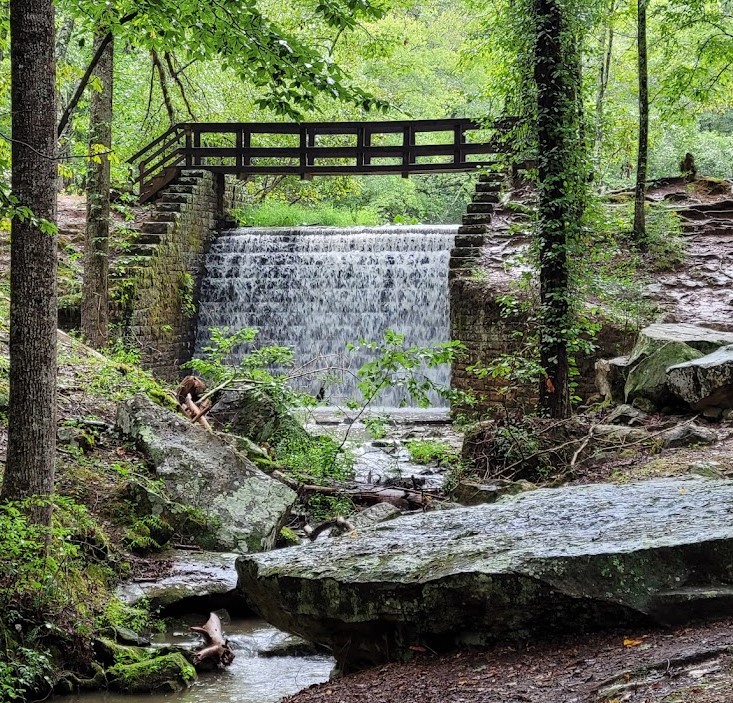
The park’s trails wind among rock formations and across Bear Creek, including a swinging bridge that has become one of its recognizable features. Hiking ranges from relaxed walks to more rugged sections where exposed stone, roots, and elevation changes require attention. The setting is especially appealing during spring wildflower season and in autumn when hardwood leaves begin to change.
Tishomingo also works particularly well as a campervan basecamp. Its wooded RV campground wraps along Haynes Lake and provides a comfortable place to settle in before exploring the trails, paddling, fishing, or continuing onto nearby sections of the Natchez Trace Parkway.
The park illustrates why a Mississippi road trip should not be limited to the most familiar regions. Within the same state, travelers can move from river bluffs and Delta fields to Appalachian foothills, southern pine forests, and Gulf beaches. Tishomingo makes that geographic variety impossible to overlook.
De Soto National Forest and the Quiet Pine Country
South Mississippi is defined in part by vast pine forests, wetlands, blackwater streams, and sandy-bottomed rivers. The De Soto National Forest protects hundreds of thousands of acres within this landscape and offers a quieter counterpart to the better-known historic and coastal destinations.

The Black Creek and Tuxachanie National Recreation Trails provide more than 60 miles of hiking through pine ridges, hardwood bottoms, wetlands, and stream corridors. Black Creek itself is designated as a National Wild and Scenic River, and its dark water, white sandbars, and forested banks create opportunities for paddling as well as hiking.
This is a region where a campground can become more than a place to sleep. It can serve as a base for an early trail walk, a paddle, a day exploring nearby small towns, or an unhurried evening beneath the pines. The forest’s scale also encourages travelers to select one area rather than trying to see everything at once.
Conditions in national forests can change because of storms, prescribed burns, road maintenance, or seasonal closures. Before entering more remote areas, check current Forest Service information, download maps, and confirm campground and road access. A little preparation preserves the freedom that makes campervan travel appealing.
The Gulf Coast: Where the Road Reaches Open Water
After days of river history, forests, and inland highways, reaching the Mississippi Gulf Coast feels like entering another state entirely. Live oaks, marshes, shrimp boats, harbors, beaches, and Gulf light replace the pine interior. Communities such as Ocean Springs, Biloxi, Gulfport, and Bay St. Louis each offer a different way to experience the coast.
Ocean Springs combines a walkable downtown, restaurants, galleries, and access to the Davis Bayou Area of Gulf Islands National Seashore. Davis Bayou includes trails, fishing areas, picnic sites, boat access, and a campground, making it one of the most convenient coastal basecamps for smaller RVs and campervans.

The national seashore’s Mississippi district includes barrier islands that protect some of the region’s most beautiful beaches and wildlife habitat. Ship Island is commonly reached by seasonal passenger ferry, while the other islands generally require private boat access. Weather and marine conditions shape every visit, so ferry schedules and park alerts should be checked before planning a day offshore.
Biloxi adds maritime history, seafood, the Biloxi Lighthouse, and views across Mississippi Sound. Bay St. Louis offers a smaller coastal-town atmosphere with galleries, restaurants, and streets that invite an evening walk. Gulfport provides another base for beaches, harbor activity, and boat connections.
The coast is also where Mississippi’s culinary identity becomes especially visible. Shrimp, oysters, crab, and fresh Gulf fish appear alongside po’boys, gumbo, barbecue, tamales, and regional dishes shaped by African American, Indigenous, European, and Gulf Coast traditions. Food is not a side attraction here. It is another way the state tells its story.
Planning a Mississippi Campervan Route
Mississippi can be explored as one long north-to-south journey, but the best route depends on the season and the interests of the traveler. Natchez, Vicksburg, and the Delta can form a western itinerary centered on the river, blues history, and civil rights. The Natchez Trace Parkway can anchor a diagonal route through the center and northeast. De Soto National Forest and the Gulf Coast can become a southern journey of their own.
Spring and fall generally offer the most comfortable conditions for extended hiking and campground evenings. Summer brings heat, humidity, thunderstorms, and hurricane-season considerations along the coast, although mornings, museums, music venues, and water-based activities can still shape a rewarding trip. Winter is often mild compared with northern states, but cold fronts and freezing nights remain possible, particularly inland.
Reservations are wise for popular state parks, coastal campgrounds, weekends, and festival periods. At the same time, leaving portions of the route open allows the journey to respond to what is discovered along the way. A night of live music may be worth staying for. A scenic section of the Trace may deserve another morning. A quiet campsite may become the place where the trip finally slows to the pace Mississippi invites.
Travelers should also check current operating hours, road conditions, park alerts, ferry schedules, and campground availability directly with each destination before leaving. Museums, historic homes, trails, and coastal services may follow seasonal schedules or close temporarily because of weather.
A State That Rewards the Unhurried Traveler
Mississippi is not a state that reveals itself through a list of attractions.
Its meaning emerges through connections: between the river and the towns built above it, between Delta fields and the music carried around the world, between civil rights landmarks and the people whose courage changed the nation, and between inland forests and the Gulf waters waiting at the end of the road.
The most memorable moments may happen in the places between the major destinations. They may come from a roadside barbecue restaurant where the conversation lasts longer than expected, a blues marker on an otherwise quiet road, an old section of the Natchez Trace disappearing beneath the trees, or an evening beside a campground lake after the day’s plans have been set aside.
That is where traveling by campervan becomes especially valuable. There is no need to hurry toward the next hotel simply because a reservation says the day is over. When a scenic road deserves another hour, when a town invites a longer walk, or when live music continues into the evening, the journey can adjust.
Mississippi has always been shaped by movement—along rivers, trails, railroads, highways, and musical paths that reached far beyond the state. Exploring it one scenic road at a time allows the traveler to become part of that continuing story.
The Mini-T does not need to become the center of the trip. Its purpose is quieter than that. It provides a comfortable place to travel, rest, and begin again in the morning, removing the small obstacles that might otherwise shorten the journey or keep it from happening at all.
From the river bluffs of Natchez to the beaches and barrier islands of the Gulf Coast, Mississippi offers more than a road trip. It offers a chance to understand how landscape, history, music, and community can shape one another—and why some states are best discovered slowly.
Explore Mississippi in a Mini-T Campervan

A Mini-T Campervan makes it easier to follow scenic roads, camp near the places you want to explore, and allow each day to unfold without the size and complexity of a traditional motorhome. Its garage-friendly design, comfortable driving experience, efficient footprint, and off-grid capability help make both planned journeys and unexpected detours a natural part of travel.
View current Mini-T Campervans for sale and discover a campervan manufactured to make travel easier.
DLM-Distribution / Campervans is a licensed manufacturer and dealer located in Lake Crystal, Minnesota, serving clients around the country.
Contact Dave: 651-285-7089 or Candy: 507-382-9446 today!