Published May 5, 2023
Category: Campervan Travel

Idaho Road Trip Guide: Sawtooth Mountains, Scenic Byways, Lakes, Public Lands, and Camping

Idaho is one of the most underrated road-trip destinations in the American West. While neighboring states often receive more attention, Idaho quietly offers a remarkable mix of rugged mountains, clear alpine lakes, wild rivers, volcanic landscapes, scenic byways, small towns, hot springs, forests, public lands, and wide-open places that still feel uncrowded.

For travelers who enjoy outdoor recreation and flexible travel, Idaho is an exceptional state to explore. A single trip can include mountain lakes near Stanley, the dramatic Sawtooth Range, the volcanic terrain of Craters of the Moon, the granite spires of City of Rocks, the deep river country of Hells Canyon, and relaxed lakeside towns such as McCall.

It is also a state that rewards slow travel. Some of Idaho’s best experiences happen between destinations: a quiet pull-off along a river, a forest road leading toward a campground, a small town bakery, a mountain pass, a wildlife sighting, or an evening spent beneath dark western skies.


Why Idaho Belongs on a Western Road Trip

Idaho’s appeal comes from variety. It is not just a mountain state, a lake state, or a public-lands state. It is all of those at once. Forested mountains, sagebrush valleys, high desert, waterfalls, rivers, farmland, volcanic rock, and alpine country all shape the travel experience.

The state also has a strong sense of openness. Many Idaho destinations feel less crowded than better-known places in the West, especially for travelers willing to explore beyond the most obvious stops. Scenic drives connect outdoor towns, national forests, state parks, recreation areas, and quiet campgrounds, making Idaho especially appealing for road-trippers who prefer flexibility over rigid itineraries.

For campers, Idaho offers a wide range of overnight options, including national forest campgrounds, state parks, private campgrounds, recreation areas, lakeside sites, and more remote public-land settings where rules and conditions allow.

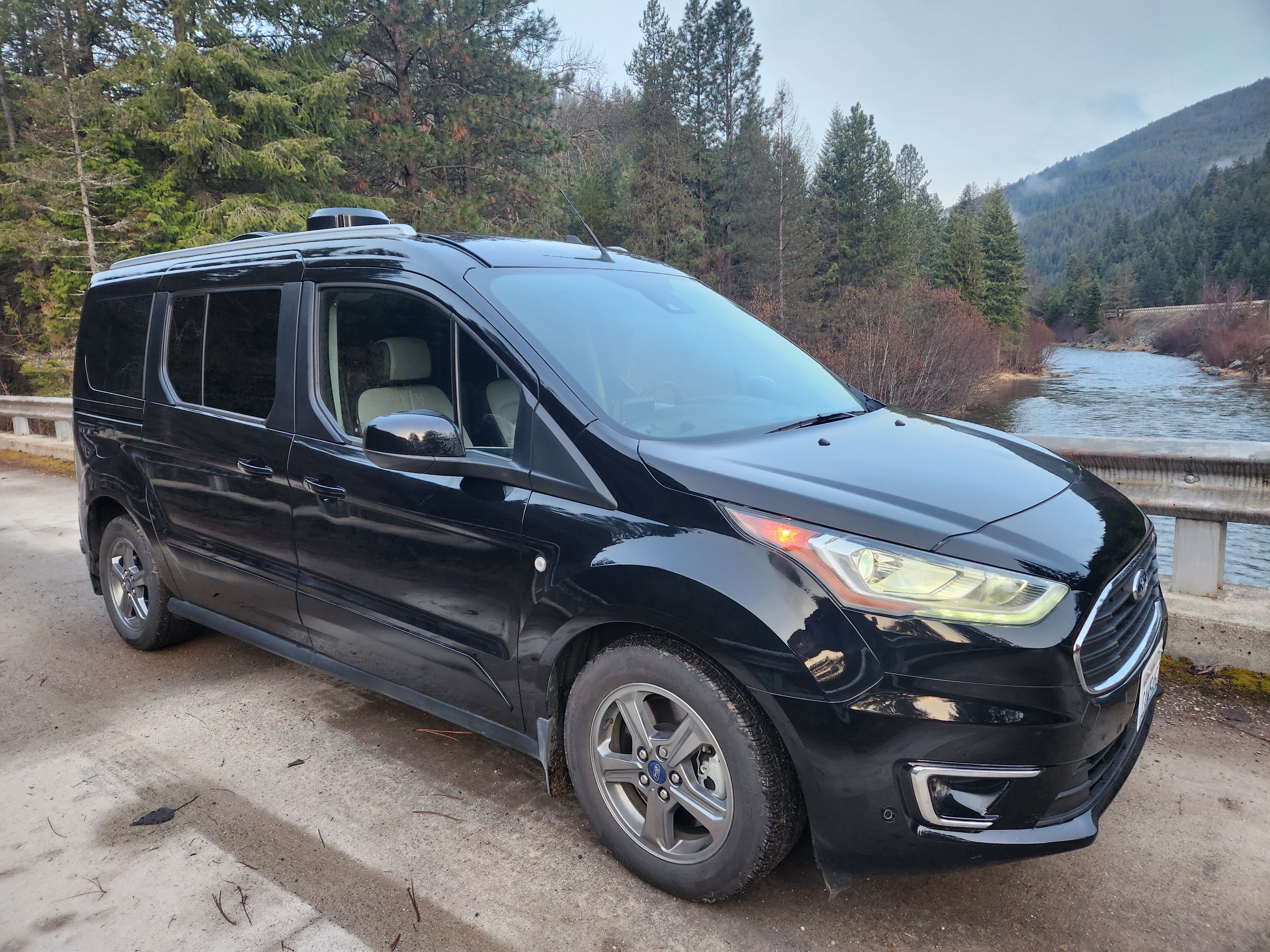
Mini-T Campervan traveling through Idaho scenery


Stanley and the Sawtooth Mountains

Few places capture Idaho’s beauty better than Stanley and the surrounding Sawtooth Mountains. Located in central Idaho, Stanley sits near some of the most dramatic mountain scenery in the Northwest. Jagged peaks, clear rivers, alpine lakes, meadows, and broad skies make the area one of the state’s signature destinations.

The Sawtooth region is known for hiking, fishing, kayaking, paddleboarding, scenic drives, photography, wildlife viewing, and camping. Travelers can explore Redfish Lake, Stanley Lake, the Salmon River, mountain trailheads, and nearby hot springs while using Stanley as a practical base for supplies, food, fuel, and local information.

Redfish Lake is especially popular because it offers classic Idaho scenery: clear water, mountain views, boating, beaches, hiking access, and campgrounds nearby. Stanley Lake provides another memorable setting, with reflections of the mountains and a quieter feel depending on season and timing.

This is a region where travelers should allow extra time. The Sawtooths are not best experienced by rushing through. They reward early mornings, slow drives, quiet evenings, and the willingness to stay one more night when the weather and scenery are right.


Sawtooth National Forest

Sawtooth National Forest covers more than two million acres and includes some of Idaho’s most scenic mountain landscapes. The forest offers access to lakes, rivers, trails, campgrounds, hot springs, scenic overlooks, and backcountry routes throughout central and southern Idaho.

For road-trippers, the national forest is important because it helps make Idaho feel open and accessible. Rather than being limited to one park entrance or one developed attraction, travelers can move through a broad landscape of public lands and choose from many different kinds of outdoor experiences.

Visitors can enjoy short scenic stops, longer hikes, fishing access, dispersed-feeling forest campgrounds, and some of the best mountain views in the state. Conditions vary by elevation and season, so travelers should always check road access, fire restrictions, campground status, and weather before heading into more remote areas.

Sawtooth National Forest mountain scenery in Idaho


Idaho Scenic Byways

Idaho is a state made for scenic driving. Its byways connect mountain passes, river valleys, forests, lakes, and small towns in a way that makes the journey itself part of the destination.

The Ponderosa Pine Scenic Byway between Boise and Stanley is one of the most memorable routes, passing through forested country, mountain terrain, rivers, and recreation areas. The Salmon River Scenic Byway follows one of the West’s great river corridors, with rugged scenery, historic sites, and access to outdoor recreation.

The Payette River Scenic Byway leads toward McCall and Payette Lake, while other routes across the state reveal high desert, farmland, mountain towns, and volcanic landscapes.

For travelers in a campervan, these drives are especially rewarding because they allow frequent stops without the stress of managing a large RV. A scenic overlook, riverside picnic area, small town, or campground can easily become part of the day.


McCall and Payette Lake

Located along the shores of Payette Lake, McCall is one of Idaho’s most beloved mountain towns. It offers a relaxed lakeside atmosphere, mountain scenery, restaurants, shops, boating, fishing, hiking, biking, skiing, and year-round outdoor recreation.

Ponderosa State Park, located on a peninsula extending into Payette Lake, is a highlight of the area. The park provides hiking and biking trails, lake views, camping, wildlife viewing, and easy access to the water. It is a strong example of why Idaho works so well for travelers who enjoy combining camping with outdoor activity.

McCall can be a destination on its own or part of a broader Idaho route connecting Boise, the Payette River, central Idaho, and the Sawtooth region. It is also a good place to slow down between more rugged mountain destinations.


Hells Canyon National Recreation Area

Hells Canyon is one of Idaho’s most dramatic landscapes. Formed by the Snake River along the Idaho-Oregon border, the canyon is often recognized as the deepest river gorge in North America. Its scale, remoteness, and rugged terrain create a powerful contrast to Idaho’s lake towns and alpine areas.

The region is known for whitewater rafting, boating, fishing, hiking, wildlife viewing, scenic overlooks, and backcountry travel. Access can vary significantly depending on route and season, so planning is important. Some areas are remote and require careful preparation.

For travelers who enjoy wild landscapes, Hells Canyon offers a deeper look at Idaho’s rugged side. It is not simply a scenic stop; it is a destination that reminds visitors how large and untamed parts of the inland Northwest still feel.

Hells Canyon National Recreation Area dramatic river gorge scenery


City of Rocks National Reserve

City of Rocks National Reserve in southern Idaho offers a landscape unlike almost anywhere else in the state. Granite spires, domes, fins, and unusual rock formations rise from a high-desert setting, creating a destination known for climbing, hiking, photography, camping, and history.

The reserve is especially famous among rock climbers, but visitors do not need to climb to appreciate it. Scenic drives, short walks, historic emigrant route connections, and striking geology make City of Rocks a memorable stop for many kinds of travelers.

Camping in or near this landscape can be especially rewarding because the scenery changes throughout the day as light moves across the rock formations. Sunrise and sunset are often excellent times for photography.

City of Rocks National Reserve granite formations in Idaho


Craters of the Moon National Monument and Preserve

One of Idaho’s most unusual destinations is Craters of the Moon National Monument and Preserve. The landscape was shaped by ancient volcanic activity and features lava flows, cinder cones, caves, spatter cones, and rugged black rock terrain that can feel almost otherworldly.

The park’s scenic loop, trails, overlooks, and cave areas allow travelers to experience this volcanic landscape up close. It is a strong contrast to Idaho’s forests and lakes, and that contrast is part of what makes a statewide Idaho road trip so interesting.

Craters of the Moon can be hot and exposed in summer, so travelers should carry water, sun protection, and appropriate footwear. In cooler seasons, the stark volcanic landscape can feel especially dramatic and quiet.

Inferno Cone at Craters of the Moon National Monument in Idaho


Shoshone Falls and the Snake River

Near Twin Falls, Shoshone Falls is one of southern Idaho’s most impressive natural landmarks. Often called the “Niagara of the West,” the falls drop along the Snake River in a dramatic setting that surprises many first-time visitors.

The Twin Falls area can also serve as a practical road-trip stop with access to the Snake River Canyon, Perrine Bridge, parks, viewpoints, and services. For travelers crossing southern Idaho, it is well worth taking time to explore beyond the highway.

Water flow at Shoshone Falls can vary by season and water management, so spring and early summer are often especially popular times to visit.


Idaho Hot Springs

Hot springs are part of Idaho’s travel identity. Across the state, travelers will find developed hot spring resorts, rustic soaking areas, and natural springs in scenic settings. Some are easy to reach, while others require careful travel on remote roads.

Hot springs can add a memorable dimension to an Idaho road trip, especially after hiking, paddling, skiing, or long days of driving. Travelers should always follow local rules, respect private property, avoid overcrowding sensitive areas, and leave natural sites cleaner than they found them.

Pairing hot springs with mountain camping, scenic drives, and small towns is one of the classic ways to experience Idaho at a slower pace.


Camping Across Idaho

Camping is one of the best ways to experience Idaho. The state offers national forest campgrounds, state park campgrounds, private RV parks, recreation areas, lakeside sites, river camps, and public-land camping opportunities where regulations allow.

In mountain regions, campgrounds often sit near lakes, rivers, trailheads, and scenic drives. In southern Idaho, camping may be closer to volcanic landscapes, rock formations, canyon country, or agricultural valleys. Around McCall, Stanley, Redfish Lake, and Payette Lake, reservations can be important during peak seasons.

Because Idaho includes remote areas and changing mountain conditions, travelers should check road status, weather, fire restrictions, campground openings, and local regulations before committing to a route. Flexibility is helpful, especially when smoke, snow, storms, or seasonal closures affect travel plans.


A Suggested Idaho Road Trip Route

A well-rounded Idaho road trip can be built in several ways, but one strong route begins in Boise and heads north toward McCall and Payette Lake. From there, travelers can continue through scenic byways toward Stanley and the Sawtooth Mountains, allowing time for Redfish Lake, Stanley Lake, hiking, hot springs, and mountain campgrounds.

The route can then continue toward Craters of the Moon, Twin Falls, Shoshone Falls, and City of Rocks National Reserve before looping back west or continuing into neighboring western states. Travelers with more time can add Hells Canyon, northern Idaho lakes, or additional public lands.

A sample 7- to 10-day route might include:

  • Days 1-2: Boise, Payette River Scenic Byway, McCall, and Payette Lake
  • Days 3-5: Stanley, Redfish Lake, Sawtooth Mountains, and Sawtooth National Forest
  • Day 6: Hot springs, scenic byways, and central Idaho small towns
  • Day 7: Craters of the Moon National Monument and Preserve
  • Day 8: Twin Falls, Snake River Canyon, and Shoshone Falls
  • Days 9-10: City of Rocks National Reserve or Hells Canyon depending on route and available time

This kind of route offers a strong mix of mountains, lakes, volcanic landscapes, scenic roads, and camping without trying to see the entire state too quickly.


Why Idaho Works Well for Compact Campervan Travel

Idaho’s mix of scenic highways, mountain roads, campgrounds, public lands, small towns, and outdoor destinations makes it an excellent state for compact campervan travel.

A smaller campervan can make it easier to access trailheads, scenic overlooks, older campgrounds, lakeside campsites, hot spring areas, and small-town streets. It also allows travelers to adjust plans more easily when weather changes, campsites fill, or a scenic detour looks too good to pass up.

The compact campervan approach fits Idaho well because the state rewards mobility. The journey is often just as memorable as the destination, and an easy-to-drive vehicle helps travelers enjoy both.


Idaho Rewards Travelers Who Leave Room for Discovery

Idaho is not a state to rush through. Its best qualities often appear gradually: a quiet lake at sunrise, the first view of the Sawtooth Range, a winding river road, a campground tucked into the forest, a small-town meal, or a night sky far from city lights.

For travelers who enjoy mountains, lakes, scenic byways, camping, hot springs, public lands, and wide-open western landscapes, Idaho deserves a place near the top of the road-trip list.

It may not always receive the attention of its better-known neighbors, but that is part of its appeal. Idaho remains one of the American West’s most rewarding states for travelers who value scenery, flexibility, and the freedom to explore at their own pace.

Happy Camping!

View Current Mini-T Campervan Inventory Here

DLM-Distribution / Campervans is a licensed manufacturer and dealer located in Lake Crystal, Minnesota, serving clients around the country.

Contact Dave: 651-285-7089 or Candy: 507-382-9446 today!

```