Published March 31, 2018  •  Updated September 5, 2026
Category: National Parks

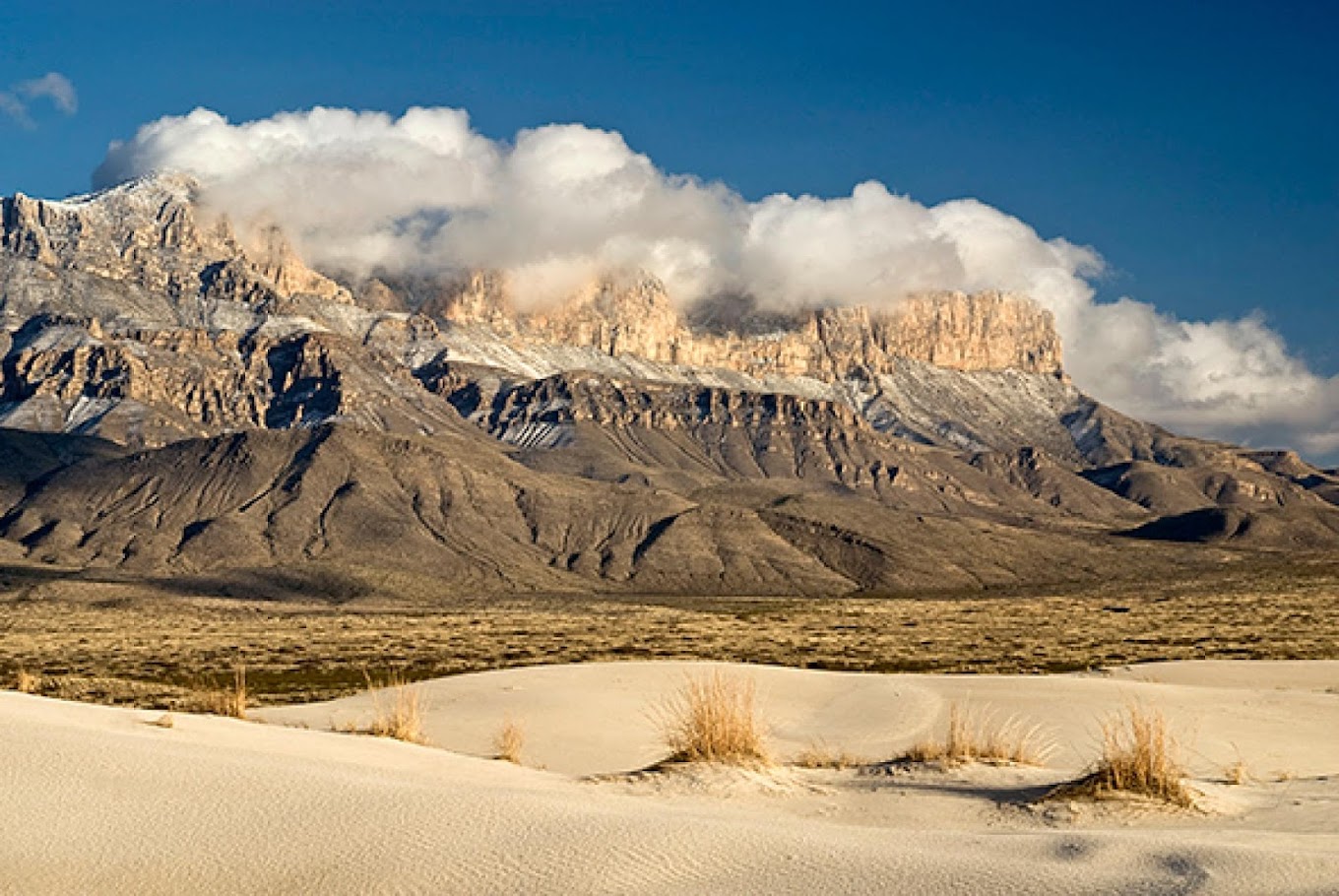
When most people imagine a Texas road trip, the first destinations that come to mind might be Big Bend, the Hill Country, the Gulf Coast, or one of the state's major cities. Far fewer travelers picture a rugged mountain range rising abruptly from the Chihuahuan Desert near the New Mexico border.

That is part of what makes Guadalupe Mountains National Park such a remarkable place to discover.

Here, the desert floor gives way to limestone mountains, high-country forests, narrow canyons, long-distance views, and Guadalupe Peak—the highest point in Texas at 8,751 feet above sea level. The landscape feels remote because it is remote, and reaching the park requires the kind of deliberate drive that has become increasingly rare in American travel.

There are no gateway-city distractions waiting just outside the entrance. Services are limited, distances are large, and the surrounding country stretches toward the horizon. For a road traveler, that isolation is not an inconvenience to work around. It is part of the experience.


When the Mountains Begin Rising from the Desert

Guadalupe Mountains National Park sits in far West Texas, close to the New Mexico state line. Getting there is part of what gives the park its character. Roads cross long stretches of open country where towns become less frequent, the horizon grows wider, and the landscape gradually begins to reveal the mountains ahead.

It is an especially natural destination for a larger Southwest road trip. Nearby Carlsbad Caverns National Park creates an obvious pairing across the New Mexico border, while travelers with more time can continue through southern New Mexico or build Guadalupe Mountains into a much larger West Texas journey.

Big Bend National Park and other Texas destinations can become part of that journey as well, although West Texas distances should never be underestimated. On a map, destinations can appear to be neighbors while still requiring hours behind the wheel.

That is not necessarily a drawback. This is road-trip country. The spaces between destinations are filled with desert basins, distant ridges, enormous skies, ranchland, and roads where the landscape itself becomes part of what you came to see.

Then the Guadalupe Mountains rise from the desert ahead, and Texas suddenly looks very different.


Guadalupe Peak and the Top of Texas

For many visitors, the defining challenge is the hike to Guadalupe Peak. At 8,751 feet, it is the highest point in Texas, but reaching the summit requires considerably more than a casual walk from the parking lot.

The Guadalupe Peak Trail covers approximately 8.4 miles round trip and gains about 3,000 feet in elevation. The National Park Service classifies it as very strenuous and advises most hikers to allow roughly six to eight hours for the trip.

The climb begins near Pine Springs and gains elevation quickly through a series of switchbacks. As the trail rises, one of the most interesting characteristics of the park becomes apparent: the environment changes with elevation. Chihuahuan Desert terrain gives way to cooler slopes and pockets of higher-elevation forest, including pines that can seem almost out of place after the desert landscape below.

Higher on the route, views begin opening across the surrounding mountains and basins. El Capitan—one of the park's most recognizable landmarks—becomes part of the panorama, and eventually the trail reaches the summit of Texas.

The reward is not simply standing beside a marker that identifies the state's highest point. It is the perspective. From the summit, mountains, desert, and enormous stretches of West Texas and southern New Mexico extend toward the horizon.

Weather, wind, heat, elevation, and the physical demands of the climb should all be taken seriously. An early start is particularly important during warmer conditions, and hikers should carry appropriate water, food, clothing, sun protection, navigation, and other essentials. Conditions at higher elevations can also be dramatically different from those at the trailhead.

For travelers prepared for the effort, however, reaching the Top of Texas can become one of the defining memories of a West Texas road trip.

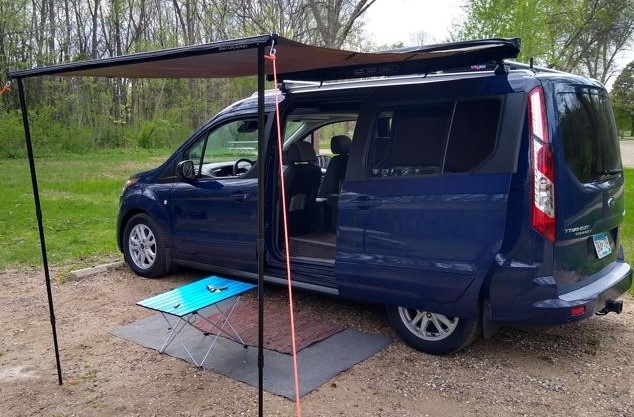
Mini-T Campervan parked among mountain scenery during a road trip


McKittrick Canyon Shows Another Side of the Park

Guadalupe Peak may receive the attention, but it would be a mistake to treat the park as a one-hike destination. McKittrick Canyon reveals a very different side of the Guadalupe Mountains.

The canyon cuts into the mountains through an environment that can seem surprising after driving across the surrounding desert. Trails lead past vegetation, rock walls, historic features, and increasingly dramatic scenery as hikers travel deeper into the canyon. Longer routes eventually climb toward the high country, while shorter destinations allow visitors to experience the canyon without committing to an all-day mountain ascent.

Autumn is particularly famous here. Deciduous trees growing within the canyon can turn shades of yellow, orange, and red, creating one of the more unexpected fall-color landscapes in Texas. That seasonal display attracts visitors, so the very place known for the park's solitude can become much busier during peak foliage.

McKittrick Canyon also requires a little more planning than simply arriving whenever you please. The lower canyon is managed as a day-use area, and access is controlled by a gate that closes each evening. Current hours, trail conditions, weather, and access information should be checked with the National Park Service before setting out.

For someone with several days in the park, Guadalupe Peak and McKittrick Canyon complement each other beautifully. One provides the experience of climbing above the landscape. The other invites you to walk into it.


Camping Where the Landscape Sets the Schedule

Spending a night in the park changes the experience. Day visitors eventually head toward the highway, temperatures begin to shift, shadows move across the mountains, and the enormous West Texas sky takes over.

Pine Springs is the primary hub for most visits and provides convenient access to the visitor center, campground, and trailheads including the route to Guadalupe Peak. The campground is intentionally simple. RV camping is provided without hookups, and there is no dump station. That simplicity suits the setting: this is a place to come prepared rather than expecting the infrastructure of a large resort-style campground.

Dog Canyon, on the park's remote northern side, offers an entirely different experience. It is a small campground in a more secluded setting and is roughly a two-hour drive from Pine Springs. For travelers who specifically seek quieter corners of national parks, that remoteness can be part of the attraction.

Both Pine Springs and Dog Canyon campsites currently require reservations, and campsite dimensions and vehicle-length restrictions should be checked when planning a stay. Supplies and services in and around the park are limited enough that arriving with food, water, fuel, and other necessities deserves more attention here than it might at a national park surrounded by developed communities.

The reward comes when the day's driving is finished. Guadalupe Mountains is far removed from major metropolitan areas, and darkness restores a scale to the landscape that daylight can almost hide. Stars fill a sky largely free from the glow familiar around cities, while the silhouettes of the mountains remain visible against the horizon.

There may be nothing on the evening itinerary beyond making dinner, sitting outside, and watching daylight disappear from the desert.

Sometimes that is enough.


The Best Season Depends on What You Came to Experience

Guadalupe Mountains is not a place where the calendar tells the whole story. Elevation changes, desert conditions, strong winds, storms, and rapidly changing mountain weather can all influence a visit.

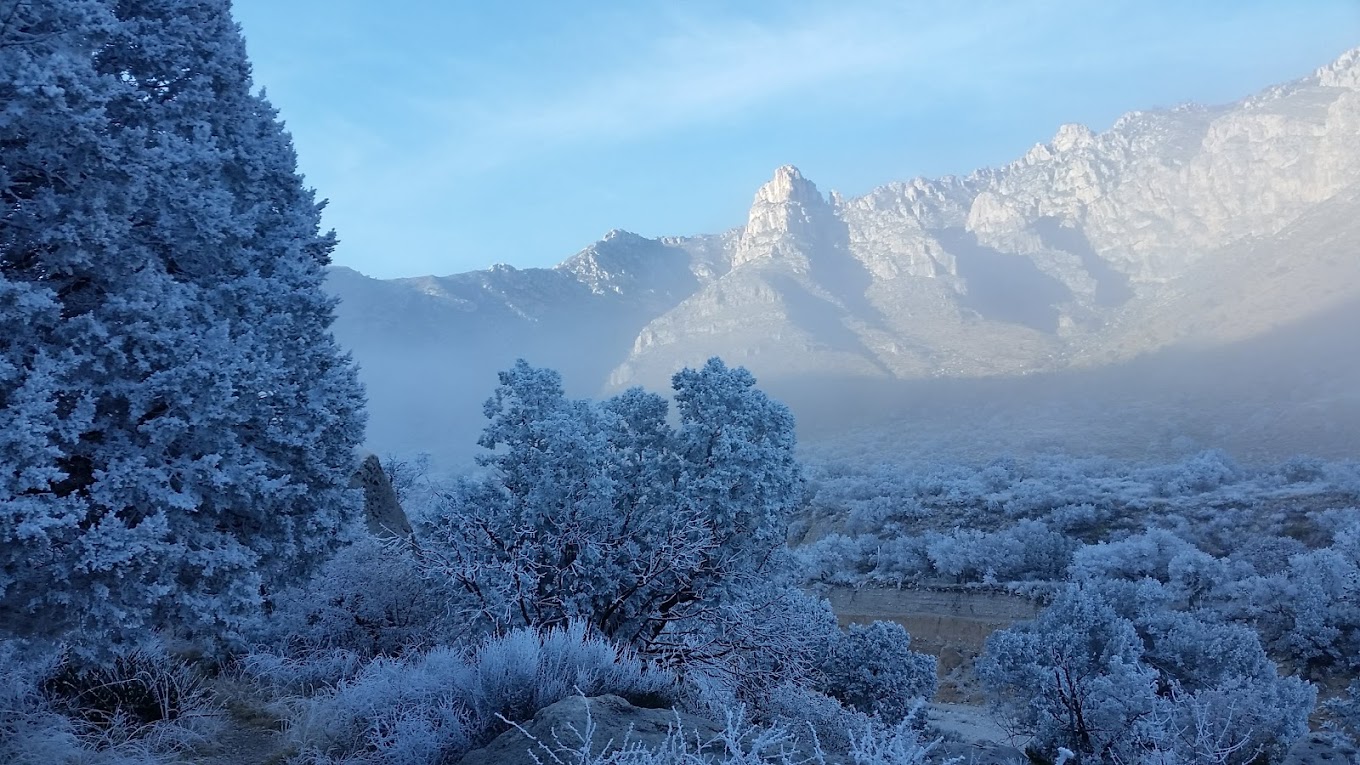
Spring and fall are popular for good reason, but popular periods can also mean full parking areas and campgrounds, particularly around Pine Springs and during fall color in McKittrick Canyon. Summer requires serious respect for heat, sun exposure, water needs, and afternoon weather, particularly on strenuous hikes. Winter can bring beautiful clear days, but cold temperatures, strong winds, ice, or snow are possible at higher elevations.

Rather than assuming what the weather should be based on the season, check current National Park Service conditions shortly before arriving and again before committing to a major hike.

That variability is part of what makes the Guadalupe Mountains so interesting. A traveler may begin the day among desert plants and end it wearing another layer thousands of feet higher on a forested mountainside.


A National Park Made for the Road-Tripping Traveler

Guadalupe Mountains National Park is an especially good example of why a road trip can be about more than reaching famous destinations. This is a place that rewards travelers willing to drive farther, carry what they need, slow down, and spend time in a landscape without expecting constant services or entertainment.

It also suits the way many campervan travelers explore. A campervan can serve as transportation on the long approach through West Texas, a place to sleep at an appropriate campsite, and the same vehicle used to continue exploring the region when the stay is over.

Depending on model, Mini-T Campervans provide sleeping accommodations for two, refrigeration, microwave capability, water and sink facilities, ventilation, storage, solar-supported electrical capability, 120V off-grid power, and shore-power capability. Those features can be particularly useful at a destination such as Guadalupe Mountains, where travelers should arrive prepared and campground amenities are intentionally limited.

But the campervan should remain secondary to the reason for making the trip.

You come here for the moment when the mountains first appear above the desert. You come for the long climb toward Guadalupe Peak, the unexpected trees of McKittrick Canyon, the changing light across El Capitan, and the quiet that arrives after dark.


One of the Places That Changes Your Idea of Texas

Perhaps that is what makes Guadalupe Mountains National Park so memorable. It does not fit neatly into the Texas many travelers think they already know.

There are no beaches here and no rolling Hill Country roads. Instead there are desert basins, limestone cliffs, forested mountain slopes, deep canyons, and a trail leading to the highest point in the state.

It is remote enough that getting there requires intention, yet that same remoteness preserves much of what makes the experience worthwhile. The road becomes quieter. The towns become farther apart. The mountains become larger. And for a while, the usual distractions of travel begin to disappear.

Guadalupe Mountains does not need to compete with Texas' better-known destinations.

It simply offers a completely different side of the state—one worth driving a long way to see.

Happy Camping!

Explore Mini-T Campervans for national park road trips and camping

DLM-Distribution / Campervans is a licensed manufacturer and dealer located in Lake Crystal, Minnesota, serving clients around the country.

Contact Dave: 651-285-7089 or Candy: 507-382-9446 today!

```