
Camping Near Okefenokee Swamp, Georgia: Where to Stay
Deep in southern Georgia, the Okefenokee Swamp offers one of the Southeast's most remarkable outdoor experiences. Its dark waterways wind through cypress forests, open wetlands, and islands of higher ground, creating a landscape where alligators, turtles, wading birds, and other wildlife are part of the everyday scenery. For travelers who enjoy quiet natural places, the Okefenokee is a destination worth slowing down to explore.
Camping near the Okefenokee Swamp provides an opportunity to experience this extraordinary environment without rushing through it in a single afternoon. Several state parks and campgrounds in the surrounding region offer convenient places to stay, while different refuge entrances provide access to boat tours, paddling trails, wildlife observation, and scenic walks.
Whether arriving in a campervan, motorhome, or with a tent, choosing the right campground can make a significant difference in how you experience the swamp.

Understanding the Okefenokee Swamp Before Choosing a Campground
The Okefenokee National Wildlife Refuge protects an immense wetland ecosystem extending across southeastern Georgia and into northern Florida. Much of the refuge is wilderness, and visitors explore its waterways and natural features through designated access points rather than a conventional network of roads running through the swamp.
Three primary areas help visitors experience different parts of the region. The western entrance near Fargo provides access through Stephen C. Foster State Park. The eastern entrance near Folkston includes the Suwannee Canal Recreation Area, visitor facilities, and opportunities for guided boat tours and paddling. Farther north, the Okefenokee Swamp Park near Waycross offers another way to experience the area's wildlife and natural history.
These entrances are separated by considerable driving distances, so choosing a campground based on the attractions you most want to visit is often more practical than trying to see everything from one location.
Stephen C. Foster State Park: Camping at the Western Entrance
For travelers who want to stay close to the swamp itself, Stephen C. Foster State Park is one of the most appealing options. Located northeast of Fargo, Georgia, along Highway 177, the park provides direct access to the western side of the Okefenokee National Wildlife Refuge.
The park offers developed campsites suitable for tents and RVs, along with opportunities for canoeing, kayaking, fishing, and guided boat excursions. Its location allows campers to spend the day exploring waterways bordered by cypress trees and return to their campsite without a lengthy drive.
Stephen C. Foster is also recognized for its exceptionally dark night skies. Its designation as an International Dark Sky Park makes it particularly attractive to visitors interested in stargazing and night photography. Away from the lights of larger communities, clear evenings can reveal an impressive view of the stars while the sounds of the surrounding wetland continue after sunset.
Because this park is relatively remote, visitors should arrive with groceries, drinking water, fuel, and other necessary supplies. Campground reservations are recommended, particularly during popular travel periods.
Laura S. Walker State Park: A Comfortable Base Near Waycross
Laura S. Walker State Park, located near Waycross, offers another excellent option for travelers exploring the northern portion of the Okefenokee region. Rather than camping directly beside the swamp's interior waterways, visitors stay in a traditional state park setting with a lake, wooded surroundings, and recreational facilities.
The park offers RV and tent camping, fishing, paddling, and opportunities to enjoy the outdoors between excursions. Its location is particularly convenient for visitors planning to explore the Okefenokee Swamp Park near Waycross, while also providing access to restaurants, shopping, and other services in the surrounding area.
For travelers who prefer a campground with recreational amenities and convenient access to town, Laura S. Walker State Park offers a practical alternative to the more remote western entrance.
Camping Near Folkston and the Eastern Entrance
Folkston, Georgia, serves as a convenient starting point for exploring the eastern side of the Okefenokee National Wildlife Refuge. The nearby Suwannee Canal Recreation Area is the refuge's main entrance and includes the Richard S. Bolt Visitor Center, access to designated water trails, and opportunities for guided boat tours.
This side of the swamp is particularly appealing to visitors who want to learn about the refuge's ecology and history before venturing onto the water. The Chesser Island area also offers opportunities to experience the region's cultural history and natural surroundings.
Travelers planning to use the eastern entrance can look for established private campgrounds and RV parks in and around Folkston. Before reserving a site, confirm the campground's current operations, hookups, vehicle-size accommodations, and driving distance to the Suwannee Canal Recreation Area.
Staying near Folkston makes it easier to enjoy the eastern refuge entrance without repeatedly driving across the region from the western or northern access areas.
Can You Camp Inside the Okefenokee Swamp?
Yes, but wilderness camping inside the Okefenokee National Wildlife Refuge is very different from conventional RV camping. The refuge maintains designated overnight camping platforms and island campsites accessible by canoe or kayak. These wilderness sites require advance permits and are intended for properly equipped paddlers rather than vehicles.
Camping is permitted only at the designated location assigned through the refuge's permit system. Water levels, weather, trail conditions, and seasonal restrictions can affect which routes and campsites are accessible. Wilderness camping also requires careful preparation, including suitable paddling equipment, drinking water, navigation information, and an understanding of the refuge's regulations.
For those who prefer to sleep in their campervan, the surrounding state parks and established campgrounds provide a more convenient approach. Travelers can enjoy guided tours or day paddling excursions and return to their vehicle for a comfortable night's rest.
Anyone interested in overnight wilderness paddling should review the official Okefenokee National Wildlife Refuge camping information before making plans.
Wildlife Watching, Boat Tours, and Paddling
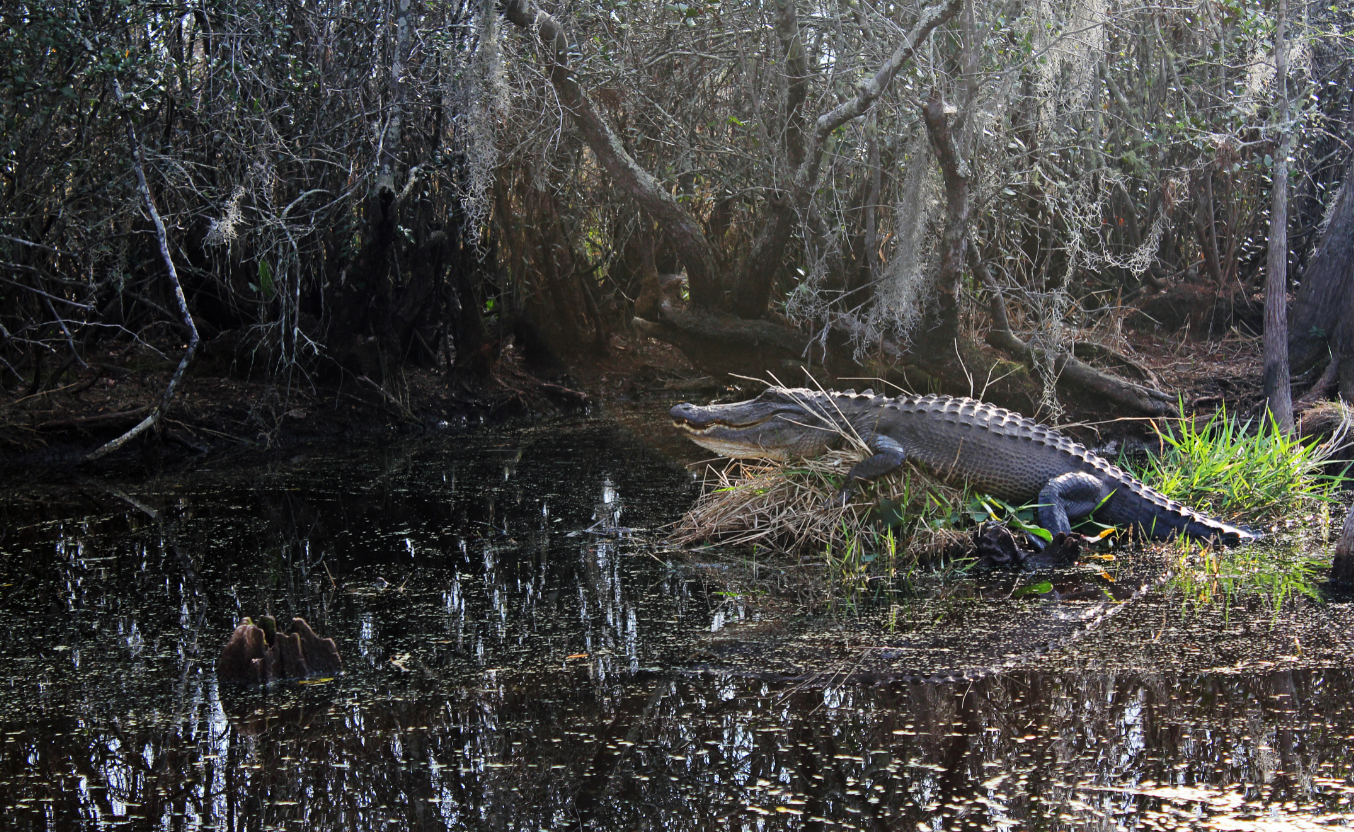
Wildlife is one of the main reasons visitors come to the Okefenokee. American alligators are frequently associated with the swamp, but the region also supports numerous species of birds, turtles, fish, and other animals adapted to its wetlands and forests.
Guided boat tours offer an accessible introduction to the swamp for visitors who would rather learn from an experienced local guide than navigate unfamiliar waterways independently. Canoeing and kayaking provide a quieter, more personal experience, allowing paddlers to travel at their own pace along designated routes when conditions permit.
Early mornings can be especially rewarding for wildlife observation, when the water is often calm and bird activity is noticeable. Visitors should maintain a safe distance from alligators and other wildlife, never feed animals, and follow the instructions of refuge staff and tour operators.
The Okefenokee is a protected natural environment rather than a recreational lake. Remaining on authorized routes and respecting wildlife helps preserve the experience for future visitors.
Traveling the Okefenokee Region by Campervan
A campervan is a practical way to explore the Okefenokee region because it allows travelers to combine scenic drives, wildlife excursions, and overnight camping without changing accommodations. A day might begin with a guided boat tour, continue with a visit to a nature trail or small Georgia town, and end at a quiet campsite.
Compact campervans are particularly convenient when visiting smaller communities, stopping for groceries, or moving between campgrounds. Travelers in a Mini-T Campervan also have access to onboard refrigeration, sleeping accommodations, and electrical power, making it easier to prepare for early departures and enjoy evenings at the campground.
Some areas surrounding the refuge are remote, and cell service may be unreliable. Downloading maps before departure, keeping sufficient fuel in the vehicle, and carrying essential supplies are sensible precautions. Travelers should also check campground access roads and any posted restrictions before heading into less-developed areas.
When Is the Best Time to Visit the Okefenokee Swamp?
The Okefenokee offers different experiences throughout the year. Cooler months can be especially pleasant for hiking, paddling, and camping, with more comfortable daytime temperatures and generally fewer biting insects than during the hottest periods.
Spring brings changing vegetation and active wildlife, while summer offers lush scenery but also high humidity, heat, and mosquitoes. Visitors traveling during warmer months should plan outdoor activities carefully, carry adequate drinking water, and prepare for afternoon thunderstorms.
Water levels also play an important role in the visitor experience. Some paddling routes may become difficult or inaccessible during periods of low water, while changing conditions can affect tour schedules and access to wilderness campsites.
Before traveling, consult the official refuge website for current conditions and alerts, especially if paddling or wilderness camping is an important part of your plans.
Planning a Relaxed Okefenokee Camping Trip
Rather than trying to visit every entrance in one day, consider spending several nights in the region. Travelers interested primarily in paddling and dark skies may prefer Stephen C. Foster State Park, while those who want convenient access to Waycross and the northern attractions may find Laura S. Walker State Park a better fit. Visitors concentrating on the Suwannee Canal Recreation Area can choose accommodations closer to Folkston.
Allow time for a guided boat tour, a quiet morning watching wildlife, and an unhurried evening at the campground. The Okefenokee is a place where the experience often comes from observing the details: sunlight filtering through cypress trees, reflections on dark water, and the sounds of birds and other wildlife throughout the wetlands.
Camping near the Okefenokee Swamp offers an opportunity to enjoy one of America's distinctive natural landscapes while exploring southern Georgia at a comfortable pace. With a suitable campground and a little advance planning, the region can become a memorable stop on a longer Southeast road trip or a destination worth visiting on its own.
Happy Travels & Happy Camping!
DLM-Distribution / Campervans is a licensed manufacturer and dealer located in Lake Crystal, Minnesota, serving clients around the country.
Contact Dave: 651-285-7089 or Candy: 507-382-9446 today!