
The term shore power is familiar to experienced RV travelers, but it can sound slightly out of place when first encountered at a campground. There may be no shoreline in sight, yet an RV owner plugs into an electrical pedestal and says the vehicle is connected to shore power.
The explanation is found not in the history of recreational vehicles, but in the maritime world.
Where the Term "Shore Power" Comes From
Long before the term became part of RV vocabulary, shore power described electricity supplied from land to a vessel while it was docked. Rather than relying on onboard engines or generators for electrical power, a ship could connect to an electrical source on shore.
The terminology was straightforward: the vessel had its own onboard power systems, while electricity coming from land was shore power. The practice is also associated with the term "cold ironing," particularly when shore-based electricity allows onboard engines or generators to be shut down while a vessel is at berth.
As recreational vehicles developed their own onboard electrical systems, the nautical terminology followed. An RV may be hundreds of miles from an ocean, but when it is plugged into an external electrical supply, RV owners still commonly describe it as being connected to shore power.

What Shore Power Means in an RV
In an RV or campervan, shore power simply means electricity supplied from an external source while the vehicle is parked. At a campground, that source is usually an electrical pedestal at the campsite. At home, it may be an appropriate electrical connection used while the campervan is parked in the garage or driveway.
This is different from electricity supplied by the RV's batteries, charging system, solar panels or an onboard generator when one is equipped. Shore power gives the RV access to an outside electrical source rather than requiring all electrical needs to be met by energy carried or generated onboard.
That distinction becomes important because RV electrical systems can be designed very differently. In some RVs, access to 120V household-style power away from an electrical hookup may depend heavily on a generator. Other systems incorporate batteries and an inverter capable of supplying 120V power when the RV is not plugged in.
Shore Power Is Only One Part of the Mini-T Electrical System
The Mini-T Campervan is designed around the second approach. Shore power is available when it is convenient, but the campervan also has an onboard electrical system designed to support camping away from electrical hookups.
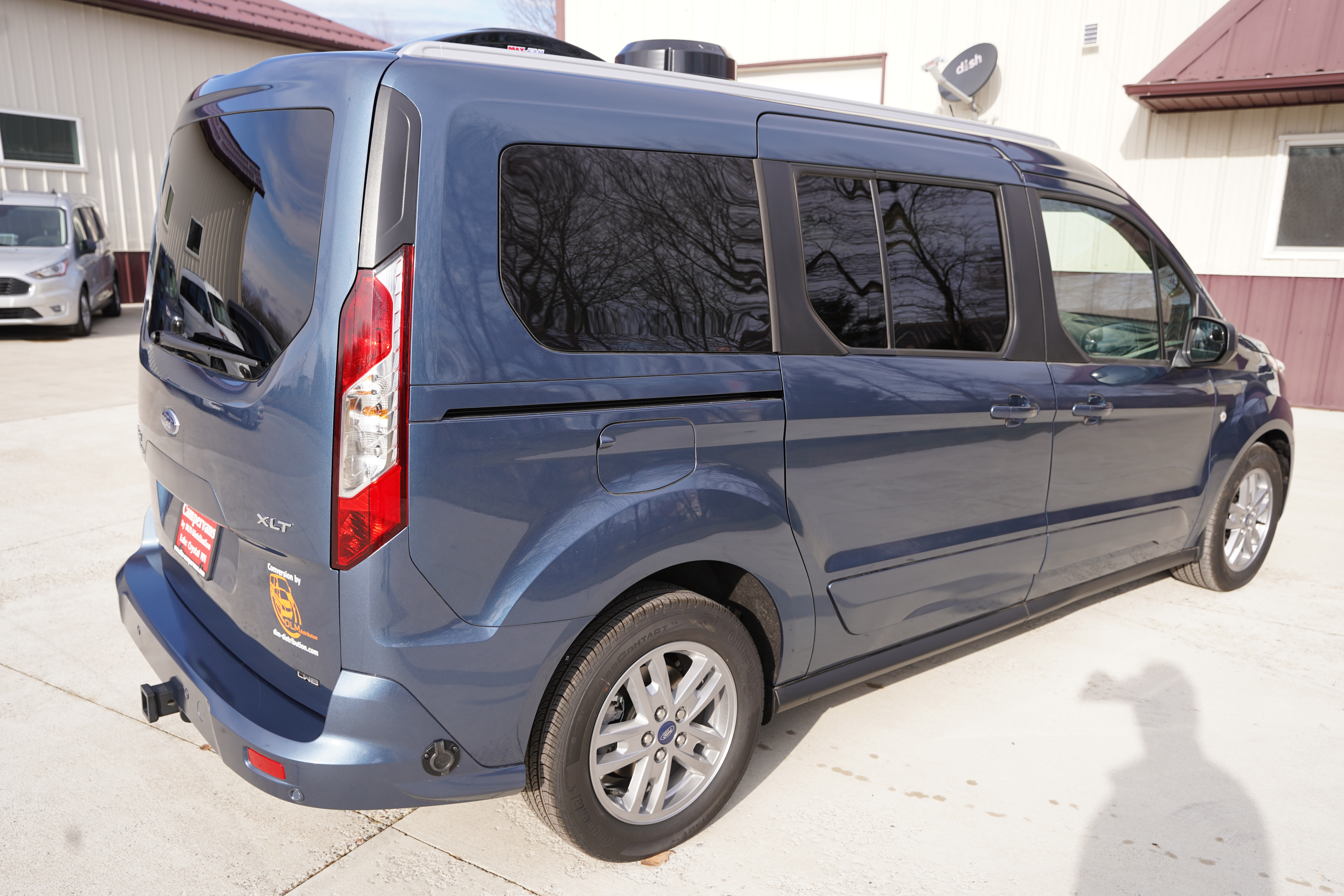
The system combines battery storage, solar charging and charging while the vehicle is driven with an inverter that provides 120V power when camping off-grid. That allows electrical equipment such as the refrigerator, lighting, television, charging outlets and other onboard equipment to be used without requiring the campervan to remain connected to a campground pedestal.
An important distinction is that 120V power is also available off-grid. The Mini-T electrical system is designed to operate its microwave and provide 120V power without starting a generator. In fact, a generator is not required as part of normal Mini-T operation.
This changes the role shore power plays during a trip. Instead of being the dividing line between having household-style electrical power and not having it, shore power becomes another available source of energy within a larger electrical system.
Solar, Driving and Shore Power Work Together
Thinking about the system in terms of energy replacement makes its operation easier to understand. Electrical energy stored in the campervan's batteries is used while camping, and that energy can be replenished in three ways: solar charging, charging while driving, and shore power.
Solar panels contribute energy when sufficient sunlight is available. Driving provides another means of replenishing the electrical system while traveling. When shore power is available, plugging in provides external electricity and another way to replenish the campervan's stored energy.
There is therefore no requirement to choose between being a "solar camper" and using campground electricity. The different sources complement one another.
On a travel day, driving may contribute much of the energy that needs to be replaced. During a quiet day at a campsite, solar can continue contributing without the vehicle being driven. At a campground with electrical service, connecting to shore power provides another convenient option.
When Does Shore Power Make Sense?
Having off-grid capability does not make shore power unnecessary. It simply means travelers have more choices about when to use it.
If an electrical hookup is included with a campsite, there is little reason not to take advantage of it. Shore power can supply the campervan's electrical system while maintaining or replenishing battery reserves. It can also be useful when the campervan remains parked for an extended period, during stretches of limited sunlight, or whenever plugging in is simply the most convenient source of electricity available.
At other times, a traveler may deliberately choose a campsite without electrical service because the location is better, the campground is quieter, or hookups simply are not available. An electrical system capable of operating independently makes that decision much easier.
What "Off-Grid" Actually Means
Off-grid camping is sometimes interpreted as camping without electricity. In a properly equipped campervan, that is not really the case. It means the vehicle is temporarily operating without a connection to an external electrical grid.
The refrigerator can still remain cold. Lights still work. Devices can still be charged. The television and other electrical equipment can still be used, and 120V power can still be available. The difference is simply where the energy is coming from.
When connected at a campground, some of that energy is arriving through the shore-power cord. When camping away from hookups, stored battery energy supplies the campervan while solar and vehicle charging help replace what is used.
Understanding that distinction makes RV electrical systems considerably less mysterious.
From Ships at the Dock to Campervans at the Campsite
"Shore power" is a good example of an old term finding a natural home in a completely different form of travel. What once described a vessel receiving electricity from land now describes essentially the same relationship between an RV and the electrical grid.
The technology inside RVs has changed considerably, however. Connecting to shore power remains useful, but it does not necessarily have to determine where someone can camp.
In the Mini-T Campervan, shore power works alongside battery storage, solar and charging while driving. When a hookup is available, it can be used. When it is not, the onboard system allows the trip to continue without a generator or the need to plan every overnight stop around an electrical pedestal.

That may ultimately be the most useful way to think about shore power: not as something an RV must always have, but as one of several ways a well-designed electrical system can keep a campervan ready for the next part of the journey.

DLM-Distribution / Campervans is a licensed manufacturer and dealer located in Lake Crystal, Minnesota, serving clients around the country.
Contact Dave: 651-285-7089 or Candy: 507-382-9446 today!